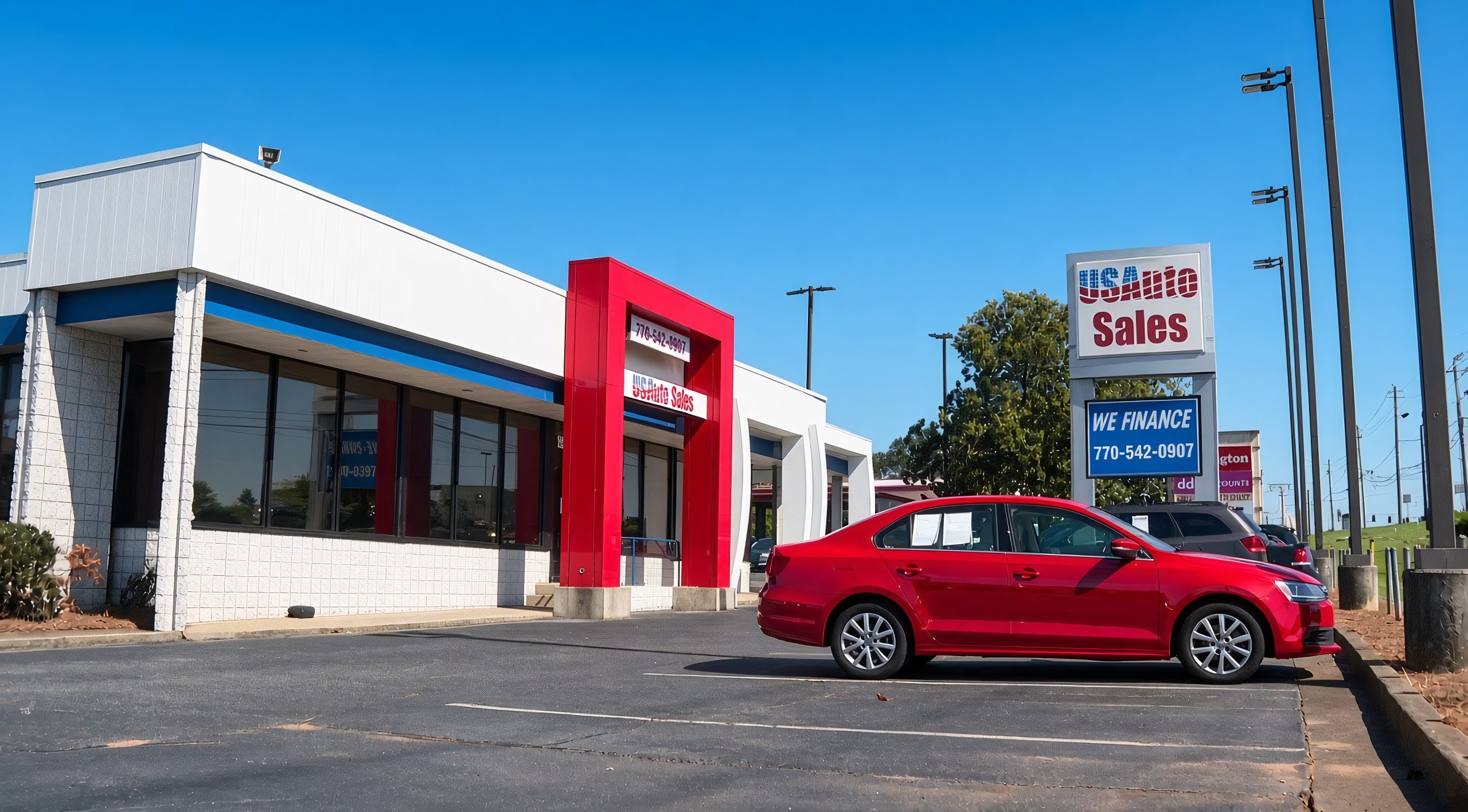
The U.S. new-vehicle market delivered a stronger September, with preliminary industry data showing sales rose 4.4% year over year as hybrid demand helped Japanese and South Korean automakers gain momentum.
The result offers an early indication of how American consumers are adjusting to a market in which federal EV incentives have changed, and fuel costs have become a more important consideration.
According to MarkLine data compiled October 2, including estimates for General Motors and Stellantis, U.S. new-vehicle sales increased 4.4% in September. The gain is notable because the market is emerging from a period of unusual volatility.
The expiration of federal EV incentives has altered buying decisions, while automakers are balancing battery-electric investments with stronger demand for hybrids.
Hybrids Gain Ground as Buyers Reconsider Powertrains
Hybrid vehicles have become an increasingly important part of the U.S. market because they offer a familiar ownership experience while reducing gasoline consumption. That proposition has become more attractive as fuel prices have climbed.
Reuters reported that U.S. gasoline prices averaged $4.43 per gallon in September, compared with $3.20 a year earlier. Higher fuel costs give buyers a stronger financial reason to consider efficient vehicles, and automakers with established hybrid lineups are positioned to benefit.
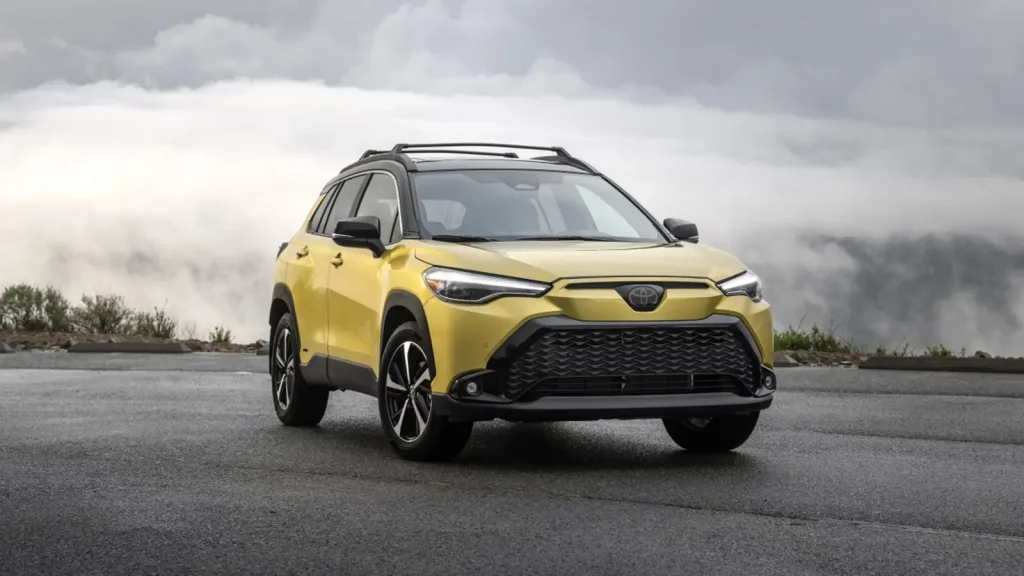
Toyota is the clearest example. The company has built a large hybrid portfolio across cars, crossovers, and SUVs, giving dealers multiple ways to match buyers with an electrified vehicle without requiring them to purchase a battery-electric model.
Toyota’s U.S. sales in the third quarter reached 633,223 vehicles, narrowing the gap with General Motors, while Corolla hybrid sales increased 36%.
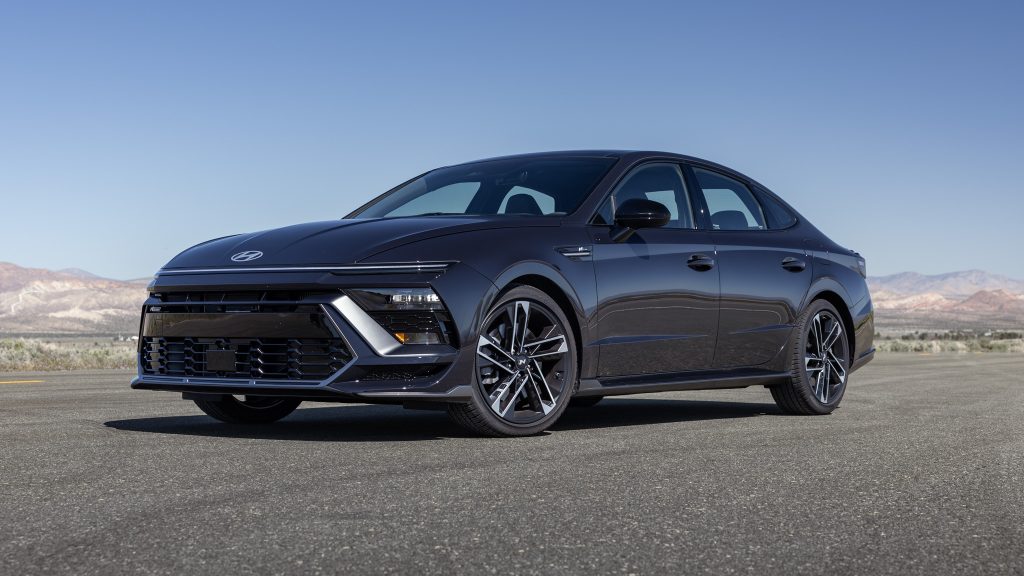
Honda has also benefited from demand for hybrids, while Hyundai and Kia have continued expanding their hybrid offerings. MarkLines said Japanese and South Korean automakers were particularly helped by strong hybrid demand in September.
The End of EV Incentives Changes the Market
September’s results also provide an early look at the U.S. market after major changes to federal EV incentives.
The previous federal EV tax credit had been an important tool for reducing the effective purchase price of qualifying electric vehicles. Its expiration removed one of the financial incentives that had encouraged some buyers to choose battery-electric models.
The effect has been visible in recent industry results. MarkLines reported strong hybrid demand in August even as overall U.S. sales fell, while other market data showed weakness in several battery-electric models after incentives changed.
Tesla provides a particularly visible example. The company delivered 486,532 vehicles globally in the third quarter, beating analyst expectations, but U.S. demand remained under pressure after the federal EV credit expired.
For traditional automakers, the changing incentive environment creates a complicated product-planning problem. Companies have already invested billions in electric vehicles, battery factories, and charging-related infrastructure, yet consumers are not moving uniformly toward battery power.
That makes flexible powertrain strategies more valuable. A manufacturer with gasoline, hybrid, plug-in hybrid, and battery-electric options can respond to different customer preferences instead of relying on one technology. The September sales results suggest that flexibility is becoming increasingly important.
Japanese and South Korean automakers entered this period with a significant advantage. They already had established hybrid technology and a broad selection of hybrid vehicles.
Toyota has been developing hybrids for decades, and its current lineup includes hybrid versions of some of its most popular models. Honda has similarly expanded hybrid availability across important segments, while Hyundai and Kia have used hybrid systems in several SUVs and passenger vehicles.
Toyota’s recent performance demonstrates the potential benefit. Reuters reported that Toyota’s third-quarter U.S. sales increased slightly to 633,223 vehicles, while GM remained the market leader with 670,974 despite a 5.5% decline.
The Detroit automakers face a more difficult position because their traditional strength has been large pickups and SUVs, while Asian competitors have developed deeper hybrid portfolios.
Ford, however, is also seeing stronger interest in hybrids. Its Maverick hybrid pickup has performed particularly well, with third-quarter sales increasing more than 20% to 41,970 units. Ford said hybrid demand was strengthening as gasoline prices rose.
That suggests the hybrid trend is not limited to passenger cars. Consumers are increasingly willing to consider hybrid technology in trucks and SUVs as well.
Even with sales improving, the U.S. vehicle market continues to face a major affordability problem.
New-vehicle prices remain high, and financing costs continue to influence purchasing decisions. Reuters reported that the average U.S. new-vehicle transaction price reached $50,089 in August, up 1.9% from a year earlier.
That means consumers are not simply choosing between gasoline and electric powertrains. They are also evaluating monthly payments, fuel costs, insurance, and long-term ownership expenses.
A hybrid can become attractive because its higher purchase price, where applicable, may be partly offset by lower fuel consumption. For a buyer driving many miles each year, fuel savings can make the calculation more favorable.
Battery-electric vehicles can provide even greater potential savings on energy and maintenance, but their higher upfront prices, charging requirements, and changing incentive environment can make the decision more complicated. Automakers therefore have to offer technology at prices consumers can justify.
What September Sales Mean for Automakers
The 4.4% increase gives automakers some encouraging news, but the composition of that growth may be more important than the headline number.
If hybrids continue gaining share while battery-electric demand remains uneven, manufacturers may need to adjust production plans accordingly. Factories designed around a single powertrain strategy can be difficult and expensive to change, so companies increasingly want platforms capable of supporting multiple technologies.
This is one reason hybrid and range-extended vehicles are receiving renewed attention. They can provide electrification without requiring manufacturers or consumers to make an immediate full transition to battery power.
For Toyota, Honda, Hyundai, and Kia, strong hybrid demand validates investments made over many years. For GM, Ford, and Stellantis, it increases the pressure to offer competitive hybrid products across profitable segments.
The September results also reinforce the importance of SUVs and pickups. These vehicles remain central to U.S. buying patterns, but consumers are increasingly interested in efficient versions. Automakers that can combine utility with better fuel economy may have an advantage as fuel prices fluctuate.
The 4.4% September increase suggests that U.S. consumers have not stopped buying new vehicles despite higher prices and major changes in government EV incentives. Instead, they appear to be becoming more selective about the technology they choose.
Hybrid demand is the clearest signal. Japanese and South Korean automakers have benefited from mature hybrid portfolios, while American manufacturers are also seeing stronger interest in hybrid trucks and other vehicles.
At the same time, the expiration of federal EV incentives is forcing manufacturers to compete more directly on product value rather than relying on subsidies to narrow the price gap.
The next few months will show whether September represents a temporary improvement or the beginning of a more durable recovery. Much will depend on fuel prices, interest rates, vehicle availability, and how automakers price their electrified models.
For now, the message from the U.S. market is clear. Consumers remain interested in electrification, but they are not necessarily demanding battery-electric vehicles. Hybrids are providing a practical middle ground, and manufacturers with strong hybrid lineups are increasingly well positioned to capture that demand.
The 4.4% rise in September sales therefore represents more than a stronger month for dealerships. It highlights a changing U.S. automotive market in which affordability, fuel costs, and powertrain flexibility are becoming more important.