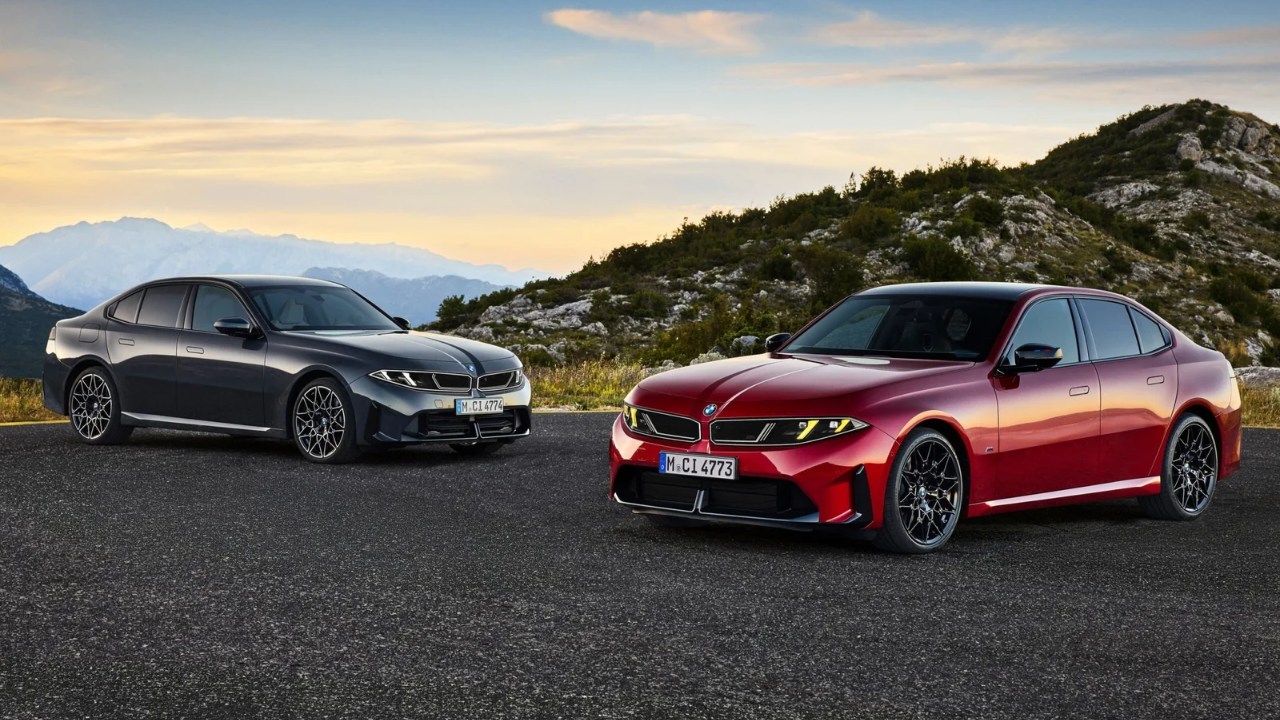
BMW is opening a new chapter for the 3-Series with the arrival of the M350 xDrive, a performance-focused sedan that becomes the most powerful gasoline model in the redesigned lineup.
The new car replaces the M340i and brings a substantial increase in power, revised chassis hardware, and a new digital architecture as BMW moves the 3-Series into its Neue Klasse era.
The M350 xDrive is already on public display at BMW Welt in Munich, shortly before production begins. BMWBlog reported that the car is appearing at the facility roughly a month before series production starts, giving enthusiasts an early look at the production-ready performance sedan.
BMW is not treating the M350 as an isolated performance model. The company is developing a broader 3-Series family that will include gasoline, plug-in hybrid, and fully electric versions. A plug-in hybrid is scheduled to arrive in 2027, while the next-generation M3 is expected to bring another major change when it arrives.
M350 xDrive Brings 437 Horsepower
The M350 xDrive replaces the M340i at the top of the gasoline-powered 3-Series range. It uses BMW’s familiar 3.0-liter turbocharged inline-six, but the engine receives a 48-volt mild-hybrid system and several important upgrades.
For the U.S. market, BMW rates the powertrain at 437 horsepower and 428 lb-ft of torque. The electric motor integrated into the transmission can contribute up to 17 horsepower, helping improve response during acceleration. Power is sent through an eight-speed Steptronic Sport automatic transmission and BMW’s xDrive all-wheel-drive system.
The performance figures put the M350 firmly into serious sports-sedan territory. BMW quotes a 0-to-60-mph time of 3.9 seconds, while top speed is electronically limited to 155 mph when the appropriate sport tires are fitted.
The output represents a major increase over the outgoing M340i. BMWBlog reports that the new model gains 69 horsepower, while additional torque comes partly from the mild-hybrid system. The electrical assistance can provide extra torque before the turbocharger reaches full boost, helping the engine respond more quickly.
BMW has also given the M350 more substantial chassis hardware. Adaptive M suspension is standard, while the car receives additional structural bracing, an active rear differential, and larger 20-inch wheels with wider tires. Those changes are intended to make the increased engine output usable through corners rather than simply improving straight-line acceleration.
The exterior makes the model’s position clear. The M350 receives four exhaust outlets, M-specific exterior details, and distinctive lighting elements. It looks considerably more aggressive than the regular 330 models, but it remains positioned below the full M3.
BMW Is Giving the 3-Series a Broader Powertrain Strategy
The M350 arrives as part of a much larger redesign of the 3-Series. The eighth-generation sedan brings BMW’s Neue Klasse design language and new digital technology to one of the company’s most important nameplates.
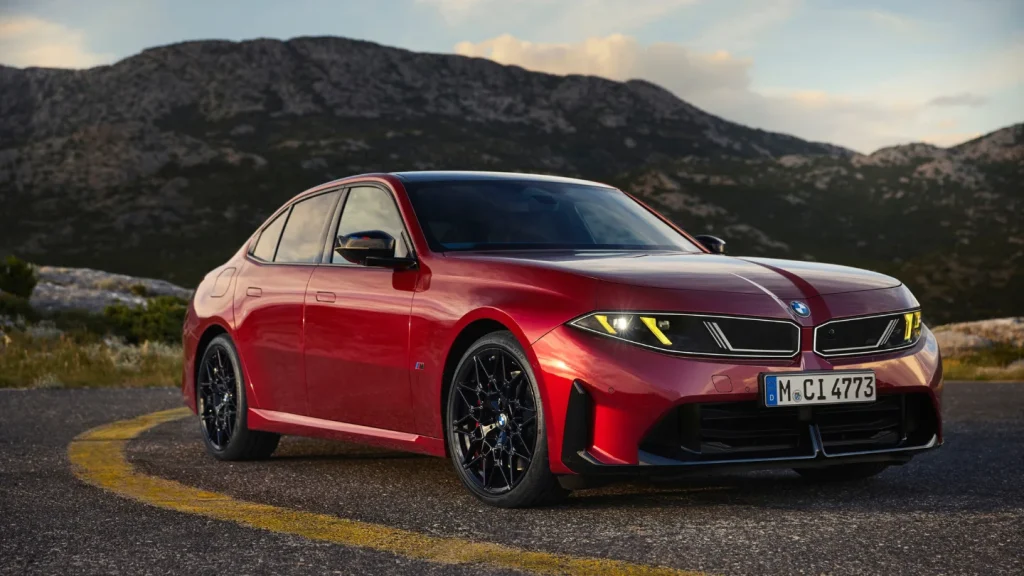
The gasoline-powered models and the fully electric i3 are closely related in appearance, but they use different approaches to propulsion. BMW is effectively allowing customers to choose how they want their 3-Series to be powered rather than forcing the entire range toward a single technology.
For U.S. buyers, the initial combustion lineup includes the 330, 330 xDrive, and M350 xDrive. BMW says the U.S. launch of these models will begin in the first quarter of 2027.
The M350 is particularly important because it gives traditional BMW customers a high-performance six-cylinder option while the company expands its electric portfolio.
The gasoline engine itself has also been extensively revised. BMW says the combustion engines in the new 3-Series use the Miller combustion cycle, along with updated intake ports, combustion chambers, camshaft timing, fuel injection, ignition, and exhaust-gas routing. The M350 also receives a revised turbocharger as part of the power increase.
This shows that BMW is still investing heavily in internal-combustion technology even as its electric Neue Klasse models enter production.
That approach is important because the transition to EVs is happening at different speeds across markets. Some customers want a fully electric sedan, while others still prefer the range, refueling convenience, and character of a gasoline engine.
The M350 gives BMW a way to retain those customers without leaving the performance segment behind.
A Plug-In Hybrid Is Coming in 2027
BMW’s strategy does not stop with gasoline and battery-electric versions. A plug-in hybrid 3-Series is scheduled to join the lineup in 2027, giving customers another option between conventional propulsion and a fully electric vehicle.
That model could become important as buyers look for more efficient vehicles without completely abandoning gasoline engines.
A plug-in hybrid can provide electric driving for shorter trips while retaining a combustion engine for longer journeys. For customers who have access to home charging but regularly travel beyond an EV’s convenient range, that combination can be attractive.
It also gives BMW greater flexibility as demand changes. The company can continue offering conventional gasoline models, add plug-in hybrids where demand is strongest, and expand its fully electric lineup at the same time. Instead of predicting exactly which technology will dominate, BMW is preparing the 3-Series to serve multiple customer preferences.
The M350 therefore represents the performance end of the gasoline strategy, while the upcoming PHEV will occupy a more efficiency-focused position.
The Electric M3 Will Raise the Stakes
The biggest performance development is still ahead. BMW is preparing a next-generation M3 that will bring electric power to the legendary performance nameplate. BMWBlog reports that the electric M3 is planned for production in Munich from 2027 and will use a four-motor configuration.
That will create an unusual situation for BMW enthusiasts. The M350 will provide a powerful six-cylinder gasoline option, while the upcoming M3 will demonstrate what BMW’s electric performance technology can achieve.
The electric M3 will also benefit from technology developed for BMW’s Neue Klasse electric vehicles. The company has been working on software-controlled torque distribution and advanced chassis management to give its EVs a more responsive driving character.
The challenge will be making an electric M3 feel like an M car rather than simply making it extremely quick.
The M350 already demonstrates how BMW is addressing that issue on the gasoline side. Its chassis uses more sophisticated suspension hardware, torque management, and an active rear differential to make the car engaging beyond straight-line acceleration.
BMW is also preparing a feature called Drift Moment for the M350. The system will allow the car to send power entirely to the rear wheels, creating a rear-drive mode despite the model’s standard xDrive configuration. BMW says the feature will become available during 2027 through an over-the-air update.
That feature is an interesting indication of BMW’s priorities. Even while electrification changes the underlying technology, the company is trying to preserve the playful driving character that has traditionally defined its performance cars.
Production Is Moving From Munich to Dingolfing
The new gasoline 3-Series also represents a major manufacturing change. For decades, the 3-Series was closely associated with BMW’s Munich plant. Production of the new gasoline G50 generation is moving to Dingolfing, approximately 62 miles from Munich, with series production scheduled to begin in November.
The move is part of BMW’s broader plan to transform the Munich factory into an electric-focused production site. The electric i3 is already entering production there, and additional electric models will follow.
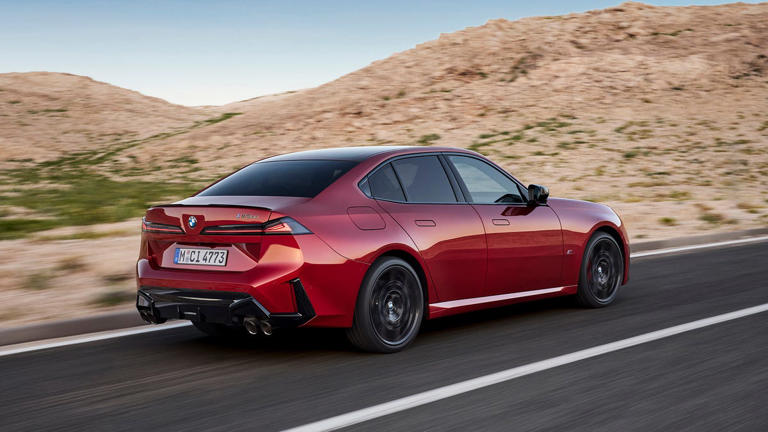
That means the 3-Series family is effectively splitting between manufacturing strategies. Gasoline-powered models will be produced in Dingolfing, while the electric i3 and future electric M models will have a stronger connection to Munich.
For BMW, that separation allows its factories to specialize while the company continues offering different powertrains.
For enthusiasts, the M350 may become an especially important model during this transition. It represents a significant evolution of the traditional six-cylinder 3-Series at a time when BMW is preparing to introduce an entirely new electric approach to M performance.
With 437 horsepower, 428 lb-ft of torque, standard xDrive, a 3.9-second 0-to-60 mph time, and sophisticated chassis technology, the M350 xDrive is more than a replacement for the M340i.
It is BMW’s clearest statement yet that the gasoline-powered performance sedan still has a place in the 3-Series family, even as the company prepares for an increasingly electric future.