
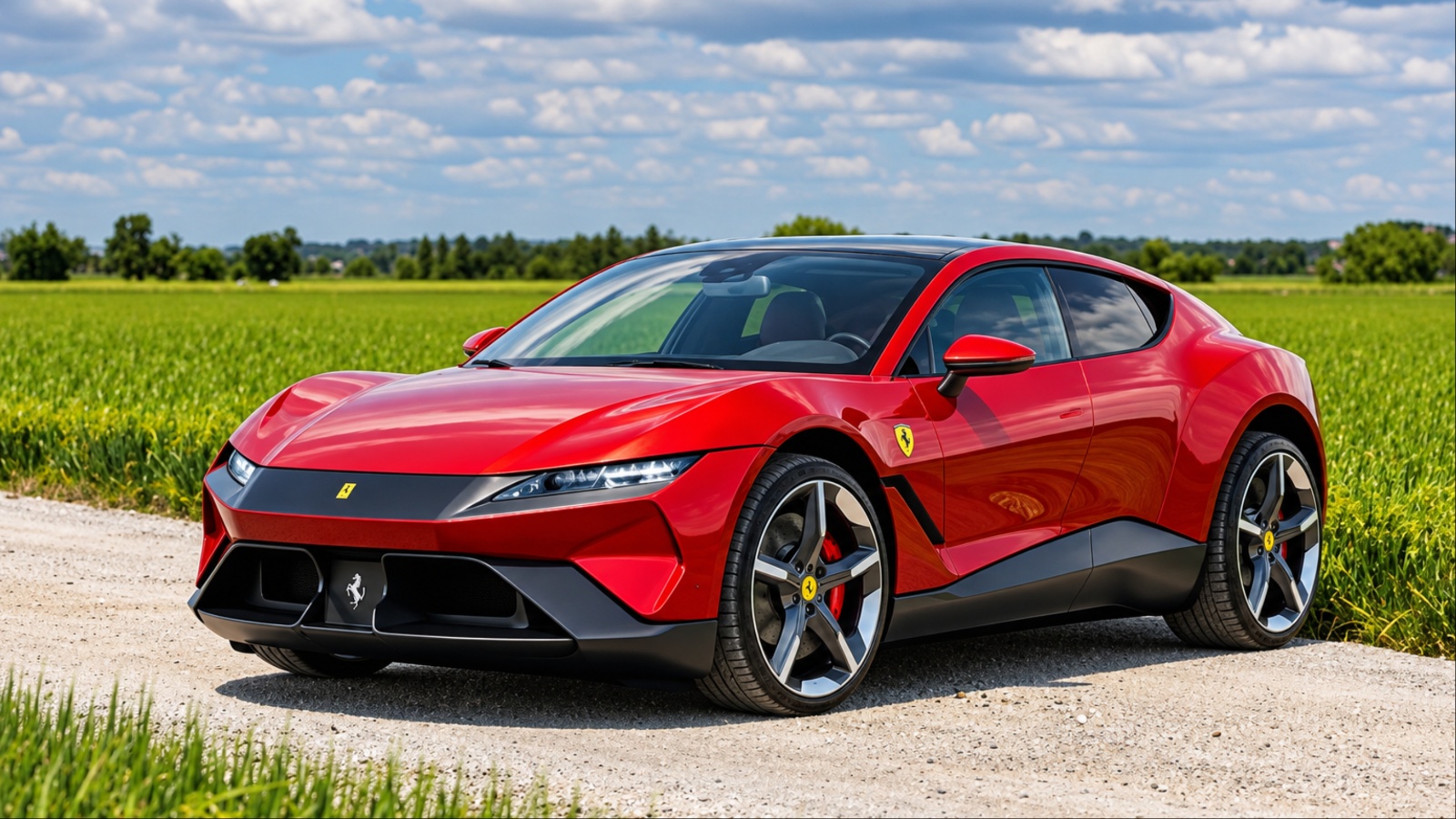
Ferrari’s first fully electric model is challenging a common assumption about the luxury EV market. Rather than relying on lower prices to attract buyers to battery power, the Ferrari Luce is taking a very different approach.
With a starting price of roughly €550,000, the electric model has already reached its initial 500-unit sales target, according to the Financial Times.
That response gives Ferrari a very different path into electrification from the one facing mainstream automakers. A manufacturer selling hundreds of thousands of vehicles must convince large numbers of customers that an EV offers enough value to justify its price.
Ferrari does not face the same calculation. Its customers are already paying for exclusivity, performance, craftsmanship, and brand heritage.
The Luce therefore represents an important experiment for the high-performance industry. Ferrari is not trying to make an electric car accessible to the average consumer. It is testing whether battery power can become desirable at the very top of the market.
Ferrari Can Approach Electrification Differently
Ferrari’s biggest advantage is its limited-volume business model. The company does not need to sell enormous numbers of vehicles to justify a new product, particularly when each vehicle carries a substantial price, and customers often spend more on personalization and options.
That changes the economics of developing an electric model. Ferrari can invest heavily in battery technology, electric motors, software, and vehicle engineering while spreading those costs across a relatively small production run. A mainstream manufacturer would struggle to use the same strategy because its customers are much more sensitive to purchase prices.
Luce’s initial 500-unit target illustrates this difference. At approximately €550,000, the car is positioned as an ultra-exclusive product rather than a direct alternative to premium electric sedans and SUVs. Buyers are unlikely to evaluate it primarily on electricity costs, charging expenses, or payback periods.
Instead, the purchase is about what the car represents. That is especially important for Ferrari because its identity has traditionally been tied to internal-combustion engines. Its V8 and V12 models are valued not only for performance but also for sound, response, and mechanical character.
Moving to a fully electric powertrain removes some of those familiar qualities, so Ferrari has to give customers a different reason to want the car.
The Challenge Is Creating Emotion Without a Combustion Engine
Electric vehicles already have an obvious performance advantage. Electric motors can deliver enormous torque immediately, allowing even relatively heavy vehicles to accelerate at extraordinary rates. For Ferrari, however, acceleration alone is not enough.
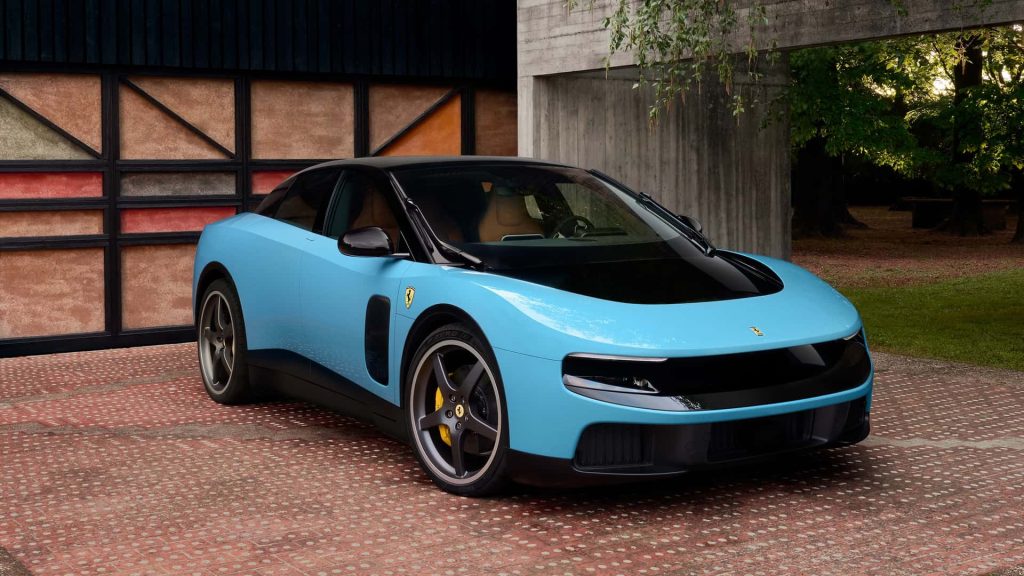
The company has spent decades building an identity around the driver’s interaction with the vehicle. Steering response, braking, power delivery, and engine sound all contribute to the experience. A successful electric Ferrari therefore has to create its own character rather than simply matching the straight-line performance of existing models.
The Luce is designed around that principle. Ferrari has developed electric drivetrain and battery technology specifically for its vehicles and has focused on controlling how power is delivered to the driver.
Different driving modes can alter the behavior of the car, while electronic systems are designed to make the electric powertrain feel more interactive.
Sound is another important issue. A silent electric motor presents a challenge for a manufacturer whose cars are strongly associated with their engine note. Ferrari has therefore worked on an acoustic experience connected to the operation of the electric drivetrain.
That approach matters beyond Ferrari. If an ultra-luxury manufacturer can make an electric vehicle feel emotionally engaging without pretending that it has a gasoline engine, other high-performance brands could adopt similar strategies.
Wealthy Buyers Are Not Typical EV Customers
The Luce also highlights how different the ultra-luxury market is from the mainstream car market.
A family purchasing a $40,000 or $50,000 vehicle may carefully calculate fuel savings, financing costs, insurance, and charging expenses. A Ferrari customer paying more than half a million euros operates under a different set of financial considerations.
Fuel savings are unlikely to determine the purchase. Many buyers in this segment own several vehicles, meaning an electric Ferrari can be added to an existing collection rather than replacing a gasoline-powered car.
That makes the psychological barrier to electrification lower. A buyer who already owns a V12 Ferrari can continue enjoying it while purchasing the Luce as a separate experience.
The electric car does not have to prove that it is a better replacement for the combustion model. It only needs to offer something sufficiently distinctive to justify joining the owner’s collection.
This is one reason Ferrari can command a price that would be difficult for other manufacturers to defend.
Ferrari Is Not Betting on EVs Alone
The Luce does not mean Ferrari is abandoning combustion engines or moving its entire business toward battery power.
The company has already demonstrated a gradual approach through hybrid technology. Its hybrid models combine electric motors with combustion engines, allowing Ferrari to improve performance and efficiency while preserving some of the characteristics customers associate with the brand.
That gives Ferrari flexibility. A traditionalist can continue buying a V8 or V12-powered Ferrari, while a customer interested in technology can choose a hybrid or fully electric model.
This strategy may prove useful while the luxury EV market remains uncertain. Wealthy buyers are not automatically moving into electric vehicles, and some still prefer the sound and character of a combustion engine. Ferrari’s limited production volumes allow it to accommodate those preferences without completely restructuring its business.
At the same time, the Luce allows Ferrari to learn from the electric market without taking the same volume risk faced by mass-market companies.
Ferrari’s early success does not mean every expensive electric vehicle will automatically find buyers. The company occupies an unusual position. Its brand is one of the most recognizable in the performance-car industry, production is deliberately limited, and customers have unusually high purchasing power.
Nevertheless, the Luce demonstrates that price is not necessarily the biggest obstacle to electric luxury vehicles.
At the mainstream end of the market, manufacturers are trying to reduce battery costs and make EVs more affordable. Ferrari is pursuing almost the opposite strategy. It is using exclusivity, engineering, and brand value to make a very expensive electric car desirable.
That could influence how other ultra-luxury manufacturers approach electrification. Instead of competing with mass-market EVs on range and price, brands can focus on performance, craftsmanship, personalization, and technology. The electric powertrain becomes another tool for creating a special product rather than simply a method of reducing emissions.
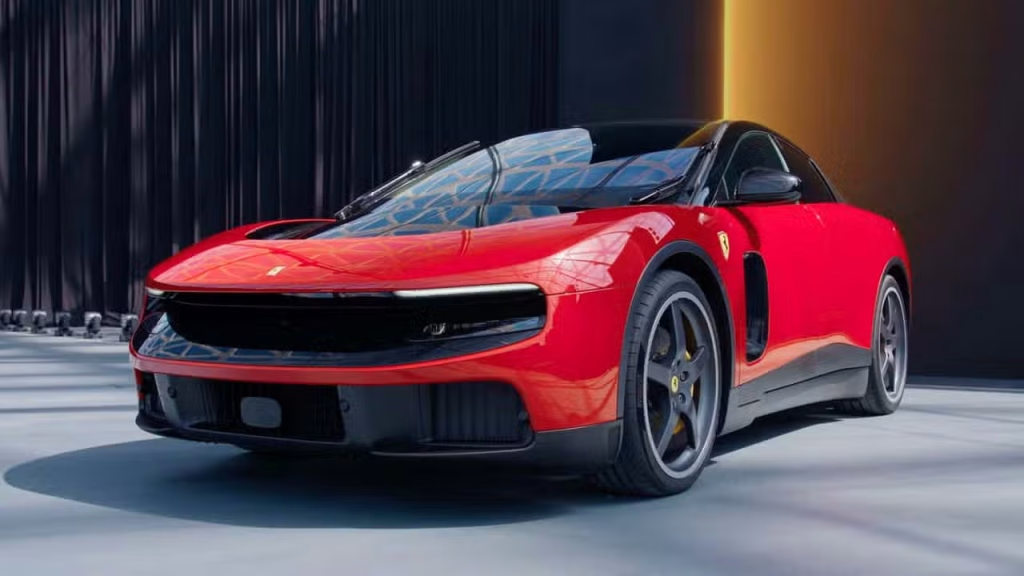
The bigger test will come after the initial enthusiasm fades. Ferrari will have to demonstrate that customers continue to value the Luce once the novelty of its first electric model has passed. It will also need to maintain a careful balance between electric technology and the combustion-powered cars that remain central to its identity.
For now, however, the response to the first 500 cars is significant. A roughly €550,000 starting price has not prevented Ferrari from finding its initial group of customers, suggesting that the wealthiest buyers can view an EV very differently from mainstream consumers.
Ferrari’s first electric car is therefore more than another entry into the growing EV market. It is a test of whether electrification can be presented as an exclusive performance experience rather than an efficiency-driven compromise.
If the Luce succeeds, it could offer the luxury market a different perspective on the transition to electric vehicles. Electric models do not necessarily need to become cheaper to attract buyers. At the highest end of the market, advanced technology, limited availability, and brand prestige can help justify supercar prices even when electric motors replace the traditional engine.
