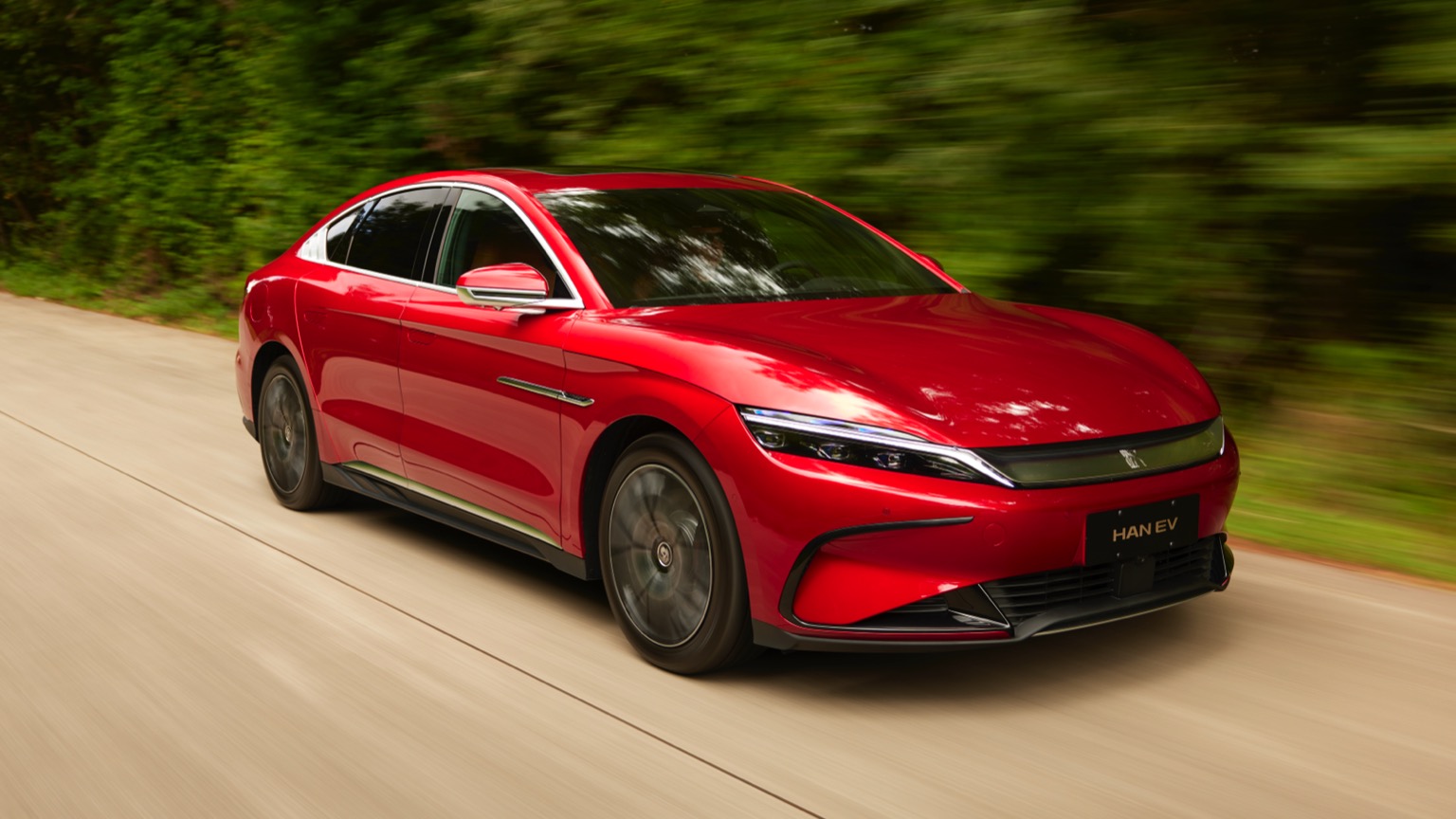
Britain’s automotive industry is facing a difficult trade-off as Chinese vehicle manufacturers expand rapidly in the UK while the European Union considers policies designed to favor vehicles and components produced within the bloc.
The issue is becoming increasingly important because the UK remains deeply dependent on the European market. The EU accounted for 58% of British car exports in the first half of 2026, according to figures cited by the Society of Motor Manufacturers and Traders, while China represented only about 4%.
That imbalance means any new European restrictions affecting British-built vehicles could have consequences far beyond the immediate dispute over Chinese imports.
At the same time, Chinese brands have been gaining market share in Britain because the UK has so far resisted imposing the type of additional tariffs that the EU has placed on Chinese electric vehicles.
The Guardian reported that Chinese-owned brands accounted for about 15% of new UK registrations in the first half of 2026, making the country an increasingly important European market for Chinese automakers.
The result is a complicated situation for British manufacturers, which want access to affordable Chinese technology and investment while also relying heavily on uninterrupted trade with their largest export market.
Why Chinese Cars Have Become a Problem for UK Automakers
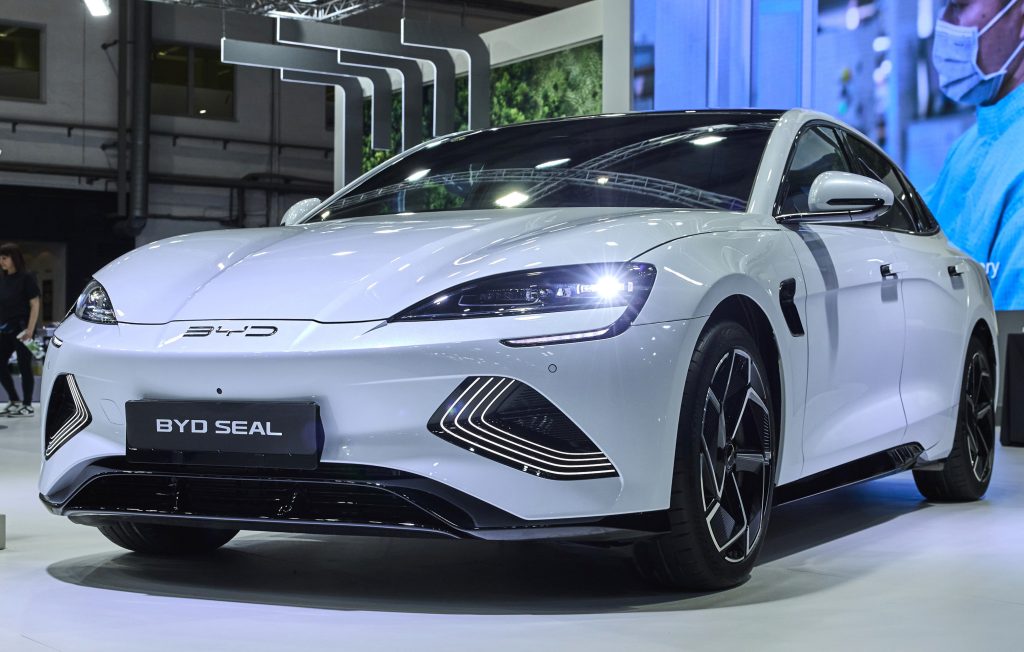
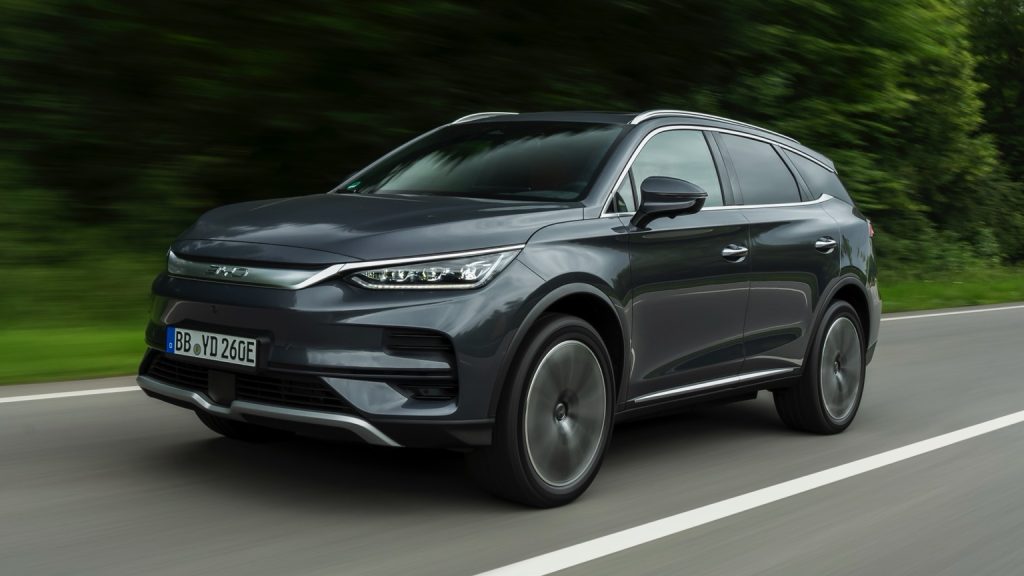
Chinese automakers have expanded rapidly across Europe, with brands such as BYD, MG, Omoda, and Jaecoo becoming increasingly visible in British showrooms.
Their growth has been particularly strong in electric vehicles. Chinese manufacturers have invested heavily in batteries, electric drivetrains, and vehicle software, allowing them to offer increasingly competitive products at prices that put pressure on established European and Japanese manufacturers.
The UK has become an attractive market partly because it has not followed the EU’s approach of imposing additional tariffs on Chinese EVs. The EU currently applies duties of up to 45% on Chinese electric cars, depending on the manufacturer and the applicable countervailing duty. Britain, by contrast, has so far avoided introducing equivalent measures.
That difference creates both opportunities and risks. British consumers gain access to a wider selection of electric and hybrid vehicles, often with competitive pricing and extensive standard equipment.
Chinese companies also have greater incentive to invest in Britain, establish dealerships, and potentially manufacture vehicles locally.
One example is Chery International UK, which has been discussing potential contract manufacturing at Nissan’s Sunderland plant.
Nissan and Chery signed a non-binding memorandum of understanding in June to study the possibility of producing Chery vehicles at the facility, with production potentially beginning on one of Sunderland’s lines in financial year 2027.
That kind of investment could support British manufacturing jobs and improve utilization of existing factories.
But the growing presence of Chinese vehicles also creates a dilemma for the UK’s relationship with the EU.
European policymakers are considering measures intended to reduce dependence on Chinese components and encourage manufacturing within Europe. The concern for Britain is that if those rules are structured around EU production, vehicles manufactured in the UK could be treated differently from vehicles built inside the bloc.
That would be significant for British factories whose business models depend on exporting into Europe.
The “Made in Europe” Issue Could Hit British Exports
The most immediate concern is the European Union’s developing “Made in Europe” approach.
The policy is intended in part to reduce Europe’s dependence on China by prioritizing European-made goods, components, and industrial capacity.
British Prime Minister Andy Burnham has argued that the UK should be treated as a trusted partner rather than being placed outside the system, warning that the policy could damage Britain’s automotive industry if British-made vehicles and components are excluded.
The Guardian reported that EU officials had warned British political leaders that failure to introduce measures against inexpensive Chinese vehicles could potentially result in European barriers affecting British exports.
The reported concern is that Brussels could use industrial rules to encourage European production without directly targeting Britain. This would create a particularly difficult position for manufacturers operating in Britain.
A vehicle assembled in Sunderland or another UK factory can be built using components sourced from several countries before being exported into Europe.
If future EU incentives, tax benefits, or procurement rules depend on a defined level of European content, British-built vehicles could face disadvantages even though the UK remains deeply integrated with European automotive supply chains.
The SMMT has described the potential consequences as extremely serious because of the industry’s dependence on European exports. The EU’s importance is also reflected in historical trade figures. The European Automobile Manufacturers’ Association previously reported that 62% of UK vehicle exports went to the EU in 2022.
That makes access to the European market more important to British vehicle production than the size of China’s current share of UK exports.
The problem is therefore not simply whether Britain should impose tariffs on Chinese vehicles. It is whether a decision over Chinese imports could indirectly determine how competitive British factories remain in Europe.
Britain Is Caught Between Two Important Markets
The British government’s position is complicated because tariffs could create costs of their own.
Business Secretary Jonathan Reynolds has argued that imposing tariffs on Chinese vehicles could trigger retaliation from China, potentially hurting British companies that sell into the Chinese market. The Guardian reported that Reynolds warned that Chinese retaliation could cost UK manufacturers sales in China.
That is a significant consideration for companies with substantial operations in China. British manufacturers also have to consider Chinese investment. If the UK makes its market substantially less attractive to Chinese automakers, some planned manufacturing or commercial projects could become less viable.
Chery’s discussions over potential production at Nissan’s Sunderland facility demonstrate why the issue is more complicated than simply counting imported vehicles. A Chinese manufacturer establishing production in Britain can become part of the UK’s industrial base, creating employment and using existing manufacturing infrastructure.
That could make the distinction between “Chinese cars” and “British-built cars” increasingly difficult.
A vehicle could be designed by a Chinese company, use Chinese-developed technology, be assembled in Britain, and then be exported to Europe. Under future European industrial rules, determining its eligibility for incentives or preferential treatment could become a major issue.
This is particularly relevant as electric vehicles contain large amounts of battery and electronic technology. European governments want to develop domestic battery and component supply chains, but automakers are already dependent on international suppliers.
The transition to EVs therefore makes trade rules more consequential than they were for conventional vehicles.
The growing dispute comes at a time when the UK automotive industry is already adjusting to a rapidly changing market.
Electric vehicles are becoming a larger part of British new-car sales, while Chinese brands are gaining ground at the same time. September provided a clear example of that shift, with UK battery-electric registrations rising 36.3% year over year to account for 28.3% of the market, according to preliminary SMMT data reported by Reuters.
Chinese manufacturers are well positioned to benefit from that transition because they have developed large domestic EV industries and extensive battery supply chains.
Blocking or significantly restricting those vehicles could protect some established manufacturers from additional competition, but it could also reduce consumer choice and potentially increase vehicle prices. Allowing unrestricted access, meanwhile, could intensify competitive pressure on European and British manufacturers.
Britain must balance consumer prices, domestic manufacturing, Chinese investment, exports to China, and access to the European market.
The European Union’s position makes the decision more difficult because Britain cannot treat its relationship with China separately from its relationship with Europe.
The UK government’s preferred approach appears to be avoiding a confrontation while seeking recognition as a close European industrial partner. Burnham has argued that Britain should work with the EU on the “Made in Europe” policy rather than be treated as an outsider.
For automakers, that distinction could prove crucial. If British factories remain eligible for European incentives and industrial programs, manufacturers can continue using the UK as a production base while exporting vehicles into the EU. If they are excluded, companies could eventually have to reconsider where future investment should be directed.
The immediate issue is therefore larger than Chinese vehicle imports. It concerns the future structure of Britain’s automotive industry after Brexit and how the country fits into Europe’s increasingly protection-oriented industrial strategy.
Britain has an opportunity to attract Chinese investment, maintain competitive vehicle prices, and remain an important manufacturing location. But it also needs to preserve access to the EU, its overwhelmingly more important export market.
As Chinese automakers continue expanding and Brussels develops policies designed to strengthen European production, those objectives are becoming increasingly difficult to reconcile.
The decisions made over tariffs and industrial rules could shape where automakers build vehicles, where they source components and how competitive British factories remain for years to come.