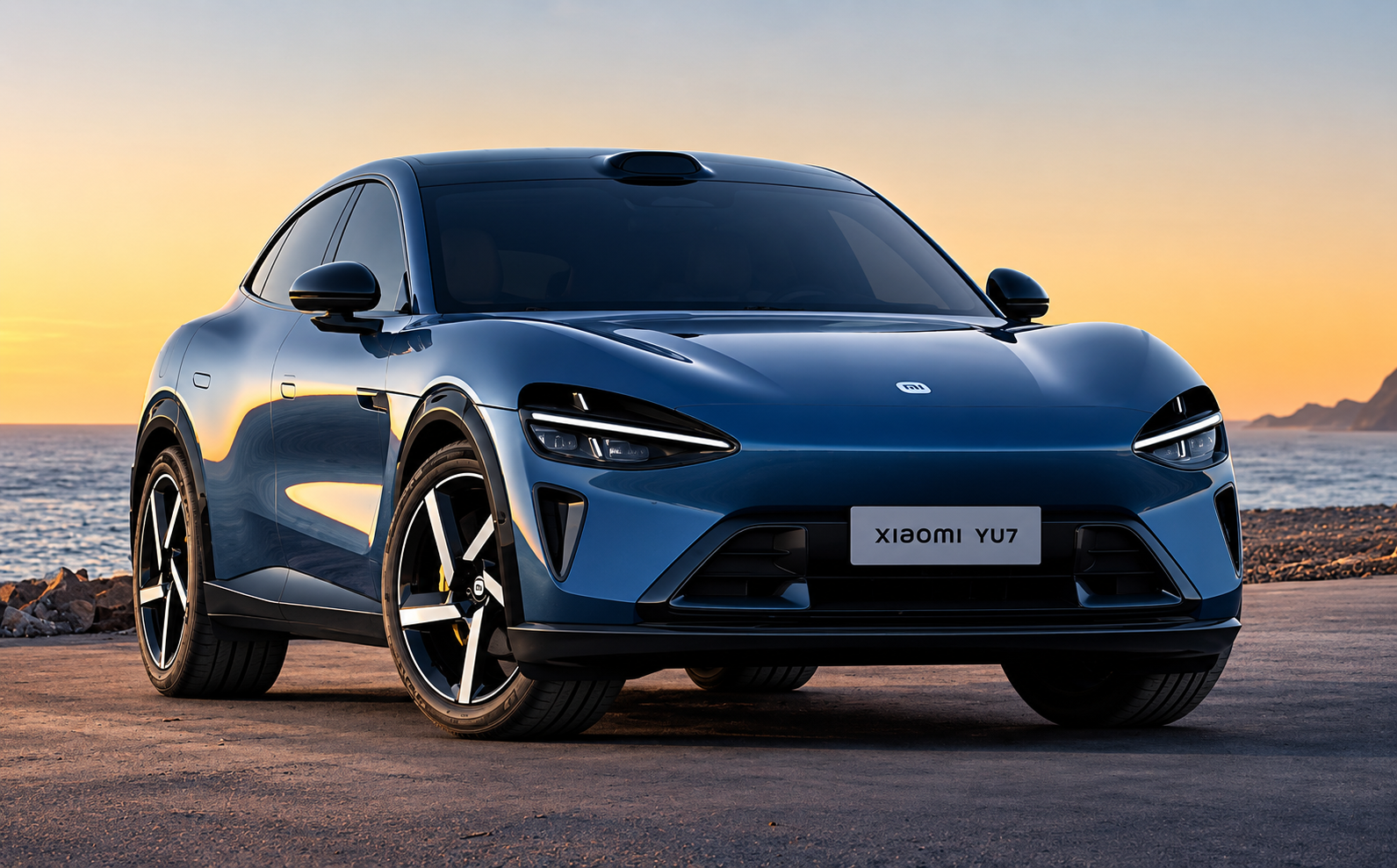
The United Kingdom is reviewing whether to introduce tariffs on Chinese-built cars as it seeks closer alignment with the European Union’s industrial policy, creating a potentially important shift in the country’s approach to Chinese automotive imports.
The move comes as Chinese-owned brands rapidly expand their presence in Britain and the UK government seeks inclusion in the EU’s proposed Industrial Accelerator Act.
The Guardian reported on October 5 that the UK is considering tariffs as part of discussions surrounding the EU’s planned “Made in Europe” provisions. The legislation is intended to strengthen European manufacturing and reduce reliance on Chinese supply chains, particularly in industries such as automobiles and chemicals.
The issue has become increasingly important because Britain remains deeply integrated with European automotive manufacturing despite leaving the European Union. British factories supply components to European plants, while vehicles assembled in the UK are sold throughout the continent.
Rules that favor European-origin components could therefore affect British manufacturers even when the vehicles themselves are built in Britain.
At the same time, Chinese automakers have established a rapidly growing position in the UK market. Chinese-owned brands, including MG, BYD, Omoda, Jaecoo, and other marques, have gained significant market share by offering competitively priced electric and plug-in hybrid vehicles.
The potential tariff decision reflects two competing priorities. Britain wants to maintain access to increasingly important Chinese automotive products while also protecting its manufacturing relationships with European markets.
Chinese Brands Are Taking a Larger Share of UK Sales
Chinese automotive companies have expanded quickly in Britain. Earlier estimates placed Chinese brands at around 12% of UK new-car sales, but more recent industry data indicate that their share has moved considerably higher.
In July, the Society of Motor Manufacturers and Traders said Chinese-owned brands accounted for about 15% of new UK registrations. The group identified MG, owned by SAIC Motor, along with BYD and Chery’s Omoda and Jaecoo brands as major contributors to that growth.
Other 2026 market data points to an even larger presence. S&P Global Mobility estimated that Chinese-origin vehicles accounted for more than 18% of UK new-car registrations in 2026, compared with less than 1% in 2019.
The consultancy also projected that China-origin vehicle sales could reach approximately 382,000 units during the year.
The growth has been driven by more than battery-electric vehicles. Chinese manufacturers have increasingly brought hybrids and plug-in hybrids to Europe, giving them a wider route into markets where consumers remain cautious about fully electric cars.
That makes the British market particularly significant. The UK has not imposed the additional tariffs on Chinese electric vehicles that the European Union introduced after it investigated Chinese state subsidies. Chinese-built EVs entering Britain have instead faced the UK’s standard import tariff structure.
The difference has created an unusual situation in which Britain can be an attractive market for Chinese manufacturers seeking access to Europe while maintaining a distinct trade policy from the EU.
In September, the UK business secretary said the government had no immediate plans to increase tariffs on Chinese cars. At the time, the government emphasized the importance of protecting trade relationships and Britain’s economic interests.
The latest review suggests that position is being reconsidered, although no new tariff has been formally introduced.
A government spokesperson told Reuters that Britain had not imposed tariffs on Chinese EVs and said the government was continuing to engage with industry so that its approach reflected the interests of the automotive sector and the country.
That distinction is important. The current discussions represent a review of possible policy rather than confirmation that Britain has decided to impose new duties.
EU Rules Put Pressure on Britain’s Automotive Industry
The tariff debate is closely connected to the EU’s Industrial Accelerator Act. The European Commission published its proposal for the legislation in March 2026 as part of a wider effort to accelerate industrial capacity and decarbonization in strategic sectors.
The proposed framework includes measures designed to encourage European production and reduce dependence on external suppliers. Automotive manufacturing is one of the industries where the implications could be significant because modern vehicles rely on international supply chains for batteries, electronics, components, and raw materials.
Britain is no longer automatically covered by EU industrial legislation because it left the bloc. That creates a potential disadvantage for British manufacturers that sell products or components into the EU.
The UK government has been lobbying for inclusion. In September, the British government told Parliament that it was making the case for UK inclusion in the EU’s Industrial Accelerator Act while also working with European counterparts on automotive supply-chain issues.
Ministers said maintaining close and mutually beneficial trade between Britain and the EU was a priority for the sector. The problem is that Brussels is concerned about differences between Britain’s trade policy and the EU’s approach toward China.
Reuters reported in September that EU officials had urged Britain to raise tariffs on Chinese cars and align more closely with European trade policy. The concern is that differences in tariff levels could allow Chinese manufacturers to use Britain as an alternative route into the European market.
That issue becomes more complicated because Britain remains an important part of European automotive supply chains. A British factory may manufacture vehicles or components that ultimately enter the EU market, while European factories can depend on British-made parts.
If the EU’s “Made in Europe” requirements exclude Britain, British companies could potentially face higher costs or lose eligibility under policies intended to favor European-origin production.
The UK government therefore has an incentive to secure a special arrangement, but matching EU trade policy on Chinese cars could carry its own consequences.
Tariffs Could Change the Competitive Landscape
Chinese manufacturers have built their UK presence partly around competitive pricing. Brands such as BYD, MG, Omoda, and Jaecoo have used a combination of aggressive pricing, expanding dealer networks, and increasingly broad model ranges to compete with established European, Japanese, and Korean manufacturers.
The pressure is already being felt by traditional automakers. SMMT chief executive Mike Hawes said Chinese manufacturers were forcing established brands to offer deeper discounts to remain competitive.
He also pointed out that Chinese competition was only one of several pressures affecting British vehicle manufacturing, alongside high energy costs, regulation, and weak investment.
British vehicle production fell 7.5% during the first half of 2026, according to S&P Global Mobility data cited by Automotive Logistics.
The consultancy also forecasts that Britain’s share of Western and Central European light-vehicle production will continue to decline, highlighting the broader structural challenges facing the country’s automotive industry.
New tariffs could therefore provide additional protection for established manufacturers, but they could also raise the prices of Chinese-built vehicles for British consumers. The impact would depend heavily on the size and structure of any duties.
The European Union already applies additional tariffs to Chinese-built electric vehicles, with rates varying by manufacturer following its investigation into subsidies. Britain could choose a similar approach or develop its own tariff structure.
Any increase would also affect Chinese-owned brands differently depending on where their vehicles are produced. Some Chinese companies are expanding manufacturing operations outside China, meaning future models could potentially avoid China-specific duties if assembled elsewhere and meet applicable rules of origin.
For the UK government, the challenge is therefore broader than deciding whether Chinese cars should cost more. It must balance consumer choice, competition, industrial investment, relations with China, and access to the European market.
The decision also comes at a critical point for Britain’s transition toward electrified vehicles. Chinese companies have become important suppliers of affordable EVs and hybrids at a time when the British market is under pressure to increase zero-emission vehicle sales.
Higher import costs could make some models more expensive, potentially affecting consumers and the pace at which lower-priced electrified vehicles reach the market.
On the other hand, closer alignment with European industrial policy could make it easier for British manufacturers to participate in EU supply chains and benefit from future European investment.
For now, Britain has not announced a new tariff regime. The government is still evaluating its options while negotiating with Brussels over the Industrial Accelerator Act and related automotive rules.
The outcome could have consequences well beyond Chinese vehicle prices. If Britain introduces tariffs, it would mark a significant change from its recent policy and could reshape competition in one of Europe’s most important automotive markets.
If it instead secures inclusion in the EU’s industrial framework without fully matching European tariff policy, Britain could attempt to preserve consumer access to Chinese vehicles while protecting its position within European manufacturing.
With Chinese-owned brands already accounting for a substantial and rapidly increasing share of British new-car registrations, the decision is becoming increasingly important for automakers, suppliers, and consumers alike.
The UK’s next move could determine how closely its automotive trade policy aligns with the EU and how the British market responds to the continuing expansion of China’s global car industry.