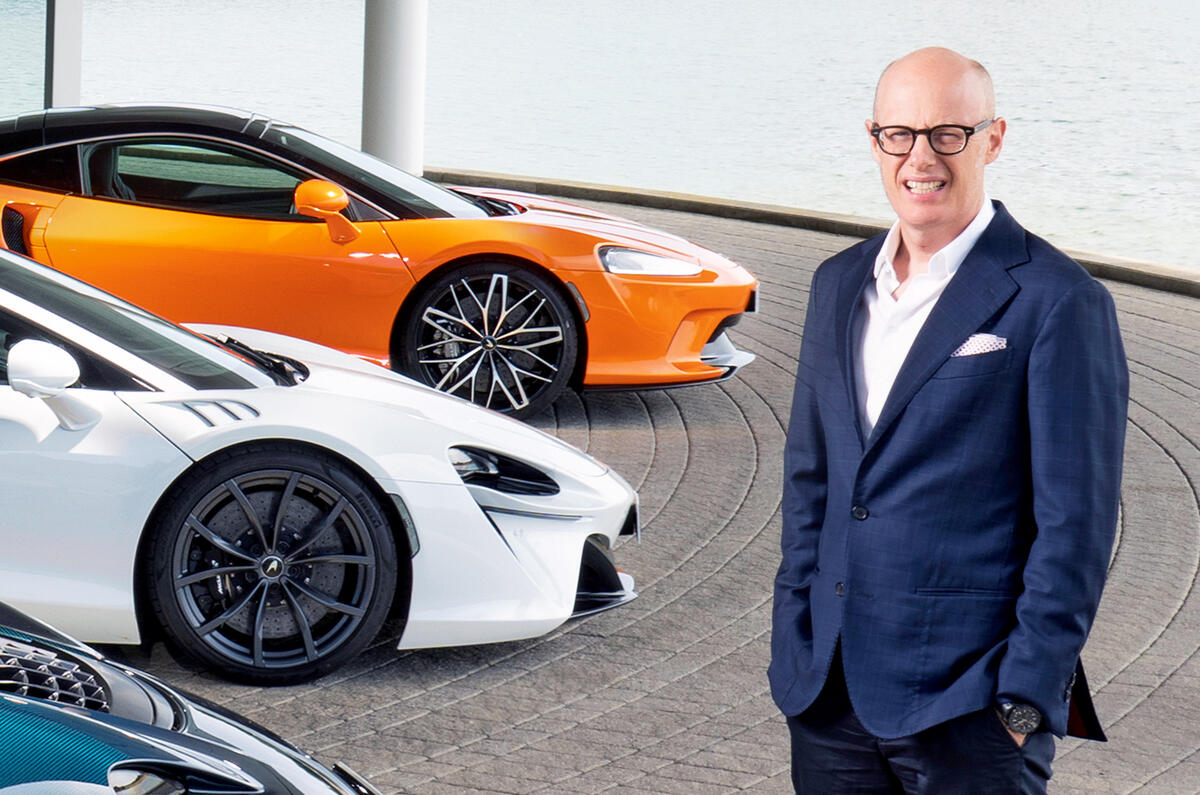
Porsche CEO Michael Leiters faces a defining test as the German sports-car maker prepares to present the next stage of its turnaround strategy.
The company is dealing with weaker demand in China, a slower-than-expected transition to electric vehicles, and declining profitability, leaving Leiters under pressure to show that his strategy can restore sustainable growth without weakening the brand’s premium positioning.
The timing is significant. Porsche is scheduled to present the detailed version of its Strategy 2035 at a Capital Markets Day on October 7, following months of restructuring under Leiters, who became chief executive in January 2026.
Porsche has already said the strategy will focus on its brand and customers, products and technology, and company and operations.
The challenge is reflected in the company’s sales performance. Porsche delivered 122,306 vehicles globally during the first half of 2026, down 16% from 146,391 during the same period of 2025. China was one of the weakest markets, with deliveries falling 32% to 14,501 vehicles.
The decline is particularly important because China had become one of Porsche’s most important markets. In 2025, Porsche delivered 41,938 vehicles in China, a 26.3% decline from the previous year.
The company attributed the deterioration to difficult conditions in the luxury market and intense competition, particularly from electric vehicles offered by Chinese manufacturers.
China and Electric Vehicles Put Pressure on Porsche
China presents perhaps the biggest immediate problem for Leiters. Porsche is not simply dealing with weaker luxury-car demand. It is competing in a market where domestic manufacturers have moved rapidly in electric vehicles, software, and pricing, while consumer expectations have changed considerably.
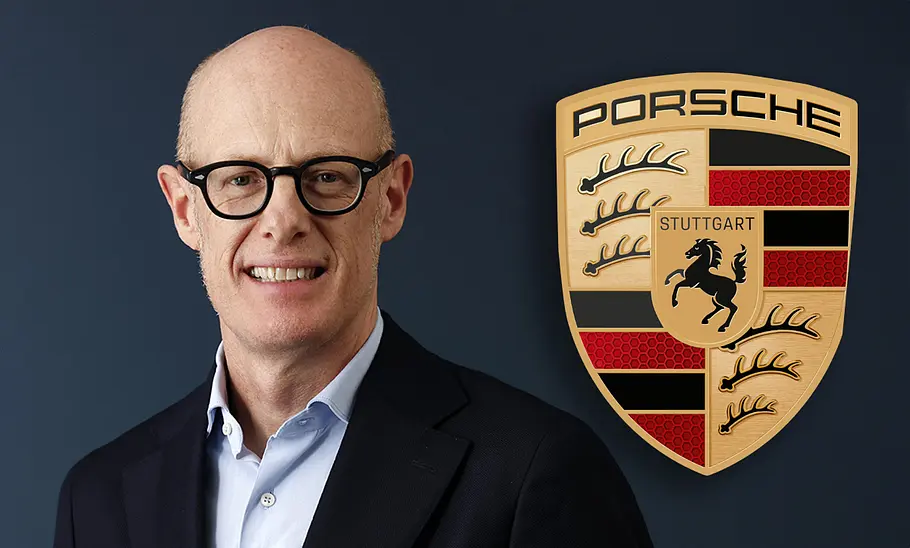
Porsche’s own first-half figures demonstrate the difficulty. Deliveries in China fell 32%, while global deliveries declined 16%. The company has responded by emphasizing a “Value over Volume” strategy, meaning it is prioritizing pricing, product mix, and brand positioning rather than attempting to maintain sales by heavily discounting vehicles.
The strategy is consistent with Leiters’ broader approach. Porsche has said its China business will increasingly combine combustion-engine products with battery-electric vehicles tailored more closely to local customer requirements. The company says it wants to protect its exclusivity rather than chase volume at the expense of profitability.
Electrification has become another difficult balancing act. Porsche has invested heavily in EVs, but demand has not developed as quickly as expected in some markets. The first-half figures show that clearly in the Macan lineup.
Porsche delivered 35,315 Macans during the first six months, including 15,620 electric versions and 19,695 combustion-engine models. The model line was down 22% from the previous year.
That does not mean Porsche is abandoning electric vehicles. Instead, the company is adjusting the speed and structure of its transition. The electric Cayenne began reaching customers at the end of June, adding another major battery-powered model to the range.
At the same time, Porsche continues to use combustion and hybrid powertrains where customer demand and regional conditions support them.
The approach reflects a broader change in strategy from simply increasing EV penetration toward giving individual markets and customers greater influence over the powertrain mix.
Leiters’ Turnaround Goes Beyond New Models
Leiters’ turnaround plan is not limited to adjusting Porsche’s powertrain strategy. The company is also working to reduce complexity, lower its break-even point, and make its operations more efficient.
Porsche’s first-quarter results highlighted the extent of the financial pressure facing the company. Operating profit fell 21.9% to €595 million ($665.7 million), down from €762 million ($852.5 million) a year earlier. Revenue declined 5.2% to €8.40 billion ($9.40 billion), while the operating return on sales fell from 8.6% to 7.1%. Despite the weaker results, Porsche maintained its 2026 forecast at the time.
For the full year, Porsche is targeting revenue of €35 billion to €36 billion ($39.16 billion to $40.28 billion) and an operating return on sales of 5.5% to 7.5%. The company also expects an automotive net cash-flow margin of 3% to 5% and an automotive EBITDA margin of 15% to 17%. Those projections include significant one-time expenses and costs related to tariffs.
Leiters has also begun restructuring the organization. In July, Porsche and its works council reached an agreement on a Future Package covering the Zuffenhausen and Weissach sites.
The agreement provides for €2.1 billion ($2.35 billion) in cumulative investment through 2035. Porsche also plans to reduce its workforce by around 5,000 positions by 2035, primarily through natural attrition, demographic changes, partial retirement, and voluntary severance.
The changes are intended to reduce personnel costs and improve productivity while protecting Porsche’s German production sites. The company has also reorganized its international sales structure, reducing the number of sales regions from five to four and giving individual markets greater responsibility.
Porsche has also taken steps to concentrate more heavily on its core business. In September, it announced the sale of MHP to Tata Consultancy Services while establishing a partnership intended to strengthen digital technology and artificial-intelligence capabilities.
The move is part of the effort to simplify Porsche’s structure and focus resources on its core automotive operations.
The Product Strategy Could Define Porsche’s Future
The most consequential part of Leiters’ turnaround will ultimately be the product portfolio. Porsche has already indicated that it wants a sharper and more focused lineup.
Under Strategy 2035, the company plans to reduce the number of model variants while concentrating development resources on products that reinforce Porsche’s sports-car identity and generate attractive returns.
The 911 provides evidence that Porsche’s traditional formula still has considerable strength. First-half deliveries of the 911 reached 30,534 units, an increase of 19% from the same period in 2025. The Cayenne was Porsche’s best-selling model line during the period with 38,141 deliveries, although that figure was down 9%.
Those numbers offer an important clue about the turnaround. Porsche does not need to abandon electrification or become a conventional high-volume automaker. Instead, Leiters is attempting to make the product range more closely match what customers are actually willing to buy while preserving the pricing power associated with the Porsche name.
That could mean a broader mix of combustion, hybrid, and electric vehicles for longer than the company’s previous plans suggested. Porsche’s strategy documents already acknowledge different regional requirements.
The company specifically describes a tailored powertrain approach for the United States and a combination of combustion-engine and battery-electric products for China.
The challenge will be maintaining technological credibility while adjusting to slower EV adoption. Porsche cannot afford to move too aggressively toward combustion engines if regulations and customer demand continue shifting toward electrification.
At the same time, pushing expensive EV programs into markets where buyers are not responding strongly could further damage profitability.
Leiters therefore faces a two-part challenge. He must improve Porsche’s financial performance while ensuring the brand’s future products continue to attract buyers.
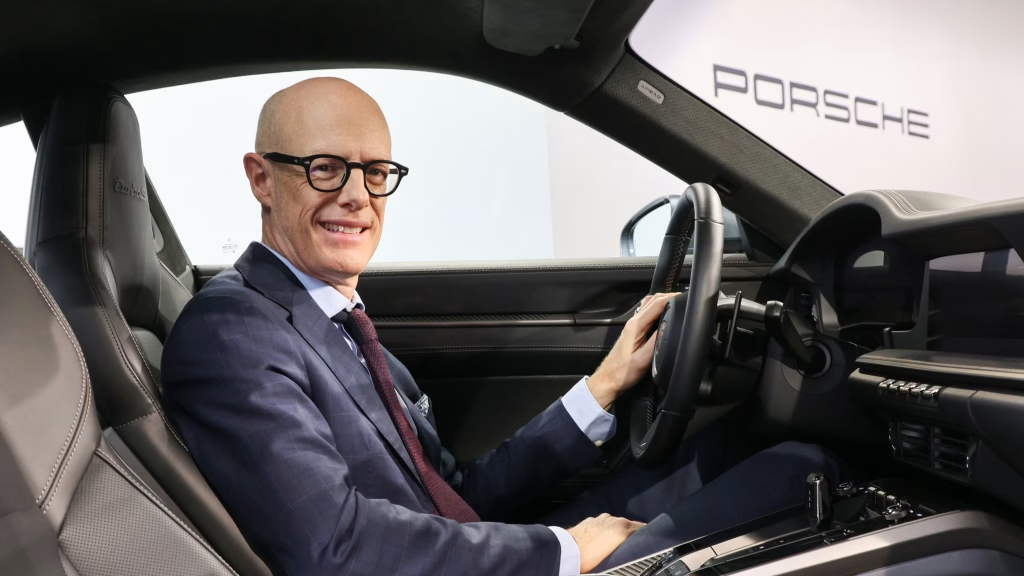
The upcoming Strategy 2035 presentation will provide the clearest indication yet of how he intends to do that. Porsche has already established the broad framework, with brand positioning, product strategy, and operational efficiency at its center.
The next stage will require concrete decisions about investments, powertrains, model complexity, costs, and regional priorities.
For Leiters, the stakes are unusually high. Porsche remains one of the most valuable brands within the Volkswagen Group, but its recent sales and profit trends show that its previous growth formula is under pressure. The 911 remains strong, yet weakness in China, slower EV momentum, and higher costs have exposed vulnerabilities elsewhere in the portfolio.
The turnaround, therefore, will not be measured simply by how many cars Porsche sells. The more important test will be whether Leiters can rebuild margins while keeping the brand desirable, restore momentum in China, and create a product strategy that works across combustion, hybrid, and electric technologies.
Strategy 2035 is designed to provide that framework. What matters now is whether Porsche can execute it quickly enough to convince investors and customers that its recent difficulties represent a temporary correction rather than a deeper structural problem.