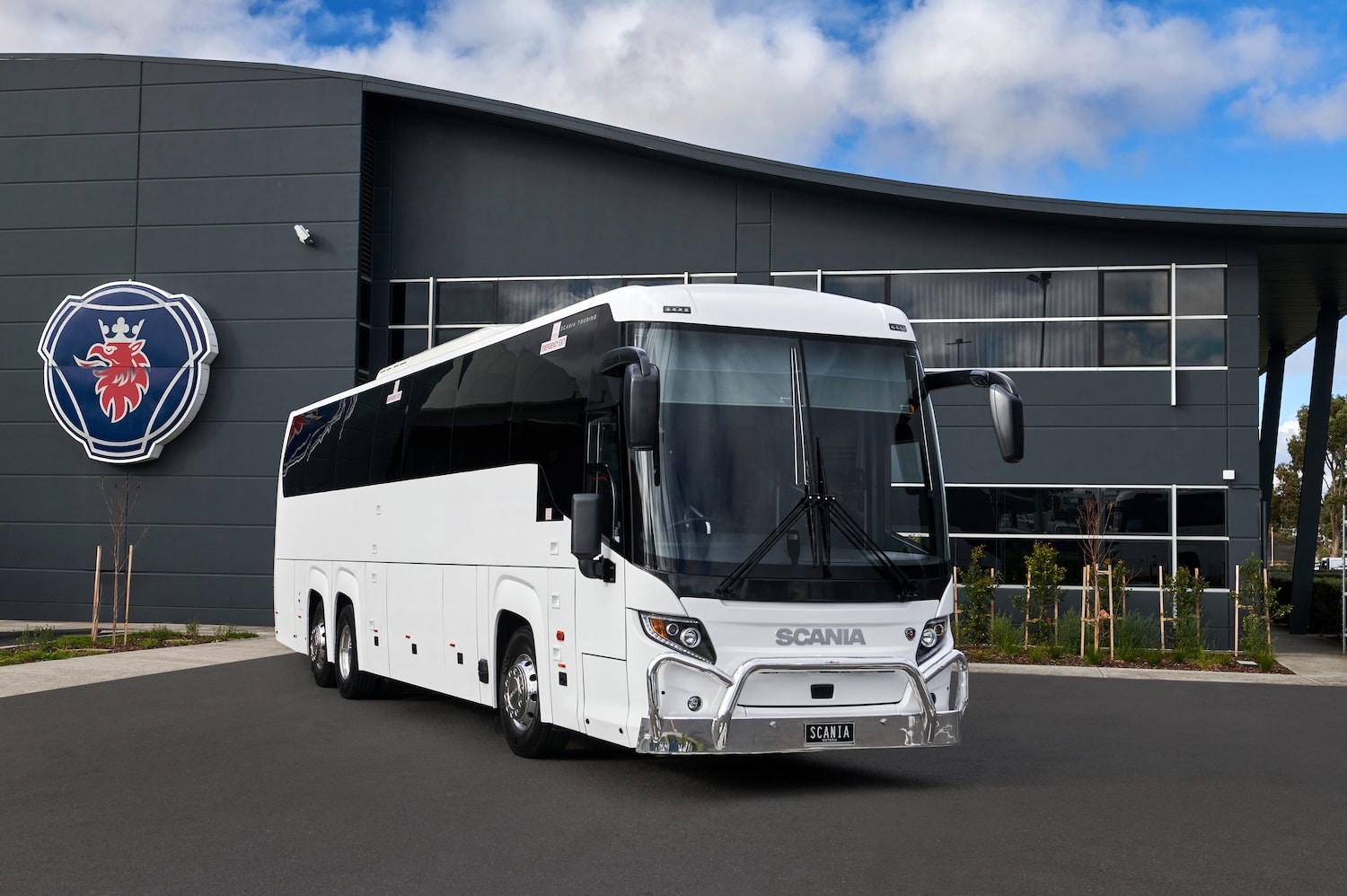
Scania has introduced a new generation of its touring high-deck coach, featuring a redesigned exterior, improved aerodynamics, increased luggage capacity, and a more advanced driver environment for one of the company’s established long-distance passenger vehicles.
The new Scania Touring was officially launched on October 7, 2026, and represents a significant update to a coach that has been part of Scania’s portfolio since 2009. The latest generation combines the company’s Super Powertrain technology with changes aimed at improving fuel efficiency, passenger comfort, visibility, and operating costs.
The coach is available with Scania’s 11-liter and 13-liter Super engines, with outputs extending from 350 horsepower to 500 horsepower. Depending on configuration, torque reaches as much as 2,650 Nm, giving the largest powertrain substantial pulling capability for long-distance operations and heavily loaded routes.
Scania has also retained a broad renewable-fuel strategy. The new Touring can be configured with powertrains compatible with biodiesel or FAME, hydrotreated vegetable oil, and conventional diesel, allowing operators to reduce fossil fuel use without immediately moving to a fully electric coach.
A More Aerodynamic Touring Coach
The most obvious change is the exterior design. Scania has redesigned the body around smoother surfaces and a more streamlined profile intended to reduce aerodynamic drag. The new coach uses rounded corners, a waterdrop-inspired shape, and an integrated roof spoiler to help air move more cleanly around the body.
Aerodynamics are particularly important for long-distance coaches because they spend many hours traveling at highway speeds. Even relatively small reductions in aerodynamic resistance can affect fuel consumption over thousands of miles.
Scania says the new generation combines its redesigned body with a more efficient superpowertrain and lighter components.
The company has previously stated that the new-generation Touring can reduce fuel consumption and emissions by as much as 6% compared with the previous generation, although real-world savings depend on vehicle specification, route, passenger load, and driving conditions.
Another major change is the introduction of digital rearview mirrors. Instead of relying exclusively on conventional exterior mirrors, the system uses cameras and displays to give the driver a view of areas around the coach.
Scania says the digital mirrors can improve visibility while also reducing aerodynamic drag. The technology is particularly relevant to a large vehicle because reducing the size and aerodynamic impact of external mirror housings can contribute to efficiency while giving drivers a more flexible view around the vehicle.
The new Touring also receives redesigned LED lighting and a more distinctive front-end treatment. Scania has incorporated a honeycomb pattern across several exterior areas, including the front bumper and lighting elements.
The changes are not simply cosmetic. Scania says the redesigned body is intended to improve efficiency, safety, and the driving experience while retaining the high-deck configuration used for long-distance travel.
Up to 500 HP and 2,650 Nm
The new Touring’s powertrain range is one of its most important technical features. Scania offers the coach with its Super 11-liter and Super 13-liter engines. The 11-liter version can produce 350 horsepower, while the 13-liter range extends to 500 horsepower. The most powerful Super 13-liter configuration generates 2,650 Nm of torque.
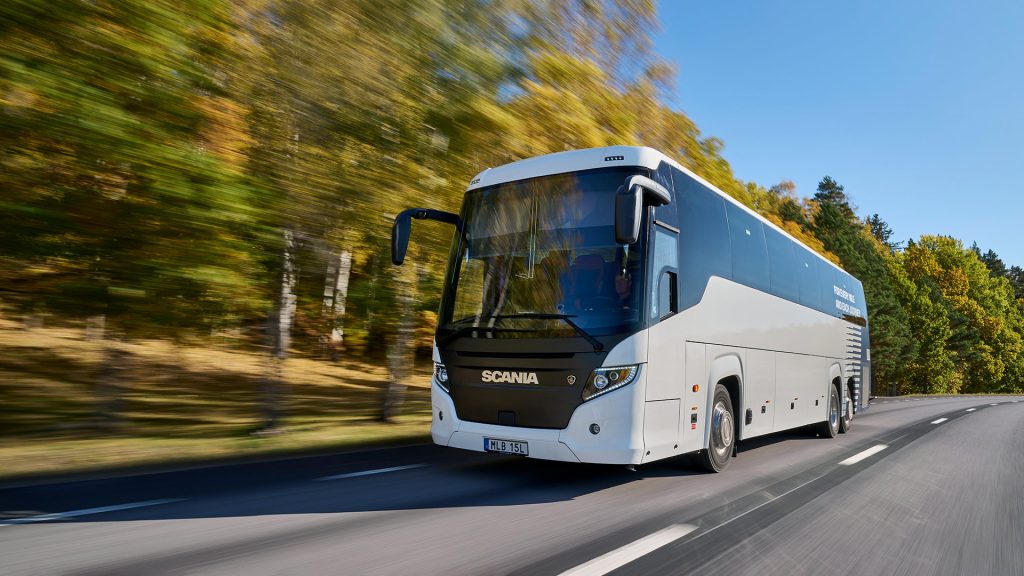
The 500-horsepower, 2,650-Nm configuration is available with Scania’s Super 13-liter engine. Scania’s specifications list this version as compatible with biodiesel/FAME, HVO, and diesel, giving operators flexibility in fuel selection.
That flexibility is particularly relevant for long-distance coach operators, where fuel consumption represents a major portion of operating costs.
HVO can be used as a lower-carbon alternative to conventional fossil diesel, while biodiesel and FAME provide another renewable-fuel option where supported by the particular engine configuration and local fuel availability.
Scania’s Superpowertrain has also been developed around improved thermal efficiency and combustion performance.
The company says the Super platform can provide fuel savings of up to 8% with the 13-liter engine compared with the previous generation in applicable operations, although that figure relates to the powertrain platform and is not a guaranteed saving for every Touring configuration.
The powertrain can be paired with Scania’s Opticruise transmission, while selected configurations use a ZF automatic gearbox. The transmission and engine systems are designed to work with predictive cruise-control functions that can use road information to improve efficiency.
Scania says the Super Powertrain also benefits from a longer service life, with the company citing a 25% longer service life as one of the new-generation improvements.
That can be important for commercial operators because a coach generates revenue only when it is available for service.
More Space and Better Passenger Comfort
Scania has also focused heavily on the passenger environment. The new Touring receives redesigned seats available in Comfort and Luxury versions, with lateral adjustment included as standard. The interior adds ambient LED lighting, updated service controls, and USB connectivity at every passenger seat.
Those features reflect the changing expectations of long-distance travelers. Passengers increasingly expect access to personal charging, adjustable seating, and a quieter, more comfortable cabin during extended journeys.
The coach’s luggage capacity has been increased as well. Scania says total luggage capacity can rise by up to 14.5%, while redesigned interior luggage shelves provide approximately 40% more space because of their deeper design. Additional storage above the wheel arches is available on suitable configurations.
For a touring coach, that is more than a convenience feature. Operators carrying passengers on multi-day trips need substantial luggage capacity, and additional storage can reduce compromises between passenger seating and baggage requirements.
The entrance and stairs have also been redesigned. Scania says the new coach uses wider and deeper steps, improved lighting, and easier access to make boarding and exiting safer and more comfortable. The driver area receives similarly extensive changes.
Scania has moved the B-pillar 90 millimeters farther rearward, creating a wider field of vision. The front passenger door and side-window arrangement have also been revised to improve the driver’s view of nearby pedestrians, cyclists, and other road users.
A new central information display expands the digital interface. It provides access to vehicle information, navigation, media, phone functions, and the reverse camera, while supporting Apple CarPlay and Android Auto.
The driver also benefits from Scania’s collection of active safety and driver-assistance technologies designed to assist with lane positioning, collision prevention, and monitoring of surrounding traffic.
Scania’s new Touring therefore represents a broad update rather than a simple styling refresh. The company has changed the body, driver environment, passenger compartment, luggage areas, and powertrain technology while maintaining the basic high-deck coach concept.
The range will be available in different configurations to suit operators and routes. Scania’s examples include a 10.99-meter two-axle version with the 350-horsepower Super 11 and a 14.70-meter three-axle version using the 500-horsepower Super 13 and Scania Opticruise. These are examples of possible specifications rather than the complete touring range.
That flexibility remains important because long-distance coach operators have different requirements depending on passenger capacity, route length, road conditions, and regulatory markets.
The new generation also shows Scania’s approach to reducing emissions in long-distance transport. While battery-electric buses are becoming increasingly common in urban operations, long-distance coaches face different requirements because they travel long distances, carry substantial passenger loads, and need quick turnaround times.
Scania is therefore continuing to improve combustion efficiency while supporting renewable fuels such as HVO and biodiesel.
The new Touring gives operators a way to reduce fuel consumption and potentially lower lifecycle emissions without waiting for charging infrastructure and battery technology to become suitable for every long-distance application.
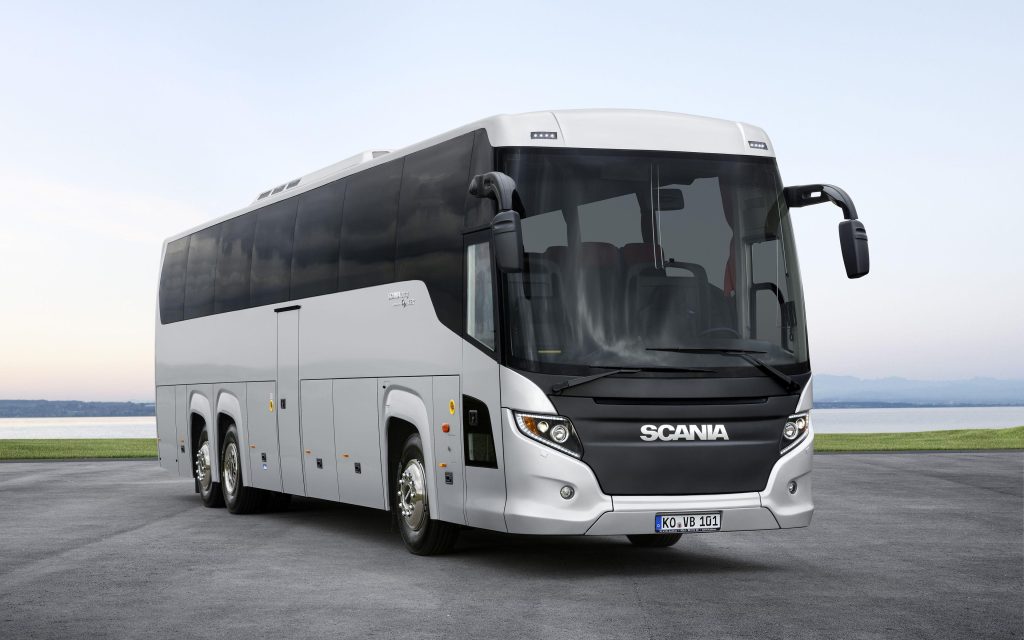
With its revised aerodynamics, digital mirrors, improved driver visibility, expanded luggage capacity, and Super powertrain range reaching 500 horsepower and 2,650 Nm, the new Scania Touring is designed to make long-distance coach operations more efficient without sacrificing the comfort and capability expected from a premium touring vehicle.
For Scania, the launch represents an important update to a product that has served the travel sector for more than 15 years.
The new generation does not abandon the established touring formula. Instead, it adds more efficient powertrains, renewable-fuel compatibility, modern digital technology, and a substantially revised passenger and driver environment.
As long-distance travel operators continue to face pressure from fuel costs, emissions requirements, and passenger expectations, Scania is betting that improving efficiency across the entire vehicle can deliver meaningful gains without requiring an immediate shift away from combustion power.