
General Motors is expanding its connected-vehicle business with OnStar Fleet Intelligence, a new platform designed to help commercial operators manage vehicles, analyze operating data, and identify ways to reduce costs.
Announced on September 30, 2026, and reported by WardsAuto on October 8, the system brings fleet information and connected services into a unified dashboard, with artificial intelligence tools that allow managers to ask questions about vehicle usage in everyday language.
The launch addresses a practical challenge for businesses that depend on trucks, vans, and other work vehicles. Keeping a fleet running involves more than purchasing vehicles and scheduling maintenance.
Managers must track fuel consumption, monitor utilization, understand downtime, manage service plans, and coordinate vehicles across different locations. When that information sits in separate systems or requires manual reporting, identifying inefficiencies can become time-consuming.
GM’s new platform aims to make those tasks easier by turning connected-vehicle information into insights that managers can use in daily operations.
The potential benefits include better vehicle allocation, less unnecessary idling, more informed maintenance planning, and improved visibility into operating expenses. However, those gains will depend on the quality of the available data and whether businesses act on the insights the system provides.
How OnStar Fleet Intelligence Brings Fleet Data Together
OnStar Fleet Intelligence combines vehicle information and GM’s connected-services ecosystem through a single account. Rather than switching between separate tools for different fleet tasks, operators can use the platform to track vehicle orders, manage vehicles, review diagnostic information, and access connected services.
Available information includes fuel efficiency, electric-vehicle range, geofencing, and vehicle-protection features.
The unified approach is particularly relevant to businesses managing fleets that are growing or spread across multiple locations.
A company might have delivery vehicles operating in several cities, service trucks assigned to different teams, and replacement vehicles arriving over the course of a year. Keeping track of those assets can become more complicated as the fleet expands.
GM also says customers with a Fleet Account Number can link that account to the platform and manage the vehicles associated with it through a single login. The capability can include vehicles regardless of make, equipment, or OnStar plan, giving businesses with mixed fleets a way to consolidate at least some administrative tasks.
That distinction matters because commercial fleets do not always consist exclusively of vehicles from one manufacturer. A business may purchase different brands depending on vehicle size, availability, purchase price, or suitability for a particular job.
A centralized account can reduce the burden of managing relationships and information across a large collection of vehicles, although the available functions may vary depending on the vehicle and its connected-services capabilities.
The platform also supports vehicle-order tracking from submission through delivery, according to GM’s fleet website. This can help fleet managers plan vehicle replacements, coordinate assignments, and prepare for new assets before they arrive.
For companies that depend on vehicles to generate revenue, knowing when replacements will be delivered can be important for staffing and operational planning.
OnStar Fleet Intelligence also provides access to connected services and allows customers to renew software and service plans and connect vehicles through the platform. These administrative functions are intended to make fleet management less fragmented, rather than forcing operators to treat each vehicle as a separate account or task.
The launch builds on GM’s existing connected-vehicle services, but it is not simply a vehicle-tracking map. Its stated purpose is to combine information about vehicle activity and business operations in a way that helps managers make decisions across an entire fleet. That shift from collecting data to making it useful is central to the platform’s value proposition.
Fleet AI Assistant Turns Vehicle Information Into Practical Insights
The most distinctive feature is GM’s OnStar Fleet AI Assistant, which uses generative AI to help fleet managers retrieve information through natural-language questions.
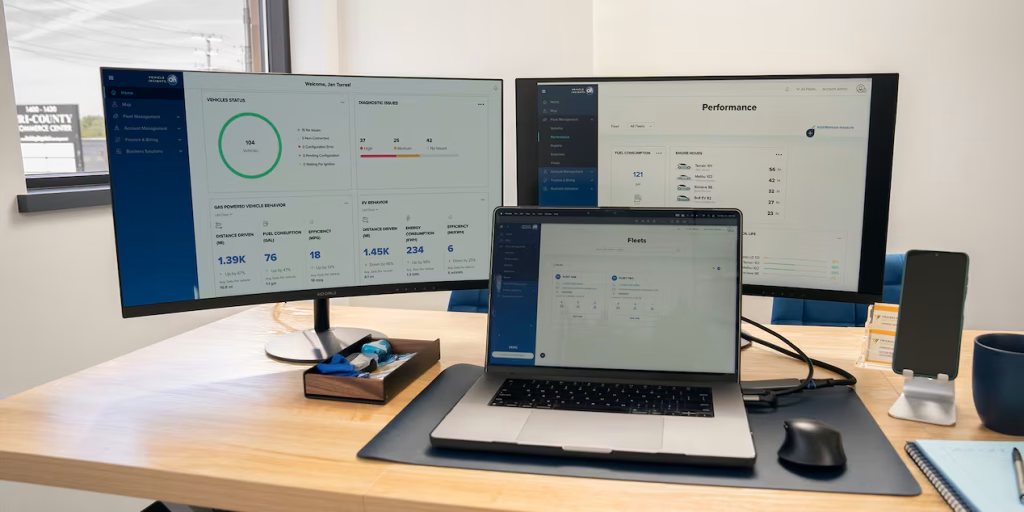
Instead of manually reviewing multiple reports, a manager can ask for a summary of a specific operational issue and use the resulting information to decide where to investigate further.
For example, a fleet manager can ask the assistant to show the total idling time for each vehicle during the current month or identify the most and least heavily used vehicles. These questions can help reveal differences in how vehicles are being deployed, which may otherwise remain hidden when managers look at one vehicle or report at a time.
Consider a delivery business operating dozens of vans. Some vehicles may complete several routes each day, while others spend long periods parked or waiting between assignments. If the data shows that a particular group of vans is consistently underused, the business could review route assignments or redistribute work before buying additional vehicles.
The system can highlight a pattern, although managers still need to determine whether the difference reflects inefficiency, seasonal demand, or a legitimate operational requirement.
Fuel expenses provide another example. GM says the platform can help managers examine fuel costs across vehicles, routes, and drivers to identify where changes could make a difference.
Excessive idling, inefficient routing, and inconsistent vehicle use may all contribute to operating expenses. Having fleet-wide information in one place can make it easier to identify where a closer review is warranted.
The distinction between an AI-generated insight and an actual saving is important. The assistant does not automatically guarantee lower fuel bills or eliminate downtime.
Its value depends on the accuracy and completeness of the underlying information, the questions managers ask, and the actions they take in response. Businesses will also need to evaluate whether the platform’s recommendations fit their operating requirements.
For fleet operators, reducing downtime can be just as important as cutting fuel costs. A vehicle that remains unavailable because a problem was overlooked may disrupt deliveries, delay customer appointments, or force a business to arrange a replacement.
Access to diagnostic information can help managers monitor vehicle condition and identify issues that warrant attention. Still, diagnostic capabilities vary by vehicle, and connected systems cannot detect every potential fault.
The AI assistant’s natural-language interface could also reduce the time employees spend compiling routine reports. Instead of manually assembling information from multiple screens, managers can request specific summaries and focus on operational decisions. That may be particularly useful for smaller businesses that lack dedicated fleet-analytics teams.
What the Launch Means for Commercial Fleet Operators
GM said select fleet customers could access OnStar Fleet Intelligence when the platform launched, with additional customers joining through a phased rollout. The company plans to add capabilities over time.
Access to the platform’s base features is offered at no additional cost through account creation, according to GM’s fleet website, but connected services and particular vehicle functions may carry separate requirements, fees, or limitations.
Businesses considering the system should therefore examine which vehicles are compatible, what data is available, which services require subscriptions, and whether the platform meets their reporting needs.
A mixed fleet may not provide identical information for every vehicle, even when its records can be managed under one account.
Data governance is another consideration. Fleet information can reveal where vehicles travel, how frequently they are used, and how employees operate them. Businesses should understand who can access this information, how it is used, and how monitoring policies are communicated to drivers.
The usefulness of connected technology needs to be balanced with appropriate management of employee and vehicle data.
The competitive landscape also matters. Fleet operators already have access to telematics products and fleet-management software from specialist providers and other automotive companies. GM’s advantage is its ability to combine vehicle connectivity with a broader set of services for its commercial customers.
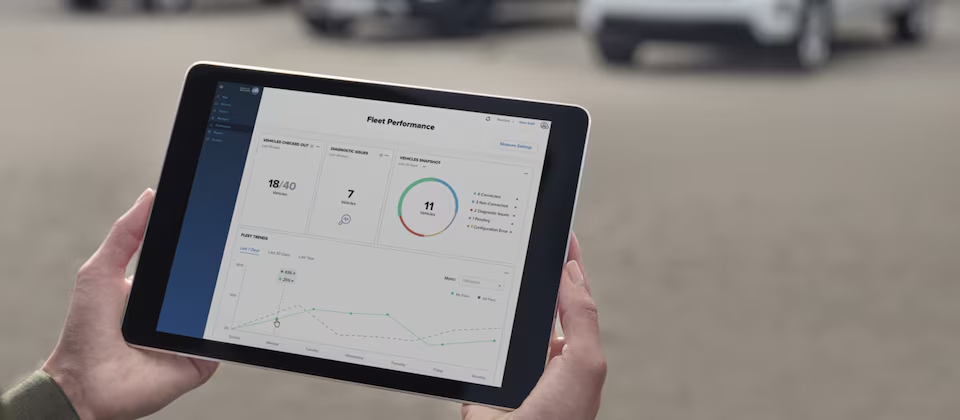
Whether that creates a compelling reason to adopt the platform will depend on its functionality, ease of use, integration with existing systems, and measurable results.
The launch reflects a wider shift in the automotive business. Manufacturers increasingly seek revenue and customer relationships beyond the initial vehicle sale, using connected services and software to support customers throughout a vehicle’s working life.
For commercial operators, that shift could mean more tools for managing vehicles, but it also makes it important to understand subscription terms and the long-term costs of digital services.
OnStar Fleet Intelligence gives GM fleet customers a central place to access vehicle information and use AI-assisted analysis to identify operational patterns. Its practical value will ultimately be measured by whether businesses can use those insights to improve vehicle utilization, make better-informed decisions, and control expenses.
The technology creates new opportunities for fleet management, but its results will depend on how effectively operators put the information to work.