
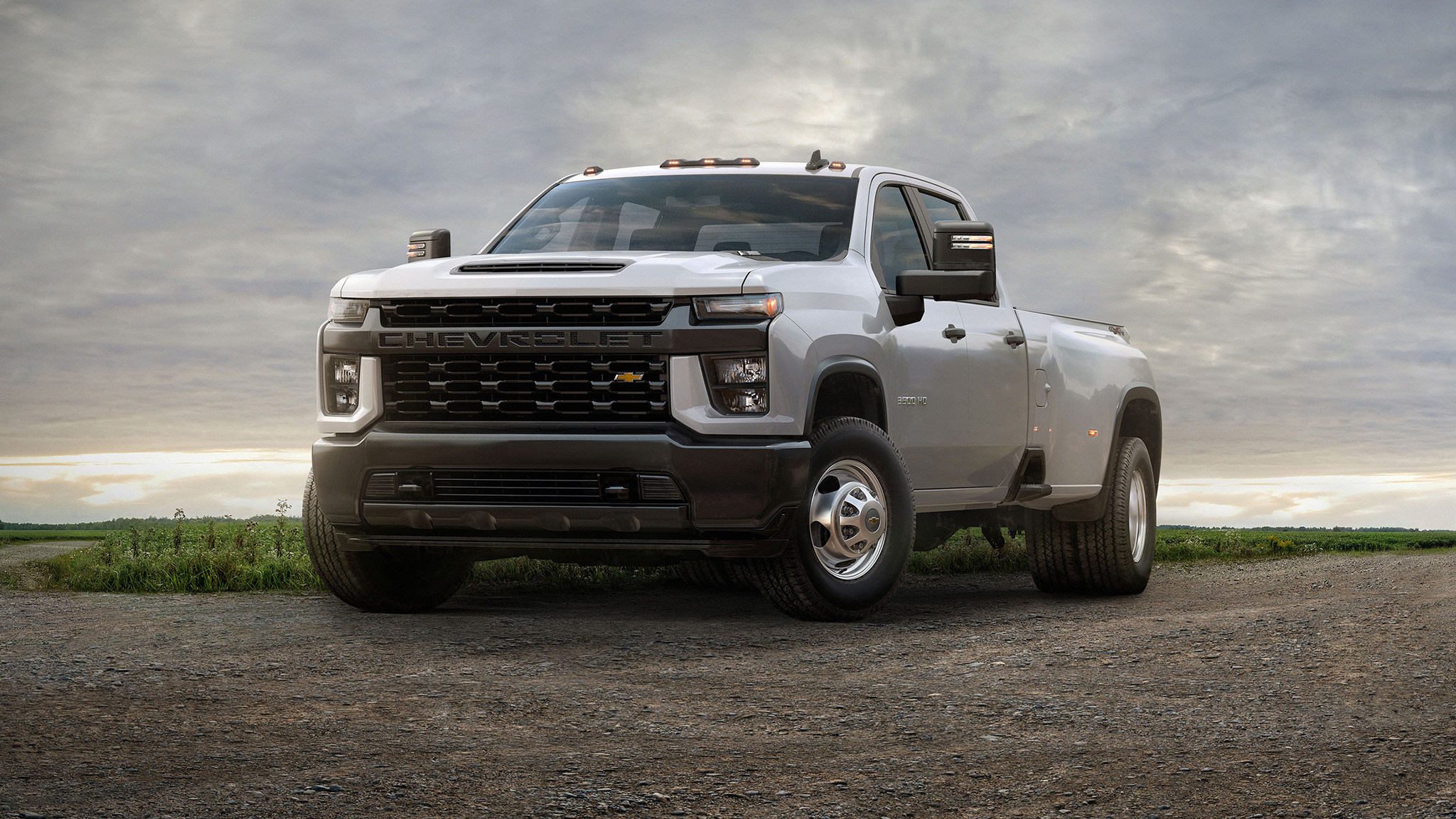
GM Defense has introduced an autonomous military vehicle concept based on the Chevrolet Silverado 3500HD. The heavy-duty pickup platform has been adapted for missions designed to reduce soldiers’ exposure to dangerous routes and high-risk environments.
Introduced at the Association of the United States Army’s annual meeting and exposition in Washington, D.C., the Unmanned Ground Vehicle (UGV) combines drive-by-wire controls, autonomous-driving technology, and a rechargeable energy-storage system.
GM Defense says the concept is intended to support silent logistics and casualty evacuation, with functional trials targeted for 2027. It remains a prototype, not a confirmed production vehicle or an announced Army purchase.
The project shows how General Motors is adapting commercial engineering for defense customers. Rather than starting from a blank sheet, GM Defense is using the Silverado 3500HD dual-rear-wheel skateboard architecture to shorten development and create a platform for mission equipment.
A Heavy-Duty Silverado Becomes an Unmanned Military Platform
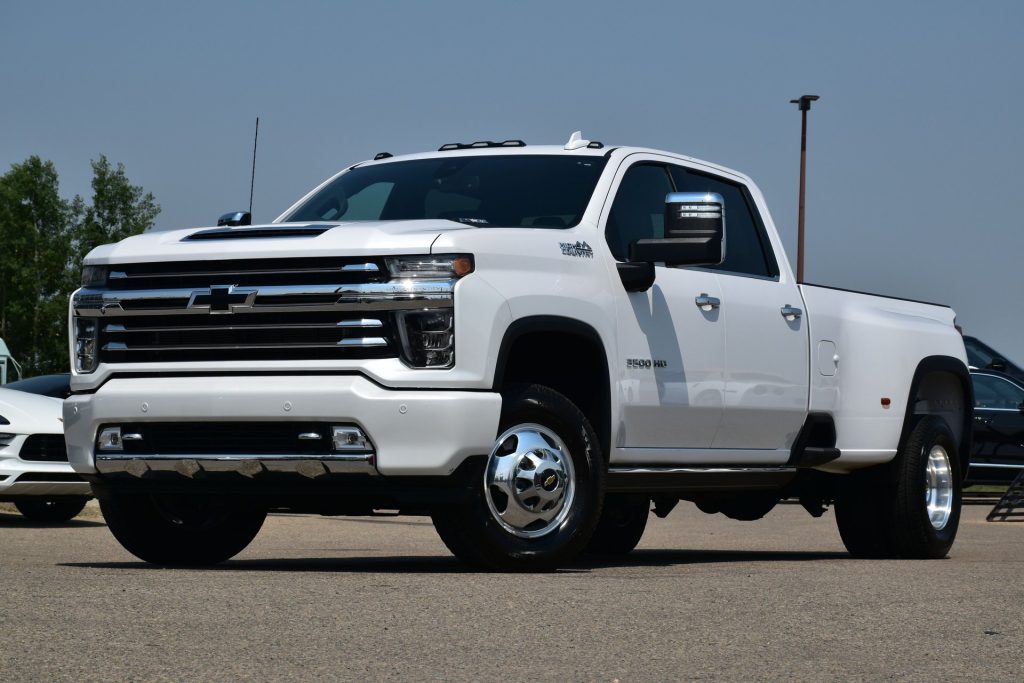
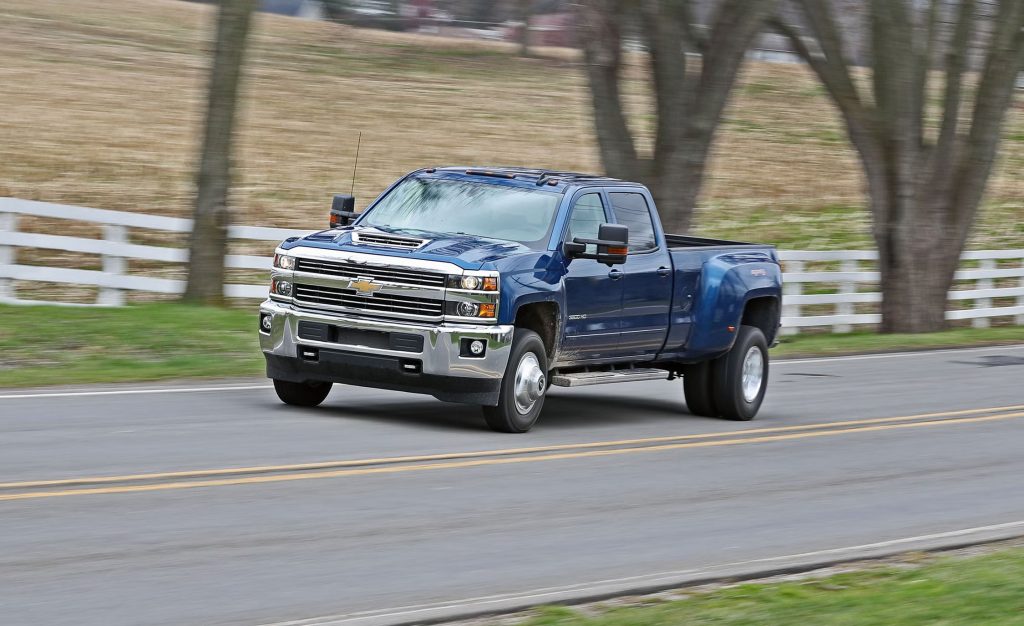
The UGV is based on the Chevrolet Silverado 3500HD, a heavy-duty truck normally associated with demanding towing and hauling work. For the military concept, GM Defense uses the truck’s dual-rear-wheel skateboard architecture, a foundation intended to accommodate the vehicle’s propulsion, chassis, and supporting systems.
The prototype is configured for unmanned operation, which changes the role of a familiar pickup from a vehicle driven by a soldier to a platform that can potentially transport supplies or support a mission with no driver at the controls.
GM Defense has identified two primary applications for the vehicle, silent logistics and casualty evacuation. Silent logistics involves transporting supplies, equipment, batteries, and other essential materials while reducing the noise and visible signatures typically associated with conventional vehicles.
In a casualty-evacuation role, an unmanned vehicle could help move injured personnel away from an exposed area, although the company has not disclosed the exact medical configuration or how many stretchers or passengers the prototype could accommodate.
Autonomy matters because a vehicle following planned routes or remote commands could reduce soldiers’ exposure during hazardous transport.
It may offer another option when terrain or threats make routine supply runs risky, although the prototype has not demonstrated every task without human supervision.
GM Defense has not published a full set of vehicle dimensions, range figures, top speed, charging time, or all-terrain performance data. Nor has it announced a production date or a contract to supply this particular UGV to the Army.
The company’s stated next step is functional trials in 2027, which should help determine how the concept performs outside a display environment.
The Silverado’s commercial roots may offer an advantage in parts availability and familiarity with heavy-duty vehicle engineering, but military use imposes different requirements. Components may need to withstand vibration, dust, water, temperature extremes, and extended periods away from workshops.
Autonomous control adds further demands because a fault in steering, braking, positioning, or communications can affect the entire mission. The company has not released test results showing how the prototype performs against those challenges.
Drive-by-Wire, Autonomy, and a 100-kWh Energy System
Drive-by-wire is a defining feature. Electronic signals operate functions such as steering and braking, making integration with remote and autonomous controls easier. Safe operation still depends on sensors, software, safeguards, and backup systems.
Scout AI’s Gx Ground Agent will run the autonomous-driving system. GM Defense has not detailed the sensors, communications architecture, operating limits, or intended autonomy level, so the prototype should not be described as capable of unrestricted self-driving in combat.
Military systems must handle obstacles, damaged roads, poor visibility, interference, and lost communications.
The prototype also replaces conventional internal-combustion propulsion with electric drive, according to Road & Track. Its rechargeable energy-storage system is rated at 100 kilowatt-hours.
That is a substantial amount of stored energy for onboard propulsion and equipment, but battery capacity alone does not establish how far the vehicle can travel.
Range would depend on its loaded weight, terrain, speed, weather, auxiliary equipment, and the energy demanded by mission systems. GM Defense has not published an official range estimate for this UGV.
Electric operation could reduce movement noise and supply equipment while stationary. Onboard and export power could support communications, battery charging, or other payloads, although GM Defense has not published complete output ratings for the UGV.
The 100-kWh figure describes stored energy, not continuous power output or guaranteed operating duration. A vehicle carrying heavy equipment may consume energy faster than one travelling lightly loaded, and stationary systems can also draw power.
Those trade-offs make mission planning and access to charging or other energy sources important considerations for any electric military platform.
The concept also uses open interfaces for modular payloads. That design approach can allow equipment to be changed for different tasks rather than requiring a wholly different vehicle for every mission.
The military could, for example, need a transport configuration for supplies and another arrangement for sensors or specialized electronics. The actual compatible payloads, installation process, and field-service requirements remain to be demonstrated.
Mission Equipment and the Road to Army Trials
The display featured two specialized systems, the Locust X3 counter-drone laser weapon and the Squarehead Discovair G2+ acoustic drone-detection sensor. Their inclusion demonstrates how a shared vehicle platform could be integrated with equipment designed to detect and counter unmanned aerial threats.
However, the unveiling does not establish that the Army has selected these components for operational deployment on the Silverado-based UGV or that the vehicle has demonstrated a fully integrated counter-drone capability in field conditions.
The acoustic sensor is designed to detect aerial threats, while the laser system is intended to engage targets under suitable conditions. Successful integration depends on reliable sensor data, coordinated control systems, sufficient power, and thorough field testing. Modular interfaces alone do not establish that the system will perform effectively in operational conditions.
The Army’s interest in autonomous ground systems reflects efforts to reduce personnel risk and make logistics more adaptable. Unmanned vehicles may handle resupply and repetitive transport, but human planning, supervision, and maintenance remain essential as terrain and threats change.
GM Defense’s wider Army business provides context for the project. The company also produces the Infantry Squad Vehicle, which is based on the Chevrolet Colorado ZR2 and designed to carry soldiers.
GM Defense says the Army’s planned requirement for Infantry Squad Vehicles has grown from an initial order of approximately 649 to nearly 12,000 units.
The company has described a five-soldier utility variant intended for use across 39 active-duty and National Guard mobile brigades. That program is separate from the new Silverado-based UGV, and its projected quantities should not be interpreted as an order for the autonomous prototype.
GM Defense also showcased the EPIQ Hybrid, an expeditionary energy system rated at 60 kilowatts and 100 kilowatt-hours, paired with an onboard generator. The company says the system is designed to lower thermal and noise signatures in austere environments.
Although it shares an emphasis on energy and reduced signatures, EPIQ Hybrid is a separate prototype and should not be confused with the Silverado UGV’s stated 100-kWh rechargeable energy-storage system.
Functional testing is targeted for 2027. Trials should assess performance with mission equipment installed, autonomy reliability, range, charging, payload limits, communications resilience, safety controls, and maintenance needs.
For now, GM Defense has presented a technology demonstrator with a clear mission focus rather than a finished Army vehicle.
Its combination of a heavy-duty truck foundation, electric drive, drive-by-wire controls, autonomous software, and modular payload support offers a route toward unmanned logistics and evacuation capability.
Whether the concept progresses beyond testing will depend on trial results and the Army’s requirements. No production schedule, final specifications, or procurement decision for this particular vehicle has been announced.
