
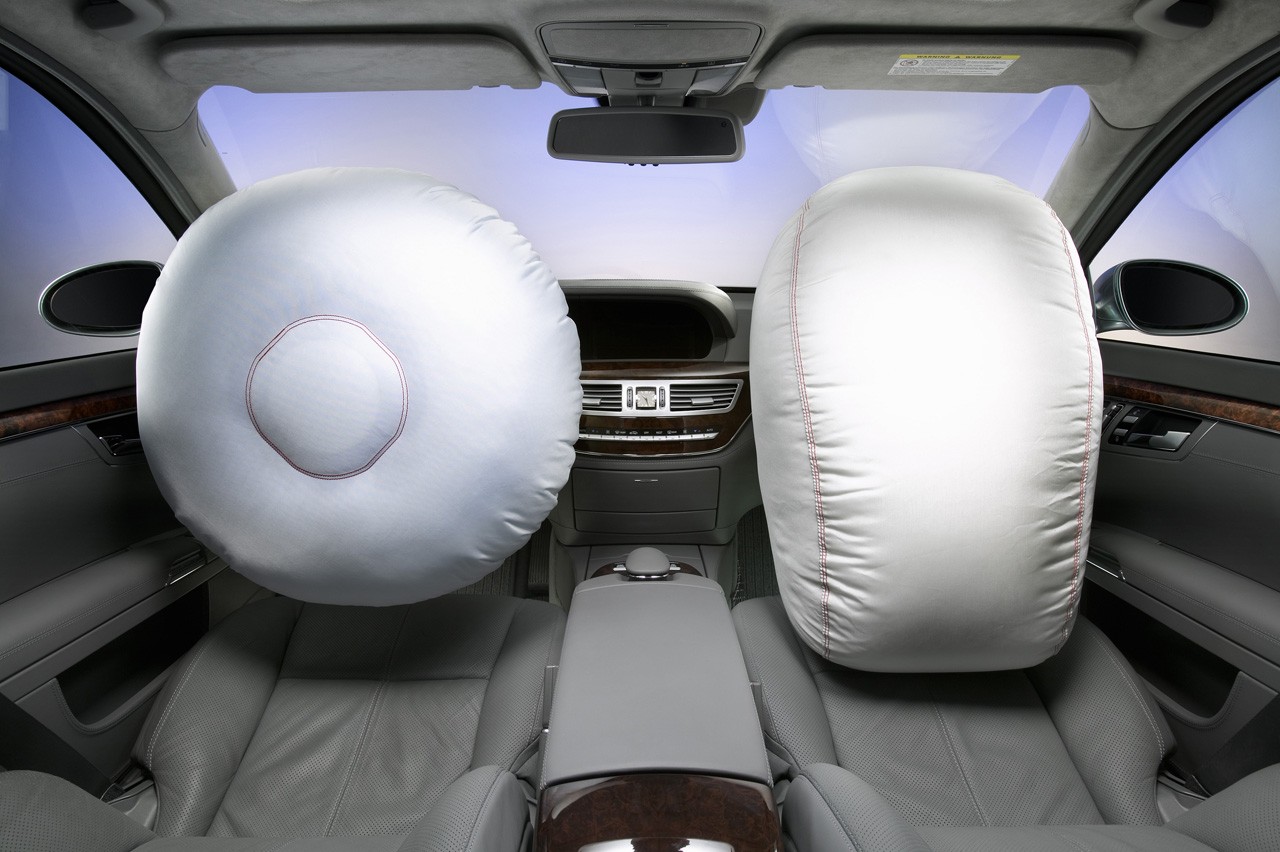
The National Highway Traffic Safety Administration (NHTSA) is warning American drivers and used-car buyers about dangerous replacement airbag inflators linked to 11 deaths and three serious injuries.
The agency says the defective components can rupture during a crash, sending metal fragments into a driver’s chest, neck, face, and eyes instead of allowing the airbag to provide protection.
The warning concerns inflators marked DTN60DB, associated with Chinese manufacturer Jilin Province Detiannuo Safety Technology Co. Ltd. NHTSA’s latest confirmed fatality announcement, dated September 3, 2026, involved a 2018 Chevrolet Equinox in Dallas. The agency says the defective inflator had been installed as replacement equipment.
The issue is particularly concerning for used-car buyers because these parts may have been installed after an earlier collision and remained in a vehicle when it was repaired and resold. A vehicle can appear roadworthy while containing an airbag component that creates a serious risk in a future crash.
How Defective Replacement Inflators Can Turn a Crash Deadly
An airbag inflator is responsible for generating the gas that rapidly fills an airbag during a collision. The system is designed to cushion occupants and reduce the risk of serious injury. If the inflator ruptures instead of functioning as intended, metal fragments can be propelled into the cabin.
NHTSA says the DTN60DB inflators have malfunctioned in crashes, causing injuries that investigators considered preventable in otherwise survivable collisions. Its investigation found 14 crashes involving these inflators, resulting in 11 deaths and three serious injuries.
The agency has identified incidents involving Chevrolet Malibu, Hyundai Sonata, and Chevrolet Equinox vehicles. However, it has cautioned that the risk should not be assumed to be limited to those models. The concern is the replacement component itself, which may have been fitted to a vehicle after its original airbag deployed or was removed.
NHTSA’s investigation identified inflators marked DTN60DB as defective and likely illegally imported into the United States. The agency issued a final decision prohibiting their importation and sale in April 2026.
Because the parts may have entered the country through illegal channels, regulators have said they cannot reliably estimate how many could be installed in vehicles.
That uncertainty makes the vehicle’s repair history important. After a crash, an insurer may declare a vehicle a total loss, or a repair shop may replace deployed airbags before returning the car to service. The quality and origin of replacement parts can determine whether the vehicle’s safety systems work as intended during another collision.
Not every replacement airbag is dangerous. Genuine replacement parts installed according to manufacturer procedures are intended to restore the vehicle’s safety system. The risk arises when a defective or counterfeit component is used instead of a legitimate part that meets the required specifications.
The distinction also explains why this issue is not necessarily identified by a conventional vehicle recall lookup. The suspect inflator is aftermarket equipment, not a component necessarily recorded against a vehicle’s VIN in a standard recall database. A clean recall search alone cannot establish that the installed airbag is genuine.
How Used-Car Buyers Can Check a Vehicle’s Repair History
A used vehicle’s appearance cannot reliably establish whether its airbag system contains genuine replacement components. Buyers should investigate any previous collision, especially one involving airbag deployment, before completing a purchase.
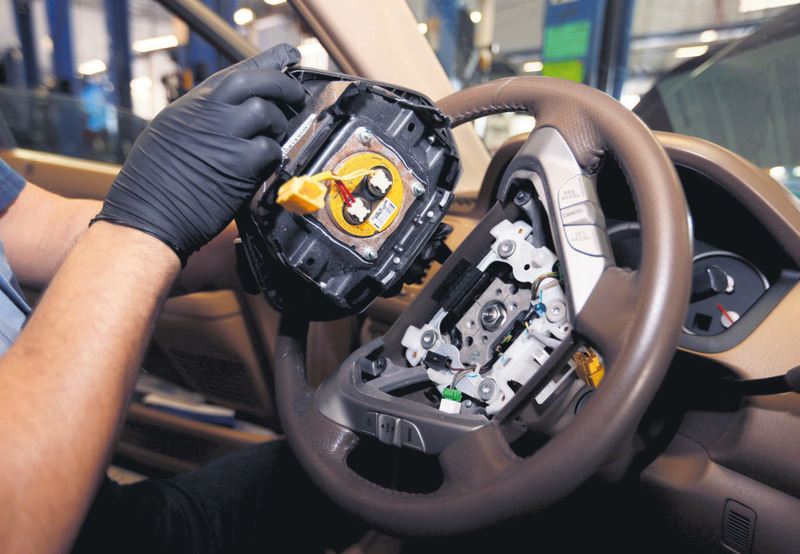
Start with a vehicle history report. Check for recorded accidents, total-loss events, title brands, and other information that might indicate significant repairs. Reports can help identify warning signs, but they are not comprehensive records of every repair. An undocumented collision or replacement part may not appear.
The U.S. Department of Justice’s National Motor Vehicle Title Information System (NMVTIS) provides access to approved vehicle history report providers. Buyers can use this information to investigate title history and certain reported events, then request additional repair records from the seller or repair facility.
If the vehicle has previously been involved in a crash in which an airbag deployed, ask who performed the repair and which replacement parts were installed. Request invoices or repair orders identifying the components used. A seller’s assurance that the airbag was replaced is not enough to establish that the replacement was genuine.
NHTSA specifically urges owners and buyers to have vehicles inspected if they were involved in a crash with airbag deployment since 2020 and were not repaired by the manufacturer’s dealership. A qualified technician can review the agency’s guidance and verify whether the installed inflator is legitimate replacement equipment.
Before buying, ask an independent mechanic or an authorized dealership to inspect the vehicle’s safety systems.
The inspection should include appropriate verification of the airbag components, rather than relying solely on whether the dashboard warning light is illuminated. A warning light that is off does not prove that every component is genuine or functioning correctly.
Other warning signs may include incomplete repair documentation, a salvage or rebuilt title, evidence of steering-wheel replacement, or unexplained changes to the interior after a reported collision. None of these signs proves that the vehicle contains a DTN60DB inflator, but they justify further investigation.
Buyers should also understand the limits of vehicle history reports. A report may show that a car was involved in an accident without identifying every part used during the repair. Conversely, the absence of an accident record does not guarantee that the vehicle has never been damaged.
The most reliable approach combines documentation with a professional inspection. If the seller refuses to provide repair records or will not allow an independent inspection, consider delaying the purchase until the uncertainty is resolved.
What Drivers Should Do if an Airbag Has Been Replaced
Drivers who know their vehicle has had an airbag replaced should establish whether the repair used genuine equipment. Contact the repair facility or the manufacturer’s dealership and ask for the replacement details. If the vehicle’s history is unknown, a professional inspection is the appropriate next step.
Do not remove the steering-wheel cover, dismantle the airbag assembly, or attempt to identify the inflator yourself. Airbag systems contain pyrotechnic components that can cause serious injury or death if handled improperly. NHTSA specifically warns against owners attempting their own inspections.
If a technician identifies an inflator marked DTN60DB, NHTSA says the vehicle should not be driven until the defective component has been replaced with genuine original-equipment parts. Arrange the inspection and repair with a qualified professional, and ask how the vehicle can be transported safely if it is found to contain the suspect part.
The agency also advises reporting a confirmed suspect inflator. Owners can contact their local Homeland Security Investigations office or FBI field office or submit a complaint to the National Intellectual Property Rights Coordination Center.
Reports can also be made directly to NHTSA through its online complaint process or Vehicle Safety Hotline at 888-327-4236.
Why the Warning Matters Beyond the Affected Vehicles
The case underscores a wider concern in used-car safety, as fixing visible damage does not guarantee that all safety systems have been properly repaired and restored to working order.
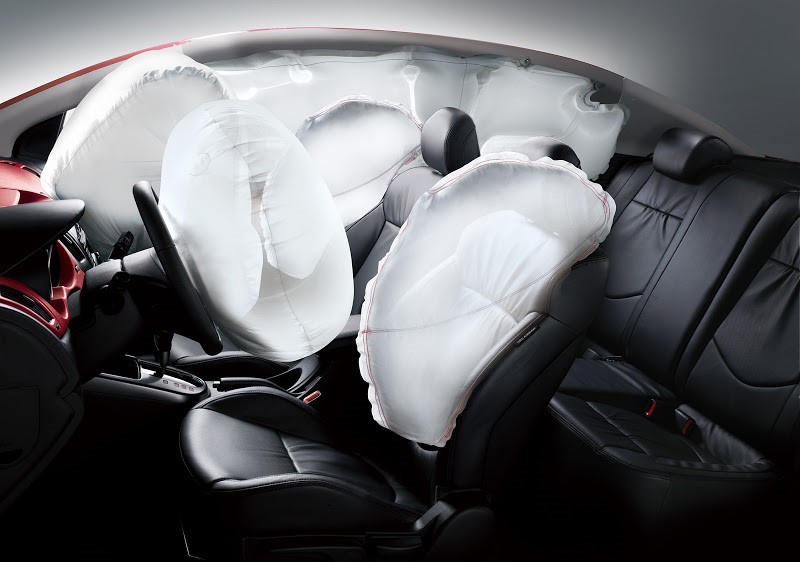
Airbags, seat-belt pretensioners, and electronic restraint systems are designed to work together, so improper repairs can leave occupants exposed to risks that may not be obvious during an ordinary test drive.
Dealerships and repair shops have an important role in preventing unsafe components from entering the used-car market. Maintaining detailed repair records, sourcing legitimate parts, and verifying safety-system repairs can help protect subsequent owners. Buyers should not assume that a professional-looking repair or a clean dashboard confirms the vehicle’s safety.
NHTSA’s final decision makes the sale and importation of the identified DTN60DB inflators illegal in the United States. However, banning the components does not automatically remove parts already installed in vehicles. That is why the agency continues to emphasize repair history and professional inspection.
For used-car shoppers, the practical lesson is to investigate previous airbag deployment rather than relying exclusively on a VIN recall search. For current owners, any uncertainty about a previous airbag replacement should be resolved by a qualified technician.
The warning does not mean every repaired vehicle is unsafe, nor does it mean all replacement airbags are defective. It identifies a specific, dangerous component and a serious failure mode.
Verifying the repair history and ensuring that genuine replacement equipment is installed can help prevent a repaired vehicle from concealing a potentially fatal safety problem.
