
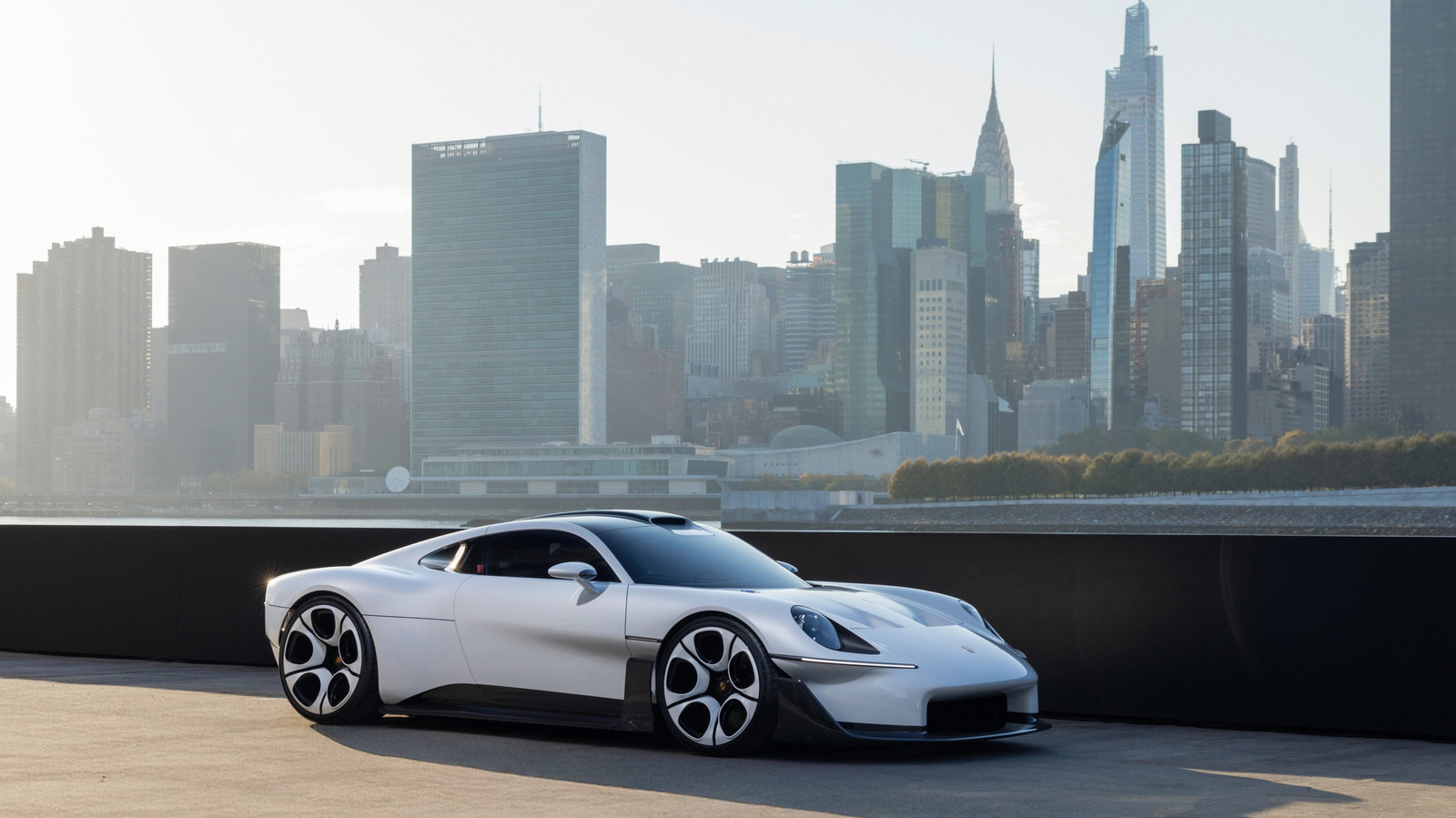
Porsche has unveiled the Mission S, a vision model that previews the next stage of its sports-car design and introduces plans for a new mid-engined super-sports-car platform.
Revealed in New York on October 15, 2026, the concept signals an expansion of Porsche’s performance lineup beyond the iconic 911, with the company describing the future model as a permanent addition rather than a limited-production hypercar.
The announcement is part of Porsche’s “Sportwagenschmiede ’35” strategic realignment, which aims to strengthen the brand through distinctive, desirable sports cars.
For American enthusiasts, the Mission S offers an early look at a potential new flagship, although important details about its engine, output, price, and production schedule remain undisclosed.
Mission S Signals a New Direction Above the Porsche 911
Porsche CEO Michael Leiters confirmed that the Mission S represents a mid-engined super-sports-car platform positioned above the 911. He described the planned addition as a versatile, permanent part of the company’s customer offering, distinguishing it from rare, limited-run projects such as the Carrera GT and 918 Spyder.
That distinction matters because a regular production model would give Porsche a continuing presence in a segment occupied by high-performance supercars from Ferrari and McLaren.
Rather than relying exclusively on occasional halo cars, the company would have another model line designed to showcase its engineering capabilities while attracting customers seeking performance beyond the 911 range.
The Mission S itself is a vision model, not a confirmed production specification sheet. Porsche has announced development of a new platform, but it has not released complete technical details for the eventual road car.
Its unveiling should therefore be understood as a preview of the company’s direction, not confirmation that every visible feature will reach American showrooms unchanged.
The concept also reflects Porsche’s attempt to balance its heritage with a more forward-looking identity. The company says its evolving design philosophy is built around authentic, consistent, and timeless styling.
Design chief Tobias Sühlmann indicated that ideas demonstrated by the Mission S will influence future products, suggesting the concept has significance beyond one prospective supercar.
For U.S. customers, the strategy could eventually broaden Porsche’s appeal among buyers who want a more exotic, mid-engined vehicle but prefer a model supported by an established manufacturer and dealership network. However, whether the production car reaches the United States, and in what configuration, remains a matter for Porsche to confirm.
Mid-Engine Architecture Shapes the Concept’s Engineering Direction
The Mission S’s defining technical feature is its mid-engine layout. Placing the engine between the driver and rear axle creates a different packaging arrangement from the rear-engined 911, giving Porsche a distinct foundation for a higher-performance model.
The layout is associated with many dedicated supercars because it allows engineers to position major components around the demands of handling, weight distribution, and aerodynamic performance.
Porsche has not disclosed the Mission S’s engine configuration, horsepower, torque, transmission, or acceleration figures. Although the concept’s rear styling includes exhaust outlets, that detail alone does not establish the production car’s final powertrain.
Reports and speculation about a possible flat-eight engine or hybrid assistance should not be mistaken for official confirmation.
The company’s announcement instead emphasizes engineering flexibility, drawing on decades of motorsport experience and the aim of creating a platform capable of supporting a permanent model in its range.
A dedicated architecture could allow Porsche to develop the chassis, cooling systems, suspension, and aerodynamic package around the requirements of a mid-engined supercar rather than adapting an existing sports car platform.
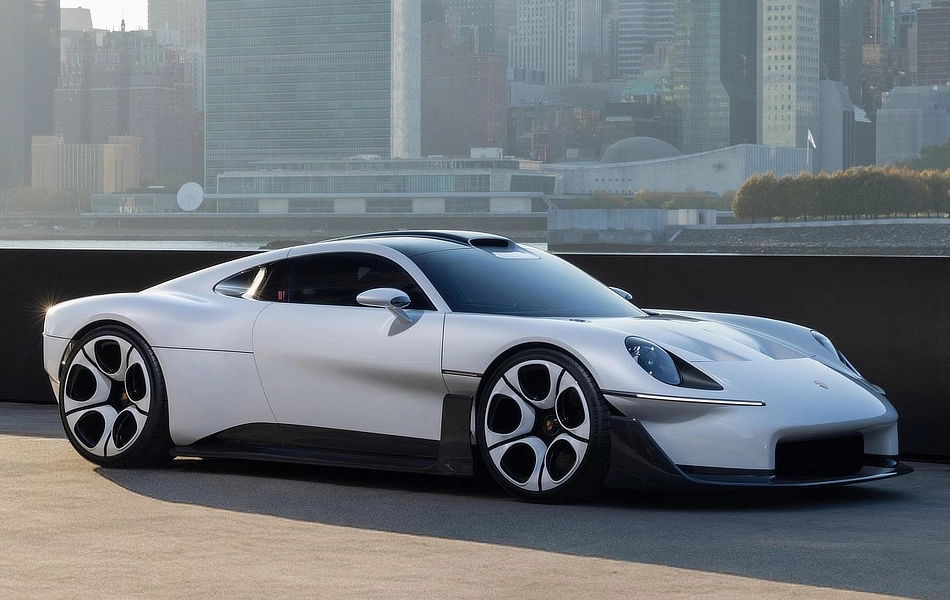
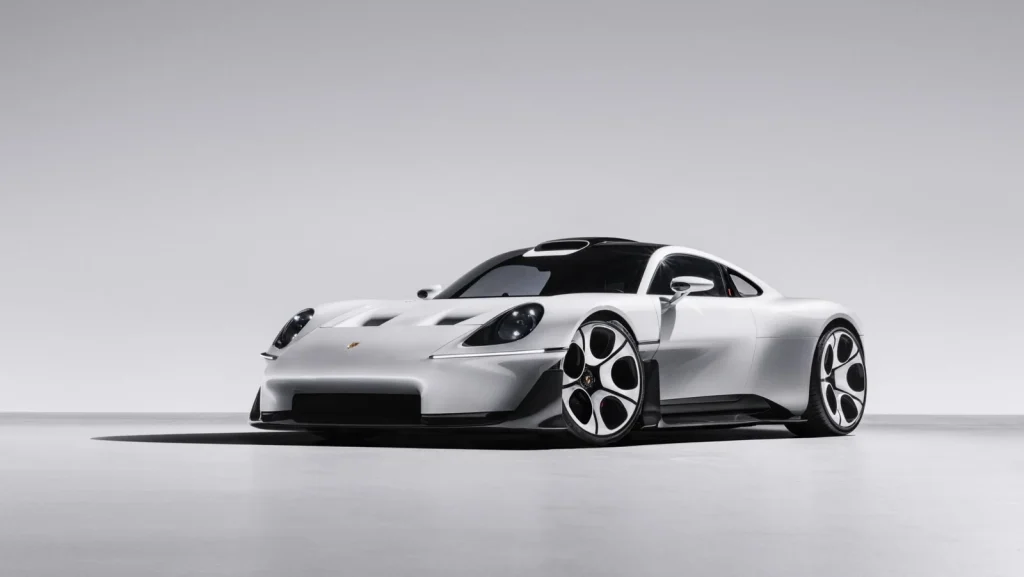
The exterior offers several clues about Porsche’s priorities. Rounded front fenders and the characteristic roofline recall established design elements, while the broad rear section gives the concept a powerful stance.
Porsche also highlights a rear treatment inspired by the 911 GT1, along with a cooling feature that references the radiator fan arrangement associated with historic racing machinery such as the 917. An integrated active rear wing adds another functional element to the design.
These details show how the company is connecting its motorsport past with contemporary engineering ideas. Active aerodynamic components can adjust airflow to suit changing driving conditions, while cooling design becomes particularly important in a high-performance vehicle operating under sustained load.
Nevertheless, Porsche has not published drag figures, downforce measurements, cooling performance data, or a confirmed production aerodynamic package for the Mission S.
The concept also features wheels inspired by the dial-like design of the Porsche 928, adapted to prioritize lightweight construction. This design choice reflects a wider goal of preserving recognizable Porsche styling cues while exploring a new approach to vehicle architecture.
For American buyers, the engineering story will become more meaningful when Porsche releases verified performance data.
Horsepower alone would not establish the car’s capabilities. Weight, tire selection, braking performance, cooling under repeated hard use, and chassis calibration would all help determine how effectively the future model performs on roads and racetracks.
Until those details are available, the Mission S is best viewed as a statement of intent. It establishes the broad architecture and design direction without revealing the technical specifications needed to compare it fairly with production supercars.
A Driver-Focused Interior Looks Beyond the Touchscreen Trend
Inside, the Mission S takes a deliberately restrained approach to digital technology. Porsche has avoided a permanently integrated central infotainment screen and a fixed passenger display, instead combining analog-inspired instruments with digital information and physical controls.
The layout is intended to keep the driver’s attention on operating the car rather than navigating a dashboard dominated by screens.
The instrument arrangement can change with the selected driving mode, while the central tachometer remains a defining feature. Porsche has also introduced push-pull dashboard controls for selected functions and reinterpreted the Sport Chrono element, blending traditional sports-car cues with digital functionality.
A retractable smartphone holder compatible with MagSafe technology takes the place of a conventional permanently installed center display. A driver’s phone can provide navigation and other information when needed, while the My Porsche app is intended to support vehicle functions and customizable instrument graphics.
This approach gives the driver access to familiar digital services without making a large central screen the visual focus of the cabin.
Whether these features survive into production remains unconfirmed. A concept interior can demonstrate design priorities without establishing the final equipment, software, connectivity features, or controls that customers will receive. U.S. production models would also need to meet applicable safety requirements and deliver practical usability in everyday driving.
The Mission S could become an important part of Porsche’s future product strategy if the production vehicle combines its proposed driver-focused cabin with the performance expected from a model above the 911.
Yet its commercial position will depend on details that have not been announced, including pricing, availability, powertrain specifications, and the timing of customer deliveries.
Porsche’s announcement establishes that a new mid-engine super-sports-car platform is being developed. It does not establish a finalized launch date, a confirmed U.S. price, or the exact technical package of the finished vehicle.
Buyers should therefore be cautious about treating speculative engine configurations, output figures, or performance estimates as settled facts.
The broader significance of the mission is clearer than its technical specification. Porsche wants to preserve a recognizable sports-car identity while creating a more permanent presence in the supercar category.
The concept previews how the company might combine historic design references, driver-oriented controls, and a dedicated mid-engine architecture in a new model.
For the U.S. market, the eventual production car could give Porsche a stronger rival to established European supercars while sitting above its familiar 911 lineup. Whether it succeeds will depend on the engineering and ownership experience behind the design, not simply the concept’s appearance.
Until Porsche provides production specifications and timing, the Mission S remains an important preview of the brand’s intentions rather than a fully defined showroom vehicle.
