
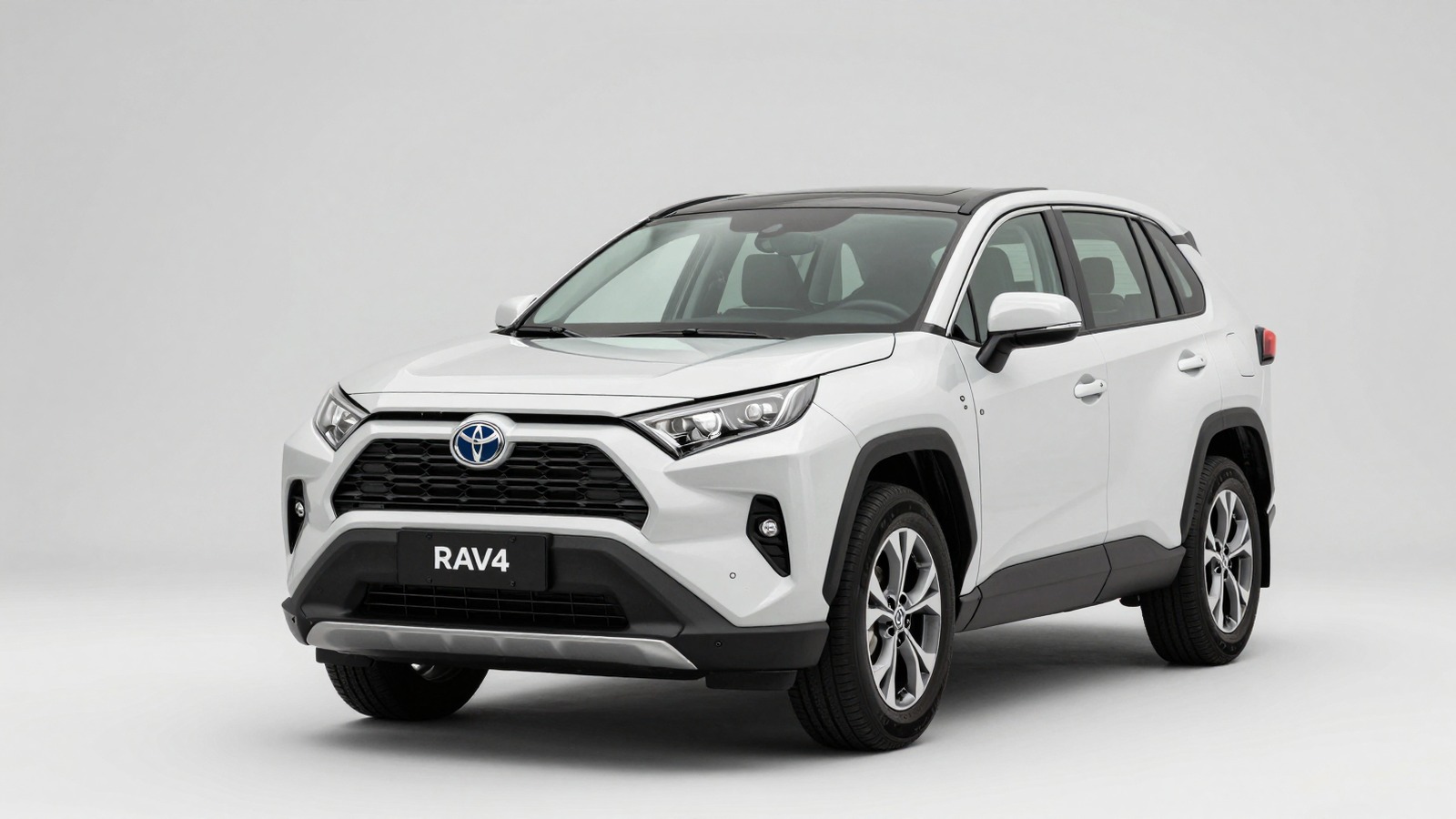
Toyota is setting an ambitious target for its software business, expecting its Arene platform to reach 50 vehicle models and approximately 10 million new vehicles annually by 2030.
The plan marks a shift in how the world’s largest automaker approaches vehicle development, with software becoming a common foundation across a much larger portion of its global lineup.
Announced on October 16, 2026, the plan builds on Arene’s introduction in the latest-generation Toyota RAV4, which launched in 2025. The platform is designed to help Toyota develop, test, and deploy vehicle software more consistently, including infotainment and safety functions, while supporting over-the-air updates after vehicles reach customers.
The significance goes beyond adding new features to a touchscreen. A broader software platform could change how Toyota develops future models, responds to technical problems, improves driver-assistance systems, and maintains vehicles throughout their ownership.
But the scale of the rollout also creates challenges around software quality, cybersecurity, customer expectations, and how much functionality owners should have to pay for after purchasing a car.
Arene Is Becoming a Common Software Foundation Across Toyota’s Lineup
Toyota’s goal is to deploy Arene across 50 models, reaching about 10 million new vehicles per year by 2030. The figures describe the company’s target for annual vehicle deployment, not a claim that 10 million cars already use the platform.
Toyota has also indicated that it wants to expand its use of Arene beyond 2030, including potential deployment in vehicles from alliance partners.
The RAV4 is an important starting point because it is one of Toyota’s high-volume global nameplates. The platform supports software behind its multimedia system, including the cockpit voice agent and center display, as well as elements of Toyota Safety Sense, the company’s suite of driver-assistance technologies.
The rollout therefore begins with customer-facing and safety-related functions rather than immediately replacing every electronic system in the vehicle.
Arene brings together a range of tools designed to simplify software development. Its software development kit allows engineers to create reusable components, while its development tools enable testing and performance evaluation through virtual simulations. It also includes a data infrastructure that supports deeper analysis and helps drive continuous software improvements.
The purpose is to reduce the need to develop every software function independently for every model and to make it easier to validate changes before they reach customers.
That common foundation could help Toyota manage the complexity of a global vehicle range. Automakers traditionally develop many electronic control units and software functions for specific platforms, suppliers, and model generations.
When components use different architectures, a feature developed for one vehicle may require substantial adaptation before it can be deployed elsewhere. Reusable software can reduce duplicated work, although different hardware, regulations, and vehicle configurations will still require model-specific engineering and testing.
For Toyota, the potential benefit is a more consistent development process. Engineers could create a feature once, validate it against a shared software architecture, and adapt it to compatible models instead of rebuilding it from scratch.
Virtual testing may also help teams examine a wider range of driving situations before putting a vehicle on public roads. Those efficiencies are goals of the platform, however, not a guarantee that every future vehicle will be developed faster or that all software issues will disappear.
Over-the-Air Updates Could Change Ownership After Delivery
One of the clearest benefits of software-defined vehicles is the ability to improve eligible functions after a car leaves the factory. Instead of requiring a dealership visit for every software change, an automaker can deliver certain updates remotely through an over-the-air connection.
Toyota says Arene is designed to support this type of continuing development, including improvements to safety systems and in-car experiences.
For owners, the potential advantages fall into several categories.
Infotainment improvements: Updates could refine voice recognition, display behavior, navigation-related functions, and the response of the multimedia interface.
Driver-assistance development: Eligible software updates could improve aspects of object detection or system behavior, provided the vehicle’s hardware supports the change and Toyota validates it for deployment.
Software fixes: Some bugs could be corrected remotely, potentially reducing the need for dealership visits for issues that do not require physical repairs.
Longer-term refinement: A vehicle’s software experience could continue to improve after purchase rather than remaining tied entirely to the version installed during production.
Toyota’s RAV4 implementation already illustrates the foundation for this approach. Arene-supported functions include multimedia features and elements of Toyota Safety Sense, while the platform’s broader architecture is intended to make future development and deployment more consistent.
It is important, though, to distinguish that existing functionality from future possibilities. Toyota’s 2030 target does not mean every model will receive every kind of update, or that all vehicle systems will be remotely upgradeable.
The distinction matters because vehicle software operates in a safety-critical environment. A smartphone app can sometimes be updated quickly and corrected after release. A change to braking-related assistance, driver monitoring, or other vehicle-control functions needs a more rigorous validation process.
Hardware limitations, regulatory requirements, and the configuration of each model can restrict which updates are possible.
There are also practical questions about ownership. Some updates may be free fixes, while new features or connected services could involve subscriptions or additional charges. Toyota’s stated deployment target does not establish a universal pricing model for future Arene-powered vehicles.
Buyers will need to examine the terms attached to specific features rather than assume that all software improvements will be free for the life of the vehicle.
Cybersecurity and privacy will matter as well. Connected vehicles can receive updates remotely, but their software and communication systems must be protected against unauthorized access.
Toyota’s platform documentation describes data collection based on customer consent for supporting software development and improvement. Owners should still review the data settings and privacy terms applicable to their individual vehicles.
Toyota’s Biggest Challenge Is Delivering Reliable Software at Scale
Reaching 50 models is not simply a matter of installing the same software package in every vehicle. Toyota sells vehicles across different markets, price segments, and regulatory environments.
A compact car, a large SUV, and an electric vehicle can have different sensors, displays, computing hardware, and driver-assistance capabilities. A shared platform can simplify development, but the software still needs to work correctly with each vehicle’s hardware and intended use.
Toyota also has to balance its reputation for manufacturing quality with the expectations customers increasingly place on digital products. An unreliable infotainment interface or inconsistent connected service can frustrate owners even if the vehicle’s mechanical components perform well.
Software problems involving safety functions carry greater consequences and require particularly careful development and validation.
The company has previously faced criticism over the pace and maturity of its software efforts. The Financial Times reported in 2025 that Arene’s initial scope in the RAV4 was narrower than some of Toyota’s broader software-defined vehicle ambitions, focusing on infotainment and safety functions.
That history is a reminder that a platform’s long-term potential should not be confused with capabilities already available to customers.
Toyota’s rollout will therefore be judged on more than the number of models equipped with Arene. Meaningful measures include whether new vehicles receive useful updates, whether software issues are resolved promptly, whether development costs fall, and whether features work consistently across the range.

The company must also make clear which functions depend on an internet connection, which require paid services, and how long vehicles will receive software support.
The longer-term ambition extends beyond Toyota’s own models. The automaker has said it wants to expand Arene’s reach toward 2035, including through vehicles from alliance partners.
If that happens, the platform could become a broader foundation for software development across multiple brands. That would increase its potential scale, but it would also require compatibility with more vehicle architectures and different product strategies.
Toyota’s target of 10 million new vehicles annually by 2030 shows how central software has become to its future product strategy. Arene could help the company reuse engineering work, deliver eligible improvements remotely, and maintain a more consistent digital experience across its lineup.
The real test will be whether those advantages translate into reliable features that customers notice and value throughout ownership.
