The automotive industry’s race to apply artificial intelligence is moving beyond vehicle software, autonomous driving, and battery development.
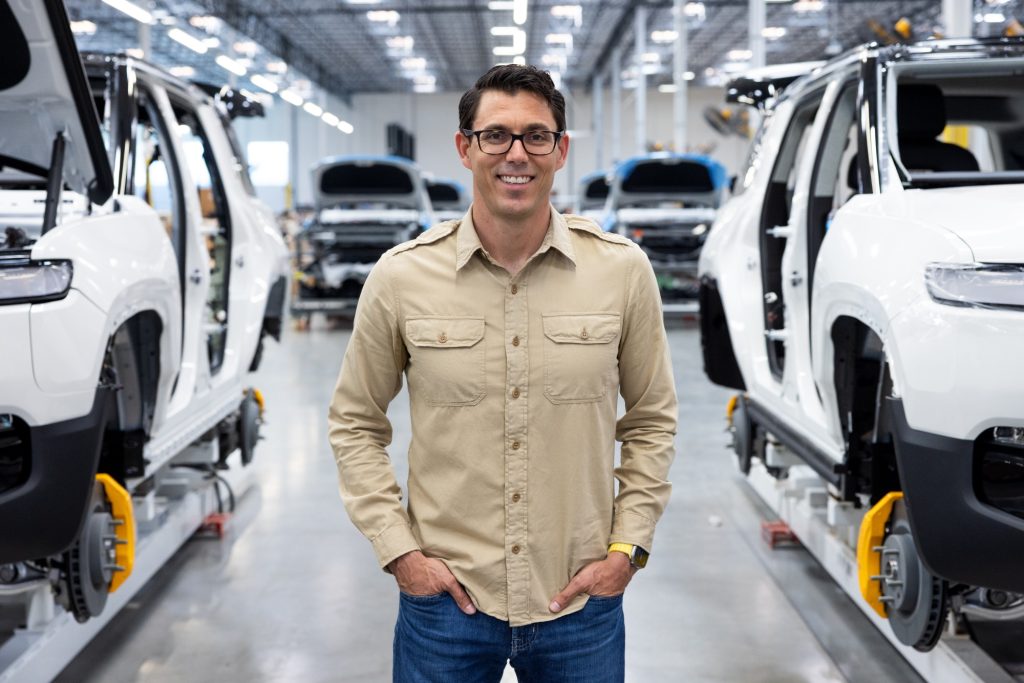
Mind Robotics, an industrial robotics company founded by Rivian CEO RJ Scaringe, has hired Doug Field as its president, bringing in an executive who has helped lead major engineering programs at Ford, Tesla, and Apple.
Announced on October 13, 2026, the appointment puts an experienced automotive technology leader in charge of a company seeking to make AI-powered robots useful inside real manufacturing facilities.
Mind Robotics is developing an industrial AI platform that combines purpose-built robot hardware with foundation models designed to handle manufacturing tasks that conventional automation struggles with.
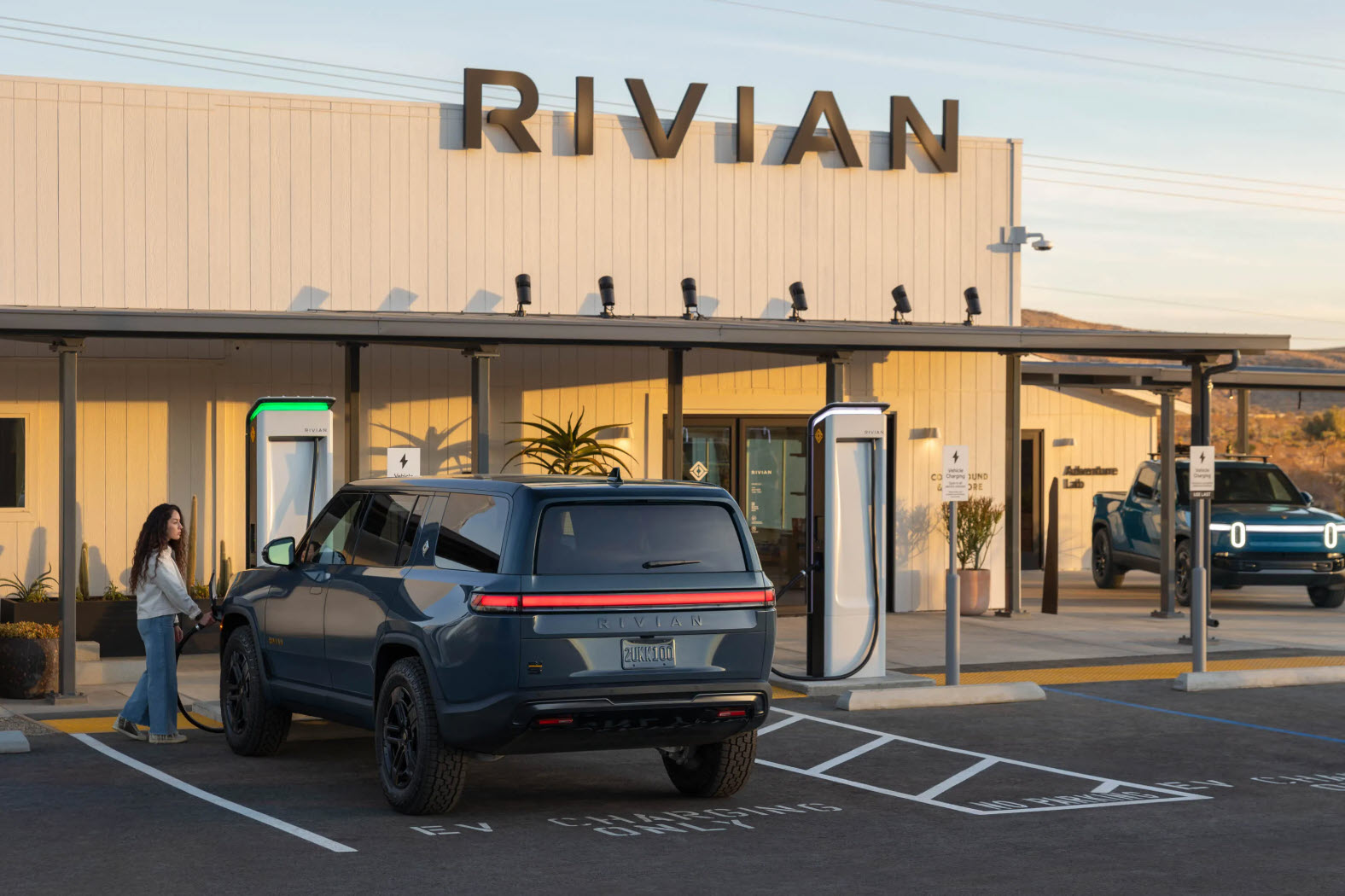
Rivian is its first manufacturing partner, giving the company access to a working vehicle factory where it can collect production data, train its systems, and test robots under real operating conditions.
The strategy offers a glimpse of how automakers may become more than vehicle manufacturers, using their factories as proving grounds for technologies that could eventually serve other industries.
Doug Field Brings Experience From Ford, Tesla, and Apple
Field’s appointment gives Mind Robotics leadership with experience across electric vehicles, advanced engineering, and large-scale product development.
Before joining the robotics company, he spent roughly five years at Ford, where he helped shape its electric vehicle and technology strategy. He left the automaker in April 2026 as Ford reorganized its leadership and adjusted its approach to electrification.
His earlier career included a senior engineering role at Tesla, where he helped oversee development of the Model 3. The sedan became a major part of Tesla’s growth, but its production ramp-up also exposed the challenges of turning ambitious engineering plans into vehicles built at scale.
That experience is relevant to industrial robotics, where a system must do more than demonstrate an impressive capability in a controlled test. It must operate reliably, repeatedly, and safely on a factory floor.
Field also led Apple’s Project Titan, the company’s effort to develop an electric and potentially autonomous vehicle. Apple abandoned that project in 2024.
Although it never resulted in a production car, the program involved complex hardware and software engineering, areas that overlap with the challenge of building robots capable of interpreting their surroundings and carrying out physical tasks.
Field previously worked at Segway as well, adding another chapter in his experience with technology that interacts directly with the physical world.
At Mind Robotics, Field will take responsibility for day-to-day leadership across product, engineering, and operations, while Scaringe remains involved in the company’s direction.
The appointment suggests that Mind is moving beyond its initial research and fundraising phase toward building, testing, and deploying systems that can perform useful work at an industrial scale.
Making this transition is not easy. A robot might perform a task successfully in a controlled laboratory setting, but face challenges in real-world production environments where components may be positioned differently, materials can vary, and manufacturing lines must continue operating without interruption.
Field said the company has an advantage because it can develop and learn inside a real, high-volume factory. That access is important because manufacturing data is not limited to images of objects. It can include the positions of tools, variations between parts, the movements of skilled workers, and the sequence of actions required to complete a task successfully.
Why Mind Robotics Is Building AI for Factory Work
Traditional industrial robots are effective at repetitive tasks in controlled environments. They can weld, move components, paint surfaces, and perform other operations when parts arrive in predictable positions, and the work follows a defined sequence.
However, tasks requiring flexible handling, adjustments to unexpected conditions, or more complex physical reasoning can be harder to automate.
Mind Robotics wants to address that gap by combining AI models with purpose-built machines. Its stated focus includes picking and placing components, sorting visually similar items, fastening parts, and connecting electrical harnesses.
These jobs can require a robot to recognize variations, apply the right amount of force, and respond when a component does not fit as expected.
The company’s approach differs from the humanoid-robot strategy pursued by some competitors. Rather than trying to reproduce every aspect of human movement, Mind says it is focused on building robots suited to industrial work.
That distinction could matter in factories, where a machine designed around a specific task may be more practical than one built to imitate the human body. The company’s final hardware configurations and the range of tasks its first commercial systems can perform will determine how much of that promise translates into production.
AI is central to the proposition. Instead of programming every movement for a single fixed situation, developers want robots to learn patterns from real-world examples and generalize those skills to changing conditions.
Mind says it is collecting video data from active manufacturing operations and training models to understand spatial relationships, object movement, and tool manipulation. Its goal is to create systems that can handle work involving greater variation than conventional automation typically manages.
That ambition comes with technical and commercial hurdles. Factory robots must meet strict requirements for safety, consistency, speed, and uptime.
A system that makes occasional mistakes can interrupt production, damage components, or require human intervention that undermines the financial case for automation. Companies must also integrate new machines into existing equipment and workflows without creating expensive disruptions.
Mind’s access to Rivian’s manufacturing environment gives it a place to test those problems against real production requirements. But access to a factory is not the same as proof that a robot can perform a task economically at scale.
The company will still need to demonstrate reliable operation, measurable productivity improvements, and a cost structure that makes sense for manufacturers.
Rivian’s Factory Could Become a Launchpad for Industrial AI
Rivian is more than a financial backer of Mind Robotics. It is the company’s first manufacturing partner and a planned deployment environment for its technology.
The arrangement gives Mind access to actual vehicle-production work, while Rivian gains an opportunity to test robotics designed around its own manufacturing needs.
The corporate relationship is closely linked but should not be confused with the two companies being a single business. Mind Robotics was founded by Scaringe in 2025 and operates as a separate company, with Rivian retaining an ownership stake.
Regulatory filings cited by TechCrunch put Rivian’s ownership at 32.1% as of June 2026, following additional outside investment.
Funding has also given the startup room to develop its technology. Mind Robotics raised $115 million in its seed round in 2025, followed by a $500 million Series A and another $400 million financing round in 2026.
TechCrunch reported in October that the company had attracted more than $1 billion in backing, including investment from Accel, Andreessen Horowitz, Eclipse, and Kleiner Perkins, alongside the venture arms of Volkswagen and Salesforce.
The wider significance extends beyond Rivian. Vehicle manufacturers operate complex factories where even small improvements in cycle time, material handling, or quality control can affect costs across thousands of production hours.
If AI-powered robots can reliably take on tasks that have resisted conventional automation, the technology could eventually apply to electronics, logistics, machinery, and other forms of manufacturing.
For automakers, that creates a potential business opportunity beyond selling cars. Manufacturing knowledge, production data, and experience integrating hardware and software could become valuable assets in developing automation systems.
Yet the economics will depend on whether these robots outperform existing approaches, not simply whether they use advanced AI.
Mind Robotics has not yet publicly demonstrated enough to establish how widely its technology will work or how quickly customers outside Rivian could adopt it. Its early deployments will need to show that the machines can perform useful tasks safely, consistently, and at a competitive cost.
Field’s arrival marks a leadership step toward that goal. His experience spans electric vehicles, software-intensive engineering, and difficult production programs, while Mind brings a direct route into a live manufacturing environment.
The real challenge now lies in practical implementation. AI models and robotic systems must be developed into reliable tools that can operate in factories and deliver measurable improvements in productivity and manufacturing efficiency.