

Negotiations between the United States and Mexico over a potential tariff agreement have stalled, raising fresh uncertainty for automakers, parts suppliers, and manufacturers that rely on cross-border production.
A report published on October 16, 2026, said the two countries had made progress toward reducing U.S. tariffs on Mexican automobiles, steel, and aluminum, but disagreements over the proposed reductions slowed the talks.
The dispute matters to the automotive industry because vehicles assembled in Mexico and the materials used to build them are closely connected to U.S. factories, suppliers, and consumers.
The negotiations are taking place as both countries prepare for the review of the United States-Mexico-Canada Agreement, or USMCA. Although the latest reported disagreement concerns tariffs, the wider discussions also involve automotive content rules, regional supply chains, and economic security.
For manufacturers, the immediate challenge is planning production and pricing while the terms governing cross-border trade remain uncertain.
Why the Tariff Negotiations Have Stalled
According to Reuters’ account of reporting by The Wall Street Journal, the United States and Mexico had been working toward an agreement that could reduce duties on automobiles, steel, aluminum, and certain finished products made from those metals.
The proposed reductions were linked to concessions from Mexico, but disagreements emerged over how far Washington should lower its tariffs.
The report said U.S. Commerce Secretary Howard Lutnick opposed significant reductions to the 25% tariff on Mexican automobiles and the 50% tariffs on steel and aluminum. He also reportedly objected to reducing duties on finished goods made from steel and aluminum.
Mexico’s Deputy Trade Minister Luis Rosendo Gutierrez, meanwhile, told the Journal that progress had been made. A Commerce Department spokesperson said discussions with Mexico remained ongoing. The disagreement therefore points to a stalled effort, not confirmation that negotiations have ended.
Mexico has been seeking relief from tariffs that affect some of its most important export industries. Its automotive sector sends large volumes of vehicles and components to the United States, while its metal producers supply materials used in manufacturing across North America.
Tariffs can raise the cost of those transactions and make it harder for businesses to predict the final price of goods moving across the border.
The legal treatment of individual products is more complicated than a single tariff rate suggests. USMCA qualification, product classification, applicable tariff provisions, and the share of qualifying regional content can affect a vehicle’s treatment.
The reported 25% automobile tariff should not be interpreted as a blanket rate applied identically to every Mexican-built vehicle. The 50% metals duties likewise depend on the applicable rules and product category.
The talks also sit within a broader review of North American trade arrangements. In July, the Office of the U.S. Trade Representative said the United States and Mexico were discussing automobiles, steel and aluminum, economic security, labor, and other issues as part of their bilateral negotiations related to the USMCA review.
That agenda demonstrates how the tariff dispute connects to broader questions about where products are made and how regional manufacturing is organized.
What the Dispute Means for Cross-Border Vehicle Production
The North American automotive industry depends on components crossing national borders during manufacturing. Engines, transmissions, electronics, metal stampings, and other parts may be produced in one country, shipped to another for assembly, and then incorporated into vehicles sold across the region.
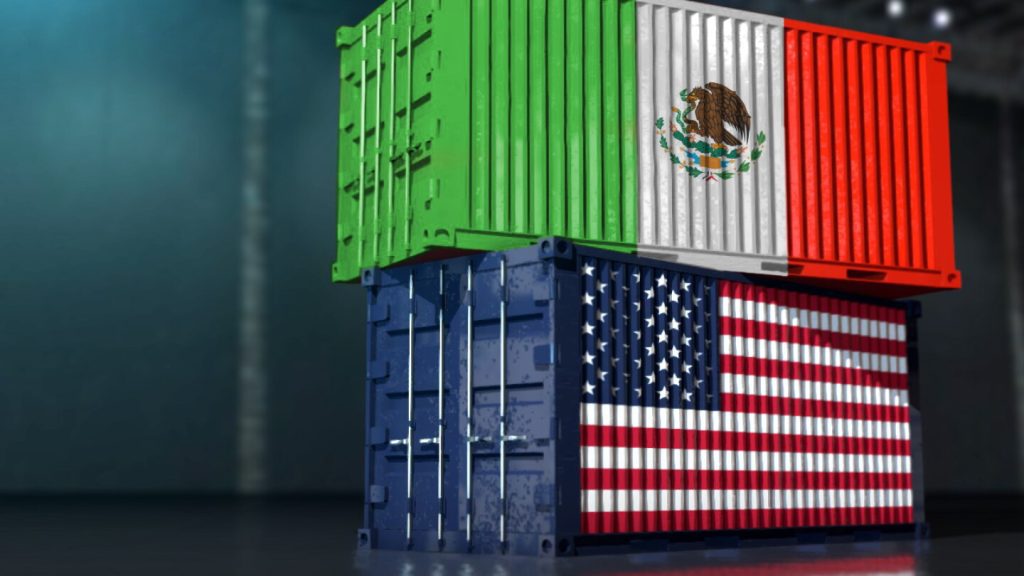
Tariffs can increase costs at several points in that process, particularly when manufacturers rely on specialized suppliers or cannot quickly move production to another facility.
For automakers operating in Mexico, continued uncertainty makes it harder to calculate the cost of exporting vehicles to the United States. Companies must decide how to manage potential duties, whether to absorb some of the added expense, and how much flexibility they have to adjust production schedules.
A tariff reduction could ease some of that pressure, but a delayed agreement leaves businesses working with the rules currently in force.
Suppliers face similar decisions. A component manufacturer may supply several vehicle programs from a single plant, making it difficult to shift production quickly if the economics of cross-border trade change.
Smaller suppliers can be particularly exposed because they may have fewer factories, less bargaining power, and limited capacity to absorb unexpected costs. Even companies that do not export complete vehicles can be affected when their products contain imported steel, aluminum, or components.
Metal tariffs add another layer of uncertainty. Steel and aluminum are used throughout vehicle production, from structural components and body panels to wheels, brackets, and battery-related parts.
Higher costs for these materials can affect both Mexican and U.S. manufacturers, depending on where the metal is produced, processed, and incorporated into a finished product. Domestic production does not automatically insulate a manufacturer from price increases if its suppliers depend on imported inputs or prices rise across the wider market.
The effect can extend to investment decisions. Automakers typically plan factory capacity, tooling, and supplier contracts for years. If tariffs are expected to remain high, a company may reassess where it assembles a particular model or sources certain parts.
Those decisions are expensive and cannot be reversed quickly, so uncertainty can delay investment even before a company makes a formal production change.
That does not mean manufacturers will immediately move factories out of Mexico or shift every component to U.S. suppliers. Relocating production requires capital, trained workers, supplier capacity, and suitable facilities.
A company also has to consider logistics, labor costs, existing contracts, and the time required to qualify new parts. In many cases, managing tariff exposure within the existing North American network may be more practical than rebuilding the supply chain.
The negotiating outcome could therefore influence more than the price of an imported vehicle. It could shape sourcing strategies, factory utilization, and the location of future investment.
For now, the uncertainty itself is a business cost because companies must plan for several possible trade scenarios without knowing which policy changes, if any, will be agreed upon.
Could American Car Buyers Pay More?
Consumers may eventually feel the effects through vehicle prices, although the impact will vary by automaker, model, and sourcing strategy.
When tariffs increase a manufacturer’s costs, the company can absorb the expense, negotiate lower prices from suppliers, change sourcing arrangements, or pass some of the increase on to buyers. The result depends on competition, profit margins, and how much flexibility the manufacturer has.
Vehicles assembled in Mexico are not automatically subject to the same tariff treatment. USMCA rules and other applicable provisions can affect the final duty owed, while some tariffs apply to particular products or portions of their value.
Buyers should therefore avoid assuming that every vehicle built in Mexico will receive a uniform price increase. The more immediate concern is uncertainty over how manufacturers will manage costs across their product lines.
Repair and replacement costs could also be affected if tariffs increase the prices of imported metal products or automotive components. A supplier facing higher material costs may eventually adjust its prices to automakers, distributors, or repair businesses.
Those changes do not necessarily appear immediately on a vehicle’s window sticker, but they can influence manufacturing expenses and the cost of maintaining vehicles over time.
American factories are not guaranteed to benefit from the dispute either. U.S. manufacturers may face higher costs for imported materials and components even when final vehicle assembly takes place domestically.
Some companies could benefit from changes that encourage additional U.S. production, but building new capacity takes time and money. Any potential benefit depends on whether manufacturers can source materials competitively and maintain efficient production.
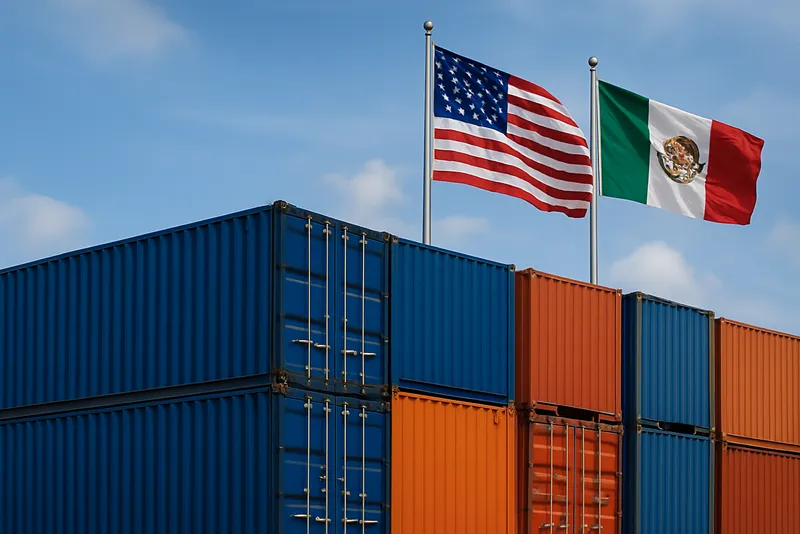
The next important development is whether Washington and Mexico City can reach an agreement that provides clearer tariff rules. Reuters reported that Mexico continued to see progress in the negotiations, while U.S. officials said discussions remained active.
The available reporting does not establish a finalized deal, a confirmed tariff reduction, or a definitive date for its implementation.
For automakers, the immediate priority is managing exposure while maintaining production and supplier relationships across North America. For consumers, the likely effects will depend on how companies distribute any additional costs rather than on the tariff headlines alone.
The stalled negotiations highlight the close relationship between trade policy and the price of building vehicles. Cars, parts, steel, and aluminum move through an integrated regional network, so changes at the border can affect factories and suppliers on both sides.
Until the United States and Mexico clarify whether tariff relief is possible, manufacturers will have to make investment and pricing decisions amid continued uncertainty, while American buyers may face some of the downstream costs.
