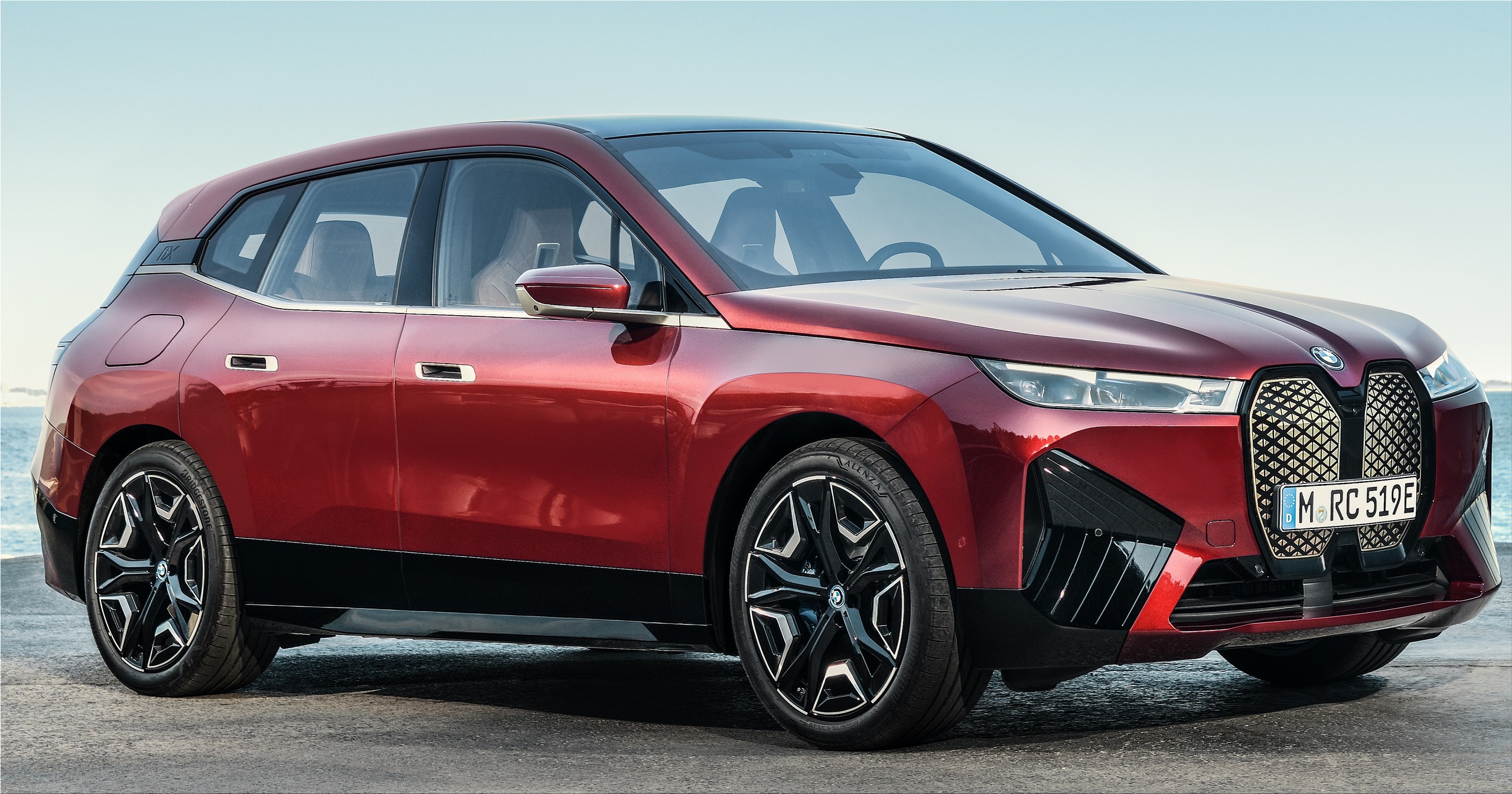
BMW is showcasing how quickly its next generation of electric vehicles could recharge after demonstrating charging power of up to 460 kilowatts with the upcoming BMW iX5 60 xDrive.
The October 20, 2026, demonstration brought together BMW Group, charging-network operator IONNA, and charging-equipment manufacturer Alpitronic at a U.S. media event in Southern California.
BMW says the SUV can add up to 170 miles of EPA-estimated range in 10 minutes under suitable conditions and charge from 10% to 80% in approximately 22 minutes. However, the 460-kW result is a technology demonstration, not a charging capability drivers can currently access at commercially available U.S. charging stations.
This milestone shows that extending EV battery range alone is not enough to make long-distance journeys more practical. Drivers also need high-powered charging stations, vehicles that can handle faster charging speeds, and effective battery thermal management to keep temperatures under control during charging.
BMW’s new sixth-generation eDrive technology is designed to address those demands, while IONNA and Alpitronic are helping demonstrate how vehicle engineering and charging infrastructure must work together.
How BMW Reached 460 kW of Charging Power
The demonstration used the BMW iX5 60 xDrive, the first fully electric version of the X5. It uses BMW’s sixth-generation eDrive technology, known as Gen6, which combines an 800-volt electrical architecture with a new high-voltage battery design and updated electric motors.
BMW says the new battery cells offer 20% greater volumetric energy density than the prismatic cells used in its previous Gen5 technology.
An 800-volt architecture can help an electric vehicle handle high power without requiring the same current that a lower-voltage system would need to deliver equivalent output. Reducing current for a given power level can help limit electrical losses and the heat generated in cables and components.
That creates opportunities for faster charging, but it does not guarantee a particular charging rate. The battery chemistry, cell design, cooling system, power electronics, and charging station must all support the target.
The battery is another key part of the iX5’s design. BMW’s U.S. announcement lists 144 kilowatt-hours of net battery capacity, providing a large energy reserve for an SUV intended for longer journeys.
Its cylindrical cells are part of the Gen6 package, which BMW says improves energy density compared with the previous prismatic-cell design. Greater energy density can help store more energy within a given volume, although real-world range also depends on vehicle weight, aerodynamics, driving conditions, and energy consumption.
The charging hardware must also deliver the power safely. Alpitronic supplied the high-power charging equipment used in the demonstration, while BMW’s onboard systems controlled how much energy the battery accepted.
IONNA contributed its charging-network expertise. The result depended on the interaction between the charger and vehicle, rather than on a single component operating independently.
Peak charging power is not the same as average charging power. A battery may accept very high output for a limited portion of a session, then reduce the rate as its state of charge rises or temperatures change.
Consequently, a brief 460-kW peak does not mean the vehicle charges at that rate from nearly empty to full. BMW’s claimed 22-minute window from 10% to 80% is a more useful indicator of how the system is intended to perform during a rapid-charging stop.
Battery Temperature and Charging Conditions Matter
High-power charging places significant demands on battery temperature management. When a battery accepts energy rapidly, heat builds up in the cells and electrical components.
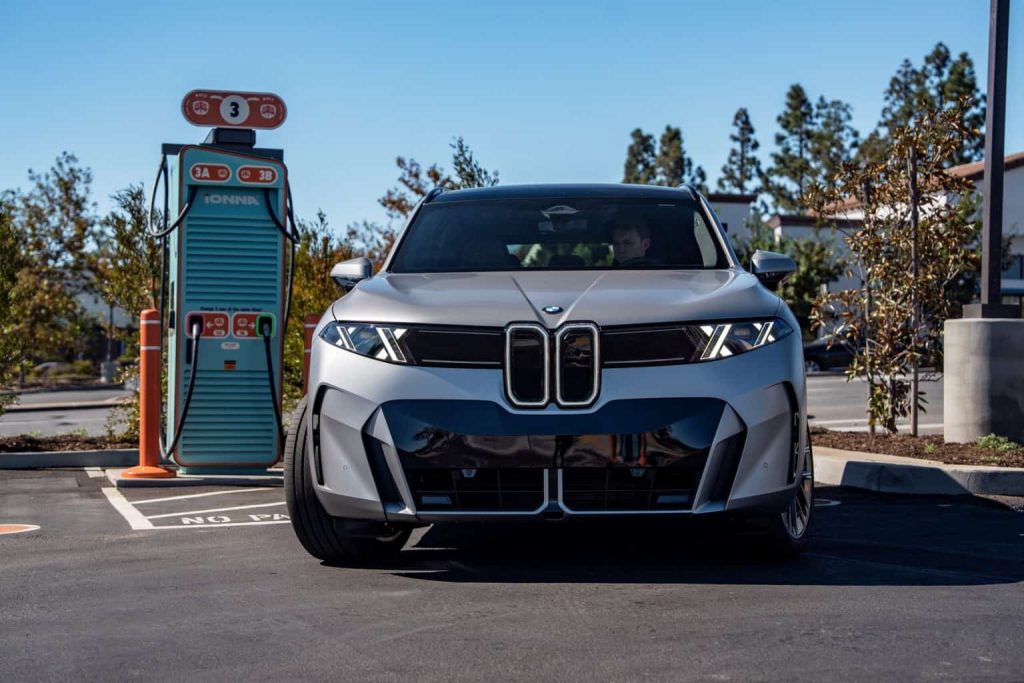
If temperatures move outside the preferred operating range, the vehicle may limit charging power to protect battery health and system safety. The battery therefore needs an effective cooling system, along with controls that manage temperature before and during a charging session.
The battery’s state of charge also affects charging speed. Charging power is generally easier to maintain at lower and moderate charge levels than when a battery approaches full capacity.
That is why manufacturers commonly advertise a 10% to 80% charging time rather than a time from empty to 100%. The final portion of a charge can take disproportionately longer as the system reduces power.
For drivers, preparation can influence the result. When a vehicle supports battery preconditioning, warming or cooling the battery before arriving at a fast charger can help it reach a suitable temperature.
The station must also be operating properly and have sufficient power available. If a charger is limited by its hardware, its power supply, or other operating constraints, the vehicle cannot compensate by accepting more energy than the station can provide.
BMW’s U.S. announcement says the iX5 60 xDrive can add up to 170 miles of EPA-estimated range in 10 minutes. That figure is a manufacturer claim under specified conditions, not a guarantee that every driver will gain that distance at every charging stop.
Ambient temperature, route conditions, driving speed, and the battery’s starting charge can all affect the actual range gained.
The distinction between the demonstration and current infrastructure is especially important. BMW explicitly states that the 460-kW experience does not represent charging hardware commercially available in the United States today.
Drivers should not assume they can reproduce the result simply by visiting an existing public fast-charging station. The demonstration shows the potential of the vehicle and charging system working together, rather than the charging speeds currently available across the public network.
What the Technology Could Mean for Long-Distance EV Travel
For drivers covering long distances, faster charging could reduce the time spent waiting at public stations. A large electric SUV needs substantial energy to replenish its battery, particularly after a long highway leg.
If the vehicle can accept high power for a meaningful part of a charging session, drivers may be able to regain a useful amount of range during a shorter stop.
BMW’s claimed 22-minute charging time from 10% to 80% gives a clearer picture of the potential benefit than the peak rate alone. Still, charging speed is only one part of a successful road trip.
Drivers need reliable stations along their route, enough capacity to avoid long queues and clear information about whether a charger is working. A vehicle capable of accepting very high power offers less practical advantage if suitable stations are unavailable.
That is where IONNA’s role becomes relevant. The company is developing a public charging network with an emphasis on reliability, convenience, and the customer experience. Alpitronic, meanwhile, specializes in high-power charging equipment.
Their collaboration with BMW illustrates how automakers and charging providers are working to coordinate vehicle capability with infrastructure development.
The iX5’s Gen6 technology also includes bidirectional charging functionality, according to BMW. Depending on the supported hardware, standards, and market-specific implementation, bidirectional systems can allow energy to flow from a vehicle’s battery to an external device or compatible installation.
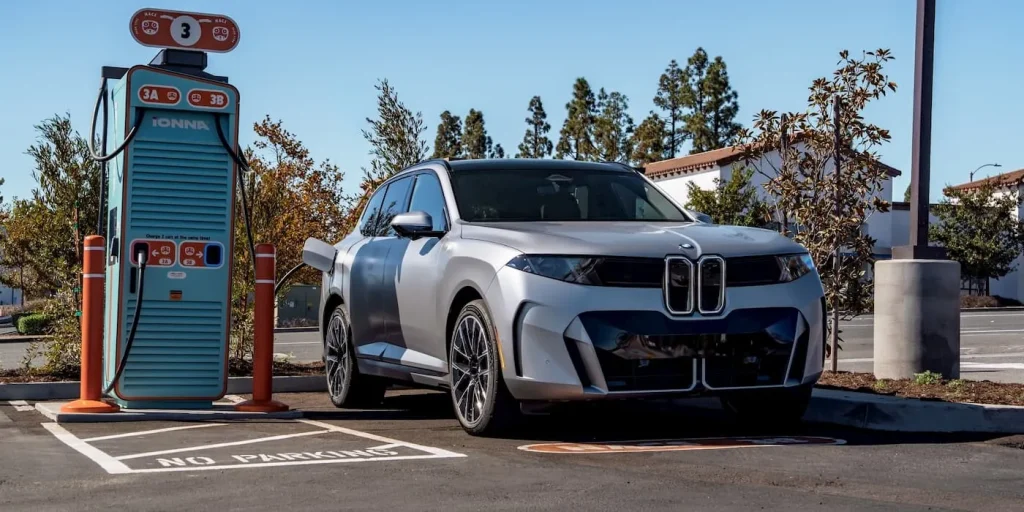
Availability and use cases will depend on the final vehicle configuration and supported equipment, so this capability should not be confused with the 460-kW charging demonstration itself.
For U.S. buyers, the key question will be how quickly this technology moves from a controlled demonstration into infrastructure that is available for everyday use. The vehicle’s claimed charging time is promising, but drivers will need compatible chargers and real-world testing to establish how consistently it can be achieved across different conditions.
BMW’s 460-kW demonstration marks a technology milestone for the upcoming electric iX5, showing what its 800-volt Gen6 system can achieve when paired with high-power charging equipment.
A single peak charging rate does not tell the whole story, as actual performance depends on battery temperature, charge level, charger capacity, and the availability of compatible stations. Although faster charging could make long-distance EV travel easier, its full potential will only be realized if vehicle technology and public charging infrastructure continue to improve together.