

Audi is preparing to make a major change to the way it sells cars in the United States. The German luxury automaker has announced plans to invest approximately $4 billion in its first U.S. manufacturing facility, choosing Georgia as the home of a new factory designed to build premium SUVs for North American customers.
The project represents more than an expansion of Audi’s production capacity. It signals a shift in how the company plans to compete in one of the world’s most important luxury vehicle markets, where import costs, trade policies, and fierce competition have made local manufacturing increasingly attractive.
Announced in October 2026, the proposed facility is expected to create around 4,500 jobs and eventually produce as many as 200,000 vehicles annually. Production is targeted for the early 2030s, giving Audi several years to prepare the site, establish its supply chain and develop the manufacturing operation.
For a brand that has long relied on vehicles manufactured outside the United States, the move could reshape its relationship with American buyers while strengthening its position within Volkswagen Group’s global operations.
Georgia Will Become the Home of Audi’s First American Factory
Audi has selected the Middle Georgia Mega Site in Peach County, near Macon, for its planned U.S. manufacturing facility. The location offers room for a large-scale industrial operation, access to established transportation networks and proximity to an automotive supplier base that has grown alongside the Southeast’s expanding vehicle industry.
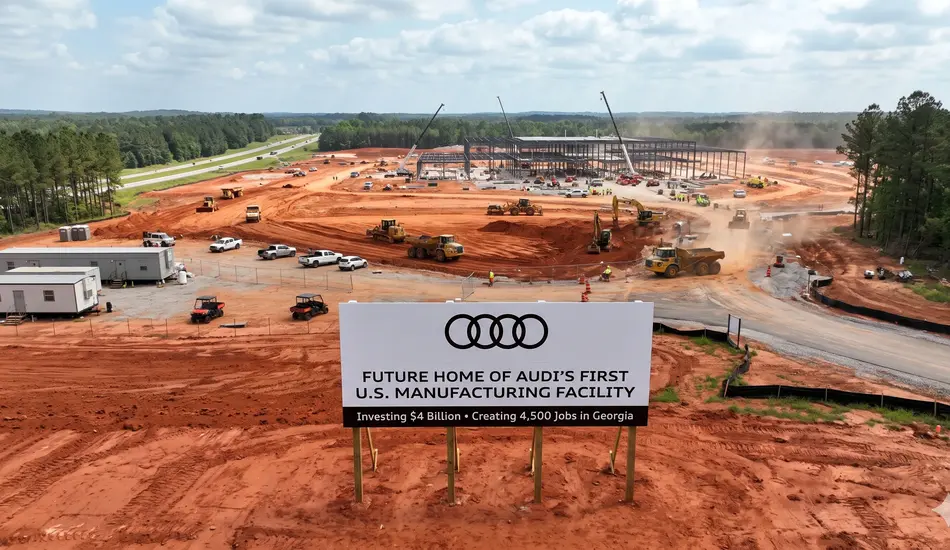
Georgia has spent years positioning itself as a destination for major automotive investments. The state already benefits from its transportation infrastructure, workforce development programs and connections to international shipping routes. Audi’s arrival would add another major name to that manufacturing ecosystem.
The company expects the project to create approximately 4,500 jobs, including opportunities associated with production and the wider network of suppliers and service providers. State workforce programs are expected to help prepare employees through specialized training and partnerships with technical colleges.
The facility will be designed around Audi’s future manufacturing needs, with an emphasis on flexible production systems and efficient operations. Rather than adapting an existing factory, the automaker will be able to plan the site around its own requirements from the beginning.
The current schedule calls for preparatory work to begin in 2027, followed by construction in 2028, according to Georgia officials. Full production is targeted for 2031, although Audi’s broader announcement describes the launch as occurring in the early 2030s. The planned annual capacity is up to 200,000 vehicles.
That timeline means the project will not immediately change the availability or pricing of Audi models in American showrooms. Its significance lies in establishing a long-term manufacturing presence that can support the brand for decades.
Premium SUVs Will Be at the Center of Production
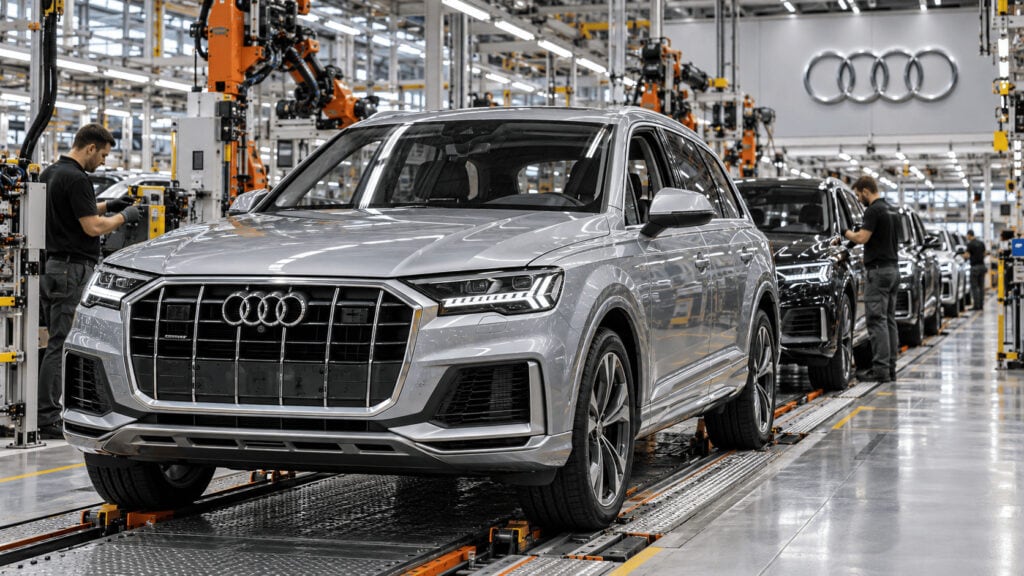
Audi has made clear that the new factory will focus on premium SUVs tailored to North American customers. That decision reflects the importance of larger vehicles in the U.S. market, where buyers often prioritize interior space, comfort, performance, and everyday practicality alongside luxury features.
Reuters reported that the planned production lineup could include the Audi Q7, Q8 and Q9. Those models were identified by a U.S. official, rather than confirmed as a final lineup by Audi itself, so the precise vehicles to be built at the facility remain subject to clarification.
The emphasis on SUVs makes commercial sense. Audi competes against established luxury brands such as BMW and Mercedes-Benz, as well as premium offerings from Lexus and other manufacturers. Producing popular vehicles closer to their destination market could help Audi respond more effectively to changes in customer demand.
Local production could also make it easier to adjust output as the market shifts between different powertrains and vehicle configurations. The exact manufacturing plans have not been fully disclosed, however, and Audi has not publicly detailed the powertrains that will be assembled at the Georgia site.
The factory’s eventual output will be important to the economics of the investment. A facility capable of building 200,000 vehicles annually would give Audi substantial room to expand its American business, but reaching that level will depend on demand, product availability and the company’s ability to compete on price and value.
For consumers, the main advantage could be that more Audi models sold in the U.S. are eventually built locally. However, whether domestic production leads to lower prices will depend on factors such as manufacturing expenses, transportation costs, tariffs, and Audi’s pricing strategy.
Tariffs Are a Major Reason Behind the Move
Audi’s investment comes at a time when trade policy has become a significant factor in the automotive industry’s manufacturing decisions. Importing vehicles into the United States can expose automakers to tariffs, currency fluctuations, and other costs that are difficult to control when production takes place thousands of miles away.
Audi currently imports the vehicles it sells in America from production facilities outside the country, including plants in Europe and Mexico. Establishing domestic manufacturing would give the company another way to manage those expenses and reduce its exposure to future trade disruptions.
The financial pressure has already been substantial. Reuters reported that U.S. tariffs cost Audi approximately €1.2 billion, or about $1.4 billion, in 2025. Audi’s American sales have also faced headwinds, with Reuters reporting a 16% decline in U.S. sales during 2026 at the time of its October coverage.
Those figures help explain why local production has become a strategic priority. Instead of relying entirely on imported vehicles, Audi would be able to manufacture a substantial volume of SUVs within the market where they are sold.
President Donald Trump presented the announcement as evidence that his tariff policies are encouraging automakers to invest in American manufacturing. However, tariffs are not the only consideration. Audi has also identified the size of the U.S. luxury market and its ambitions for long-term growth as reasons for expanding its production footprint.
One key challenge is that constructing a new factory can take several years, and domestic production would not shield Audi from import costs across its entire vehicle lineup. The company would still need to secure parts, establish supplier networks, and control manufacturing expenses. Nevertheless, a U.S. facility could give Audi more flexibility in planning production and meeting the needs of American buyers.
Audi Wants America to Become a Bigger Part of Its Future
The Georgia project fits into a broader effort by Volkswagen Group to strengthen its position in North America. Audi has a recognizable premium image, but it faces competition in the United States while the wider group navigates changing demand, pressure on costs and intense competition in other global markets.
Audi says the new facility will help make North America a third major pillar of its global production network, alongside Europe and China. The company has also stressed that Germany and Europe will remain central to its engineering expertise and industrial operations.
That distinction matters. The factory is not a replacement for Audi’s European manufacturing base. It is intended to complement it by bringing production closer to an important customer market and making the company’s operations more balanced.
The investment also carries risks. Audi must commit billions of dollars before the factory begins producing vehicles, while the luxury market could change considerably by the early 2030s. Demand, labor costs, supplier capacity and future trade rules will all influence whether the plant delivers the expected returns.
Volkswagen Group has also said the U.S. plant proposal remains subject to approval by the relevant corporate committees, an important qualification as the project moves forward.
For Georgia, the opportunity is substantial. Thousands of jobs, new supplier contracts and additional investment could bring lasting economic benefits to the region. For Audi, success will depend on turning that manufacturing capacity into vehicles that American buyers genuinely want.
Audi has made its ambitions clear, signaling its commitment to expanding its presence in the U.S. through a major investment. Although production is still several years away, the planned $4 billion factory could represent a significant turning point for the German luxury automaker in the American market.
