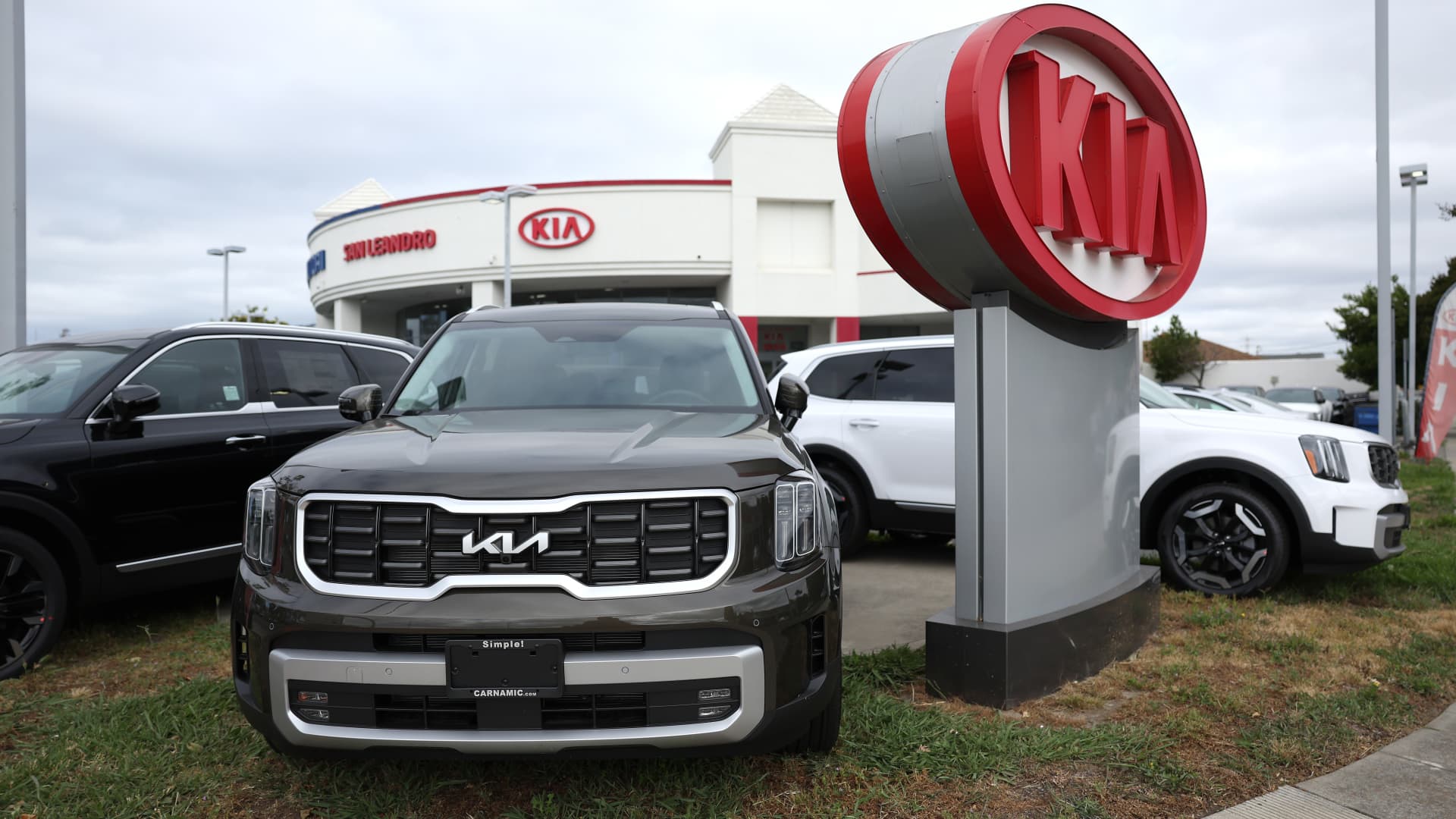
Cox Automotive expects U.S. new-vehicle sales to reach approximately 1.38 million units in October 2026, representing a 7.2% increase compared with October last year. The forecast suggests that demand remains relatively strong despite high vehicle prices, financing costs, and pressure on household budgets.
Cox also projects a seasonally adjusted annualized rate (SAAR) of approximately 16.1 million vehicles, indicating a market running at a healthier pace than some affordability concerns might suggest.
However, these projections should be viewed in context, as sales estimates can be affected by the number of working days, vehicle inventory, promotional incentives, and shifts in consumer buying habits. October’s sales figures will provide further insight into whether the U.S. automotive market can sustain its momentum through the final months of the year.
October Sales Forecast Points to a Steady Market
Cox Automotive’s October 27 forecast puts total new-vehicle sales at 1.38 million units, up 3.6% from September and 7.2% from October 2025. The projected SAAR is 16.1 million, compared with 16 million in September and 15.7 million a year earlier.
SAAR converts a single month’s selling pace into an annual rate after adjusting for seasonal patterns. It is useful for comparing market momentum across months, but it is not a prediction that exactly 16.1 million vehicles will be sold during calendar 2026.
The difference between the 7.2% volume increase and the more modest change in the annualized rate is important. October has 28 selling days, three more than September and one more than October 2025.
That additional time gives dealerships more opportunities to complete transactions, lifting the raw monthly total. Cox notes that October typically experiences a slower sales pace than September, which offsets some of the calendar advantage.
The higher unit count should therefore not be interpreted as a sudden jump in underlying consumer demand.
Cox’s forecast places the market on a relatively consistent track that has persisted since March, with the annualized pace staying in the low-to-mid 16-million range.
Jonathan Gregory, senior director of Economic and Industry Insights at Cox Automotive, said healthy fleet sales, wealthier new-vehicle buyers, and greater access to credit are helping support activity. He also said high gasoline prices and historically weak consumer confidence have not affected new-vehicle sales as much as might have been expected.
The financial profile of today’s new-car buyers helps explain this resilience, as higher-income households are generally better equipped to manage inflation and rising borrowing costs.
This does not mean every part of the market is equally strong. Buyers with tighter budgets face a different calculation, particularly when comparing monthly payments, insurance, fuel, and maintenance costs.
A healthy industry-wide sales pace can coexist with difficulty for shoppers who need an affordable vehicle or cannot qualify for attractive financing. The forecast describes aggregate demand, not the financial experience of every household.
SUVs and Compact Cars Lead the Segment Growth
Cox expects six of the seven vehicle segments it tracks to record year-over-year sales growth in October. Subcompact SUVs and crossovers are forecast to post the largest increase, with volume expected to reach 120,000 units, up 17.6%.
Compact cars follow with projected sales of 95,000, a 15.6% increase. Midsize SUVs and crossovers are expected to reach 235,000 units, up 9.4%, while compact SUVs and crossovers are forecast at 240,000, a 4% gain. Compact SUVs alone are expected to account for 17.5% of the market.
The strength of smaller SUVs suggests that buyers continue to value a combination of passenger space, a higher seating position, and manageable exterior dimensions. Subcompact models can offer much of the utility associated with larger crossovers while generally carrying lower purchase prices and operating costs.
That positioning can appeal to households looking for flexibility without moving into a more expensive midsize SUV. Compact cars’ projected 15.6% increase is also notable, indicating that demand for traditional passenger cars has not disappeared even as SUVs dominate much of the market.
Full-size pickups are forecast to reach 195,000 units, up 2.1% from a year earlier and 2.5% from September. The segment remains important to the U.S. market because pickups serve personal, commercial, and fleet buyers.
However, their growth forecast is more modest than that of subcompact SUVs and compact cars. Midsize cars are the only category expected to decline year over year, with projected sales of 60,000 units, down 2.1%.
The numbers suggest that buyers are concentrating demand in segments that offer either practical utility or a relatively accessible entry price.
The segment forecast also gives dealers a useful inventory signal, although it should not be treated as a guarantee for individual models. A growing category can contain vehicles with very different transaction prices, incentives, and availability.
Dealers still need to match local demand with the specific trims and powertrains shoppers want. Cox’s projection indicates where the market may be expanding, not which individual nameplates will necessarily outperform.
Affordability Remains the Main Question Behind the Growth
The October forecast arrives against a difficult affordability backdrop. Cox Automotive and Moody’s Analytics reported that the average new-vehicle transaction price reached $50,562 in September, up 0.9% from August and close to the record of $50,614 set in December 2025.
The estimated average monthly payment rose to $776, the highest since December 2023. The average loan rate edged down to 9.45%, but that small improvement was not enough to offset the higher vehicle price. Incentives increased to approximately $3,359, providing some relief without reversing the pressure on buyers.
Those figures help explain why the October market can grow while affordability remains a serious concern. Buyers who can afford new vehicles are still purchasing, and fleet demand is contributing to total volume.
But the average transaction price shows that new vehicles remain expensive. A monthly payment also depends on the amount financed, loan duration, interest rate, down payment, and trade-in value. Two buyers purchasing the same model can face very different costs depending on their financing circumstances.
Credit availability is another part of the picture. Cox says broader access to credit has supported sales, but approval does not necessarily mean a loan is affordable over its full term.
Longer repayment periods can lower the monthly payment while increasing the total interest paid and keeping owners in debt for more years.
Shoppers also need to account for insurance, fuel or electricity, registration, and maintenance when deciding what they can reasonably spend.
For automakers and dealers, the forecast is encouraging because it points to continued sales activity despite weak consumer sentiment and high borrowing costs. The segment figures suggest that smaller SUVs and compact cars may offer opportunities to meet demand, while fleet sales and more affluent retail buyers continue supporting the market.
Yet the same data should discourage complacency. If prices and financing costs remain elevated, a large share of potential customers may postpone purchases, choose used vehicles, or move toward less expensive models.
Cox’s 1.38-million-unit estimate is a forecast, not the final October sales tally. The 16.1-million SAAR is the more useful indicator of the market’s underlying pace, while the additional selling days explain part of the headline year-over-year increase.
If the projection proves accurate, October will reinforce the picture of a U.S. auto market that is holding up better than consumer confidence might suggest. The bigger question is how long that resilience can continue while affordability remains strained.
Sustained demand will depend not only on buyers with high incomes but also on whether manufacturers can offer vehicles and financing that bring more households back into the new-car market.