
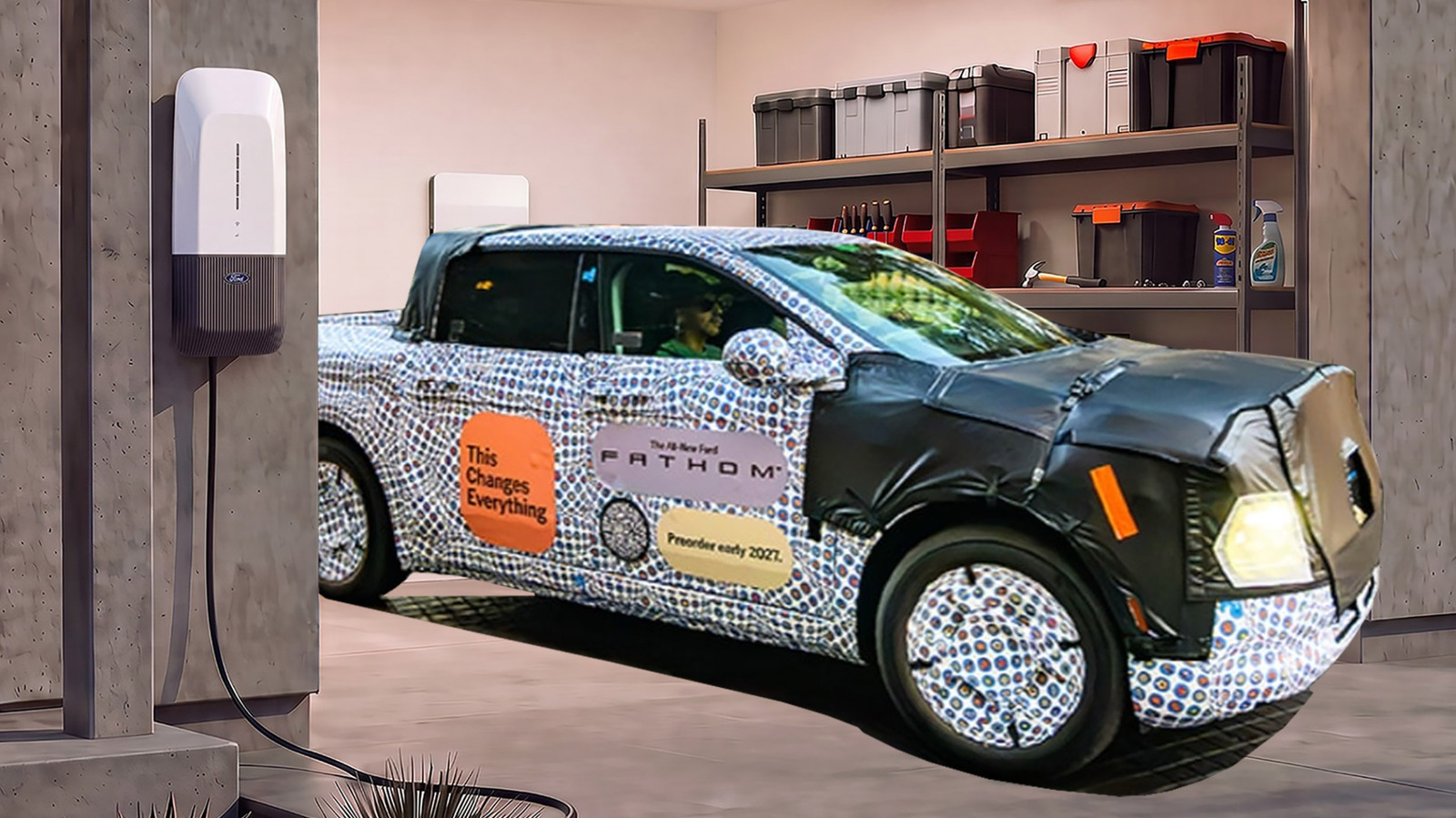
Ford is developing a lower-cost way for owners of its upcoming Fathom electric pickup to use the vehicle’s battery to power their homes. The system is designed to deliver more than a projected 10 kilowatts of alternating-current (AC) electricity without requiring a separate wall-mounted inverter.
By integrating the inverter into the truck, Ford aims to reduce the number of components and make bidirectional charging more affordable. The capability could help owners manage electricity costs and provide backup power during outages.
However, the feature will require additional setup rather than working straight out of the box. Customers will need compatible Ford home-energy equipment, while installation costs and final hardware pricing remain unannounced.
Ford Moves the Inverter Inside the Fathom
In its October 27, 2026 announcement, Ford addressed a major obstacle to vehicle-to-home technology, namely the expense and technical complexity of power conversion. An EV battery stores electricity as direct current (DC), whereas most household electrical systems operate on alternating current (AC).
Sending energy from the battery into a home therefore requires power-conversion equipment. On many existing systems, that conversion is handled by an inverter installed in a wall-mounted charger or a separate home unit.
Ford says the Fathom will take a different approach. Its inverter will be integrated into the vehicle’s E-box, one of five main modules in the Universal Electric Vehicle platform. The E-box combines several electrical functions, allowing Ford to reduce separate components and simplify the system.
The company says the truck is projected to supply more than 10 kW of AC power to a home without a separate wall-mounted inverter. The figure is a projection, not a final independently verified output measurement.
The redesign builds on Ford’s 2023 acquisition of Auto Motive Power, a startup focused on electric-vehicle power electronics. Ford says the acquisition helped it develop bidirectional hardware and software for its new platform, integrating more functions into the vehicle rather than relying on expensive external equipment.
The Fathom is expected to arrive in 2027 with a starting price of $28,350 before the destination charge and other fees. That positions the truck below many electric pickups and makes the integrated power system particularly significant.
A home-energy feature that previously required expensive additional equipment could become more attractive if Ford can keep the supporting hardware and installation costs under control.
How Owners Can Use the Truck to Power a Home
Ford outlines two primary applications for the system, home energy management and backup power during outages. Each serves a distinct purpose and requires its own equipment setup.
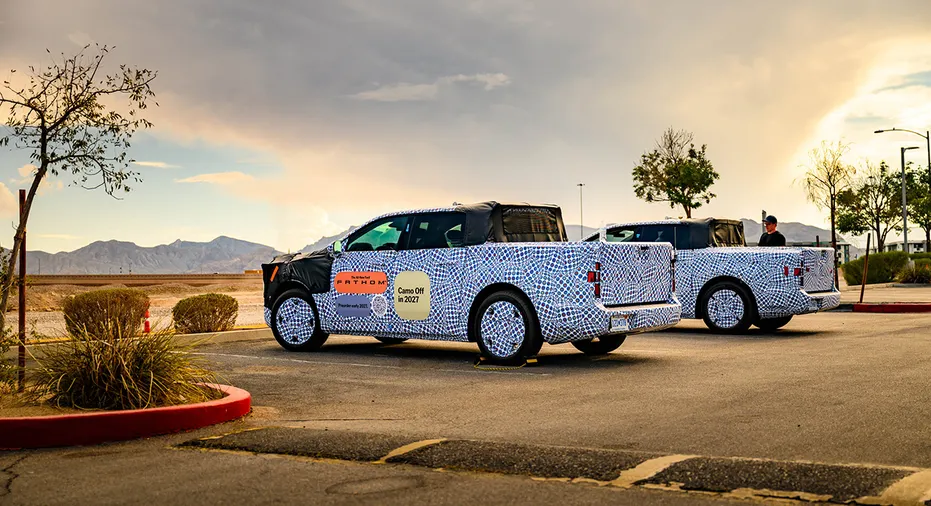
Home Power Management is designed to help customers respond to changing electricity prices. Owners could charge the Fathom when electricity rates are lower, then use energy stored in its battery to supply their home when rates rise.
This could reduce electricity bills for households on time-of-use plans, where prices vary depending on the time of day. This could be useful in regions where utilities charge different rates depending on demand.
The financial benefit will vary by electricity plan, local rates, and how much energy the household uses during peak periods.
Frequent charging and discharging also need to fit the owner’s driving schedule, because electricity reserved for the home is not available for the next trip. For this function, Ford says customers will need its Home Power Station.
The company expects this equipment to cost about half as much as its first-generation bidirectional charger, although it has not published a final retail price.
Home backup power is intended for outages. When enabled and properly connected, the truck can send electricity to a home when the utility supply is interrupted. This setup requires both the Home Power Station and Ford’s Home Backup Panel.
Ford says the new backup panel is expected to cost at least 60 percent less than its first-generation equivalent. The exact price, installation expense, and subscription details have not yet been finalized.
More than 10 kW could support important household loads, but it does not guarantee that every home can run every appliance simultaneously. Actual capability will depend on the electrical configuration, installed equipment, available battery charge, and connected circuits. High-demand appliances operating together could exceed the available power.
This is not simply a matter of plugging an appliance into the truck. Home backup requires a properly installed connection and equipment to manage power transfer. The backup panel is essential to the outage setup.
Lower equipment costs could make the system more appealing than earlier bidirectional packages. The F-150 Lightning’s home-backup arrangement required a bidirectional charger and additional integration hardware.
Ford says the new equipment will cost substantially less, but buyers should compare the complete installed cost rather than hardware prices alone.
Utility Rules and Installation Will Determine How Useful It Becomes
Making the hardware less expensive is only one part of bringing bidirectional charging to more households. Connecting a vehicle to a home, and potentially operating it in parallel with the electricity grid, involves technical standards and utility procedures.
Ford says its system is designed to meet applicable UL 1741 requirements and comply with IEEE 1547 interconnection standards. It also uses SAE J3068 communication technology, which Ford says helps reduce the cost of the charging equipment.
In July 2026, Ford formed a working group with American Electric Power, BC Hydro, Consumers Energy, Exelon, and Pacific Gas and Electric to address inconsistent interconnection procedures.
Many existing rules were developed around stationary batteries and solar systems rather than vehicles connected to homes.
Ford and the participating utilities have proposed distinguishing between isolated home backup and systems that operate in parallel with the grid.
Under the principles outlined by the working group, a customer using an EV only to charge or provide isolated backup power should not face the same interconnection process as someone exporting electricity to the grid.
Grid-parallel operation would still require appropriate approval. These are recommendations for clearer procedures, not a nationwide exemption already in force. Local utility rules will continue to matter.
There is also an important difference between using the truck to power a home and selling electricity back to the grid. Ford’s announced Home Power Management and Home Backup Power functions focus on household use.
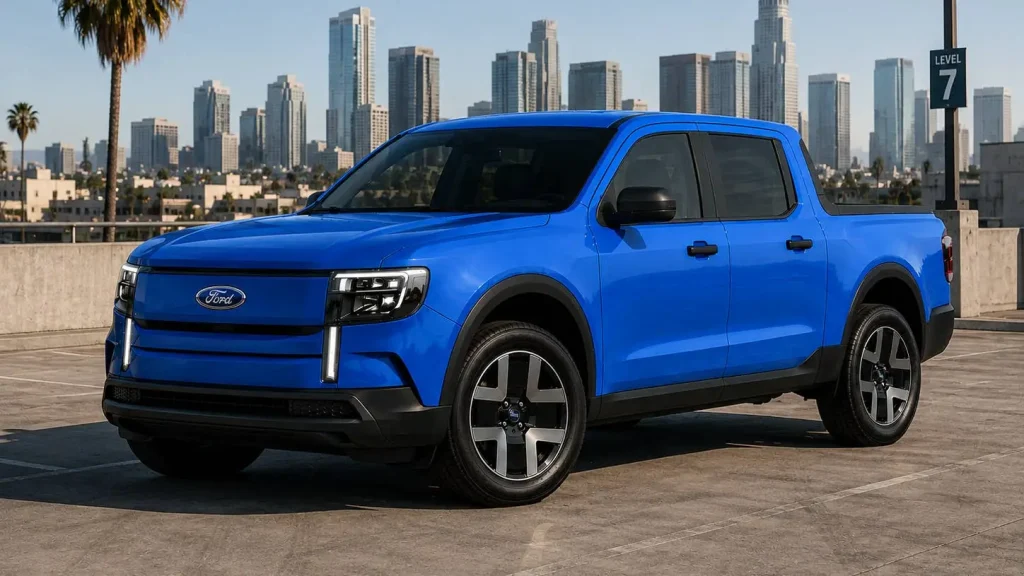
Sending power into the wider grid can involve additional utility agreements, technical requirements, and compensation arrangements. Ford is working with utilities on the broader potential of bidirectional vehicles, but customers should not assume that every Fathom owner will automatically be able to earn money by exporting electricity.
For buyers, value will depend on battery charge, household demand, and installation costs. Owners must balance backup use against the driving range they need. Installation may require electrical work and permits, and Ford has not provided final equipment prices or a complete installed-cost estimate.
The Fathom’s bidirectional system is a meaningful attempt to make vehicle-to-home power less expensive by moving the inverter into the vehicle and simplifying the supporting hardware. If Ford delivers the projected output and keeps the Home Power Station and Backup Panel affordable, the pickup could offer more than transportation.
It could also serve as a household energy resource during expensive electricity periods and power interruptions. The technology’s real impact, however, will depend on final pricing, installation requirements, utility rules, and the truck’s eventual production launch in 2027.
