
The three-row SUV segment has traditionally required buyers to accept a compromise between passenger space and fuel economy. Larger vehicles offer the room families need, but their weight and conventional gasoline engines often result in frequent visits to the fuel station.
Hyundai is addressing that challenge with the 2027 Palisade Hybrid, which combines three-row seating with a turbocharged hybrid powertrain producing 329 horsepower. The SUV delivers up to 34 mpg combined in front-wheel-drive configuration and 30 mpg with all-wheel drive, according to Hyundai’s U.S. specifications.
Recognized by WardsAuto for its powertrain technology, the Palisade Hybrid demonstrates how manufacturers are adapting electrification to larger family vehicles.
Hyundai Brings Hybrid Efficiency to Its Three-Row Flagship SUV
The introduction of the Palisade Hybrid represents an important expansion of Hyundai’s electrification strategy in the American market. Rather than limiting hybrid technology to smaller sedans and compact crossovers, the manufacturer has applied it to a midsize SUV designed to accommodate larger families.
This is particularly relevant in the United States, where three-row vehicles remain popular among households requiring additional passenger capacity, flexible cargo arrangements, and the ability to undertake longer journeys.
According to Hyundai’s official U.S. specifications, the 2027 Palisade Hybrid achieves 34 mpg combined in SEL and SEL Premium front-wheel-drive configurations. The Limited, Calligraphy, and Calligraphy Black Ink front-wheel-drive models are rated at 31 mpg combined.
Buyers selecting all-wheel drive receive an EPA-estimated 30 mpg combined across the available hybrid trims. These figures make the 30-mpg claim accurate for AWD models, but the front-wheel-drive versions offer even better efficiency.
The difference is significant for customers who regularly drive long distances. Hyundai estimates a maximum driving range of 619 miles for the SEL and SEL Premium front-wheel-drive models, using an 18.2-gallon fuel tank and the EPA-estimated 34 mpg combined rating.
This gives the SUV the potential to cover substantial distances between fuel stops without requiring owners to change their driving routines or depend on charging infrastructure.
The Palisade Hybrid also received recognition in the 2026 Wards 10 Best Engines and Propulsion Systems awards. WardsAuto highlighted the engineering behind Hyundai’s hybrid system, particularly its combination of improved efficiency, reduced emissions, and stronger performance.
The recognition is notable because hybrid technology in a large SUV must do more than reduce fuel consumption. It also needs to deliver sufficient power when carrying several passengers, luggage, and additional equipment.
Hyundai’s approach is aimed at customers who want the practicality of a full-size family-oriented vehicle without accepting the fuel consumption traditionally associated with a gasoline-powered three-row SUV.
The hybrid version retains the Palisade’s passenger-focused identity while introducing a more efficient alternative within the same model family.
A 329-HP Turbocharged Hybrid Powertrain Changes the Equation.
The biggest engineering development is underneath the hood. The 2027 Palisade Hybrid uses a 2.5-liter turbocharged four-cylinder gasoline engine combined with an electric hybrid system.
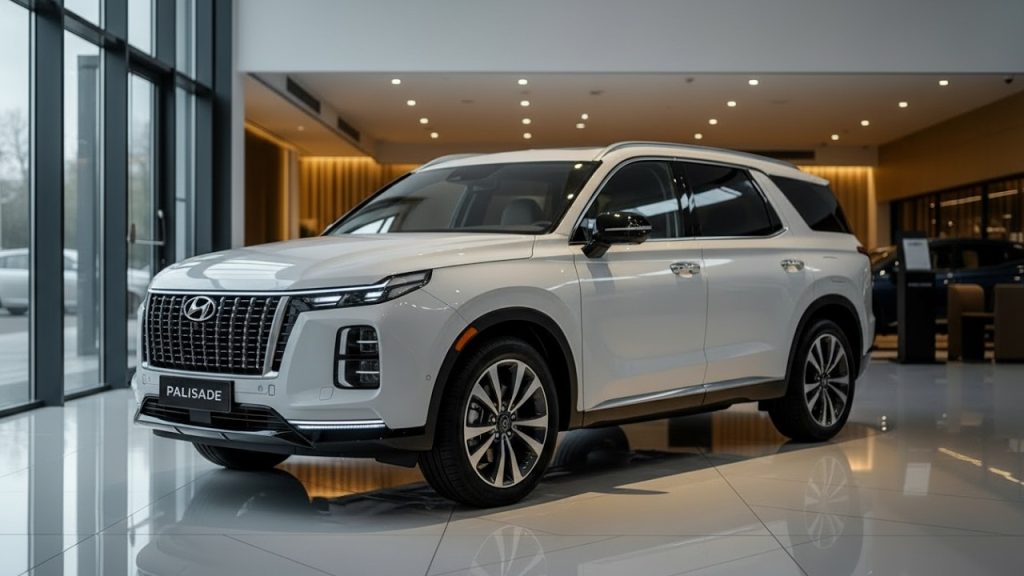
Together, the components produce 329 horsepower and 339 lb-ft of torque. Power is delivered through a six-speed automatic transmission, with front-wheel drive standard and Hyundai’s HTRAC all-wheel-drive system available across the trim lineup.
These figures represent a considerable increase over the conventional 3.5-liter V6 Palisade, which produces 287 horsepower and 260 lb-ft of torque. The hybrid therefore delivers 42 additional horsepower and 79 lb-ft more torque.
This is an important distinction because Hyundai is not asking customers to sacrifice performance in exchange for improved fuel economy. Instead, the manufacturer has developed a powertrain that offers more combined output while consuming less fuel under EPA testing conditions.
The electric assistance also plays an important role in how the vehicle responds to acceleration. Electric motors can provide torque without waiting for engine speed to build, helping the SUV move away from a standstill and respond during acceleration.
This characteristic is particularly useful in a vehicle designed to carry several passengers, where additional weight can make conventional engines work harder.
Hyundai’s hybrid engineering also focuses on reducing unnecessary engine operation and improving energy management. The system can use electric assistance during appropriate driving conditions, while regenerative braking recovers some of the energy normally lost during deceleration.
The recovered electricity is stored in the hybrid battery and made available to support the powertrain.
The battery itself has a relatively compact 1.65-kWh capacity. This is a conventional hybrid rather than a plug-in hybrid, meaning owners do not need to connect it to an external charger.
The vehicle manages battery charging through its gasoline engine and regenerative braking system. This makes the ownership experience closer to that of a regular gasoline SUV, with the additional efficiency benefits of electrification.
Hyundai has also incorporated a Stay Mode function. This feature monitors the hybrid battery system while the vehicle is parked, allowing occupants to use functions such as the infotainment system and climate control for extended periods.
It reflects the manufacturer’s effort to make the hybrid system useful beyond simply improving fuel consumption.
The transmission choice is another interesting part of the package. Instead of using a continuously variable transmission, Hyundai has paired the hybrid powertrain with a six-speed automatic.
This provides conventional gear changes and allows the vehicle to maintain a familiar driving character for customers transitioning from traditional gasoline-powered SUVs.
For buyers who need additional traction, HTRAC all-wheel drive is available. The system provides improved traction on slippery surfaces and offers selectable terrain modes for conditions such as mud, snow, and sand.
However, customers should remember that selecting AWD reduces the EPA-estimated combined economy to 30 mpg, compared with 34 mpg for the most efficient FWD versions.
Three-Row Practicality, Pricing, and Competition in the American SUV Market
Fuel efficiency is only part of the Palisade Hybrid’s appeal. Hyundai has retained the spacious cabin and family-focused features that make the conventional Palisade relevant to American households.
The SUV offers seating for seven passengers, while configurations with an available second-row bench can accommodate up to eight. This gives families flexibility when deciding between additional seating and easier access to the third row.
Cargo capacity is another important consideration. Hyundai lists 19.1 cubic feet of storage behind the third row, increasing to 46.3 cubic feet when the third row is folded.
With both rear seating rows folded, the available cargo area expands to 86.7 cubic feet. These figures make the vehicle suitable for grocery shopping, luggage, sports equipment, and longer family journeys.
The interior equipment also varies according to trim. The SEL Premium adds convenience and technology upgrades, while the Limited and Calligraphy versions introduce more premium materials and comfort features.
Higher trims offer amenities such as heated and ventilated front seats, heated second-row seats, a surround-view monitor, and additional driver-assistance technology.
Hyundai’s infotainment system includes a 12.3-inch touchscreen with navigation, while USB-C charging access extends across all three rows. Higher-end Calligraphy configurations also receive additional luxury-focused equipment. The availability of these features makes the hybrid more than an economy-focused alternative within the Palisade lineup.
Pricing starts at $44,560 for the 2027 Palisade Hybrid SEL. The SEL Premium begins at $47,920, while the Limited starts at $52,390. The Calligraphy and Calligraphy Black Ink are priced at $57,180 and $57,680, respectively.
These prices exclude freight charges, taxes, title, and licensing fees. By comparison, the conventional 2027 Palisade starts at $39,735, creating a noticeable entry-price difference between the gasoline and hybrid lineups.
The financial calculation becomes more interesting when fuel consumption enters the picture. The conventional V6 Palisade delivers 21 mpg combined in the front-wheel-drive configuration and 20 mpg with AWD.
The corresponding hybrid ratings are 34 mpg and 30 mpg for the most efficient FWD and AWD configurations. That represents an improvement of 13 mpg for FWD buyers and 10 mpg for AWD buyers.
For someone covering 15,000 miles annually, the difference could be substantial. Using the EPA combined ratings, a front-wheel-drive gasoline Palisade would consume approximately 714 gallons annually, compared with around 441 gallons for the hybrid.
That is a reduction of approximately 273 gallons per year. Actual savings will depend on fuel prices, driving patterns, and real-world mileage, but the difference provides a useful indication of the potential benefit.
The Palisade Hybrid also offers a maximum towing capacity of 4,000 pounds when properly equipped with trailer brakes. This is lower than the conventional Palisade’s maximum rating of 5,000 pounds, making the powertrain choice important for customers who regularly tow heavier trailers or recreational equipment.
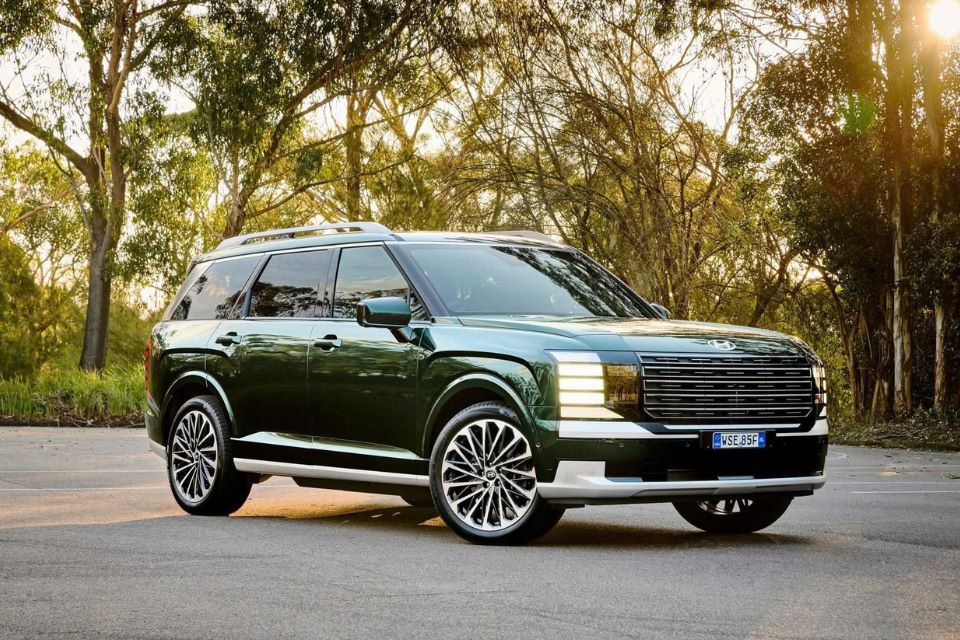
Hyundai’s decision to bring hybrid technology into this segment reflects changing expectations among American SUV buyers.
Not every household wants to move to a fully electric vehicle, particularly when long-distance travel, towing, and charging availability remain important considerations. A conventional hybrid provides an alternative without requiring owners to change their refueling habits.
The 2027 Palisade Hybrid makes that proposition particularly relevant by combining higher power output, three-row seating, and substantially improved EPA fuel economy. Its higher purchase price remains an important consideration, and buyers will need to evaluate whether their annual mileage justifies the additional expense.
Nevertheless, Hyundai has demonstrated that improved efficiency does not necessarily require smaller vehicles or reduced passenger capacity.
With up to 34 mpg combined, 329 horsepower, and seating for as many as eight occupants, the Palisade Hybrid gives American families another reason to consider electrified SUVs when choosing their next vehicle.