General Motors is preparing to move its stock-market listing from the New York Stock Exchange (NYSE) to the Nasdaq, a decision that reflects how the automaker wants investors to view its changing business.
Traditionally associated with vehicle manufacturing, GM is increasingly investing in software, artificial intelligence, connected services, and advanced vehicle technology. A Nasdaq listing would place the company alongside many technology-focused businesses, potentially strengthening that part of its corporate identity.
However, changing exchanges does not transform GM into a technology company overnight. Its core business remains manufacturing and selling vehicles, and the financial performance of its automotive operations will continue to matter most to shareholders.
GM Confirms Its Move to Nasdaq in November
GM formally announced the transfer on October 27, 2026, confirming that its common stock will leave the NYSE and join the Nasdaq Global Select Market. The company expects its shares to trade on the NYSE through the close of business on November 16.
Nasdaq trading is scheduled to begin on November 17, and the stock will retain its familiar ticker symbol, GM. Investors will not receive a new class of shares, and the company says existing shareholders do not need to take any action because of the exchange transfer.
GM Chief Financial Officer Paul Jacobson described Nasdaq as a natural fit for the company’s customer-focused, technology-driven strategy. His statement also acknowledged the automaker’s long relationship with the NYSE.
The move is therefore being presented as a strategic decision about the company’s future identity, rather than a criticism of its current exchange or a response to an immediate trading problem.
GM is expected to become the first traditional legacy automaker listed on Nasdaq, according to Reuters. That distinction is important because the exchange is strongly associated with technology, semiconductors, software, and internet businesses.
Nasdaq already hosts major companies whose valuations are closely linked to technology investment and future growth expectations. GM’s arrival would put a major Detroit-based vehicle manufacturer into that environment, even though its business model remains different from that of a pure technology company.
Why GM Wants to Be Closer to the Technology Sector
The exchange change comes as automakers face a transformation in what customers expect from their vehicles. Powertrain performance, safety, comfort, and reliability remain essential, but software increasingly influences the ownership experience.
Drivers now encounter connected services, digital interfaces, over-the-air updates, driver-assistance systems, and subscription-based features. GM wants investors to recognize that its future products may generate value through these technologies as well as through the sale of cars, trucks, and SUVs.

One area receiving attention is automated driving. GM has been investing in advanced driver-assistance technology, including systems designed to let drivers take their attention away from the road under specific operating conditions.
The company is also working on a software architecture intended to support future vehicle features and digital services. Reuters reported that GM sees automated-driving capabilities and other software-based functions as possible sources of additional revenue.
However, the opportunity is not guaranteed. Customers may resist recurring fees for features they expect to be included in the purchase price. Software must also work reliably, protect personal data, and provide a clear benefit.
Driver-assistance technology carries additional safety responsibilities, and its capabilities must be communicated accurately. GM will need to demonstrate that its software investments can create useful products and sustainable revenue, rather than simply adding development costs.
The company is also operating in a difficult competitive environment. Traditional automakers face pressure from higher costs, changing demand for electric vehicles, and competition from manufacturers offering increasingly software-rich products.
Chinese automakers have been particularly aggressive in combining digital features with competitive pricing. GM’s technology investments are part of its effort to remain relevant as the definition of vehicle competitiveness changes.
A Nasdaq listing may help communicate that strategy to investors, but the exchange itself does not create new technology or guarantee higher earnings.
GM will still have to prove that its vehicle platforms, software development, and advanced driving systems can compete in the market. Its ability to turn research and engineering into products customers actually use will matter far more than the location where its shares are traded.
What the Nasdaq Listing Could Mean for GM Shareholders
One practical benefit of the move is potential eligibility for inclusion in the Nasdaq-100 Index. GM specifically highlighted that possibility in its announcement. The Nasdaq-100 tracks 100 of the largest non-financial companies listed on the Nasdaq exchange, subject to its eligibility and selection rules.
Moving to Nasdaq makes GM eligible for consideration, but it does not mean the automaker will automatically enter the index. Inclusion would depend on the index provider’s methodology and decisions.
Potential index inclusion can matter because funds that track an index generally buy shares of companies included in it. If GM were selected, those funds could become additional holders of its stock.
That could broaden the shareholder base and potentially influence trading activity. But there is no guarantee of selection, and index membership alone does not determine a company’s long-term share performance.
For everyday investors, the transition should be operationally straightforward. The exchange venue changes, but the company’s underlying shares do not become a different security.
Brokerage platforms generally display the same ticker, although market-data pages and watchlists may update the exchange designation after the switch. The key date to remember is November 17, when Nasdaq trading is scheduled to begin.
The transfer also does not change the basic ownership rights attached to GM common stock. The ticker remains GM, and existing shareholders do not need to sell their holdings, open a new account, or exchange their shares simply because the listing venue changes.
Investors should nevertheless check with their broker if they have questions about how the transition will appear on account statements or trading platforms. GM’s announcement says no action is required from current shareholders.
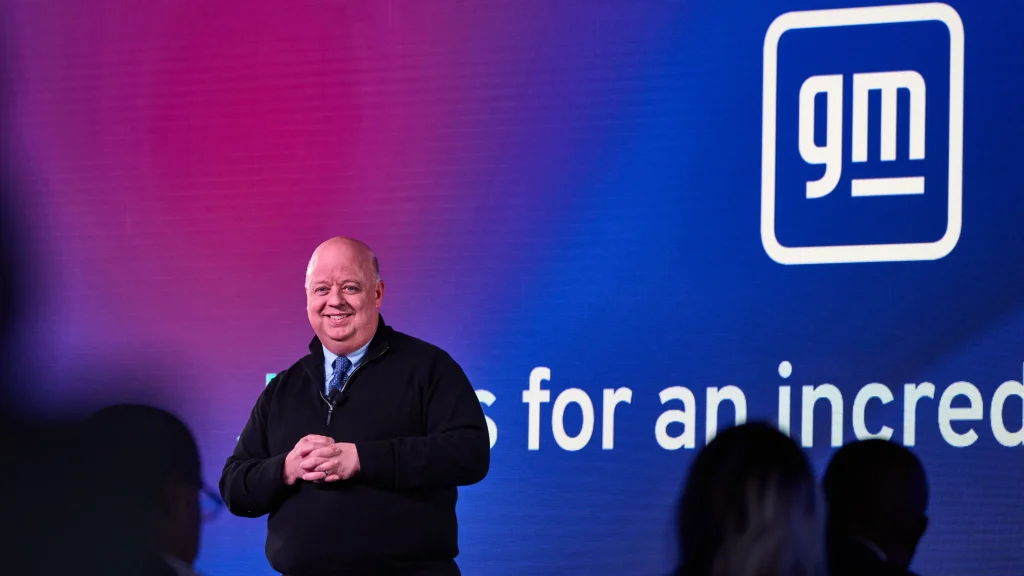
Reuters reported that GM had a market value of approximately $64.4 billion around the time of the announcement. Its shares rose in premarket trading after the news, suggesting that investors initially responded positively.
That short-term movement should not be treated as proof that the Nasdaq transfer will create lasting shareholder value. Market prices react to many factors, and the impact of the exchange change will be difficult to separate from GM’s operating results and broader market conditions.
For GM, the November 17 transition is a symbolic step with practical market implications, particularly because it opens the door to possible Nasdaq-100 consideration. The larger challenge is making the company’s technology ambitions commercially meaningful.
If software, connected services, and automated-driving features become dependable sources of customer value and revenue, the listing move may look consistent with a broader business transformation. If those initiatives fail to deliver, a different stock exchange will not change the underlying economics of building and selling vehicles.
The change therefore marks a shift in how GM wants to position itself in the investment market, not a change in what shareholders own.
The company will carry the same ticker, continue producing vehicles under its established brands, and face the same competitive pressures. Investors will be watching whether its technology-led strategy can produce measurable results long after the first day of Nasdaq trading.