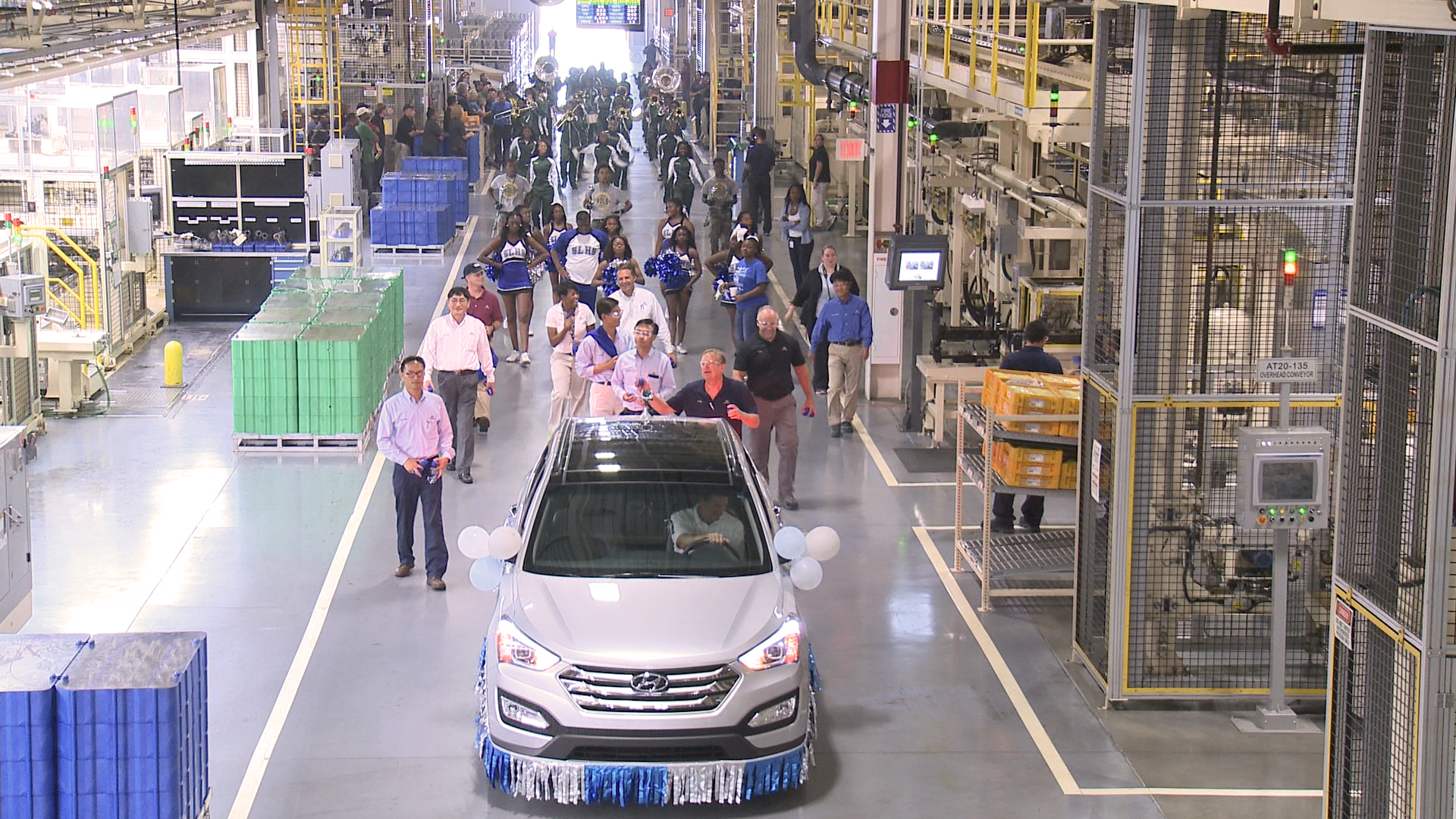
Hyundai is committing nearly $450 million to expand its manufacturing operations in Montgomery, Alabama, as it prepares for a broader range of hybrid and extended-range electric vehicles.
Announced on October 28, 2026, the investment will expand engine production capabilities, upgrade manufacturing equipment, and prepare the facility for upcoming versions of the Tucson and Santa Fe.
The project is also expected to create 53 full-time jobs. More importantly, it signals Hyundai’s intention to build a wider mix of powertrains in the United States rather than relying as heavily on imported engines and electrified vehicle components.
The expansion is part of a larger effort to strengthen the company’s North American manufacturing base.
Montgomery Plant Receives a Major Manufacturing Expansion
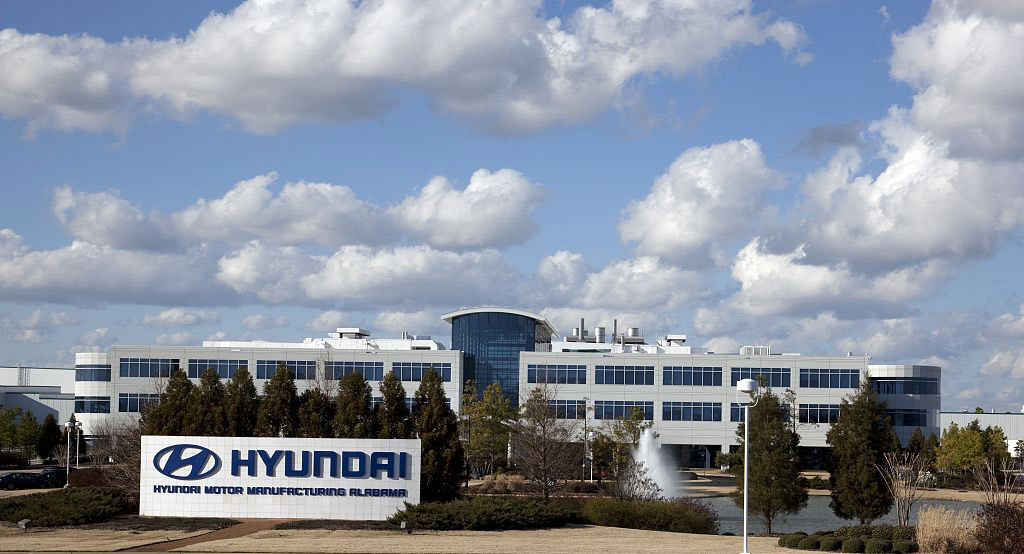
The investment will be carried out at Hyundai Motor Manufacturing Alabama (HMMA), the company’s vehicle assembly facility in Montgomery. Hyundai described the project as an expansion of production capabilities designed to support future vehicle programs and advanced propulsion technologies.
Although the announcement is commonly reported as a $450 million investment, Alabama’s official project description lists a capital investment of $412,885,541. The larger figure is the rounded public announcement, not a separate additional commitment.
The expansion has two central objectives. First, Hyundai will increase engine manufacturing capabilities to support a wider range of powertrain configurations, including hybrid and extended-range electric vehicle (EREV) technologies.
Second, the facility will receive upgrades to its manufacturing equipment and infrastructure to support upcoming generations of two key SUV models, the Tucson and Santa Fe.
The project is particularly relevant because the Montgomery factory already produces several major Hyundai vehicles for the North American market. Its existing lineup includes the Tucson, Santa Fe, Santa Fe Hybrid, and Santa Cruz.
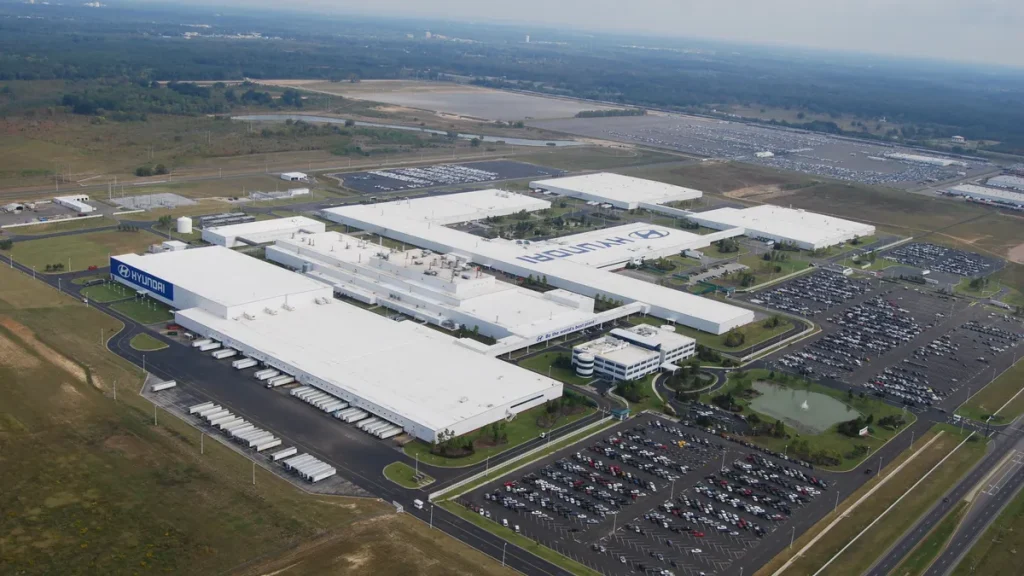
HMMA says the facility has the capacity to build up to 399,500 vehicles annually at full production. The investment is intended to help the factory handle additional product and powertrain requirements, rather than simply increase its existing output figure.
The new project is also expected to create 53 full-time positions. According to Alabama’s announcement, the roles will carry an average hourly wage of $30.03, equivalent to approximately $62,467 annually.
That is a relatively modest increase compared with the plant’s existing workforce of approximately 4,200 employees, but the jobs are part of a broader investment in manufacturing capability and technical expertise.
The economic impact extends beyond the factory itself. HMMA and its suppliers generate more than $5 billion in annual economic activity for Alabama, according to the state’s announcement.
The facility also contributes approximately $100 million in state tax revenue and more than $12 million in local tax revenue each year.
A larger manufacturing operation can support suppliers, logistics companies, and service providers throughout the region, although the eventual economic impact of this particular expansion will depend on production volumes and the timing of new vehicle launches.
With the latest commitment, Hyundai’s cumulative investment at the Montgomery facility will approach $2.2 billion since production began in 2005. The project therefore represents another major step in a relationship that has made the plant an important part of the state’s automotive industry.
Hybrid and EREV Production Are Central to Hyundai’s Plans
The most strategically important part of the expansion is the additional engine manufacturing capability. Hyundai is preparing the plant to produce a broader range of engines that can support hybrid vehicles and extended-range electric vehicles.
This signals a change in the company’s U.S. product strategy. Battery-electric vehicles remain a priority, but Hyundai is also investing in hybrids and other electrified powertrains to serve buyers who prefer alternatives to fully electric vehicles.
A conventional hybrid combines a gasoline engine with electric motors and a battery. The vehicle can use electric assistance during acceleration, recover energy through regenerative braking, and sometimes travel short distances using electric power alone.
It does not normally need to be plugged in. A plug-in hybrid uses a larger battery that can be charged externally, allowing a longer electric-only driving range before the gasoline engine takes over.
An EREV, or extended-range electric vehicle, follows a different arrangement. Its wheels are primarily driven by electric motors, while a gasoline engine acts as an onboard generator to produce electricity when the battery’s charge becomes low.
Depending on the system design, the engine may operate independently of the wheels rather than directly driving them. This allows the vehicle to retain an electric driving character while reducing dependence on charging infrastructure for longer journeys.
That distinction is important for Hyundai’s future lineup. The company is developing EREV technology as another option between conventional hybrids and fully battery-electric vehicles.
The architecture could appeal to drivers who want electric propulsion but are concerned about charging availability or long-distance travel.
Hyundai has previously outlined plans for an extended-range system targeting more than 600 miles of combined driving range, although that figure is a development target and should not be treated as a confirmed EPA rating for a production Alabama-built vehicle.
The Santa Fe is expected to play an important role in this strategy. Hyundai has identified the refreshed Santa Fe as one of the models that the Montgomery facility is preparing to build, while reporting from South Korean outlets has connected the company’s U.S. EREV plans with future Santa Fe production.
The investment announcement itself confirms preparation for advanced propulsion technologies, but Hyundai has not publicly detailed every final powertrain specification or production configuration for the Alabama-built model.
Tucson is another major part of the plan. Hyundai is preparing the plant for the next-generation SUV, including hybrid variants. This is strategically significant because the Tucson is one of the brand’s important volume models in the United States.
Local production of hybrid versions would give Hyundai greater control over manufacturing and supply, while reducing the need to ship those vehicles from overseas facilities.
At present, the Tucson Hybrid sold in the United States has been produced in South Korea. Bringing future hybrid production to Alabama would give Hyundai a domestic manufacturing source for a model that competes in one of the country’s largest vehicle segments.
It could also make production more responsive to changes in regional demand. However, the company has not disclosed final production volumes or a detailed schedule for every version of the next-generation Tucson.
The Investment Strengthens Hyundai’s Wider U.S. Manufacturing Strategy
The Montgomery expansion is not an isolated investment. It forms part of Hyundai Motor Group’s broader commitment to invest $26 billion in the United States between 2025 and 2028. That strategy covers manufacturing, research and development, new technologies, and other business operations.
The Alabama project is one part of the effort to increase the group’s ability to build vehicles and powertrain components closer to American customers.
Hyundai has also expanded its U.S. manufacturing presence through Hyundai Motor Group Metaplant America in Georgia. That facility is focused on electric vehicle production and battery-related operations, giving the group another major manufacturing base in the Southeast.
The two facilities have distinct but complementary responsibilities. Georgia is focused on advancing the company’s battery-electric vehicle plans, while the Montgomery plant is being upgraded to produce a broader mix of conventional and electrified powertrains.
This approach reflects the reality of the U.S. market. Battery-electric vehicle adoption continues, but demand varies by vehicle category, region, price, and charging access.
Hybrids have become an important alternative for customers who want better fuel economy without changing their refueling habits. EREVs could offer another option by providing electric propulsion with an onboard generator for longer journeys.
For Hyundai, manufacturing flexibility is therefore becoming as important as adding capacity for a single technology. A factory that can support multiple engine and powertrain configurations gives the automaker more room to adjust its product mix as customer demand and regulations change.
It can also strengthen the local supply chain and reduce some of the risks associated with relying on overseas production for high-demand models.
There is a competitive advantage in localizing popular hybrid vehicles as well. Toyota, Honda, and other manufacturers have built strong positions in the American hybrid market. Producing more hybrid models domestically could help Hyundai respond more effectively to those rivals, particularly in the compact and midsize SUV categories.
The Tucson Hybrid and Santa Fe are important products in that competition, so preparing the Alabama facility for their next iterations is a commercially significant move.
The investment also reinforces Montgomery’s position within Hyundai’s North American operations. The plant has operated since 2005 and already employs thousands of workers.
Its supplier network and established manufacturing infrastructure provide a foundation for introducing new equipment and production processes without building an entirely new facility.
However, the expansion should not be confused with a confirmed increase in annual vehicle capacity or a guarantee of a particular number of hybrid and EREV vehicles.
Hyundai has announced the investment, manufacturing upgrades and future model preparations, but has not released detailed output targets for each powertrain. Those figures will be necessary to measure the project’s full effect once the new production arrangements are operational.
For now, the nearly $450 million commitment sends a clear message about Hyundai’s priorities in the United States. The company is not relying exclusively on battery-electric vehicles to shape its next phase of growth.
Instead, it is preparing its Alabama operation for conventional engines, hybrids and extended-range electric technology while updating the facility for future Tucson and Santa Fe models.
With 53 additional jobs and cumulative investment approaching $2.2 billion, the project strengthens both Hyundai’s manufacturing footprint and Alabama’s role in the changing American automotive industry.