
Ford has raised the lower end of its 2026 adjusted operating profit forecast by $500 million, signaling confidence in its financial performance despite rising material costs and production challenges.
Following its third-quarter results on October 28, the automaker increased its full-year adjusted earnings before interest and taxes (EBIT) guidance to $10.5 billion to $11 billion, up from the previous range of $10 billion to $11 billion.
The improvement comes as Ford faces higher prices for steel, copper, fuel, and semiconductors, alongside a temporary supplier disruption affecting F-150 production. Strong truck demand, an improved product mix, and cost-control measures are helping offset those pressures.
Ford Raises Its Profit Outlook After a Strong Third Quarter
Ford’s third-quarter financial performance provided the foundation for its improved annual forecast. The company reported revenue of $49.5 billion, down 2% from $50.5 billion in the same period of 2025. However, adjusted EBIT increased to $2.7 billion from $2.6 billion, demonstrating that Ford generated slightly higher adjusted operating earnings despite lower revenue.
Net income reached $2 billion, compared with $2.4 billion a year earlier. Adjusted earnings per share were 49 cents, exceeding the 45 cents reported in the third quarter of 2025. The results show that Ford’s profitability improved on an adjusted basis, although its reported net income declined.
The guidance change is relatively specific. Ford raised the bottom of its adjusted EBIT forecast from $10 billion to $10.5 billion while retaining the upper limit of $11 billion. This narrows the company’s expected range and increases its midpoint from $10.5 billion to $10.75 billion.
It is not an $11 billion profit guarantee. The final result will depend on vehicle production, demand, pricing, costs, and the company’s performance during the fourth quarter.
Ford also maintained its adjusted free cash flow forecast at $6 billion to $7 billion. That figure matters because operating profitability and cash generation are different measures.
A company can report strong adjusted earnings while still facing substantial spending requirements for factories, product development, inventory, and other operations. Ford’s third-quarter adjusted free cash flow was $4.7 billion, compared with $4.3 billion a year earlier.
The company credited stronger product mix and cost-control efforts for supporting its results. Higher-margin vehicles, including off-road-oriented trims, have helped Ford generate more earnings from its sales.
Its truck and SUV franchises remain important because they contribute substantial revenue and generally command higher prices than smaller passenger vehicles.
Ford’s segment outlook also illustrates where management expects its earnings to come from. For 2026, the company projects approximately $7 billion in EBIT from Ford Pro, $5.5 billion from Ford Blue, and an operating loss of about $4 billion from Ford Model e.
Ford Credit is expected to generate approximately $2.8 billion in earnings before taxes. These are segment forecasts, not amounts that can simply be added together to calculate the company’s consolidated adjusted EBIT, because corporate costs and other adjustments also matter.
Steel, Copper, and Semiconductor Costs Continue to Pressure Margins
The improved forecast comes despite a more expensive manufacturing environment. Ford now expects commodity-related cost headwinds to approach $2.5 billion in 2026, compared with its earlier estimate of approximately $2 billion. That represents an increase of roughly $500 million in anticipated pressure from raw materials and other inputs.

Steel and copper are particularly important because they are used throughout modern vehicles. Steel is essential for body structures, frames, and other components, while copper is widely used in electrical wiring, motors, electronics, and battery-related systems.
Higher prices can increase manufacturing expenses across multiple vehicle categories, making it difficult for automakers to protect margins without adjusting prices or finding savings elsewhere.
Semiconductor costs add another challenge. Modern vehicles depend on chips for engine management, infotainment, driver-assistance systems, safety functions, and powertrain controls.
Even when chip availability improves, higher component prices can still affect production costs. A shortage or delayed delivery can create an additional problem by preventing a manufacturer from completing vehicles on schedule.
Ford also cited higher fuel and logistics expenses. More expensive fuel can increase the cost of transporting components to factories and finished vehicles to dealerships. These pressures are particularly relevant for manufacturers with large production and distribution networks across North America.
The company has identified cost reductions as an important counterweight. Its 2026 outlook assumes approximately $1 billion in improvements from material-cost reductions and lower warranty expenses, excluding tariff impacts and temporary costs associated with the Novelis disruption.
That is a substantial savings target, particularly when combined with nearly $2.5 billion in expected commodity headwinds.
Warranty costs deserve attention because they can affect profitability even after a vehicle has left the factory. Automakers must account for expected repairs, recalls, and customer claims.
Reducing warranty expenses can improve earnings without requiring higher vehicle prices or additional sales. However, those savings need to come from better product quality, more effective repair processes, and lower failure rates, rather than simply delaying necessary customer support.
Ford’s pricing assumptions also contribute to the forecast. The company expects U.S. industry pricing to increase approximately 1% in 2026.
That suggests it expects some ability to maintain or improve transaction prices, although competition and customer affordability limit how much manufacturers can pass higher costs on to buyers.
The company’s ability to manage these pressures will be important beyond the current year. Commodity prices can change quickly, and a forecast based on current assumptions can be affected by geopolitical developments, trade policy, and transportation costs.
Ford has cautioned that its guidance does not include the impact of potential new tariffs or major changes in the economic environment announced after October 28.
F-150 Production Challenges Add Another Test for Ford
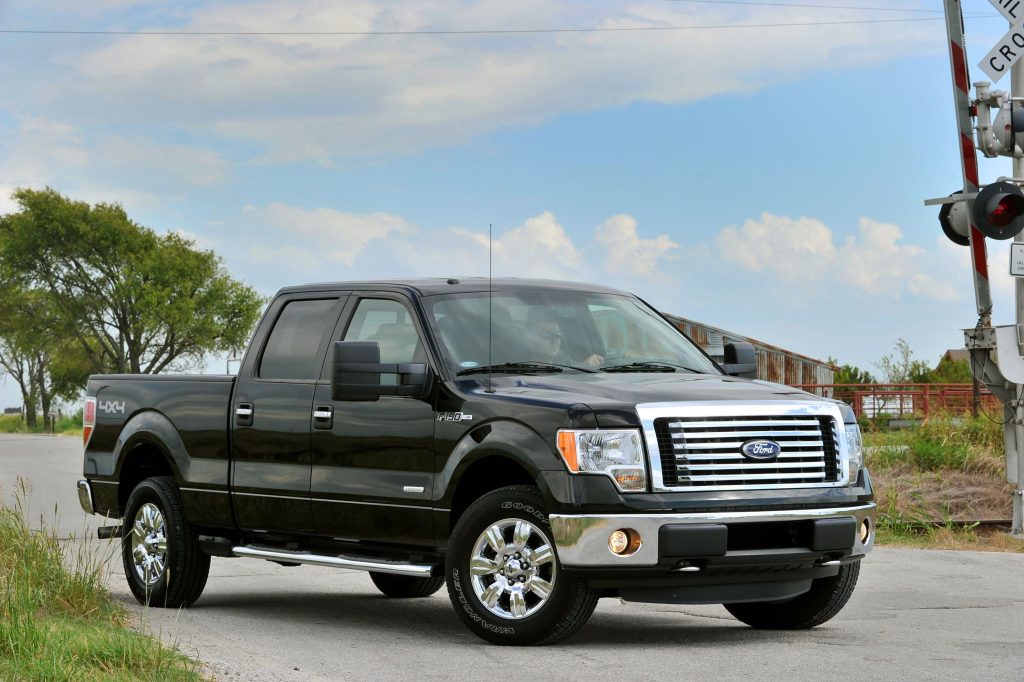
Ford’s production difficulties involving the F-150 are especially important because the pickup remains one of its most valuable vehicle franchises. At the end of September, a short-term supplier issue unrelated to aluminum affected F-150 production.
Ford said the expected financial impact was manageable within its earlier earnings guidance, and Reuters reported that the company was rebuilding output following the disruption.
The distinction about aluminum matters. Ford had already been dealing with the consequences of a fire at a Novelis aluminum supplier facility in 2025. That incident disrupted aluminum supplies and affected production planning.
By the October earnings announcement, Ford said recovery from that disruption was largely complete. The newer F-150 issue was a separate supplier problem, not a continuation of the Novelis fire.
Even a temporary interruption can have consequences for a high-volume pickup. When production falls, dealerships may receive fewer vehicles, popular configurations can become harder to find, and the manufacturer can lose opportunities to convert customer demand into sales.
A production recovery therefore matters not just for factory output but also for revenue, dealer inventory, and market share.
The F-Series remains a major strength for Ford. The company reported that it maintained the highest retail share among full-line truck brands in the third quarter.
Its wider pickup portfolio, including the Maverick and Ranger, also gives Ford opportunities across different customer budgets and vehicle sizes. The company has emphasized that demand for its trucks remains strong, providing support for its financial outlook.
Ford’s recovery from the supplier disruption will need to be measured through consistent production and deliveries, rather than management assurances alone.
The company must also avoid allowing a production rebound to create quality problems or excessive overtime and logistics costs. Rebuilding output quickly is useful only if the vehicles can be completed reliably and delivered profitably.
Another key factor shaping Ford’s earnings outlook is the continued losses in its electric vehicle division. The company projects an operating loss of around $4 billion for Model e in 2026, even as it continues investing in a new generation of more affordable electric vehicles.
The company is therefore relying heavily on its established combustion and commercial vehicle operations to support group earnings while it works to improve the economics of its EV business.
Ford’s higher profit forecast is an encouraging development, but it does not mean its cost challenges have disappeared. The company still faces commodity inflation, supplier risks, and a substantial investment burden across its vehicle portfolio.
Its ability to deliver the revised $10.5 billion to $11 billion adjusted EBIT target will depend on keeping F-150 production stable, protecting margins, and achieving planned material and warranty savings.
Ford faces the challenge of protecting profits from its established vehicle business while funding the development of new technologies and upgrading its manufacturing capabilities.
Raising the lower end of its forecast suggests management believes the business is performing better than previously expected. Whether that confidence translates into a stronger finish to 2026 will depend on execution during the final quarter.