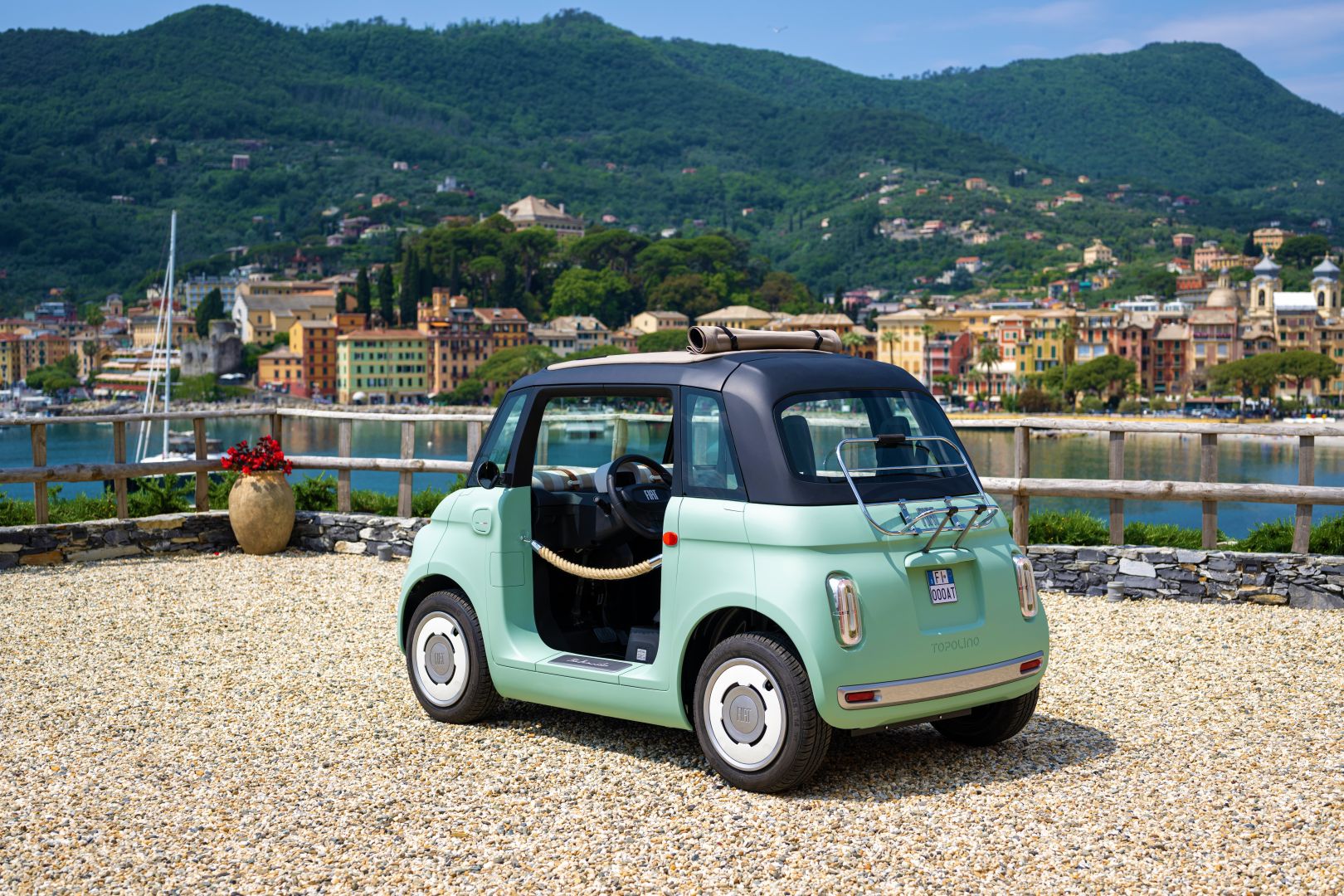
FIAT is expanding the Topolino lineup in the United States for 2027 with a new open-air body style, two additional exterior colors, and a full-color digital instrument display. The announcement, issued on October 29, also puts the tiny electric vehicle in the spotlight through a one-off collaboration with Italian yacht builder Sanlorenzo.
The updates arrive as FIAT says demand from American customers has exceeded expectations, with some dealers already selling through their initial allocations. The Topolino is not a conventional passenger car, however. It is a low-speed vehicle designed for short neighborhood trips, with a different role from a regular electric hatchback.
Topolino Open Air Adds a Retractable Roof to the U.S. Lineup
The headline addition for 2027 is the Topolino Open Air, a new body style that brings a retractable soft-top roof to the two-door electric vehicle. It joins the existing Topolino and Dolce Vita versions, giving U.S. customers another way to configure the small urban runabout.
The rollback roof is intended to make the cabin feel more open during pleasant weather while retaining the compact footprint and basic layout that define the Topolino.
Unlike a conventional convertible, the Open Air uses a simple fabric roof arrangement suited to the vehicle’s modest size and neighborhood role. FIAT has not announced mechanical changes, presenting it as a new body-style choice rather than a performance upgrade.
FIAT is refreshing the 2027 Topolino with two new exterior colors: Corallo Orange and Luna Greige. The additions give buyers more styling options while maintaining the model’s playful Italian aesthetic. The updates are purely cosmetic, with no mechanical changes, keeping the focus on individuality, visual appeal, and distinctive design.
Inside, the most notable update is a new full-color digital instrument cluster. It replaces the simpler display treatment with a more contemporary, color interface that presents driving information in a more visually distinct format.
The company has not yet provided a detailed list of display functions, screen dimensions, or customization options, so it is best understood as a technology and presentation update rather than a major infotainment overhaul.
These modest updates align with the Topolino’s intended role as a compact urban vehicle, built for short trips, everyday errands, and getting around the neighborhood rather than covering long commuting distances.
U.S. Topolino Pricing, Availability, and Low-Speed Vehicle Rules
FIAT says the 2027 Topolino is available now through select U.S. dealers, with a manufacturer’s suggested retail price of $13,995 before the destination fee.
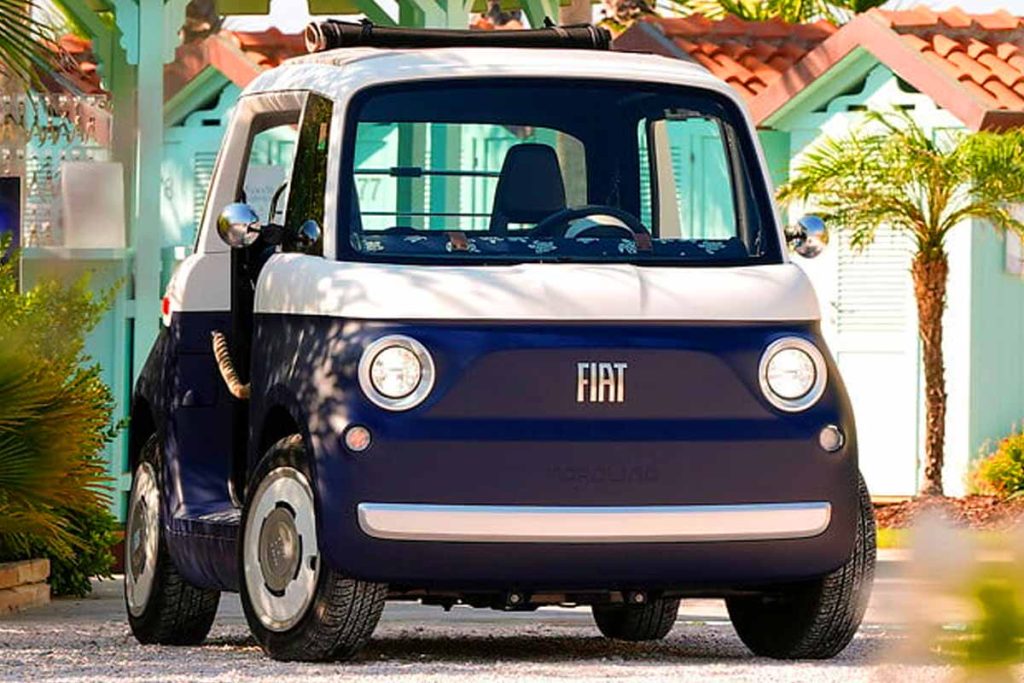
The company is also continuing complimentary home delivery within a 50-mile radius of the purchasing dealer. Because sales are limited to select dealers, customers should check local inventory.
A more consequential part of the U.S. launch is the vehicle’s low-speed, street-legal capability. FIAT says subsequent shipments of 2027 Topolino models will arrive at dealerships already configured for street-legal LSV use.
Owners of earlier Topolinos will be offered a complimentary LSV conversion kit, allowing them to bring their vehicles into the same configuration, subject to applicable requirements.
The LSV classification is central to understanding what the Topolino can and cannot do. Under federal regulations, low-speed vehicles are four-wheeled vehicles with a maximum speed of no more than 25 mph and a gross vehicle weight rating below 3,000 pounds.
They must also meet specified safety equipment requirements. State and local rules determine where these vehicles may be operated, including which roads are permitted and whether additional registration or equipment requirements apply. Buyers should check the rules in their state and community before relying on an LSV for regular transportation.
Federal LSV standards also require specific safety equipment, including headlamps, turn signals, stop lamps, mirrors, a parking brake, a compliant windshield, and seat belts. That equipment requirement is separate from state rules governing road access.
A vehicle can meet the federal LSV definition and still be restricted from particular streets by local law, so checking the intended routes is essential before purchase.
That means the Topolino should not be compared directly with a typical battery-electric car such as the Fiat 500e. It is intended for local trips and lower-speed environments, not interstate travel or roads where traffic moves substantially faster.
Its appeal is the ability to handle short journeys with a small footprint and electric propulsion, especially in communities where LSV use is permitted.
At $13,995, the Topolino is best considered as a second vehicle for short trips in communities where LSV use is permitted. Buyers should still account for destination charges and local fees.
Sanlorenzo Collaboration Gives the Topolino a Luxury Design Twist
Alongside the 2027 model lineup, FIAT introduced a unique Topolino developed in collaboration with Italian yacht builder Sanlorenzo. The one-off vehicle made its debut at the Fort Lauderdale International Boat Show, displayed aboard Sanlorenzo’s SX100 yacht.
The collaboration brings yacht-inspired materials and detailing into a tiny electric vehicle, creating a design exercise rather than a new production trim.
The interior uses natural materials and premium textiles inspired by Sanlorenzo’s approach to yacht interiors. FIAT lists bespoke seat belts, genuine leather accents, and natural nautical-grade wood flooring, with the wood inspired by the teak decks found on San Lorenzo vessels.
The seats, dashboard, and sunroof area also receive distinctive finishes intended to reflect the yacht builder’s design language.
The project highlights an unusual partnership, bringing together an affordable neighborhood vehicle and a luxury yacht manufacturer through a shared focus on design, attention to detail, and craftsmanship.
The special Sanlorenzo vehicle is a one-off and should not be confused with an announced customer edition. FIAT has not said that the yacht-inspired interior, wood flooring, or bespoke trim will be offered as a production package.
The company has instead used the project to highlight the customization potential of the Topolino and its connection to Italian design.
FIAT is also promoting Monsterlino, a portable audio system developed with Monster. Its Bluetooth speakers attach magnetically to the vehicle and can be detached for use elsewhere, including with a phone.
The company says the accessory will become available online, adding another personalization option without changing the Topolino’s core vehicle specification.
FIAT also points to growing recognition for the model. The Topolino was named one of TIME’s Best Inventions of 2026 in the Design category, while Green Car Journal selected it as the 2027 Neighborhood Green Car of the Year.
Those awards reflect the vehicle’s unusual approach to urban mobility, although they do not change its LSV limitations or make it suitable for every driving environment.
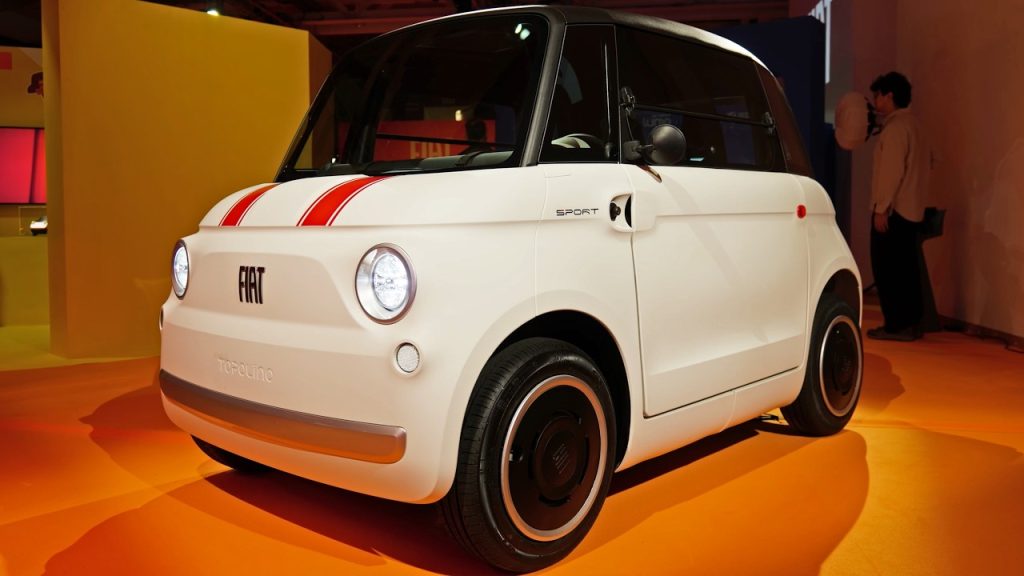
FIAT says the Topolino has been Europe’s best-selling electric quadricycle, while its U.S. reception has exceeded expectations. In Italy, it reported a 42.2% share of the light electric quadricycle market during the first eight months of 2026.
For American buyers, the 2027 updates are about choice and usability more than speed or range. The open-air roof adds a different way to enjoy the cabin, the new colors provide more personalization, and the digital cluster modernizes the driver’s display.
The Sanlorenzo project supplies a high-profile design showcase, while the LSV conversion program addresses an important part of the vehicle’s U.S. market positioning.
The Topolino will remain a niche option because its low-speed classification limits where it can be driven. But for buyers who need a compact electric vehicle for short local journeys, the new lineup gives FIAT a more distinctive offering.
Its success will depend not just on styling but on whether customers have roads, parking, and daily routines that suit a vehicle built specifically for neighborhood mobility.