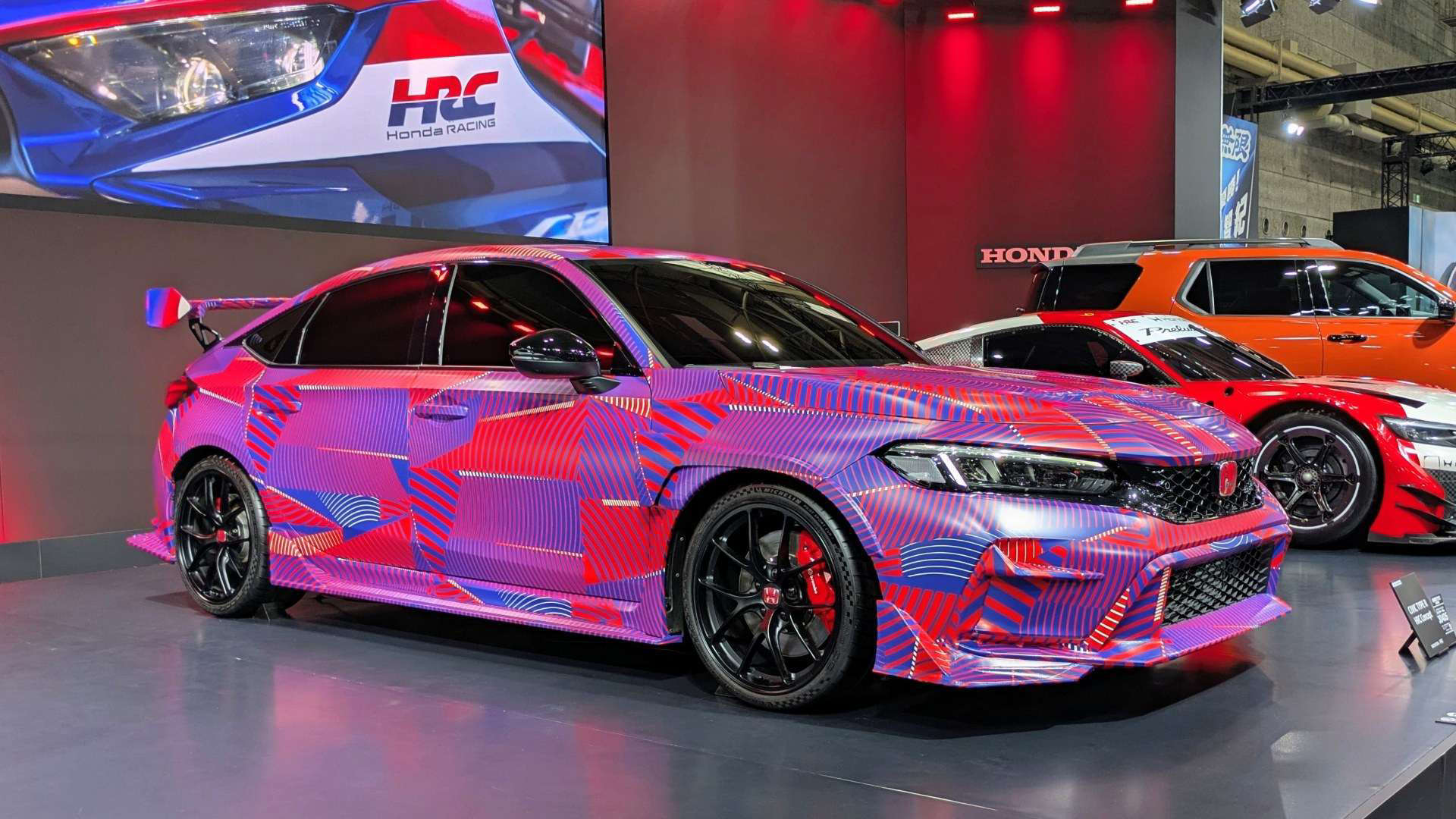
Honda’s announcement makes it clear that the Civic Type R HRC Concept is being developed with the U.S. market in mind, but it has not yet been confirmed for production. The company also has a more ambitious SEMA project in the works: a hybrid-powered Passport Trophy Truck capable of producing more than 1,300 horsepower.
The two vehicles demonstrate different applications of Honda Racing Corporation’s engineering, one aimed at potentially sharpening a road-going performance car and the other at competing in demanding desert races.
Civic Type R HRC Concept Moves Closer to a U.S. Performance Model
The most important part of Honda’s October 30 announcement is its confirmation that the Civic Type R HRC Concept is in development for the U.S. market. First shown at the 2026 Tokyo Auto Salon, the concept will now make its North American debut at SEMA, running November 3–6 at the Las Vegas Convention Center.
There is an important distinction between development and a confirmed production launch. Honda has not announced a final specification, U.S. pricing, production volume, or showroom arrival date. It has also not confirmed that the concept will reach dealerships unchanged.
The announcement establishes that the company is developing the model for American buyers, but it should not yet be treated as a guaranteed new trim.
The HRC name carries considerable weight within Honda’s motorsport history. Honda Racing Corporation was established in 1982 and has since supported competition programs across several disciplines.
Its work spans motorcycle racing, circuit competition, and customer motorsport. Applying that expertise to the Civic Type R creates an opportunity to connect the road-going hot hatch more closely with Honda’s racing operations.
The existing U.S.-market Civic Type R provides a strong starting point. Its 2.0-liter turbocharged four-cylinder engine produces 315 horsepower and 310 lb-ft of torque, sending power to the front wheels through a six-speed manual transmission.
That combination has established the Type R as one of the most capable front-wheel-drive performance cars available in the United States.
Honda says the HRC concept incorporates racing technologies and the expertise of its drivers to refine the car’s driving experience. That points toward development work involving engine performance, chassis behavior, aerodynamics, and driver feedback.
However, the company has not published a complete technical specification explaining exactly how the concept differs from the standard Type R.
Its more aggressive front-end treatment, revised aerodynamic details, and prominent rear wing suggest an emphasis on stability and track performance. But without confirmed aerodynamic figures, suspension specifications, or test results, it would be premature to attach specific performance gains to the design.
The biggest unanswered question is whether HRC will increase engine output. Honda has not confirmed additional horsepower or torque for the U.S. development program. Improvements to cooling, throttle response, and sustained track performance could be just as important as a higher peak power figure.
For enthusiasts, the concept could eventually occupy a position above the standard Type R, offering a more specialized factory-developed package. For now, it remains a development project rather than a confirmed production model.
Honda’s 1,300-Plus-Horsepower Hybrid Passport Targets Baja Racing
The other major attraction at Honda’s SEMA display is the Passport Baja Spec Trophy Truck. Unlike the Civic Type R concept, which is being developed with a potential road-going application in mind, this machine is built for demanding off-road competition.
Honda describes it as the first hybrid-powered Trophy Truck intended to compete in the SCORE World Desert Championship’s top Trophy Truck class.
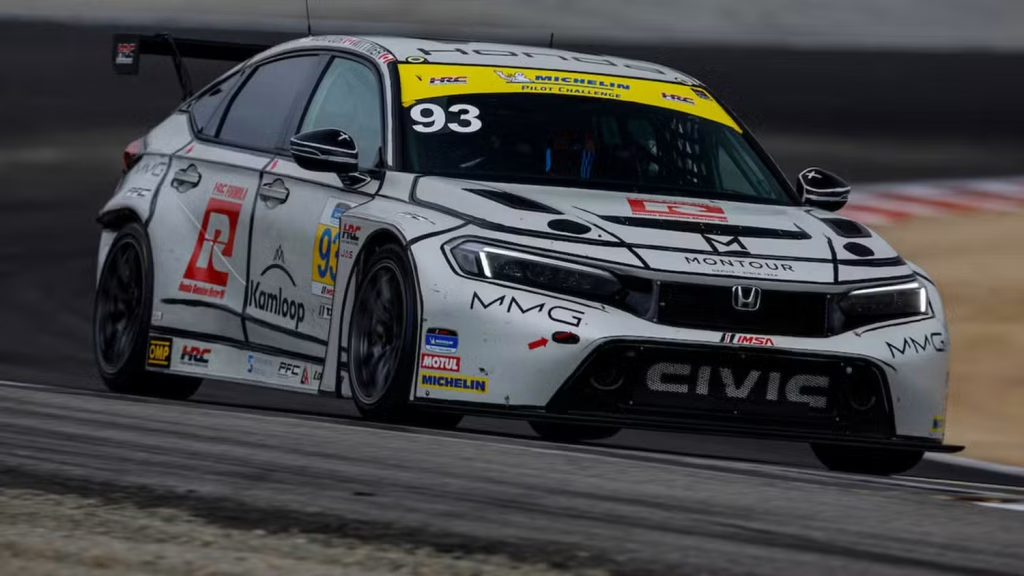
The truck combines a 2.4-liter twin-turbocharged V6 with an 800-volt hybrid-electric system. Honda claims more than 1,300 peak horsepower, exceeding the output of the large 9.0-liter V8 engines used by leading Trophy Truck competitors.
This is not a conventional production Passport with additional off-road equipment. It is a purpose-built racing vehicle that uses the Passport name and design identity while incorporating specialized competition hardware.
HRC developed the truck with Mason Motorsports and partnered with two-time Baja 1000 winner Bryce Menzies and Menzies Motorsports for its racing campaign.
Honda aims to compete in the 2027 SCORE World Desert Championship, making its debut at the Baja 500. The manufacturer is also targeting a victory at the Baja 1000, which will celebrate its 60th anniversary in 2027.
The hybrid system is especially interesting because desert racing places unusual demands on powertrains. Vehicles must deliver substantial output over rough terrain, endure prolonged periods of high load, and cope with heat, dust, and repeated impacts.
Integrating electrification creates engineering challenges involving battery protection, thermal management, power delivery, and reliability. Honda has not released the battery capacity or electric motor output, so the 1,300-hp figure should be understood as its stated peak system output.
Honda has disclosed several of the truck’s advanced technologies. Its hybrid system was developed by HRC US, and the battery pack is assembled and validated at the company’s Santa Clarita, California, headquarters.
The vehicle also uses dual-axle brake-by-wire, adaptive traction control, and software-managed power deployment. Honda describes it as a software-defined vehicle, with integrated powertrain, chassis, and energy-management systems that can be adjusted to suit the driver, course, and race conditions.
The truck’s V6 is based on the engine architecture used in the Acura ARX-06 GTP prototype, which competes in endurance racing. Honda says that the racing foundation has demonstrated durability in events such as the Rolex 24 at Daytona and the 12 Hours of Sebring.
Its carbon-fiber body was developed using computational fluid dynamics to manage airflow and improve high-speed stability. These details show that the project draws on engine, software, and aerodynamic development from Honda’s other racing programs.
HRC Expands Its Performance Parts Business Alongside the SEMA Display
Honda’s SEMA announcement also introduces its first line of HRC Performance Parts for road and off-road applications. The initial range includes lightweight forged wheels, exhaust systems, and a short-throw shifter.
Honda says the components are being developed by HRC engineers for production vehicles, including the Civic Type R, Acura Integra Type S, and Passport TrailSport.
This creates a more direct connection between Honda’s racing division and customers who want to modify their vehicles. Rather than relying exclusively on aftermarket companies, owners will have access to components developed under the HRC name and distributed through Honda and Acura’s retail networks.
The parts are undergoing performance and durability testing, including evaluation at Germany’s Nürburgring circuit. Honda and Acura dealerships nationwide, along with Honda’s DreamShop online store, are scheduled to begin offering the initial range in March 2027.
Prices have not been announced, so customers will have to wait for the retail launch to compare costs with existing aftermarket alternatives.
HRC will also display prototypes of additional components, including adjustable coilovers with camber plates and a large Brembo brake kit featuring six-piston calipers. These are not confirmed retail products yet. Their appearance at SEMA indicates possible future additions, but Honda has not provided final pricing or availability details.
The parts strategy could reach owners of several vehicles. Civic Type R drivers may be interested in handling and shifting upgrades, while Integra Type S customers could seek similar improvements in a different body style.
Passport TrailSport owners may be more interested in components designed to improve off-road capability and durability. This gives HRC a potential customer base beyond buyers of a future Type R HRC model.
Honda is bringing 12 racing machines to its SEMA booth, number 24789 in the Las Vegas Convention Center’s Central Hall.
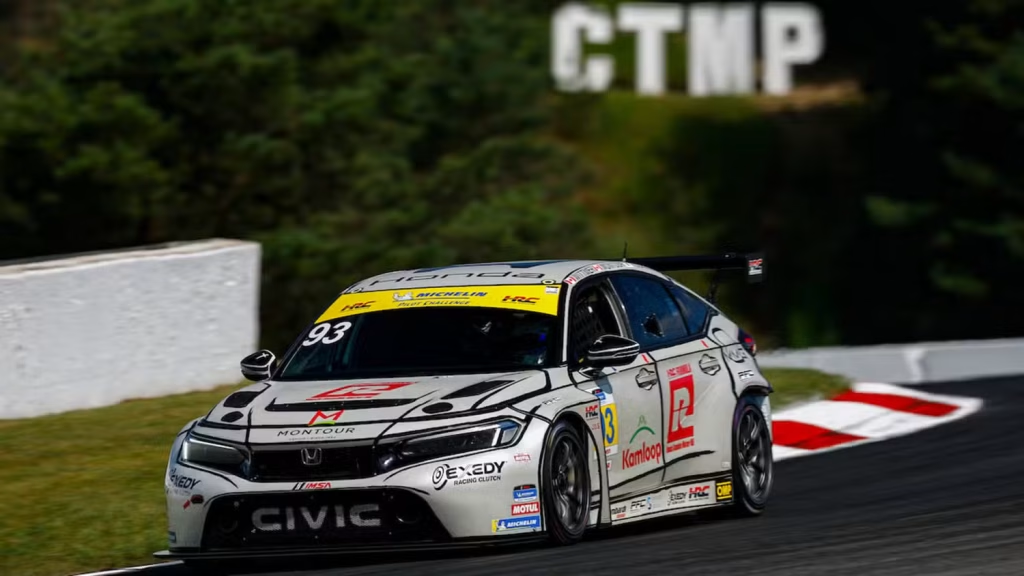
The display includes the Civic Type R HRC Concept, Passport Baja Spec Trophy Truck, historic race cars, championship-winning motorcycles, and other competition vehicles. A Hasport-built Prelude Club Racer is also part of the lineup.
The company will also offer HRC merchandise and motorsport memorabilia directly to SEMA visitors. Items include components from the Honda RA100E V10 engine used in the McLaren MP4/5B driven by Gerhard Berger during the 1990 Formula One season, as well as scale models of the RA272, which secured Honda’s first Formula One victory at the 1965 Mexican Grand Prix.
The two headline vehicles illustrate different sides of Honda’s performance strategy. The Civic Type R HRC Concept could eventually bring more motorsport-developed engineering to American road-car buyers, while the Passport Baja Spec will test hybrid technology in demanding desert competition.
The HRC Performance Parts range adds a practical element by giving owners access to components developed by the racing division. Honda has not confirmed the Type R’s production timetable, but its SEMA appearance makes clear that HRC wants a larger role in the company’s U.S. performance business.