
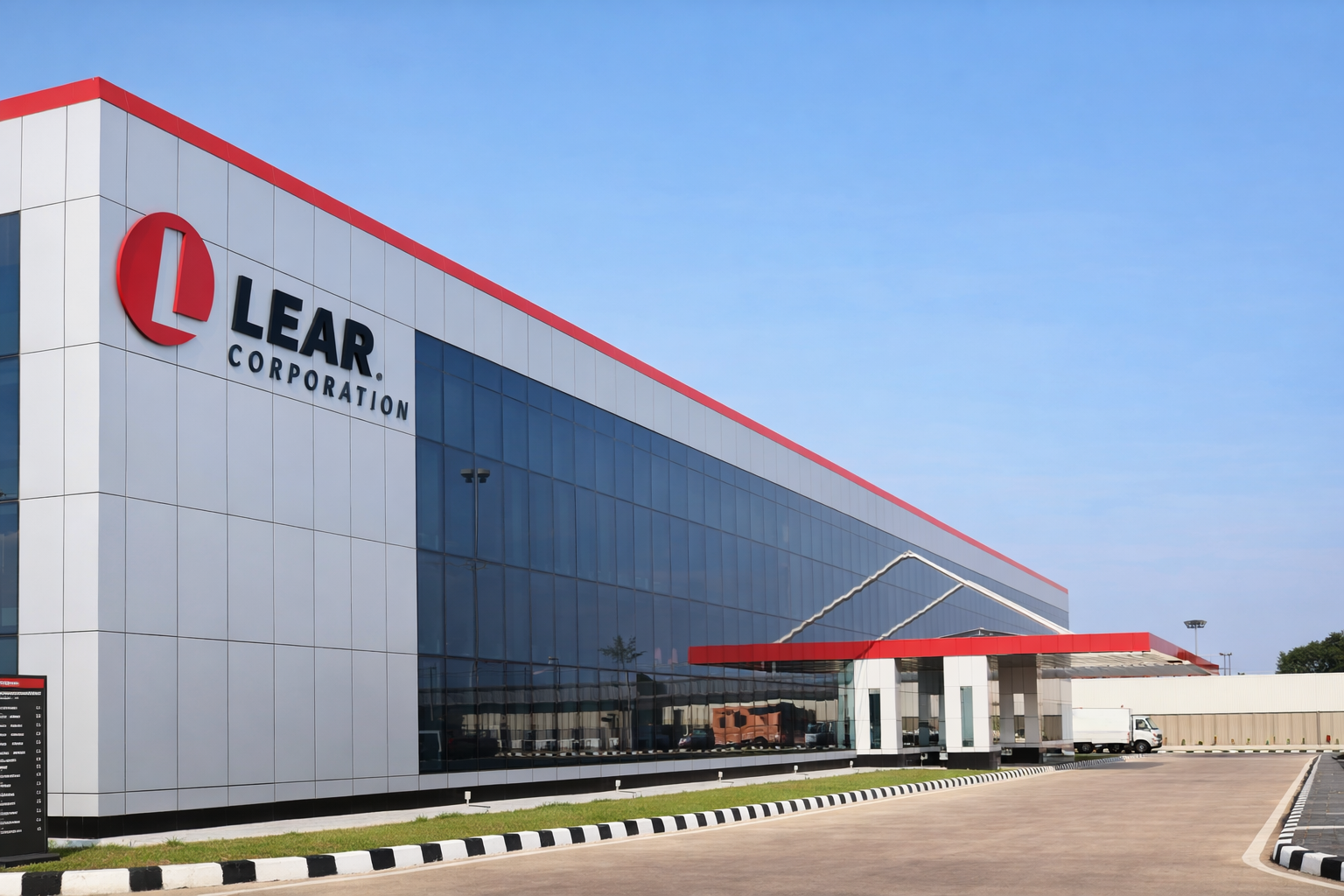
Automotive supplier Lear plans to launch a highly automated seating production facility in Orion Township, Michigan, in early 2027. The plant will produce complete seating systems for three major General Motors models, including the Cadillac Escalade, Chevrolet Silverado, and GMC Sierra.
More importantly, Lear expects its automation strategy to reduce conversion cost requirements by approximately 10% to 15%, potentially changing the economics of how automotive seats are manufactured and delivered.
The company intends to use the Michigan facility as a blueprint for other factories across its global network. The project reflects a wider shift in automotive manufacturing, where suppliers are investing in robotics, digital inventory management, and automated material handling to improve productivity and control costs.
Lear’s New Michigan Factory Will Supply Three Major GM Vehicles
Lear’s Orion Township facility is designed to operate as a just-in-time seating plant, meaning finished seats will be assembled and delivered in coordination with GM’s vehicle production schedule.
Instead of manufacturing large quantities of seats and storing them for extended periods, the facility will synchronize production with the nearby GM Orion Assembly operation.
The facility will manufacture seating systems for three key General Motors vehicles, namely the Cadillac Escalade, Chevrolet Silverado, and GMC Sierra. As major models in GM’s full-size SUV and pickup truck lineup, these vehicles require a steady and dependable supply of seats to support uninterrupted production and maintain factory schedules.
Lear’s contract builds on its established relationship with GM and adds another major manufacturing program to its North American operations.
Lear CEO Raymond Scott confirmed during the company’s October 30, 2026, earnings call that the Orion facility remains on track to begin production early in 2027.
He described it as the company’s most sophisticated seating plant and an important milestone in its IDEA by Lear strategy, which focuses on integrating digital technology, engineering, and automation into manufacturing operations.
The facility has been developed specifically around the requirements of modern seating production rather than simply adapting an older factory. Its layout connects component storage, material movement, assembly, inspection, and delivery into a coordinated production system.
This approach is particularly relevant to just-in-time manufacturing because seating systems must arrive at the vehicle assembly plant in the correct sequence and within a narrow delivery window.
The project also strengthens the local automotive supply chain. Producing seats close to GM’s assembly operation reduces the need to transport bulky, finished seating systems over long distances. It also gives Lear the opportunity to coordinate production more closely with GM’s manufacturing requirements.
The factory is therefore not simply another supplier building. It represents a change in how Lear intends to organize seating production, with automation and connected material management designed into the operation from the beginning.
Automation Could Reduce Conversion Costs by 10% to 15%
The most significant financial target associated with the Orion facility is Lear’s expectation that automation will reduce conversion cost requirements by approximately 10% to 15%. Conversion costs refer to the expenses involved in turning raw materials and components into finished products.

In seating production, this includes manufacturing labor, material handling, equipment operation, and other factory-processing expenses.
This distinction is important. Lear has not said that the new facility will reduce the total cost of producing a seat by 10% to 15%, nor has it announced an equivalent reduction in the final price paid by GM.
The figure relates specifically to conversion cost requirements, and actual savings will depend on production volumes, operating efficiency, and implementation performance.
The factory will use several automated technologies to achieve these improvements. One of its central features is an integrated intralogistics system, which connects inventory, storage, material management, and production decisions.
It allows information to move through the facility as components arrive, enter storage, reach assembly stations, and become finished seating systems.
Lear has also installed two automated storage and retrieval systems. One handles raw components, including materials such as foam, while the other manages finished products. These systems are intended to reduce unnecessary manual handling and improve the accuracy of inventory movement.
Other technologies include:
- Automated guided vehicles: Transport materials through designated factory routes with reduced manual movement.
- Autonomous mobile robots: Move components and materials between production areas.
- Overhead material storage: Suspended systems deliver components while making better use of available floor space.
- Automated trailer loading: Helps move finished seating systems onto delivery vehicles.
- Smart ovens: Integrate automated processing into the production sequence.
- AI vision inspection: Uses camera-based technology to identify potential quality problems.
- Automated end-of-line testing: Checks finished products before they leave the facility.
Lear is also using proprietary software tools for cycle-time monitoring and dynamic line scheduling. These systems can help identify production delays, adjust work schedules, and provide managers with more immediate information about factory performance.
The broader objective is to reduce repetitive tasks while allowing employees to focus more on troubleshooting, quality control, and production improvements. Scott explained that Lear is moving toward automated execution, with employees concentrating on solving problems rather than performing routine material-handling activities.
This does not mean the facility will operate without workers. Instead, automation is intended to change how employees contribute to production.
Lear Wants to Use Orion as a Blueprint for Global Manufacturing
The Michigan project is part of a longer investment in automation capabilities. Lear has spent approximately a decade developing the technologies that will be used at Orion, combining internal engineering work with acquisitions of specialist automation businesses.
These include WIP Industrial Automation, Thagora Technology, and InTouch Automation. The company also developed its automated storage systems using expertise gained through its acquisition of ASI Automation.
Owning more of the technology gives Lear greater control over its manufacturing systems. Instead of relying entirely on equipment purchased from outside suppliers, it can develop and modify automation solutions according to the requirements of its seating operations.
This could make it easier to replicate successful processes at other plants without redesigning every system from scratch.
CEO Raymond Scott has identified the Orion facility as a model for expanding automation across Lear’s global seating network.
One potential application is the Ford Super Duty program, which could benefit from similar manufacturing capabilities. Lear has not disclosed a specific implementation schedule or the expected savings from applying the technology to that program.
The strategy also arrives as automotive suppliers face pressure to control production costs. Automakers expect suppliers to deliver increasingly complex components while maintaining quality and meeting strict delivery schedules.
Seating systems illustrate this challenge because they combine structural components, foam, upholstery, electrical connections, and, increasingly, features such as heating, ventilation, and electronic adjustment systems.
Producing these components efficiently requires coordination across multiple manufacturing stages. A delay in receiving one component can disrupt the assembly of a complete seat, while inaccurate inventory information can lead to unnecessary storage or production interruptions.
Lear’s connected material-management system is intended to reduce these problems through better visibility and automated movement of components.
The company’s latest financial results provide additional context for the investment. Lear reported third-quarter 2026 revenue of approximately $5.77 billion, up 2% from $5.68 billion in the same period of 2025.
Net income increased 26% to $136.6 million, while core operating earnings rose 6% to $255.7 million. The company also reported that its seating segment generated an adjusted operating margin of 6.3% during the quarter.
Lear’s full-year capital spending guidance was approximately $660 million, with investments directed toward manufacturing automation and the digital development of facilities such as Orion. The company also reported achieving approximately $55 million in IDEA by Lear savings during the first three quarters of 2026, against a full-year target of $75 million.
These investments show that automation is becoming a central part of Lear’s cost-management strategy rather than an isolated factory upgrade. If the Orion facility achieves its projected efficiency improvements, the company could use the results to strengthen its position when competing for future seating contracts.
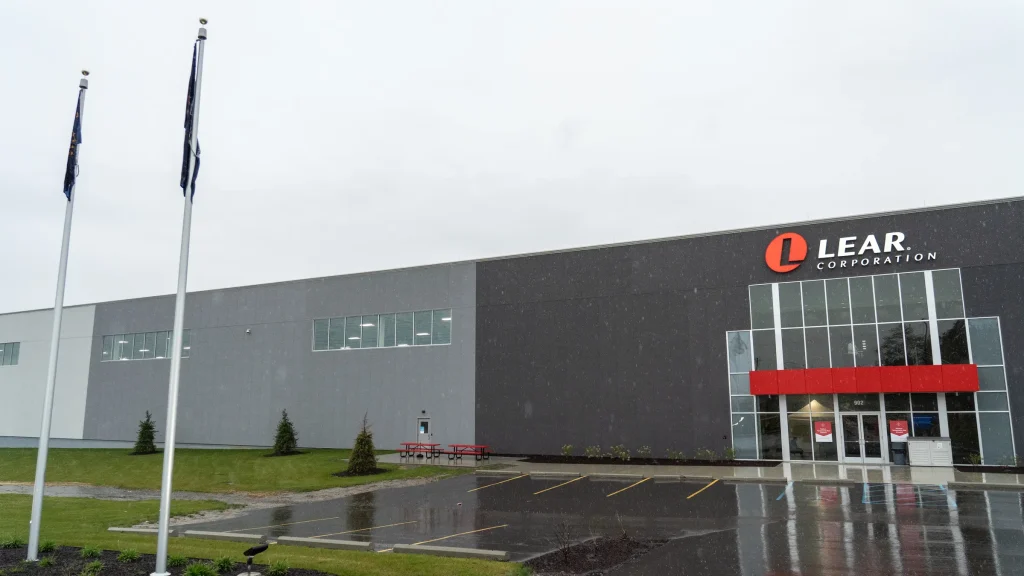
There are still important performance measures to watch once production begins. Lear has not published a complete breakdown of expected labor-hour reductions, production capacity, inventory-turn improvements, or the facility’s projected annual savings.
The 10% to 15% conversion-cost target remains a management estimate rather than a confirmed operating result.
The company will also need to demonstrate that automation can maintain consistent product quality while supporting the delivery schedules required by GM. A highly automated plant can improve efficiency, but its success depends on equipment reliability, software coordination, maintenance, and the ability to respond when production conditions change.
For General Motors, the facility provides a nearby supplier dedicated to seating for three major vehicle programs. For Lear, it offers an opportunity to demonstrate that its investments in proprietary automation can produce measurable manufacturing advantages.
The Orion project could become an important example of how automotive suppliers are redesigning factories around automation and connected production systems.
Its projected 10% to 15% reduction in conversion cost requirements is significant, but the real test will come when the facility begins operating in 2027, and Lear demonstrates whether those expected savings can be achieved consistently.
