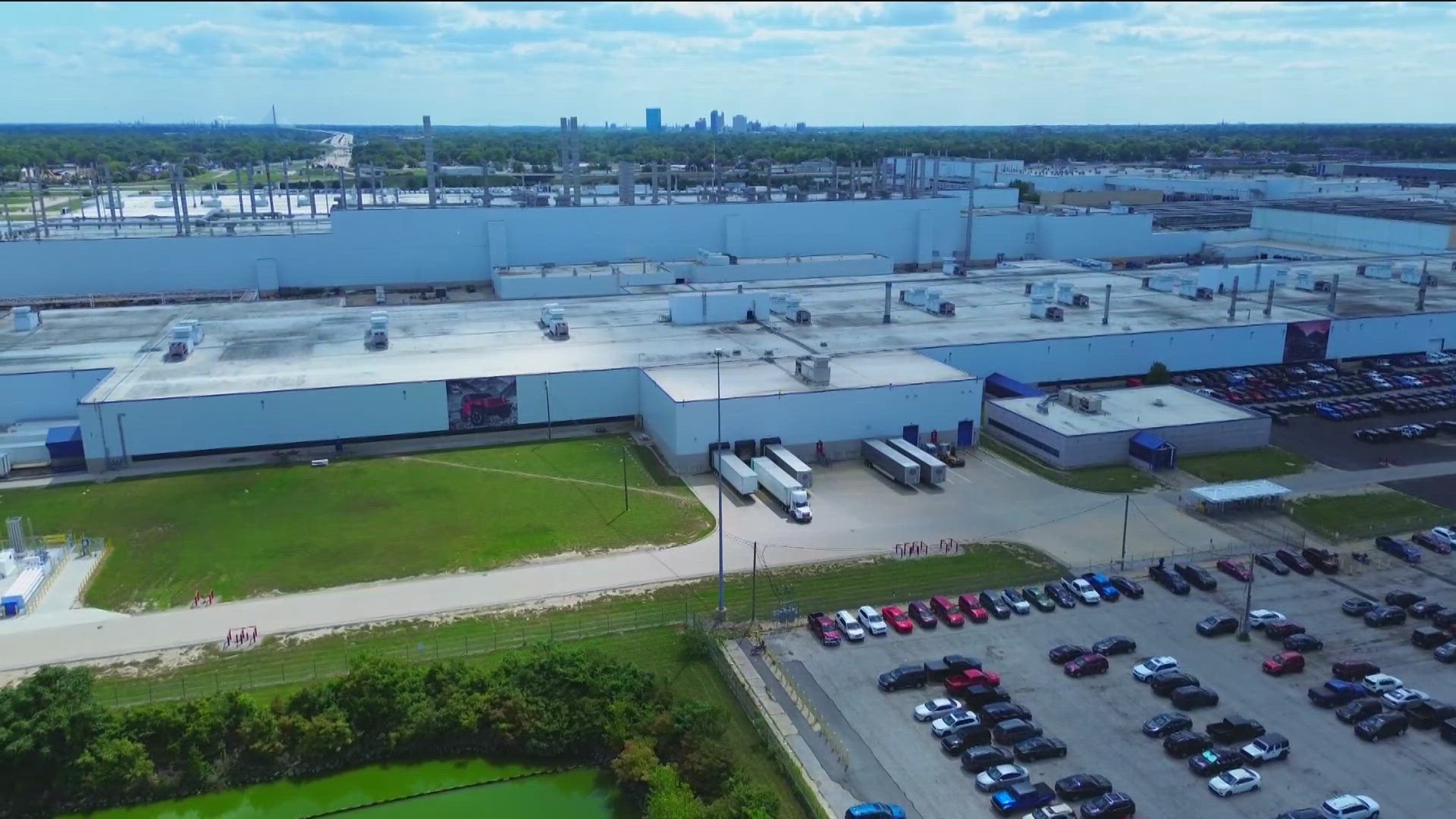
Japanese automotive supplier F-TECH is planning a $35 million expansion of its manufacturing operations in Ohio as it prepares to pursue more business connected to hybrid vehicles in North America.
The project will add a new building beside the company’s existing facility, creating additional space for assembly and warehousing. Construction is scheduled to begin in April 2027, with operations expected to start in October 2028.
The investment reflects F-TECH’s effort to benefit from its major customers’ plans to strengthen hybrid vehicle production across the region, particularly as automakers continue balancing gasoline, hybrid, and fully electric models.
F-TECH Plans a $35 Million Expansion at Its Ohio Facility
F-TECH announced the investment in its 16th Medium-Term Management Plan, released on November 5, 2026. The company plans to invest approximately $35 million, equivalent to around ¥5.5 billion, in a new building at its U.S. subsidiary, F&P America Mfg., Inc.
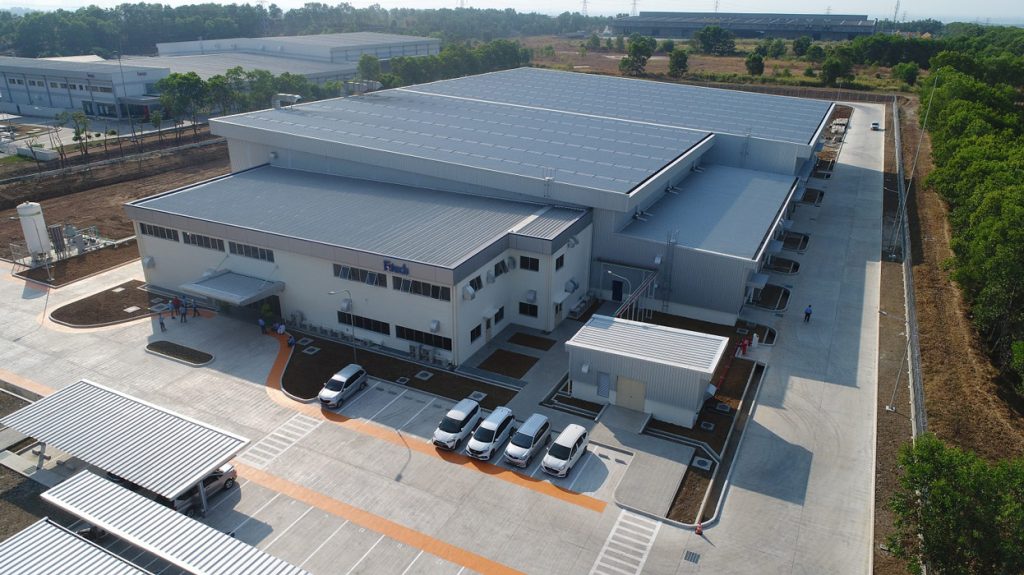
The building, referred to as the North Plant, will be constructed next to the existing Ohio facility rather than at a separate manufacturing location.
The project is designed to expand the company’s production infrastructure while improving how different activities are organized inside the facility. F-TECH intends to consolidate assembly and warehousing functions in the new building and optimize the layout of its existing operations.
Bringing these activities together could help the company manage material movement more efficiently and coordinate production processes as additional business comes in.
The planned North Plant will occupy a site measuring approximately 86,603 square meters, with a building area of 16,351 square meters.
These figures show that the project involves a substantial addition to the company’s Ohio footprint, although F-TECH has not disclosed the expected annual production capacity or the number of additional production lines that will be installed.
The construction schedule is also relatively long. F-TECH expects work to begin in April 2027, followed by the start of operations in October 2028. That gives the company roughly 18 months between the planned construction start and the expected operational launch.
The period will allow for building work, equipment installation, and preparation of the manufacturing processes, although the company has not provided a more detailed commissioning timetable.
Importantly, the $35 million investment is intended to position F-TECH for additional hybrid-related orders. It should not be interpreted as confirmation that the company has already secured a specific new contract worth that amount.
The announcement describes the expansion as a way to capture opportunities created by major customers strengthening their North American hybrid vehicle production capabilities.
The distinction matters because automotive suppliers often invest ahead of anticipated vehicle programs. They need factory space, equipment, and production arrangements ready before an automaker begins manufacturing a new model or increases output.
F-TECH is preparing its Ohio operation for that potential demand rather than announcing a confirmed production volume for a named vehicle.
Why Hybrid Vehicle Production Is Driving the Investment
F-TECH’s expansion comes as hybrid vehicles remain an important part of automakers’ North American product strategies. While manufacturers are investing heavily in battery-electric vehicles, hybrids offer another way to reduce fuel consumption and emissions without requiring customers to rely entirely on charging infrastructure.
A conventional hybrid combines an internal combustion engine with an electric motor and battery. The electric system can assist the engine during acceleration, recover energy through regenerative braking, and, in some driving conditions, allow the vehicle to operate using electric power alone for short periods.
The engine remains an essential part of the powertrain, but the combination can improve fuel efficiency compared with a comparable gasoline-only vehicle.
This creates opportunities for suppliers that manufacture components used in vehicle structures and mechanical systems. F-TECH specializes in automotive components and manufacturing technologies, including chassis and body-related products.
Its expertise in metal forming, welding, and assembly gives it a position in the production networks supporting major vehicle manufacturers.
The company has not identified the precise hybrid components that will be manufactured or assembled in the new North Plant. Nor has it named the vehicle models or customers associated with the expected additional business.
However, the stated objective is to increase orders for hybrid-related products as major customers strengthen their North American hybrid production systems.
Honda is an important customer relationship for F-TECH, and the MarkLines report identifies Honda as part of the relevant industry context for the expansion.
Nevertheless, the announcement does not establish that the entire new facility will serve Honda exclusively. It would be premature to assign all planned production to a particular automaker without a confirmed customer or vehicle-program disclosure.
The wider market provides a reason for suppliers to prepare for more hybrid-related manufacturing work. Automakers have been adjusting their electrification strategies in response to consumer demand, vehicle pricing, charging availability, and changing regulatory conditions.
Some manufacturers are expanding hybrid offerings while continuing to develop battery-electric platforms. This creates a mixed powertrain market in which suppliers may need to support several types of vehicles at the same time.
For companies such as F-TECH, flexibility is valuable. A factory expansion can provide room to organize production around new customer requirements, increase assembly capacity, and improve material storage.
The new building’s planned combination of assembly and warehousing functions is particularly relevant because efficient parts handling is important when suppliers operate within tightly coordinated automotive production schedules.
However, the project does not mean F-TECH is abandoning other automotive technologies or shifting its entire business toward hybrids. The investment is specifically aimed at capturing additional hybrid-related opportunities in North America, while the company continues serving the wider automotive component market.
What the Expansion Means for F-TECH’s North American Business
The Ohio project is part of F-TECH’s broader effort to strengthen its overseas operations and improve its ability to compete for future automotive programs. Establishing additional production and warehousing space can help the company respond to customer requirements without relying entirely on the capacity of its existing factory.
For automotive suppliers, proximity to vehicle assembly operations can be a competitive advantage. Automakers frequently require components to arrive according to tightly controlled production schedules.
A supplier with suitable local manufacturing capacity can coordinate deliveries, respond to production changes, and reduce the logistical complexity associated with shipping parts over long distances.
The North Plant should give F&P America Mfg. additional operational space to support those requirements. Consolidating assembly and warehousing functions may also allow F-TECH to reorganize its current facility and make better use of its existing production footprint.
The company has not published specific targets for productivity improvements, labor savings, or output increases, so the financial return from these operational changes remains to be seen.
The investment also carries a longer-term commercial consideration. Factory buildings and manufacturing equipment require substantial upfront spending, while the revenue generated from new vehicle programs generally develops over several years.
F-TECH is therefore committing capital in anticipation of future demand from its customers. The success of the project will depend partly on whether the expected hybrid-related orders materialize and whether the company can secure enough production volume to use the added capacity efficiently.
The October 2028 operational target gives the supplier time to prepare for programs that may enter production in the late 2020s. It also means the expansion will not immediately increase the number of components coming out of the Ohio operation.
The benefits will become clearer once the facility begins operating and F-TECH provides more information about its customer programs and manufacturing volumes.
The company has not disclosed how many new jobs the project will create, whether the investment includes specific machinery purchases, or how much additional revenue it expects from the expansion. Those details will be important indicators of the project’s local economic impact and commercial scale.
For North American automakers, a stronger regional supplier network can help support production growth while reducing dependence on components manufactured far from vehicle assembly plants.
For F-TECH, the Ohio expansion is an opportunity to deepen its manufacturing presence in a market where hybrid vehicles remain an important part of the industry’s transition.
The next milestones will be the planned April 2027 construction start and the October 2028 operational launch. Until then, the most important question is whether F-TECH can turn anticipated hybrid demand into confirmed customer orders.
The $35 million commitment demonstrates that the company is preparing for that opportunity, but its eventual impact will depend on the production programs and volumes it secures.