
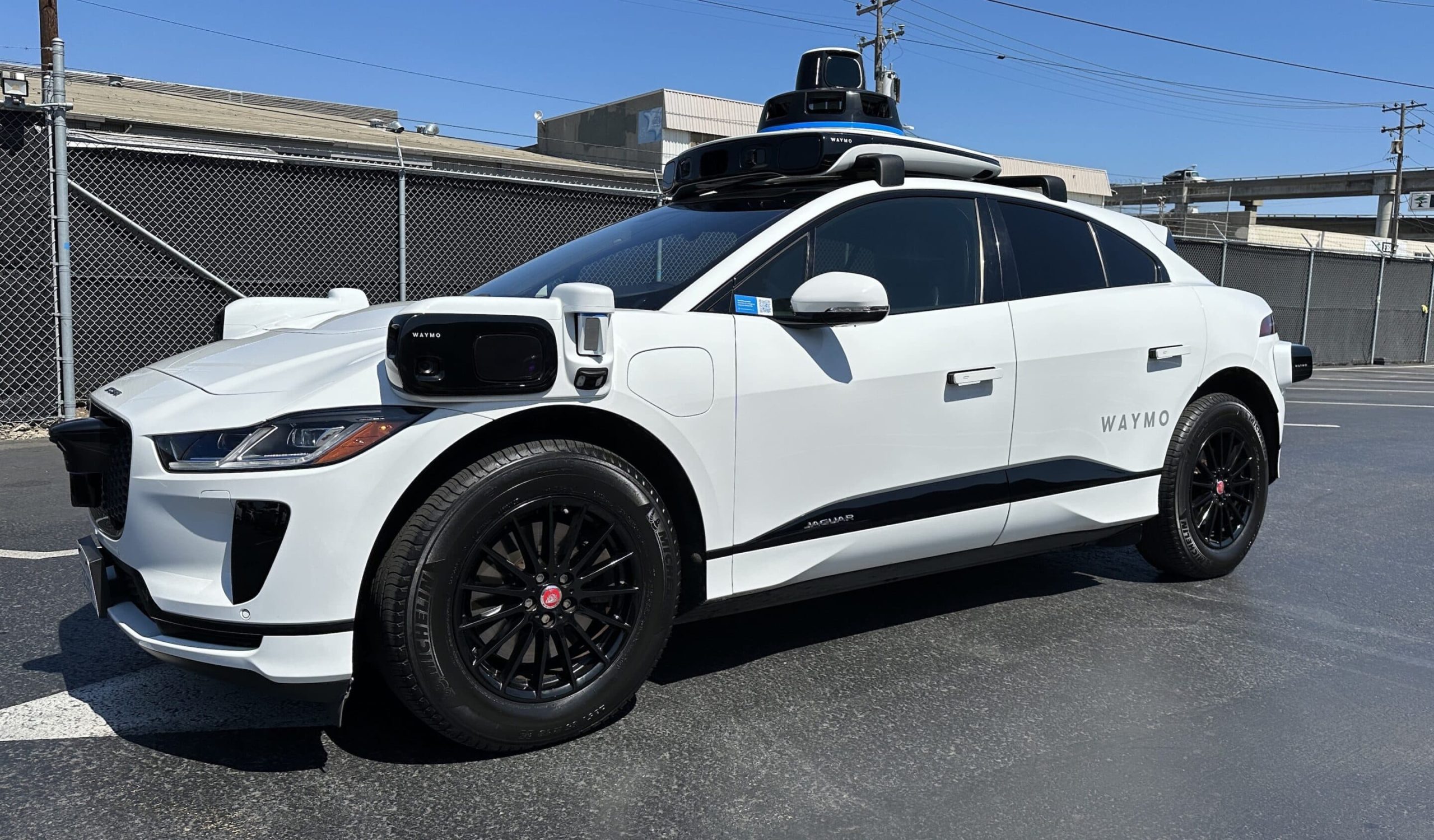
Waymo is facing renewed federal scrutiny after reports that its driverless vehicles continued passing stopped school buses, even after the company introduced a software update intended to correct the behavior.
On November 9, 2026, the National Highway Traffic Safety Administration (NHTSA) opened a recall query covering 2,895 Waymo vehicles equipped with its fifth-generation automated driving system.
Regulators want to determine whether the earlier software remedy actually fixed the problem and why violations continued afterward. The investigation raises important questions about how autonomous vehicles recognize school-bus warning signals and comply with traffic laws designed to protect children.
Why NHTSA Has Opened a New Investigation Into Waymo
The latest action follows a series of reports involving Waymo robotaxis passing school buses that had stopped with their red warning lights flashing and stop arms extended. Under these conditions, drivers are generally required to stop and remain stopped while children board or leave the bus.
A vehicle passing a stopped school bus can put students at risk, particularly when they are crossing the road in front of or behind the vehicle.
NHTSA’s new action is classified as a recall query, rather than a finding that every vehicle included in the investigation is defective.
The agency is examining whether the corrective action from Waymo’s previous recall was adequate and what caused additional incidents after the company said the software update had been completed. The inquiry covers 2,895 vehicles operated by Waymo and equipped with its fifth-generation automated driving system.
The issue first attracted federal attention in October 2025, when NHTSA opened a preliminary evaluation after reports of a Waymo vehicle maneuvering around a stopped school bus in Atlanta, Georgia.
The bus had its red lights flashing, its stop arm extended, and children getting off. The autonomous vehicle approached from a perpendicular side street, passed in front of the bus, and continued along the road.
The incident raised concerns about whether Waymo’s automated driving system could reliably recognize a stopped school bus and follow the applicable traffic rules. NHTSA subsequently sought information from the company about its vehicles’ behavior around school buses and whether similar incidents had occurred elsewhere.
The agency’s original investigation was focused on the system’s ability to stop and remain stopped when a school bus was displaying the required warning signals.
Waymo responded with a software remedy under a December 2025 recall. The company said the update had been deployed across all affected vehicles by November 17, 2025.
However, NHTSA later identified numerous additional reports, with most of the incidents occurring after that date. That timing is central to the new investigation because it suggests the original remedy may not have eliminated the behavior as intended.
The agency has now closed the earlier preliminary evaluation in favor of the recall query. This allows investigators to focus on whether the previous recall addressed the safety concern and why vehicles continued to be reported passing stopped school buses after the update.
The investigation does not yet establish the precise technical cause or determine whether another software recall will be required.
Reports From Austin and Atlanta Raise Questions About the Software Fix
Some of the clearest evidence of the continuing problem has come from school districts in Austin, Texas, and Atlanta, Georgia. According to Reuters, Austin Independent School District documented 19 distinct violations involving Waymo vehicles and issued multiple $300 tickets. Public schools in Atlanta recorded another six violations.
These reports gave regulators specific examples to examine rather than relying only on general concerns about autonomous driving.
The Austin reports are particularly significant because they indicate that the issue was not limited to the original incident in Atlanta. School buses regularly stop to collect and drop off students, often in residential neighborhoods and on roads where children must cross to reach their homes or schools.
A robotaxi that fails to remain stopped can create a dangerous situation even if it slows down or initially comes to a complete stop.
The problem also illustrates why recognizing a school bus is more complicated than identifying an ordinary stationary vehicle. An autonomous system must interpret several signals together, including flashing red lights, an extended stop arm, the bus’s position, and the surrounding road environment.
It must then make the correct decision and maintain that behavior while the bus is loading or unloading passengers.
A vehicle that slows down but subsequently moves past the bus has not complied with the safety requirement. The concern raised by the reports is therefore not simply whether Waymo’s cameras or sensors can detect a school bus.
Regulators are examining whether the complete automated driving system responds correctly and consistently when it encounters one.
The timing of the reported violations makes the situation more serious for Waymo’s previous recall effort. The company had told regulators that the software remedy was completed in November 2025, yet most of the incidents identified by NHTSA occurred after that deployment.
This does not necessarily mean the update had no effect, but it gives the agency a reason to investigate whether the fix was sufficient under real-world conditions.
Waymo has defended the progress made since the original incidents. In a statement reported by Reuters and TechCrunch, the company said it had significantly improved vehicle behavior around school buses and had received no citations since March 2026.
It also said it would respond to NHTSA’s inquiry and continue working with regulators on the safety and recall process for autonomous vehicle software.
That response is important, but it does not close the investigation. NHTSA must independently assess the reported incidents, review the software remedy, and decide whether further action is necessary.
The absence of citations since March, as reported by Waymo, is a company statement rather than a final regulatory conclusion that the problem has been resolved.
What the Investigation Could Mean for Waymo and Autonomous Vehicles
The outcome could have consequences beyond the 2,895 vehicles included in the recall query. Waymo operates driverless ride-hailing services in several U.S. markets, and its automated driving technology is central to the company’s commercial plans.
A finding that its previous software remedy was inadequate could lead to another corrective action, potentially requiring additional software changes and verification before the affected vehicles can continue operating under the same conditions.
The incident underscores a major challenge for the autonomous vehicle industry as it expands driverless technology. Self-driving systems must be capable of responding to unusual situations with legal implications, rather than simply navigating everyday traffic conditions.
School buses are a particularly sensitive example because the rules are designed around the safety of children who may be difficult to see from a moving vehicle.
The investigation also comes amid other safety scrutiny involving Waymo. NHTSA and the National Transportation Safety Board have separately investigated a January 2026 incident in which a Waymo vehicle struck a child near an elementary school in Santa Monica, California.
That matter is separate from the school-bus recall query, and the existence of one investigation should not be treated as proof of a connection between the incidents. The NTSB is also examining the school-bus events.
For regulators, the broader challenge is determining how autonomous vehicle manufacturers test, update, and validate software that controls safety-critical decisions. Unlike a conventional mechanical repair, a software remedy can change vehicle behavior without replacing physical components.
That makes it important to establish whether an update works across different road layouts, lighting conditions, bus designs, and traffic situations.
Waymo’s next steps will include responding to NHTSA’s questions and providing information relevant to the recall query. Investigators will then determine whether the existing remedy was adequate and whether additional corrective measures are needed.
A recall query does not automatically mean that a new recall has been ordered, nor does it establish that every vehicle in the group has experienced the reported behavior.
The main priority is ensuring that driverless vehicles can detect stopped school buses and follow the same stopping rules required of human motorists. Waymo says it has since updated its technology and has not received any citations related to these violations since March 2026.
NHTSA’s investigation will test whether those improvements have been sufficient. Until regulators complete their review, the effectiveness of the earlier software update remains an open safety question.
