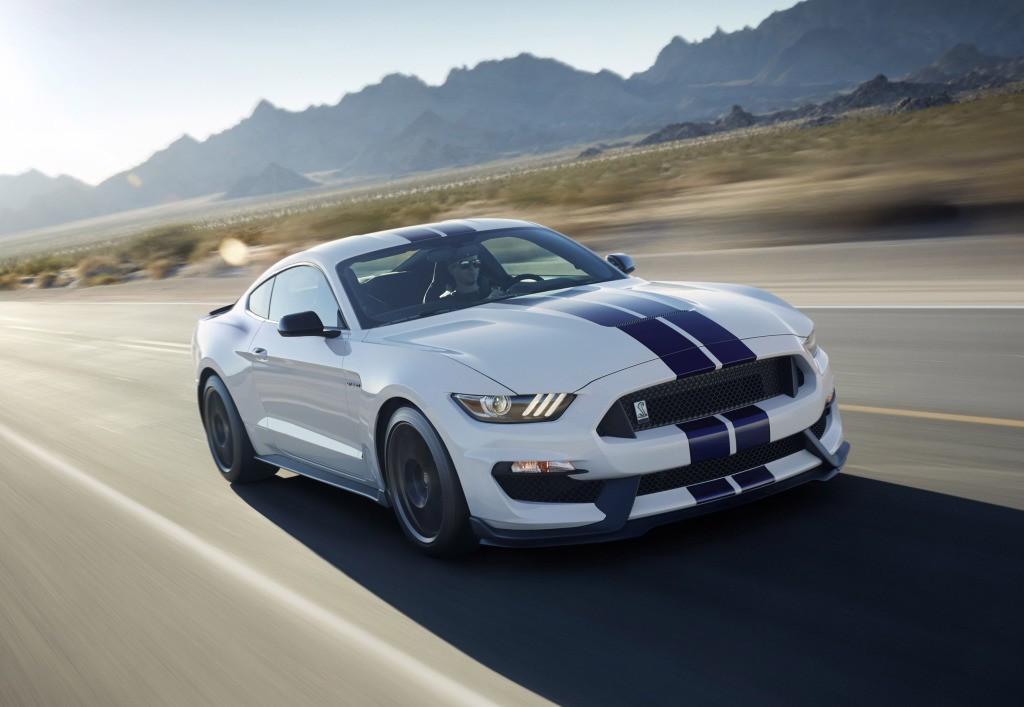
Ford has officially teased the return of the Mustang Cobra, bringing back one of the most recognizable performance names in the company’s history. A short video released by Ford Racing on November 10, 2026, features the sound of a high-revving V8, spells out the word “COBRA” and ends with the letter R highlighted in blue.
Ford describes the upcoming car as having an “all-motor heart born from racing” and says its story continues in 2027. Although the teaser confirms the Cobra name is returning, it reveals no engine specifications, horsepower figures, or production details.
The possibility of a flat-plane-crank V8 and a more extreme Cobra R version has already generated considerable interest among Mustang enthusiasts.
Ford Confirms the Mustang Cobra’s Return With a Racing-Inspired Teaser
The teaser is brief, but its message is significant. Ford Racing released a video showing the letters “COBRA” appearing alongside the sound of an accelerating engine and gear changes.
The clip finishes with a blue R, followed by the Mustang logo. Its accompanying message, “A Legacy Reborn,” confirms that Ford intends to bring the Cobra name back, with more information expected in 2027.
The announcement is particularly interesting because the Cobra badge has a long history with high-performance Mustangs. Ford previously used the SVT Cobra name for performance versions developed by its Special Vehicle Team.
These cars were positioned above ordinary Mustang GT models, offering stronger engines, improved handling hardware, and distinctive styling.
The original SVT Cobra appeared during the 1990s, followed by several performance-focused versions. The Cobra R was an even more specialized derivative, generally developed with track use in mind. Its limited production numbers and mechanical upgrades helped establish a reputation among Mustang collectors.
The last SVT Cobra R arrived for the 2000 model year. It used a naturally aspirated 5.4-liter V8 producing 390 horsepower and 385 lb-ft of torque, paired with a six-speed manual transmission.
Ford built just 300 examples, making it one of the most distinctive Mustangs of its generation. Its engine, suspension, and braking upgrades were intended to support serious track driving rather than simply provide a more aggressive appearance.
Ford’s latest teaser has revived speculation that the company could bring back both the standard Cobra and the more track-focused Cobra R. The highlighted R at the end of the video is the main reason enthusiasts are considering that possibility.
However, Ford has not officially confirmed two separate models. The visual detail could be a deliberate hint, but it should not yet be treated as proof of a production Cobra R.
The expected positioning is also attracting attention. Recent reporting suggests the new model could serve as a spiritual successor to the Shelby GT350, filling the space between the Mustang Dark Horse and the more expensive, supercharged Dark Horse SC.
That would give Ford another naturally aspirated performance option for buyers who prioritize engine response, sound, and driver involvement over maximum output.
The return of the Cobra name is therefore more than a nostalgic marketing exercise. It could signal a new direction for the Mustang’s performance lineup, particularly if Ford delivers a naturally aspirated V8 and a manual transmission.
Could the New Cobra Bring Back Ford’s Flat-Plane-Crank V8?
The biggest technical question concerns the engine. Ford’s teaser describes the upcoming Mustang as having an “all-motor heart born from racing.” In American performance terminology, “all-motor” generally refers to a naturally aspirated engine, meaning it does not use a turbocharger or supercharger to force additional air into the cylinders.
That wording has encouraged speculation that the new Cobra could use a high-revving V8 rather than the supercharged engine found in the Dark Horse SC.
The exhaust note in the video also sounds similar to the distinctive engine character of Ford’s previous flat-plane-crank V8, although an audio clip is not enough to establish the engine’s internal design.
A flat-plane crankshaft has a different arrangement from the cross-plane crankshaft commonly used in American V8 engines. Its firing characteristics can support a higher-revving engine and produce a sharper exhaust note.
However, the design also brings different vibration characteristics and engineering challenges. It is one reason flat-plane V8s are often associated with high-performance European sports cars and specialized American engines.
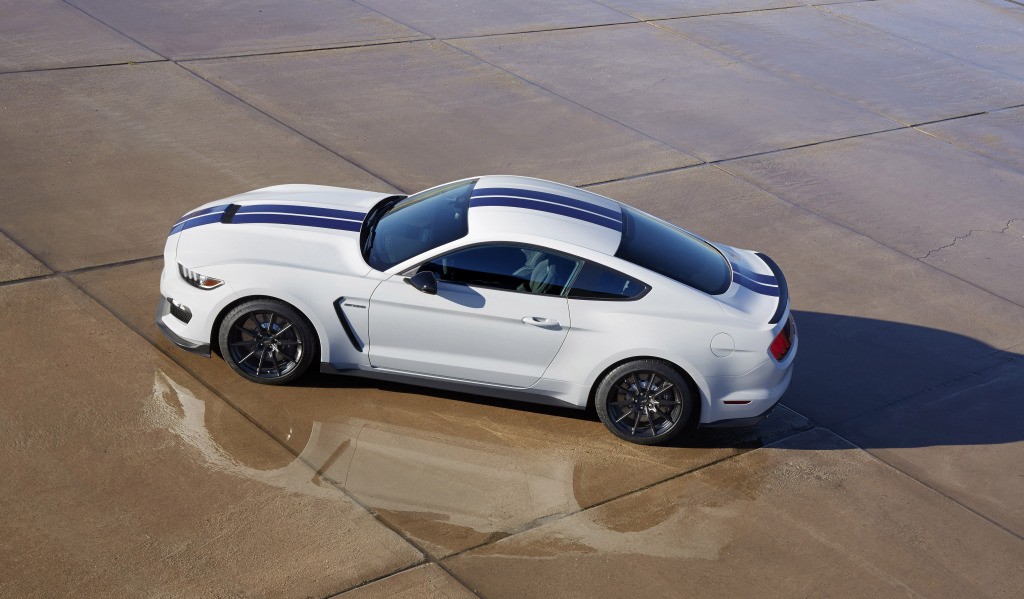
Ford previously used this layout in the 5.2-liter Voodoo V8 powering the Shelby GT350. In its final form, the engine produced 526 horsepower and 429 lb-ft of torque.
It could rev to 8,250 rpm, giving the GT350 a character that differed considerably from the lower-revving, cross-plane V8s in other Mustang models. Production ended after the 2020 model year.
The possible return of that engine architecture is one explanation for the new car’s sound. However, another possibility involves Ford’s 5.4-liter V8 used in the Mustang GT3 race car.
The GT3 engine is based on the Coyote V8 architecture and was developed with motorsport engineering support from M-Sport. Its racing background makes it a plausible reference point for Ford’s description of an engine “born from racing.”
There is no confirmation that the road-going Cobra will receive the GT3 engine itself. Race engines are developed for specific competition requirements, and a production road car has different emissions, durability, noise, and operating requirements.
Ford could use elements of the racing engine’s development without transferring the complete competition specification to a street vehicle.
The engine’s displacement, output, and redline remain unknown. Reports have suggested a naturally aspirated V8, potentially with either a 5.2-liter or 5.4-liter displacement, but these are possibilities rather than confirmed specifications.
Ford has not announced whether the new Cobra will use a flat-plane crankshaft, a conventional cross-plane arrangement, or a modified version of an existing engine.
Transmission details are equally uncertain. The teaser includes gear-change sounds that have prompted speculation about a manual gearbox.
A six-speed manual would make sense for a performance model positioned as a successor to the GT350, but Ford has not confirmed the transmission. Horsepower, torque, gearing, and acceleration figures have also not been released.
Where the Cobra Could Fit in the Mustang Performance Lineup
If the new Cobra becomes the GT350 successor described in recent reports, it could occupy an interesting position in Ford’s current Mustang range. The standard Mustang GT already offers a naturally aspirated 5.0-liter Coyote V8, while the Dark Horse raises performance with additional power and chassis upgrades.
The Dark Horse produces 500 horsepower and 418 lb-ft of torque. Above it, the Dark Horse SC uses a supercharged 5.2-liter V8 producing 795 horsepower. The Mustang GTD takes the performance concept even further with a supercharged V8 and extensive track-focused engineering.
A naturally aspirated Cobra would not necessarily need to match the Dark Horse SC’s output to justify its place in the lineup. Instead, Ford could focus on high engine speeds, sharper throttle response, a distinctive exhaust note, and a more engaging manual-driving experience. That would give the car a different personality from the supercharged models.
The chassis would also be important. A genuine GT350-style successor would be expected to receive upgrades to braking, cooling, suspension, and steering.
These components matter because a car designed for repeated track sessions needs to manage heat and maintain consistent performance under demanding conditions. Reports have also suggested a wider body design similar to the Dark Horse SC, although Ford has not confirmed the exterior changes.
The possible Cobra R would represent another step. Historically, the R designation has been associated with limited-production Mustangs featuring more specialized track equipment. If Ford revives it, the company could offer a more focused version with additional weight reduction, aerodynamic changes, and upgraded chassis components.
At this stage, however, there is no confirmed production plan, specification, or allocation figure for a Cobra R.
Timing is another important point. Ford’s teaser says the story continues in 2027, which confirms that more information is expected next year.
It does not establish that the car will officially be sold as a 2028 model, even though that possibility has been raised in reporting. Ford has not announced a public reveal date, U.S. starting price, production limit, or dealership arrival schedule.
For buyers, the most important development will be whether Ford delivers the naturally aspirated V8 character suggested by the teaser. The Mustang’s performance lineup already includes powerful supercharged models, so a high-revving engine and manual transmission could provide a different reason to choose the Cobra.
The announcement also demonstrates that Ford is continuing to invest in enthusiast-focused versions of the Mustang while the broader automotive industry moves toward electrification and increasingly complex powertrains. The company has revealed very little about the car itself, but the return of the Cobra name is now confirmed.
Until Ford publishes the technical specifications, the flat-plane-crank V8, manual gearbox, and Cobra R remain possibilities rather than facts. The next major milestone will be the additional information promised for 2027.
If the production model follows the direction suggested by the teaser, it could become one of the most interesting additions to the Mustang family in years.