
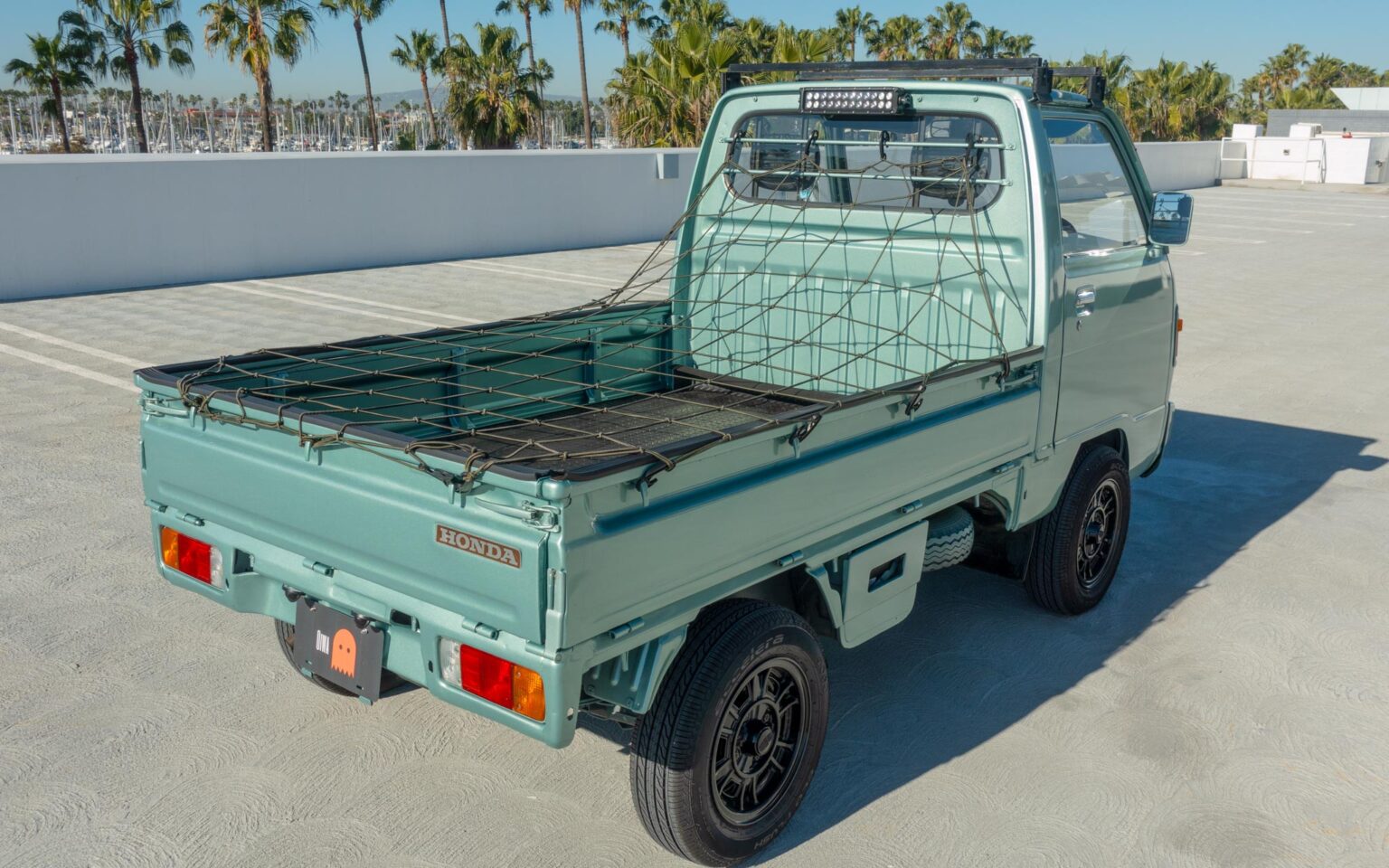
Toyota is bringing back the Scion name in a very different form, introducing a new experimental brand called Scion by Toyota alongside its first vehicle, the KEI-01. Unveiled on November 10, 2026, the ultra-compact utility truck is based on the practical philosophy of Japan’s kei vehicles but has been developed for U.S. low-speed vehicle regulations.
It features a 660cc three-cylinder engine, a continuously variable transmission, and standard four-wheel drive. Toyota plans to assemble it at its Indiana facility beginning in the second half of 2027, supported by a $34 million investment and approximately 50 new jobs. Initial sales will target fleet customers rather than private buyers.
Scion Returns as an Experimental Brand Under Toyota
Scion has been absent from the American new-car market since Toyota discontinued the original brand in 2016. Originally launched in 2003, Scion was designed to attract younger buyers with distinctive styling, customization options, and relatively affordable vehicles.
Models such as the xB, tC, and FR-S helped establish its identity, but Toyota eventually moved the remaining products and customers into its main brand.
The new initiative is not simply a revival of that original lineup. Toyota is introducing Scion by Toyota as an experimental mobility brand, giving the company a separate identity for unusual vehicle concepts and products that do not necessarily fit its conventional passenger-car range.
Toyota describes it as a place to test ideas involving utility, outdoor recreation, and personal mobility.
The first production-intended vehicle is the KEI-01, a miniature utility truck inspired by Japan’s kei truck category. These vehicles are popular in Japan because their compact dimensions make them practical for farms, small businesses, construction sites, and narrow urban roads.
Their small footprint also makes them easier to maneuver and park than conventional pickups.
Toyota is bringing that basic concept to American customers, but the KEI-01 has been configured around a specific regulatory category.
Rather than being developed as a conventional road-going pickup, it is designed to comply with federal requirements for a low-speed vehicle, or LSV. This distinction is central to understanding what the truck can and cannot do.
The company also presented two additional concepts at the launch. The SxS Concept is a high-performance side-by-side off-road vehicle featuring a turbocharged four-cylinder hybrid powertrain producing more than 300 horsepower.
The BKE Concept is a compact personal-mobility design focused on adaptable utility and outdoor use. Neither concept has been confirmed as a production vehicle, but both demonstrate that Scion by Toyota is intended to cover more than small commercial trucks.
For Toyota, the new brand creates room to test niche products without changing the positioning of its established Toyota and Lexus lineups. The KEI-01 is the first practical example of that approach, although its initial availability will be deliberately limited.
KEI-01 Uses a 660cc Engine, Four-Wheel Drive, and a 25-MPH Speed Limit
The KEI-01’s powertrain is considerably smaller than what American pickup buyers are accustomed to. It uses a 660cc three-cylinder gasoline engine connected to a continuously variable transmission. Four-wheel drive is standard, with selectable operating modes and a locking function intended to improve traction on mud, snow, and uneven surfaces.
Toyota has not announced an official horsepower or torque rating for the U.S.-market vehicle. It would therefore be misleading to assign it a confirmed output figure based on specifications from related Japanese models.
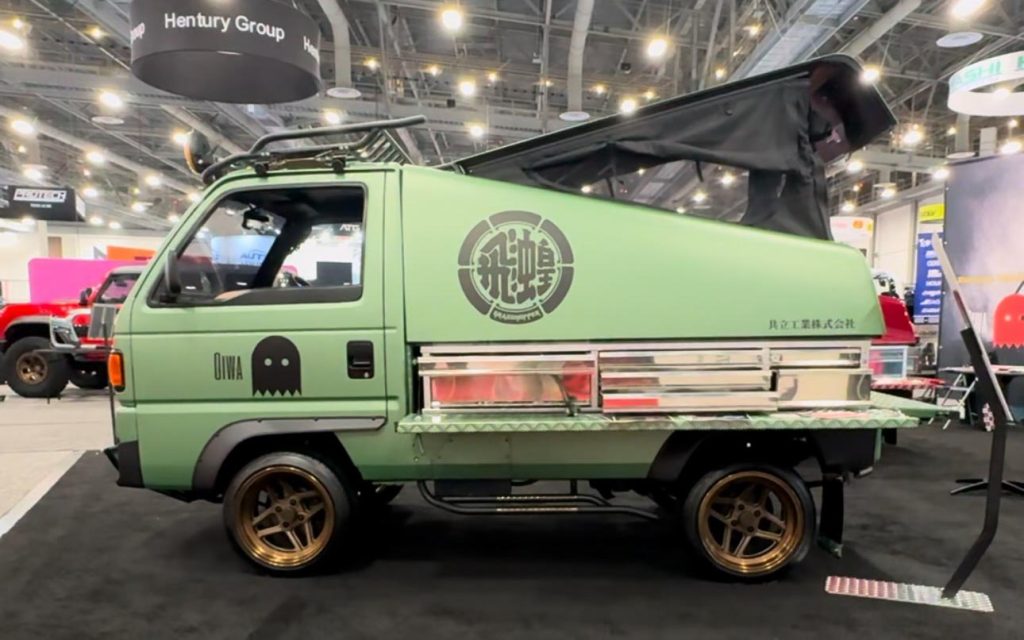
The company has emphasized low-speed utility, maneuverability, and efficiency rather than acceleration or highway performance.
The vehicle measures just over 11 feet long and less than 5 feet wide. Those dimensions make it substantially smaller than conventional U.S. pickups, including compact models.
Its short length and narrow body should make it useful in places where a full-size truck would be difficult to maneuver, such as university campuses, municipal properties, farms, and industrial facilities.
The cargo bed is designed for practical loading, with three-way fold-down access that allows materials to be loaded and unloaded from different sides. Toyota lists a maximum bed payload of 600 pounds.
The company also says the truck is structurally designed to tow small trailers and equipment, although it has not published a specific maximum towing rating in its announcement.
Unlike many basic utility vehicles, the KEI-01 will have an enclosed cabin with heating and air conditioning. Its extended-cab layout includes sliding and reclining seats, along with storage space behind the seats for tools and equipment. Toyota is also providing a raised roofline to improve cabin practicality.
The truck will be right-hand drive, another unusual feature for a vehicle intended for the American market. That configuration reflects its Japanese kei-truck origins and helps distinguish it from conventional U.S. pickups. Toyota has not announced whether a left-hand-drive version will be considered in the future.
One of the vehicle’s key specifications is its top speed, which is limited to 25 mph. The KEI-01 was developed to meet Federal Motor Vehicle Safety Standard No. 500, the regulation governing low-speed vehicles.
That classification means it is not intended to operate like an ordinary highway-capable pickup. Federal rules generally limit LSV operation to roads with posted speed limits of 35 mph or less, subject to applicable state and local laws.
This restriction changes the vehicle’s potential customer base. It may work well for short-distance transportation, maintenance duties, and moving supplies around controlled properties, but it is not suitable for highway commuting or regular long-distance travel.
Buyers expecting a miniature version of a Tacoma or Hilux should understand that the KEI-01 serves a different purpose.
Toyota has not announced U.S. pricing, detailed option packages, or a full technical specification sheet. Those details will be important in determining whether the truck can compete with existing utility vehicles and low-speed fleet equipment.
Indiana Assembly Begins in 2027, With Fleet Sales First
Toyota plans to assemble the KEI-01 at Toyota Motor Manufacturing Indiana in Princeton, Indiana. The project includes a $34 million investment to establish the new vehicle assembly operation and upgrade production and logistics infrastructure. Toyota expects the investment to create approximately 50 additional jobs.
The planned production start is in the second half of 2027, matching the company’s expected U.S. arrival window for the vehicle.
This domestic assembly plan is an important part of the announcement because Toyota is not simply importing completed Japanese kei trucks for American customers. It intends to carry out assembly at an existing U.S. manufacturing facility.
However, the initial sales strategy will be different from a normal Toyota vehicle launch. The KEI-01 will begin with a low-volume fleet-focused pilot program. Toyota plans to distribute it through a small number of authorized Scion by Toyota dealers selected from its existing Toyota dealer network.
Potential customers include small businesses, farmers, ranchers, delivery and service operators, municipalities, universities, and companies managing large campuses. These organizations often need compact vehicles for moving tools, equipment, and supplies over relatively short distances.
A vehicle limited to 25 mph can still be useful in those environments, provided its operating restrictions fit the property’s roads and local regulations.
Toyota says it may consider limited retail sales later, depending on market conditions, customer demand, and operational requirements. That means individual buyers should not assume the KEI-01 will be available through every Toyota dealership when production begins.
The company has not committed to a nationwide retail launch or announced a timetable for expanding sales beyond fleet customers.
The investment also adds another activity to Toyota’s established Indiana manufacturing operation. The plant already produces vehicles for the North American market, and the new assembly program will require dedicated production and logistics arrangements.
The additional 50 jobs are expected to support the project, although Toyota has not provided a detailed breakdown of the positions or hiring schedule.
The launch also arrives amid renewed American interest in kei-style vehicles. Their small size and relatively simple design appeal to buyers looking for affordable, practical transportation, but federal safety requirements and state road-use rules have historically limited how newer Japanese kei vehicles could be sold and operated in the United States.
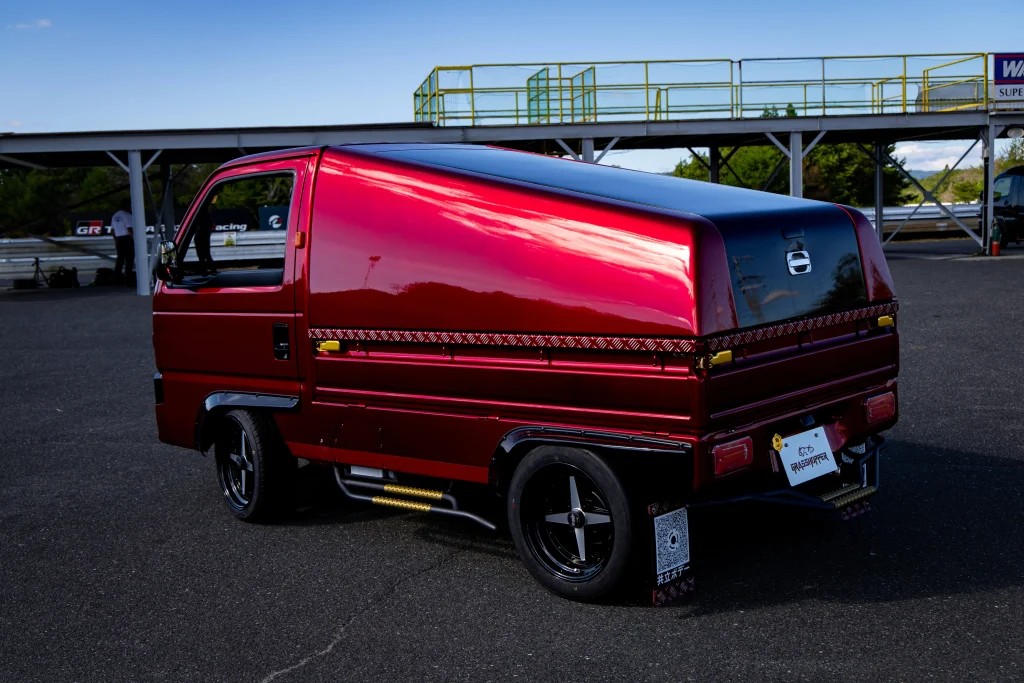
Toyota’s LSV approach provides a route into a specific market, but the 25-mph limit is a major compromise compared with conventional road vehicles.
The KEI-01’s success will depend on whether fleet operators see enough value in its compact dimensions, four-wheel drive, and enclosed cabin to accept its speed limitation. Its 600-pound payload and small footprint could make it useful for specialized jobs, but pricing, maintenance costs, and real-world operating performance will influence purchasing decisions.
For now, Toyota is treating the KEI-01 as a limited experiment rather than a mass-market pickup. The return of Scion is therefore less about recreating the brand’s former lineup and more about giving Toyota a platform for unconventional mobility products.
With U.S. assembly planned for late 2027, the KEI-01 will test whether the Japanese kei-truck concept can find a meaningful customer base in America, beginning with fleets that value compact utility more than highway speed.
