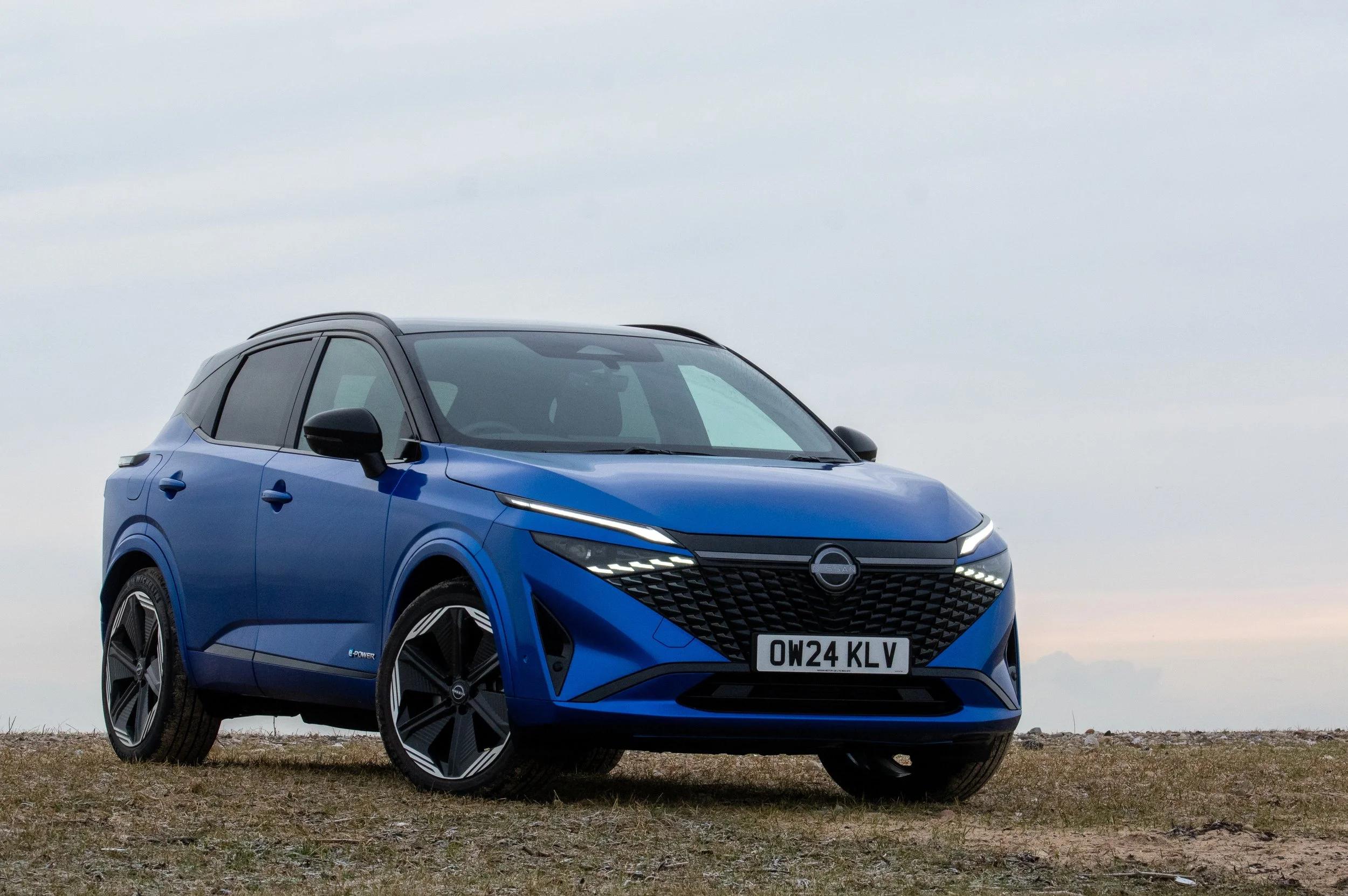
Nissan is celebrating two decades of the Qashqai, the crossover that helped reshape the European family-car market by combining SUV styling and a raised driving position with the practicality of a conventional hatchback.
First introduced in 2006, the model has grown into one of Nissan’s most successful global nameplates, accumulating more than 7.3 million sales across its international family of vehicles.
Now spanning three generations, the Qashqai has evolved from a bold alternative to traditional family cars into a technology-focused crossover featuring electrified powertrains. Its anniversary highlights how one product helped establish a vehicle category now central to the global automotive industry.
How the Qashqai Changed the Family-Car Market in 2006
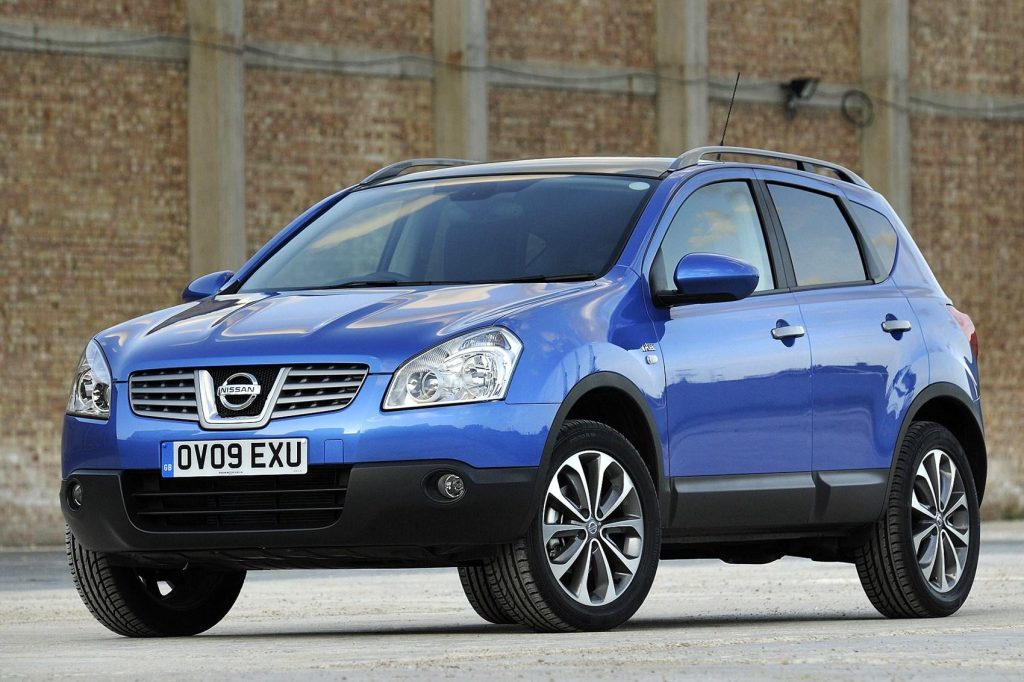
The Qashqai’s development began in 2002, when Nissan’s European team reconsidered what should replace the Almera family hatchback. Instead of producing another conventional passenger car, the company explored a vehicle that combined the practical dimensions and efficiency of a hatchback with the elevated seating position and styling of an SUV.
At the time, European buyers generally chose between hatchbacks, saloons, estate cars, MPVs, and larger SUVs. Nissan believed there was room for something between these categories.
Traditional SUVs offered a higher driving position and rugged appearance, but many were larger, heavier, and more expensive to operate than ordinary family cars.
The Qashqai was developed to address that gap. Its design offered SUV-inspired proportions without requiring the size and complexity of a traditional off-roader. The concept was presented at the Geneva Motor Show in 2004, before the production vehicle made its public debut at the Paris Motor Show in 2006.
Production began at Nissan’s Sunderland facility in the United Kingdom in December 2006, with European sales starting in February 2007. The response was stronger than Nissan initially expected.
The company had planned for approximately 100,000 sales during the first full year, but the Qashqai achieved 164,000 sales. Demand became so strong that certain versions developed waiting periods of up to 10 months.
The early success demonstrated that buyers were interested in a vehicle that offered a combination of passenger-car practicality and SUV characteristics. Nissan did not simply create another compact SUV. It helped establish the modern compact crossover formula that manufacturers across the industry would subsequently adopt.
The first generation also received updates as Nissan expanded its technology offering. In 2010, the company introduced its Around View Monitor system, providing a 360-degree camera view to help drivers maneuver and park. This was an important addition for a vehicle designed primarily for everyday family use rather than serious off-road driving.
By January 2011, cumulative global production had reached one million units. More than 750,000 of those vehicles had been sold in Europe, demonstrating how quickly the model had established itself in its most important market.
The Qashqai also expanded beyond Europe under different names. It was marketed as the Nissan Dualis in Japan and Australia, while China received the model under the Xiaoke name. In the United States, it was introduced as the Rogue Sport in 2017, although Nissan later discontinued that nameplate in the American market.
These different identities helped the model reach customers with varying market preferences while retaining the same basic crossover concept. Nissan’s manufacturing operations also expanded, with production beginning in Japan in 2007 and China in 2008.
Three Generations and More Than 7.3 Million Global Sales
The Qashqai has passed through three generations since its introduction, with each bringing changes to its styling, technology, safety equipment, and powertrain options.
The original Qashqai introduced Nissan’s interpretation of a compact family crossover. It combined a raised driving position, relatively compact exterior dimensions, and practical passenger accommodation. Its success encouraged Nissan to develop the concept further rather than return to a conventional hatchback replacement.
The first generation also helped establish Sunderland as a major manufacturing center for the model. By 2011, the factory had produced one million Qashqai vehicles, and the vehicle was being exported to markets around the world.
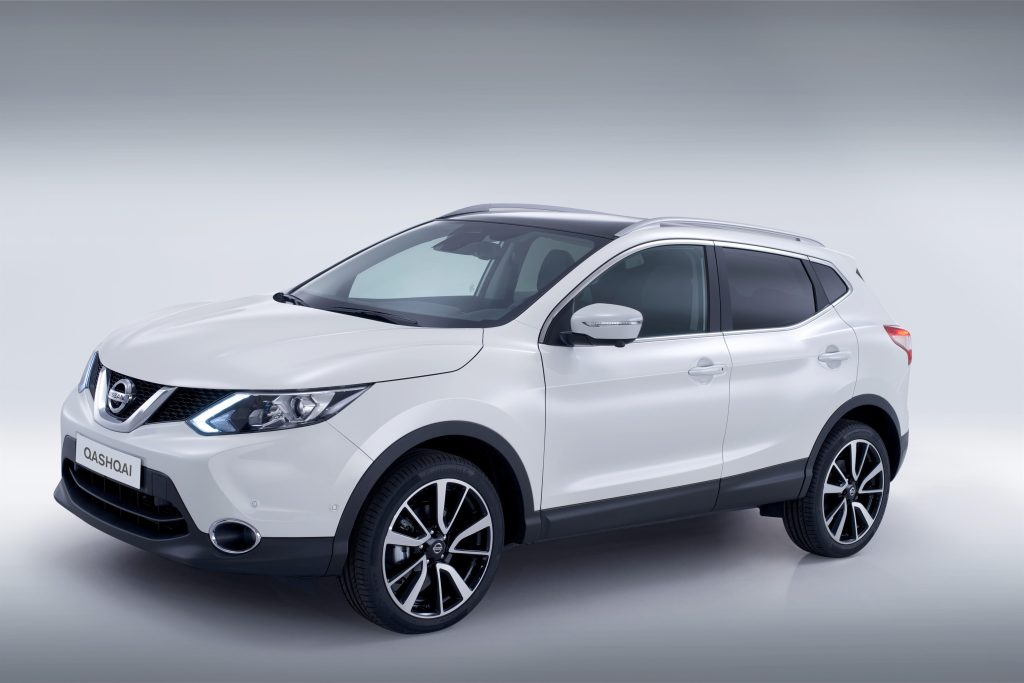
Nissan introduced the second-generation Qashqai in 2014 with a redesigned exterior, improved cabin presentation, and additional driver-assistance technology. The updated model retained the compact crossover layout but offered a more sophisticated ownership experience.
One important addition was Intelligent Park Assist, which helped drivers maneuver into parking spaces. Other technology improvements included enhanced safety systems and updated connectivity features.
The second generation also continued to expand the model’s international reach. In 2017, Nissan introduced it to North America as the Rogue Sport in the United States and the Qashqai in Canada. Meanwhile, the model continued to build a strong following in Europe and China.
By the end of 2016, cumulative global sales had reached approximately 3.3 million vehicles. The milestone reflected the growing popularity of compact crossovers and the Qashqai’s established position within the segment.
The third-generation Qashqai arrived in 2021 with a more modern exterior, improved interior technology, and an increasingly electrified powertrain range. Nissan placed greater emphasis on driver assistance, connectivity, cabin comfort, and efficiency.
One of its most important developments was the introduction of e-POWER hybrid technology in Europe in 2022. Unlike a conventional hybrid system, the Qashqai e-POWER uses an electric motor to drive the wheels, while a gasoline engine generates electricity. The engine does not mechanically drive the wheels.
This arrangement provides an electric-motor driving experience without requiring owners to plug the vehicle into an external charger. It gives customers access to electric-style acceleration and response while retaining the convenience of refueling at conventional gasoline stations.
In September 2025, Nissan introduced its third-generation e-POWER technology to the European Qashqai. The updated system was designed to improve fuel efficiency, reduce emissions, and deliver quieter operation compared with the previous version.
The sales milestone reached in 2026 demonstrates the scale of the model’s success. Nissan reports more than 7.3 million cumulative global sales across the Qashqai model family as of October 2026. Europe accounts for approximately 4.1 million of those sales.
The model has been sold in more than 100 markets and has received over 110 international awards, including more than 20 Car of the Year titles. These figures underline its importance to Nissan’s international product strategy.
There is an important distinction between global sales and manufacturing figures. Nissan’s Sunderland factory alone has produced more than 4.5 million Qashqai vehicles since production began. That is a production milestone for one facility, whereas the 7.3 million figure represents cumulative sales across the wider model family and its regional nameplates.
A 20th-Anniversary Design Celebrates the Qashqai’s History
Nissan is marking the anniversary with a special one-off Qashqai featuring a design inspired by the early 2000s. Rather than announcing a new production trim or performance edition, the company has collaborated with digital artist @heymoonly to create a vehicle that reflects the cultural style of the period when the original crossover was developed.
The exterior uses a colorful sticker-bomb design with bright graphics and visual references to early-2000s digital culture. Inside, the anniversary vehicle features several unusual details, including velour seat covers, a colorful steering-wheel cover, music CDs, and a working Apple iPod loaded with music from the era.
The display is intended to capture the optimism and creativity associated with the period when the Qashqai first appeared. The original vehicle challenged established ideas about what a family car should look like, and the anniversary design uses the visual language of that same decade to celebrate its beginnings.
However, customers should not mistake this vehicle for a new limited-production model. Nissan has presented it as a one-off anniversary creation, and the distinctive interior accessories and exterior graphics are not being announced as regular customer options.
The company is also introducing the Nissan Qashqai Heritage Collection, a digital archive containing original design sketches, historical photographs, videos, and important milestones from the vehicle’s development. The collection is intended to document how the crossover evolved from its early design stages into a globally recognized model.
The anniversary also provides an opportunity to examine the Qashqai’s contribution to Nissan’s manufacturing operations in the United Kingdom. The Sunderland factory has become central to the model’s production history, manufacturing more than 4.5 million examples.
Nissan says the Qashqai has contributed significantly to the British automotive industry, supporting thousands of direct jobs at the plant and employment across its wider supply chain.
Looking ahead, the crossover’s future will depend on how Nissan responds to changing customer expectations. Electrification, improved efficiency, software integration, safety technology, and competition from other manufacturers will remain important factors.
The growth of electric vehicles and hybrid alternatives also means the Qashqai must continue offering a convincing balance between operating costs, practicality, and driving experience.
Its 20th anniversary is therefore more than a celebration of sales figures. The Qashqai helped establish a category that has become one of the most important parts of the modern automotive market. With three generations, more than 7.3 million global sales, and a growing electrified lineup, it remains one of Nissan’s most influential vehicles.