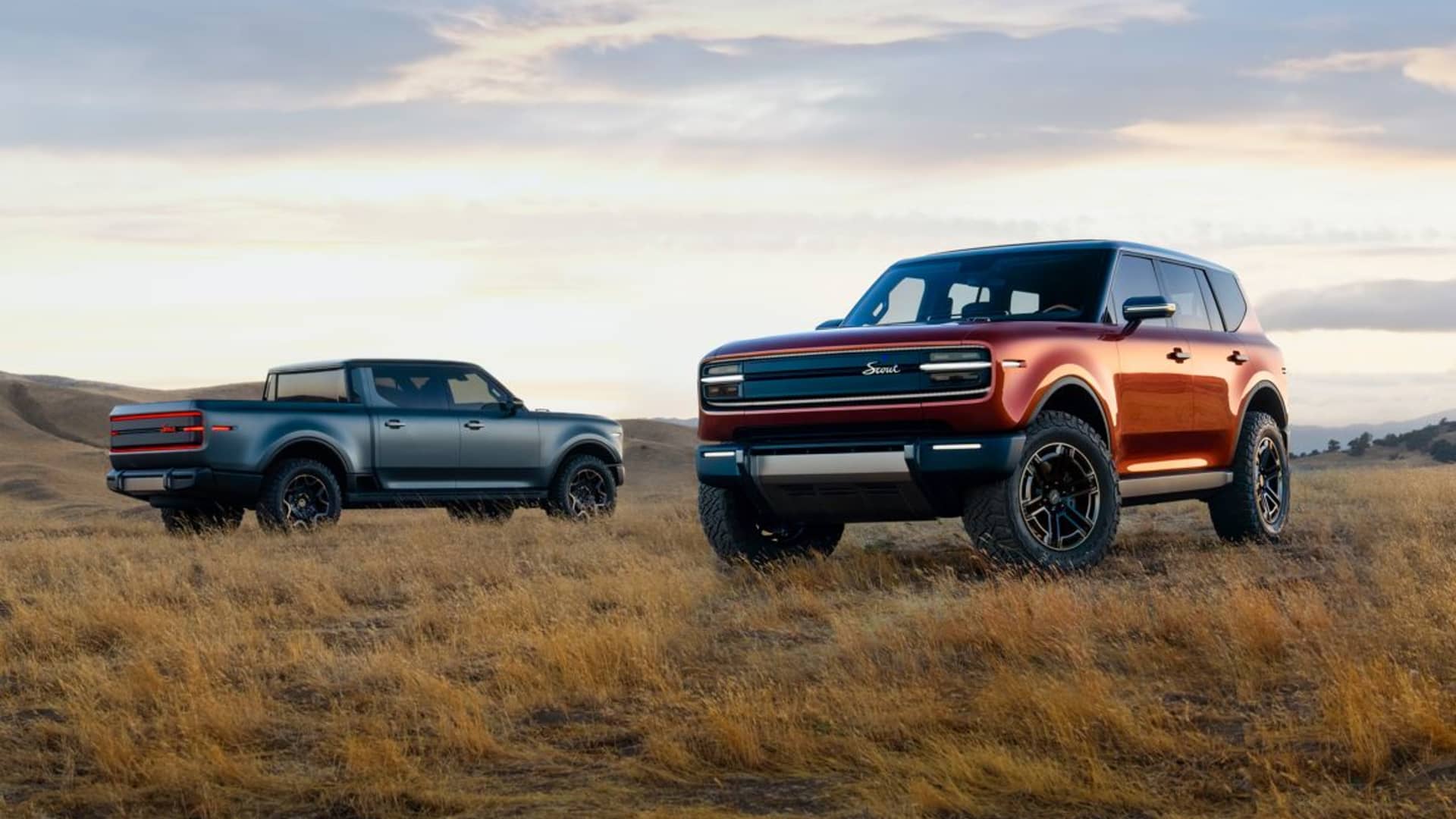
Scout Motors has reached an important milestone in its return to the American automotive market. The Volkswagen Group-backed company has started welding, painting, and assembling validation vehicles at its new manufacturing facility in Blythewood, South Carolina.
The $2 billion project covers approximately 1,600 acres and is designed to produce the upcoming Scout Traveler SUV and Scout Terra pickup.
Although the factory is still completing its final construction work, manufacturing equipment is now being tested with actual vehicles. Production is targeted for late 2027, with customer deliveries expected to begin in 2028.
Scout Motors Begins Building Vehicles at Its New South Carolina Factory
Scout Motors announced on November 12, 2026, that its Blythewood Production Center had started building validation vehicles. The development marks a transition from installing factory equipment to using that equipment to manufacture complete vehicle bodies and test production processes.
The facility is located approximately 20 miles north of Columbia, South Carolina, and represents an investment of more than $2 billion. Construction began around two and a half years before the validation announcement.
The site covers approximately 1,600 acres and includes a large vehicle production complex, supplier facilities, and employee training infrastructure.
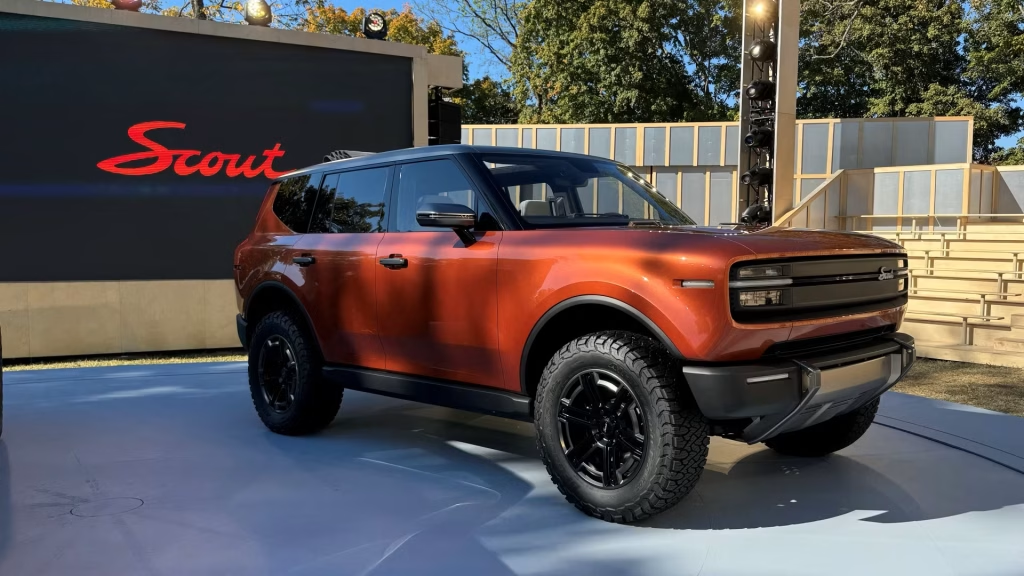
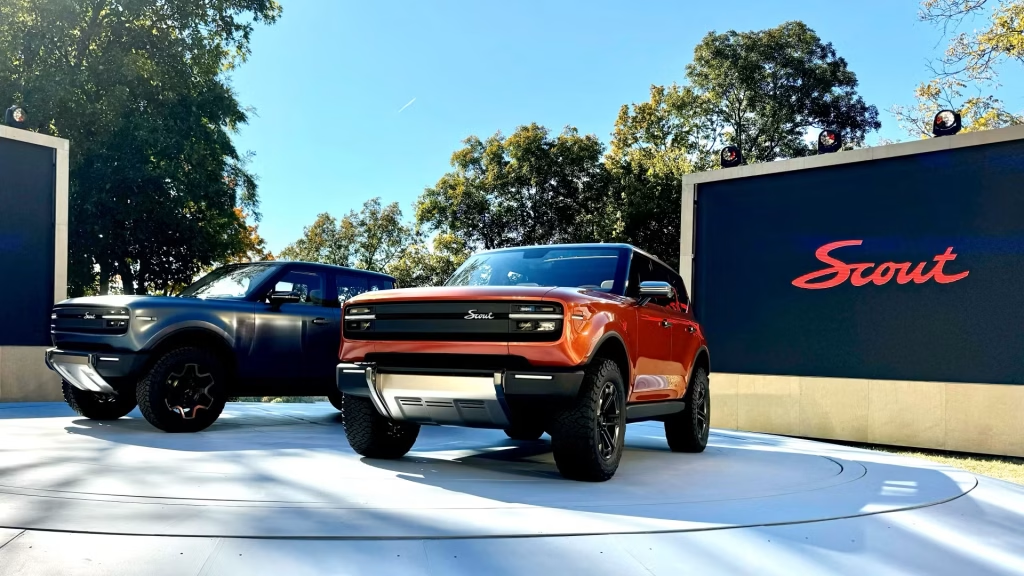
The new factory will produce two models, the Scout Traveler SUV and the Scout Terra pickup truck. Both will feature a rugged body-on-frame platform, highlighting the brand’s focus on utility vehicles and off-road performance.
Scout Motors is reviving a name that originally belonged to International Harvester. The original Scout was introduced in 1961 and remained in production until 1980. It became known as a versatile utility vehicle capable of handling both everyday transportation and challenging outdoor conditions.
The modern Scout brand was established under Volkswagen Group ownership to develop electric and extended-range electric trucks and SUVs for the North American market. Its new manufacturing facility is intended to bring that project from vehicle development into large-scale American production.
The validation vehicles currently being assembled are not finished customer models. They are built to test engineering specifications, manufacturing equipment, component compatibility, and assembly procedures. These vehicles allow engineers to identify problems before the factory begins producing vehicles intended for sale.
Scout says the initial validation program will continue into 2027. The company expects to progress from these early builds to more advanced pre-production vehicles before scaling manufacturing operations toward regular production.
The distinction is important because installing machinery does not automatically mean a factory is ready to manufacture vehicles at commercial volumes.
Equipment must be tested, production sequences refined, employees trained, and quality standards established. Validation builds help manufacturers identify problems while there is still time to correct them.
Scout Motors president and CEO Scott Keogh described the development as tangible progress, explaining that the equipment is now operating and employees are assembling the company’s first validation vehicles inside the factory.
More Than 750 Robots and AI Systems Support Vehicle Assembly
One of the most significant parts of the Blythewood facility is its highly automated body shop. Scout says more than 750 robots support operations in this section of the factory, where approximately 160 individual parts are brought together to create a complete vehicle body.
Each completed body contains approximately 5,000 weld points. Robots perform operations requiring consistent positioning and repeatability, while employees supervise equipment, inspect results, and evaluate production quality.
Artificial intelligence is being used to support weld monitoring. AI-assisted systems analyze welding operations and help identify irregularities that could affect structural quality. Advanced measurement equipment also checks whether completed vehicle bodies meet engineering dimensions.
An additional metrology system provides another inspection stage. Sample bodies undergo thousands of measurements against engineering specifications before moving to the Paint Shop. This helps engineers identify dimensional problems early rather than allowing them to continue into later assembly stages.
Scout has designed the Body Shop to process approximately 40 vehicles per hour at full capacity. However, this is the facility’s intended production capability, not its current validation-build speed. The company must complete equipment commissioning and process validation before reaching that level.
The factory also includes a dedicated paint shop. Vehicle bodies move through cleaning, coating, corrosion protection, painting, drying, and inspection. Quality checks take place throughout the process to ensure that the finished exterior meets the required standards.
Once painting is complete, the vehicle bodies move into final assembly. This is where employees install components such as wiring, windows, flooring, seats, steering wheels, and tires. The painted body and chassis are brought together to create a functioning vehicle.
The facility combines automated equipment with manual work rather than relying entirely on robots. Machines handle repetitive and precision-sensitive tasks, while employees oversee operations, resolve problems, and perform installation work that requires human judgment.
Scout is also investing in employee training. Its manufacturing workforce is being prepared to operate advanced equipment and understand the production systems used throughout the facility. The company expects the site to create more than 4,000 jobs as operations expand.
The current workforce is still considerably smaller than the expected full-capacity workforce. Reporting from South Carolina in November 2026 indicated that approximately 900 employees were already working in the state across manufacturing, engineering, and management roles. Hiring is expected to increase as the factory moves toward production.
Production Timeline, Supplier Park, and Future Manufacturing Capacity
Scout Motors is targeting initial production in late 2027, followed by customer deliveries in 2028. The validation program will continue throughout 2027, allowing the company to test vehicle durability, safety systems, software, electronic hardware, and manufacturing processes.
The first validation vehicles will also help Scout assess how well components fit together and whether suppliers can consistently deliver parts that meet engineering requirements. These checks are particularly important for a new automaker introducing an entirely new vehicle platform and manufacturing operation.
The company plans to offer both fully electric and extended-range electric versions of the Traveler and Terra. The extended-range version, known as Harvester, uses a gasoline engine as a generator to supply electricity when needed. This arrangement is different from a conventional hybrid because the electric motors provide the vehicle’s driving power.
Scout’s September 2026 production update cited projected ranges of up to 350 miles for the battery-electric configuration and up to 500 miles for the extended-range version. These are manufacturer estimates based on internal targets, not final EPA-certified figures. Actual range will depend on vehicle configuration, driving conditions, temperature, and other factors.
The Blythewood project also includes an on-site supplier park. Scout announced an additional $300 million investment in 2025 to develop this area, which is expected to support approximately 1,000 supplier jobs and attract another $368 million in supplier investment.
The Supplier Park is designed to bring important manufacturing and logistics operations closer to the main vehicle assembly facility. It includes a just-in-time facility, battery assembly building, and accessories installation center. This arrangement is intended to improve the movement of components and reduce delays between suppliers and vehicle production.
A separate joint venture facility with Sodecia Aapico will manufacture ladder frames for the Scout trucks and SUVs. The body-on-frame construction is an important part of the vehicles’ intended utility and off-road positioning.
At full capacity, Scout’s Blythewood facility is planned to manufacture as many as 200,000 vehicles annually. The company expects the site to employ more than 4,000 people when fully operational. Reaching those figures will require additional hiring, successful validation, and a gradual increase in production volumes.
The project also benefits from Volkswagen Group’s manufacturing and purchasing resources. That backing could help Scout access established automotive suppliers and production expertise while developing its own brand identity.
For now, the start of validation builds is the most important development. Scout has moved beyond factory construction and equipment installation into actual vehicle assembly. The next challenge is proving that the Traveler and Terra can be manufactured consistently, safely, and at the required quality levels.
If the company maintains its schedule, production will begin in late 2027, with customer deliveries following in 2028. The Blythewood facility will then become the manufacturing base for Scout’s return to the American truck and SUV market.