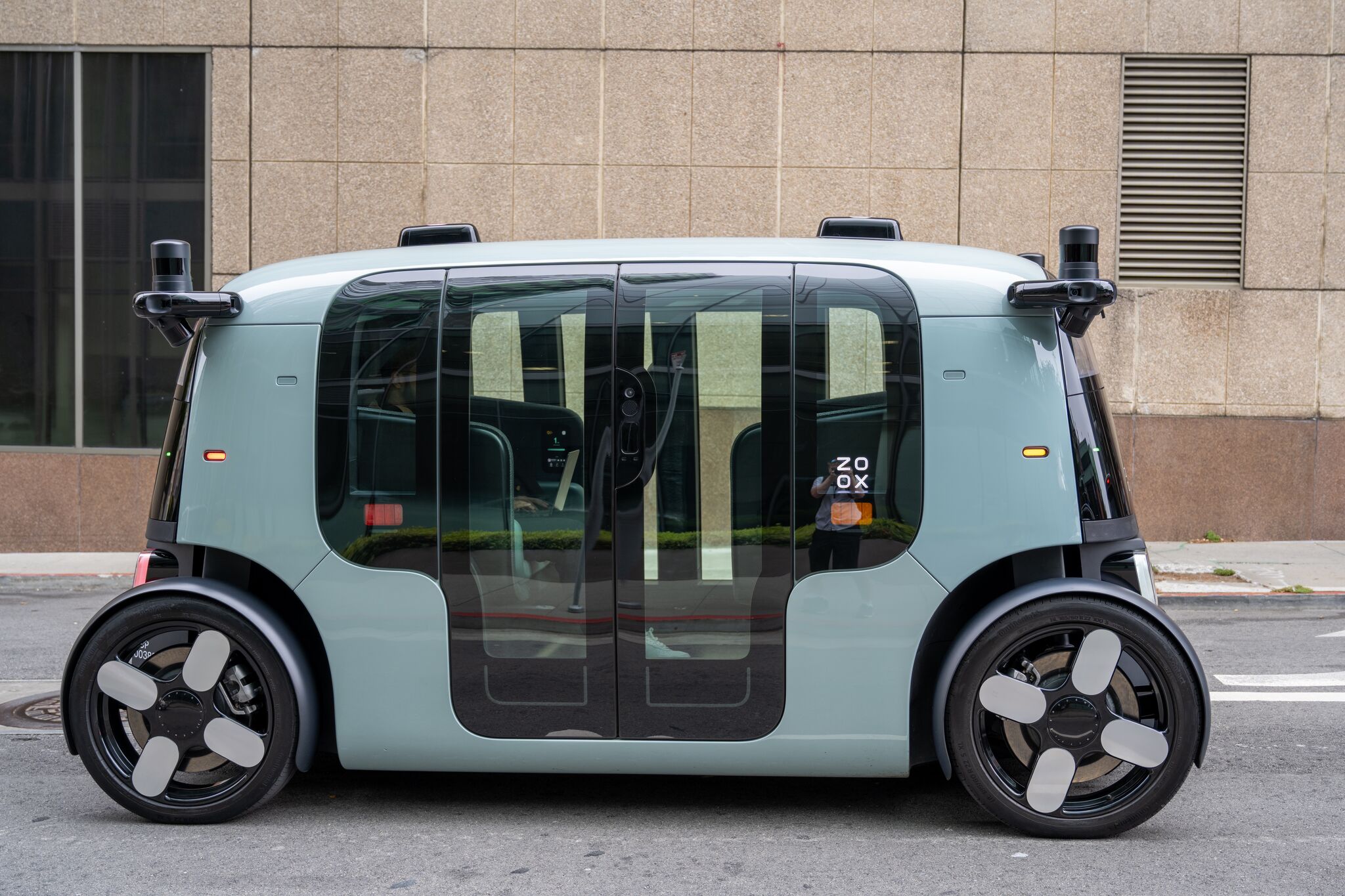
Amazon-owned Zoox has begun testing its purpose-built autonomous robotaxis on public roads in Atlanta, Georgia, adding another major U.S. market to its expansion plans.
Announced on November 13, 2026, the initial rollout is focused on northwest Atlanta neighborhoods near Atlantic Station, Woodward, and Home Park. At this stage, rides are limited to Zoox employees, their families, and friends.
The company plans to open a public waitlist in the coming months before introducing its Zoox Explorers early-rider program in 2027. The move follows more than a year of local preparation and mapping.
Zoox Starts a Limited Robotaxi Rollout in Atlanta
The Atlanta deployment is a new phase in work that began in spring 2025. Zoox initially used a conventional testing fleet to map local streets and gather information about driving behavior, weather patterns, and city infrastructure.
The company says it has since expanded its autonomous-driving capabilities, operating area, fleet, and local team in preparation for testing its purpose-built robotaxi.
The first operating area covers parts of northwest Atlanta, including Atlantic Station, Woodward, and Home Park. Zoox says it expects to expand the area as testing progresses. The initial geographic restriction allows the company to gather data in a defined part of the city before attempting more complex routes and a wider service footprint.
The service is not yet open to ordinary customers. Only Zoox employees, their families, and friends can ride during this phase. The company plans to open a waitlist in the coming months, followed by its Zoox Explorers early-rider program in 2027.
The distinction between testing and public ride-hailing is important. The appearance of Zoox vehicles on Atlanta streets does not mean residents can currently summon one through the app. The company has not announced a general public launch date, fares, operating hours, or a final service boundary for Atlanta.
Zoox says it works with local and state officials before beginning operations in a new market. Its Atlanta announcement also highlighted a partnership with the Promise Center focused on youth development and workforce preparation.
Atlanta is an attractive market for autonomous ride-hailing because of its large urban population, busy travel corridors, and established ride-hailing demand.
However, operating in a city environment requires more than navigating straightforward roads. Robotaxis must respond to complicated intersections, pedestrians, cyclists, construction zones, emergency vehicles, unpredictable traffic, and changing weather.
Zoox’s gradual rollout gives the company an opportunity to observe how its vehicles handle those conditions before expanding access.
A Robotaxi Designed Without a Steering Wheel or Driver’s Seat
Zoox takes a different approach from companies that convert existing passenger cars into autonomous vehicles. Its robotaxi was designed from the beginning for driverless ride-hailing. The cabin has no steering wheel, conventional driver’s seat, or front-facing dashboard arranged around a human driver.
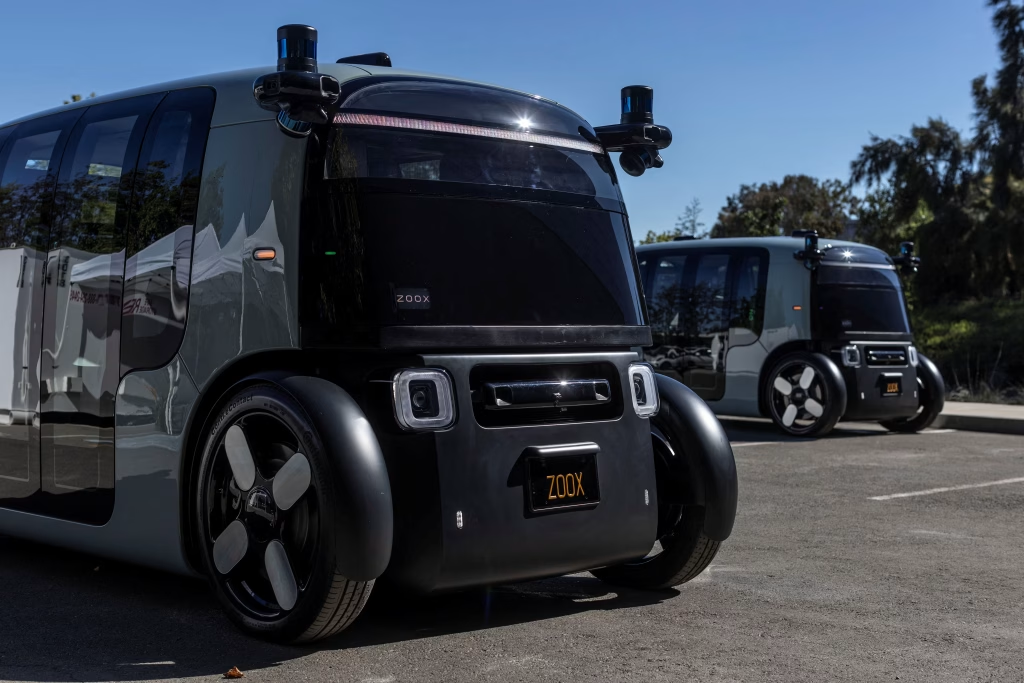
Instead, passengers sit facing one another in a carriage-style layout. The vehicle is designed to carry up to four people, creating a shared cabin rather than a traditional car interior. Zoox says the arrangement is intended to give passengers space to talk, relax, or use their travel time without concentrating on the road.
The vehicle is also bidirectional, meaning it can travel in either direction without needing to turn around conventionally. This design can be useful in urban areas where curb space and tight streets may make maneuvering difficult. The vehicle’s compact, purpose-built format is intended to support frequent passenger pickups and drop-offs.
The robotaxi used in Zoox’s wider program is electric and uses cameras, radar, and lidar to detect road users, objects, and traffic conditions. Its autonomous driving system uses that information to plan and execute movements.
The lack of a steering wheel reflects Zoox’s goal of operating without a human driver available to take control. However, this design also presents a significant safety challenge, as the company must prove that its autonomous systems can handle both everyday traffic conditions and unexpected situations reliably.
Zoox says it owns, operates, and assembles its vehicles, giving it direct responsibility for the vehicle design and the service experience. Its vertically integrated approach differs from models in which an autonomous technology company supplies software to a separate automaker or adapts commercially available vehicles.
The company is owned by Amazon, which acquired it in 2020. Amazon’s backing gives Zoox access to substantial corporate resources, although the robotaxi business still needs to prove that it can operate safely and economically at scale.
A purpose-built vehicle may offer advantages in passenger layout and fleet operation, but it also means Zoox must develop and manufacture a specialized vehicle rather than rely on large numbers of existing cars. That creates its own production, maintenance, and operating challenges.
Atlanta Expands Zoox’s U.S. Testing and Service Network
Atlanta joins a growing list of U.S. cities where Zoox is testing or operating its autonomous vehicles. The company identifies Austin and Miami as additional testing markets. It offers public rides in Las Vegas and has an early-rider program in San Francisco. These locations represent different stages of deployment, rather than one uniform nationwide service.
Las Vegas is currently the most established public-facing market in the company’s rollout. San Francisco has a more limited early-rider program, while Austin and Miami remain testing locations. Atlanta is now entering the testing stage with rides initially restricted to people connected to the company.
This phased approach allows Zoox to build local maps, evaluate driving conditions, and expand its operating area in stages. A vehicle that performs well in one city cannot automatically be assumed to work equally well in another. Road layouts, traffic patterns, weather, local driving habits, and regulatory requirements vary significantly.
Atlanta also has an existing autonomous-vehicle presence. Waymo has operated in the city, and May Mobility has been active in the wider market. Zoox, therefore, enters an environment where residents and regulators are already becoming familiar with driverless transportation while also facing comparison with other operators.
The arrival of another robotaxi company could increase competition in the long term, but it is too early to assess its effect on fares, traffic, or ride availability. Zoox has not yet opened its Atlanta service to the general public, and its initial operating area is limited. The company must first build confidence in its vehicle performance and operational procedures.
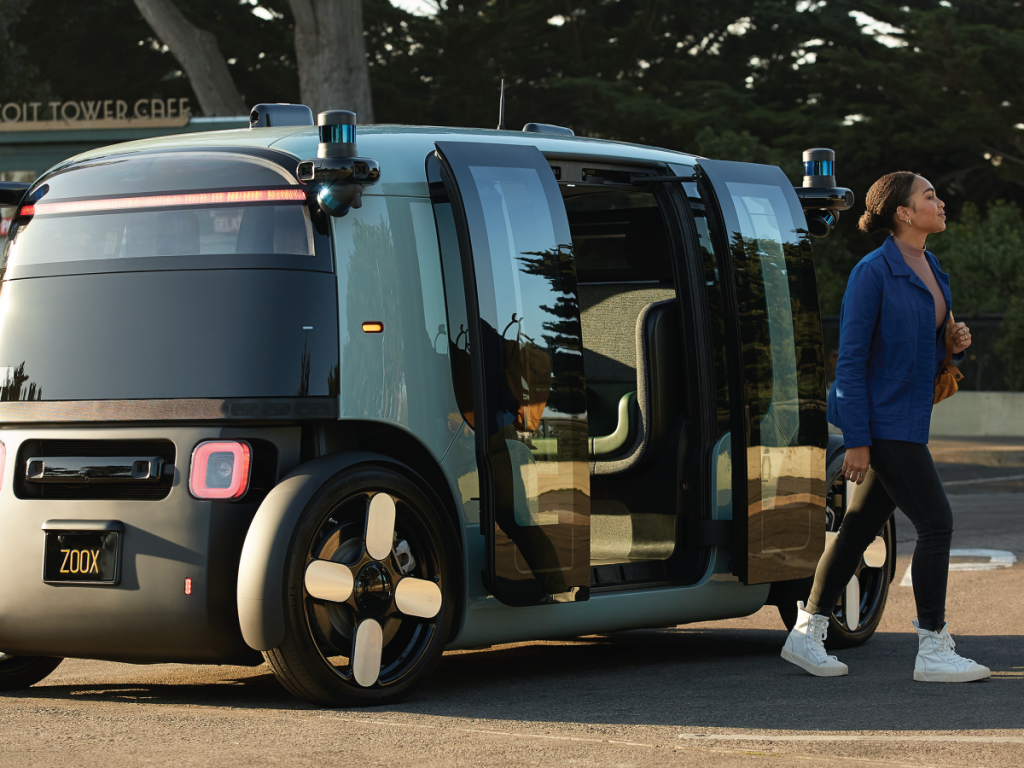
Public acceptance will also matter. Residents may want to know how the vehicles respond to emergencies, interact with other road users, and handle unexpected stops. Clear communication and cooperation with local authorities will be important.
The company has not announced Atlanta pricing, a full commercial launch date, or the number of vehicles assigned to the initial rollout. Its stated plan is to open a waitlist in the coming months and introduce the Zoox Explorers program in 2027.
Expansion across the city is expected as testing progresses, but no neighborhood-by-neighborhood timetable has been published.
For now, the Atlanta deployment is a testing milestone rather than a full robotaxi launch. It gives Zoox another opportunity to evaluate its unusual four-passenger vehicle in a large U.S. city and prepare for a potential wider service.
The next meaningful developments will be the opening of the public waitlist, the start of early-rider trips, and any expansion of the operating area. Those steps will show how quickly Zoox can move from employee testing to a service available to Atlanta residents.