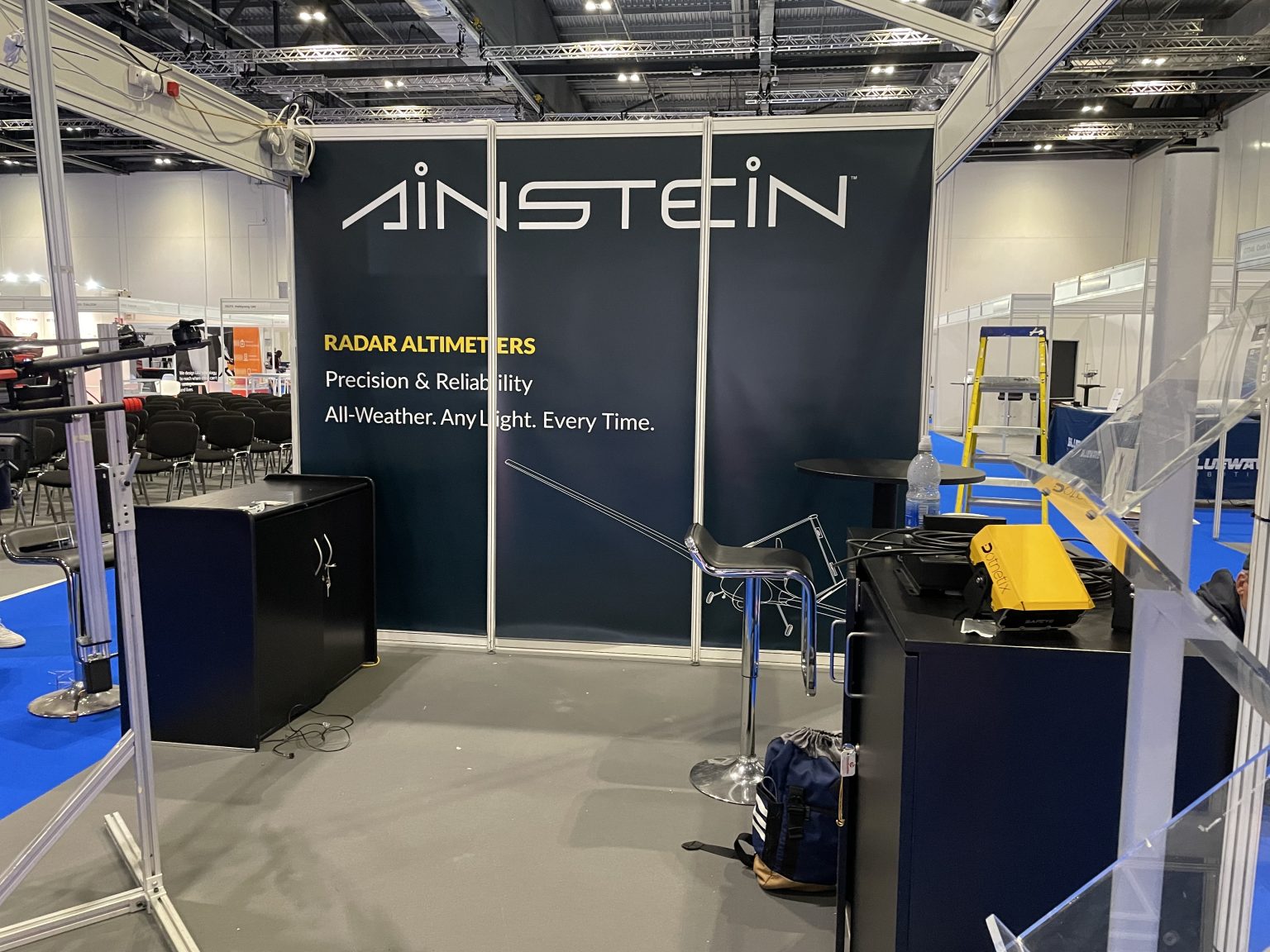
Ainstein has opened a new radar-sensor manufacturing facility in Lenexa, Kansas, adding stated annual production capacity of 44,000 units.
Announced on November 16, the expansion strengthens the company’s U.S. manufacturing operations as demand grows for sensing technology used in autonomous vehicles, commercial fleets, agricultural machinery, and unmanned aircraft.
The facility’s opening ceremony took place on November 13, bringing additional production capability to the state where Ainstein was founded.
The investment is intended to support larger customer programs and improve supply chain capacity, although the 44,000 figure represents potential annual output rather than confirmed production or shipments.
Ainstein Expands Radar Manufacturing in Kansas
Founded in Lawrence, Kansas, in 2015, Ainstein develops millimeter-wave radar sensors and related software for aerospace, automotive, specialty-vehicle, and industrial applications.
The new Lenexa facility adds manufacturing capability in the same state where the company began. Its opening ceremony was attended by employees, board members, business leaders, community representatives, and partners.
Ainstein says the site adds capacity to manufacture as many as 44,000 radar sensors annually. However, the company has not disclosed the facility’s investment value, staffing level, production ramp schedule, or expected utilization.
It has also not provided a breakdown of which sensor models will be manufactured there or how much of the capacity is already committed to customers.
The distinction between capacity and output matters. A factory designed to produce 44,000 units annually does not necessarily manufacture that number immediately. Actual production depends on equipment, workforce availability, component supplies, customer orders, and quality-control processes.
Ainstein describes Lenexa as an early step in a longer-term investment in production capabilities rather than confirming that the plant will reach full capacity in its first year.
The company reports that more than 150,000 of its sensors have been deployed worldwide and that its technology supports autonomous operations in more than 40 countries.
These are company-reported figures that indicate an established international customer base, although they do not reveal how deployments are divided between industries.
Ainstein is backed by Doosan Bobcat and remains headquartered in Lawrence. The Lenexa operation gives the business additional room to scale manufacturing and support customers requiring larger quantities or shorter delivery times.
The company says customers increasingly want higher production capacity, more resilient supply chains, and the ability to scale programs.
These requirements are particularly relevant to unmanned aircraft and commercial vehicle applications, where sensors may be integrated into equipment manufactured in significant volumes. Domestic production can also help customers that prefer or require U.S.-based sourcing.
The opening represents a manufacturing expansion, not the announcement of a new radar product or a confirmed contract with a major automaker. Its immediate significance is the additional production capability available to Ainstein and its customers.
How Ainstein’s Radar Sensors Support Vehicles and Unmanned Systems
Radar sensors transmit radio waves and analyze signals reflected by surrounding objects. By measuring the returning signals, a radar system can estimate an object’s distance and relative speed. Depending on its design and software, it can also help detect movement and track objects within a defined area.
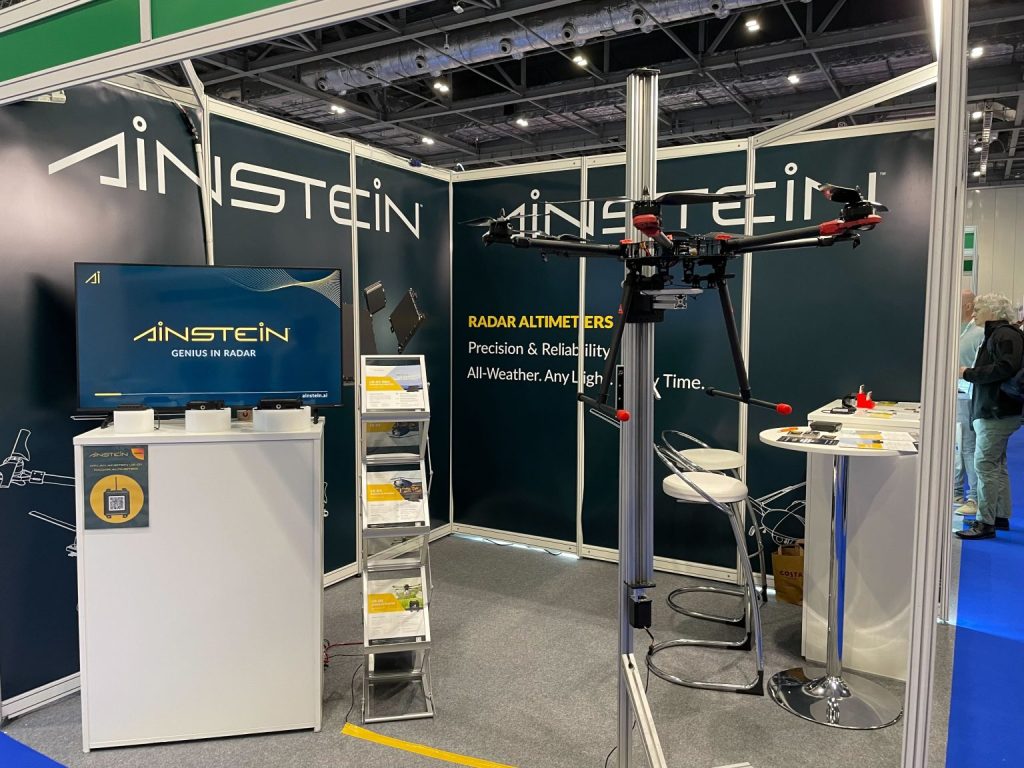
This makes radar useful in environments where cameras alone may struggle. Darkness, glare, dust, and rain can reduce the effectiveness of optical sensors. Radar can continue providing useful information in many of these conditions, although its performance depends on frequency, antenna design, target characteristics, and environmental conditions.
In road vehicles, radar is commonly used in advanced driver-assistance systems. Applications include adaptive cruise control, forward collision warning, blind-spot monitoring, and automatic emergency braking.
The sensor supplies information about vehicles or other objects around the car, while electronic control systems determine whether to warn the driver or intervene.
Ainstein’s product portfolio includes millimeter-wave radar systems operating in frequency ranges such as 24 GHz, 60 GHz, and 76 to 81 GHz. The company also develops software and application-specific sensing solutions.
The exact products assigned to the Lenexa factory have not been disclosed, so its full portfolio should not be mistaken for a confirmed production list for this facility.
Beyond passenger vehicles, radar has applications in commercial fleets and specialty machinery. Trucks and construction vehicles can use radar to monitor nearby obstacles, support collision-avoidance functions, and improve awareness around areas that are difficult for operators to see.
Agricultural equipment can also benefit from sensors that help detect objects while machinery operates across large fields or near other vehicles.
Unmanned aircraft are another important market. Drones and other uncrewed systems need to detect obstacles and understand their surroundings, particularly when operating near buildings, infrastructure, or other aircraft.
Radar can contribute to obstacle detection and situational awareness, including when visibility is limited. It is one part of a larger system that may also use cameras, satellite positioning, and other technologies.
Radar does not make a vehicle or aircraft autonomous by itself. It supplies information that must be interpreted by software and combined with other sensors and control systems. The reliability of the complete application depends on how well those components work together and how thoroughly the system is tested.
Ainstein also serves aerospace, professional sports, and emerging technology markets, according to its announcement. That range demonstrates that radar sensing is not limited to automotive applications.
The underlying technology can be adapted for different tasks, although each market requires different hardware, detection ranges, and software capabilities.
What the New U.S. Capacity Means for the Radar Supply Chain
The Lenexa factory arrives as manufacturers and technology developers seek dependable supplies of sensors for automated equipment. Autonomous vehicles, commercial fleets, agricultural machinery, and unmanned aircraft all depend on electronic components that must be available in the right quantities and meet application-specific performance requirements.
Adding domestic manufacturing capacity could help Ainstein respond to customer demand and improve coordination between engineering, production, and customer support.
However, the company has not said that Lenexa will replace production at another facility or that all products sold in the United States will now be manufactured in Kansas.
Ainstein has previously maintained manufacturing activity in China. A 2023 announcement described a facility in Jiading, Shanghai, for production of 77-GHz automotive radar products.
The Lenexa opening should therefore be understood as an expansion of the company’s manufacturing footprint, rather than its first production operation or a confirmed transfer of all manufacturing to the United States.
The new plant could be particularly relevant to customers developing larger unmanned-aircraft programs. Ainstein specifically cited demand for locally produced sensors at higher volumes as one reason for expanding U.S. capacity.
Domestic sourcing can matter when customers face program deadlines, supply chain requirements, or procurement rules that favor U.S.-made components. The company has not named specific aircraft manufacturers or disclosed orders that will use the new production capacity.
There are practical questions about how quickly the facility will reach its stated output. Radar sensors require specialized electronic components, precise assembly, and testing. Manufacturers must verify that each unit performs consistently because inaccurate readings can affect the operation of the larger vehicle or machine into which the sensor is integrated.
Scaling production while maintaining quality is therefore as important as increasing the number of units assembled.
The company has not announced the number of employees working at Lenexa or a schedule for further expansion. It has also not published product-by-product production targets. These details will help establish the plant’s eventual contribution to Ainstein’s business.
For the automotive industry, the expansion is part of a broader shift toward vehicles that rely on more sensors and software to assist drivers and manage vehicle functions. Radar is expected to remain one element of that mix because it can provide distance and speed information in conditions that challenge cameras.
Commercial and industrial equipment faces similar demands as manufacturers introduce collision-warning and automation features.
The Honda Civic proves that strong resale value is not exclusive to expensive sports cars or niche vehicles. Its appeal lies in practical qualities such as affordability, fuel efficiency, everyday comfort, and a well-established reputation in the American compact-car market.
The stated capacity of 44,000 sensors annually provides a measurable indication of the site’s intended scale, but actual output, customer demand, and delivery performance will determine its longer-term impact.
With the Lenexa opening, Ainstein is adding another step to its manufacturing strategy while keeping its roots in Kansas. The facility is designed to support growing demand for radar sensing in the air and on the ground.
Whether it reaches its full annual capacity will become clearer as production ramps up and the company reports further details about customer programs and shipments.