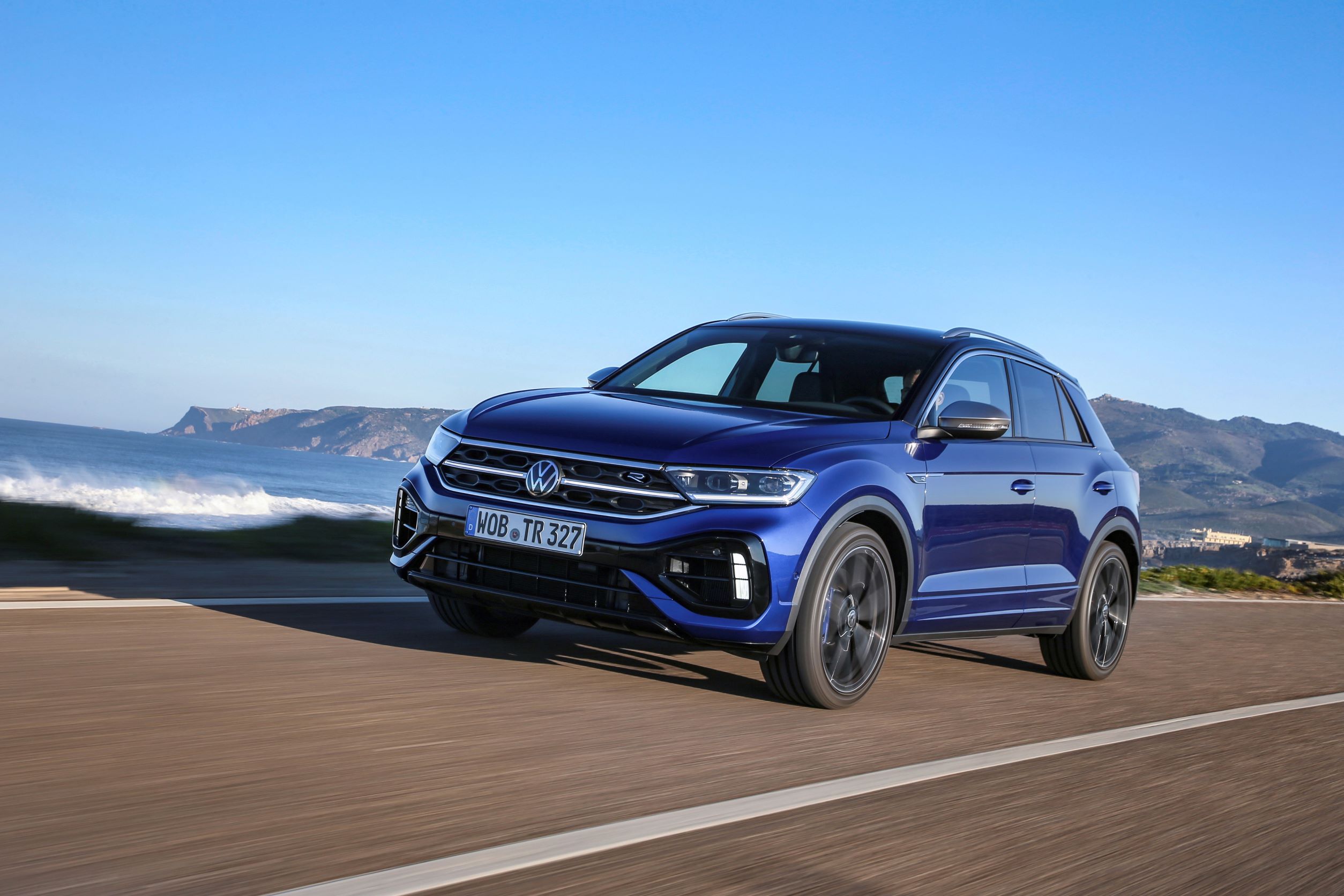
Volkswagen has introduced the new T-Roc R as the performance flagship of its second-generation compact SUV range.
Revealed on November 18, 2026, the European-market model combines a 2.0-liter turbocharged four-cylinder engine with a 48-volt mild-hybrid system, producing 333 PS, equivalent to approximately 328 horsepower, and 420 Nm of torque.
Power is delivered through a seven-speed dual-clutch transmission and Volkswagen’s 4MOTION all-wheel-drive system with torque vectoring.
The new T-Roc R can accelerate from 0 to 62 mph in five seconds and reach an electronically limited top speed of 155 mph. It also introduces mild-hybrid technology to Volkswagen’s R performance lineup for the first time.
New 2.0-Liter Turbocharged Engine Produces 328 Horsepower.
The main attraction of the new T-Roc R is its EA888 evo5 2.0-liter turbocharged four-cylinder gasoline engine. It develops 245 kW, or 333 PS, which converts to approximately 328 mechanical horsepower. Maximum torque reaches 420 Nm, equivalent to around 310 lb-ft.
This makes the new model the most powerful version of the second-generation T-Roc range and, according to Volkswagen, its most powerful SUV currently offered in Europe.
The engine is paired with a 48-volt mild-hybrid system, marking the first time Volkswagen has used this technology in an R-badged performance vehicle. Unlike a full hybrid, the system cannot independently propel the SUV for extended periods using electric power.
Instead, it supports the gasoline engine, recovers energy during deceleration, and helps improve efficiency.
One particularly interesting component is the electrically driven compressor powered by the 48-volt system. It helps increase torque delivery at lower engine speeds, reducing the delay often associated with turbocharged engines. This allows the T-Roc R to respond more quickly when the driver accelerates, particularly when pulling away or exiting slower corners.
The mild-hybrid hardware also supports energy recuperation during braking and deceleration. Recovered electricity can be used by the vehicle’s electrical systems and helps enable the engine to switch off temporarily when coasting under suitable conditions.
Volkswagen says this can reduce fuel consumption without significantly changing the driving experience.
Power reaches all four wheels through a seven-speed direct-shift gearbox, commonly known as DSG. Volkswagen’s 4MOTION all-wheel-drive system is standard, giving the SUV the traction required to manage its substantial output. Launch Control is also included, allowing the vehicle to deliver strong acceleration from a standstill.
The performance figures are competitive for a compact SUV. Volkswagen claims a 0-to-62-mph time of five seconds, while the electronically limited maximum speed is 155 mph. These are manufacturer figures rather than independent test results, but they establish the T-Roc R as a serious performance model rather than simply a sportier-looking trim.
Volkswagen has published preliminary European fuel-consumption estimates of approximately 7.9 to 8.3 litres per 100 kilometres under its applicable testing cycle. These figures are not U.S. EPA ratings, and actual consumption will depend on driving conditions, equipment, and vehicle configuration.
Torque Vectoring, Adaptive Suspension, and Nürburgring Driving Mode
The new T-Roc R receives a more advanced all-wheel-drive system than a conventional arrangement that simply transfers power between the front and rear axles. Its 4MOTION setup includes Volkswagen R-Performance torque vectoring, using a rear torque splitter to distribute power between the two rear wheels independently.
This allows the system to send more torque to the wheel with greater traction or to influence the vehicle’s behavior through corners. By managing power distribution across both rear wheels, the technology can improve cornering response and help the SUV remain more predictable during acceleration.
Volkswagen has also revised the software controlling the torque splitter. The updated system is designed to improve performance when the left and right sides of the road offer different levels of grip. This is particularly useful on wet or uneven surfaces, where the amount of available traction can change quickly.
The suspension package is another major part of the T-Roc R’s performance equipment. Adaptive Dynamic Chassis Control, or DCC, comes as standard. It allows the suspension to adjust its damping characteristics according to the selected driving mode and road conditions.
The basic suspension layout uses MacPherson struts at the front and a multi-link arrangement at the rear.
Progressive steering is also standard. It provides a more direct steering response during maneuvers while maintaining stability at higher speeds. Volkswagen has additionally fitted an 18-inch braking system with R-specific performance components and blue-painted brake calipers.
Drivers can select several specialized driving profiles. Race mode sharpens the settings for more aggressive driving and can be activated through the dedicated R button on the steering wheel. The system adjusts the suspension, steering, all-wheel-drive behavior, and torque distribution to create a more performance-focused setup.
Two particularly interesting options are Special and Drift modes. Special is calibrated for the Nürburgring Nordschleife, with the powertrain and adaptive suspension adjusted for the circuit’s distinctive surface and corner combinations. Drift mode changes the torque distribution to support controlled oversteer on closed tracks.
These settings demonstrate that Volkswagen has developed the T-Roc R with more than straight-line acceleration in mind.
The combination of torque vectoring, adaptive suspension, and selectable driving modes is intended to make the SUV engaging on winding roads and suitable for occasional track use. However, Drift mode is designed for closed-course driving, not public roads.
Sporty Exterior, R-Specific Interior, and European Pricing
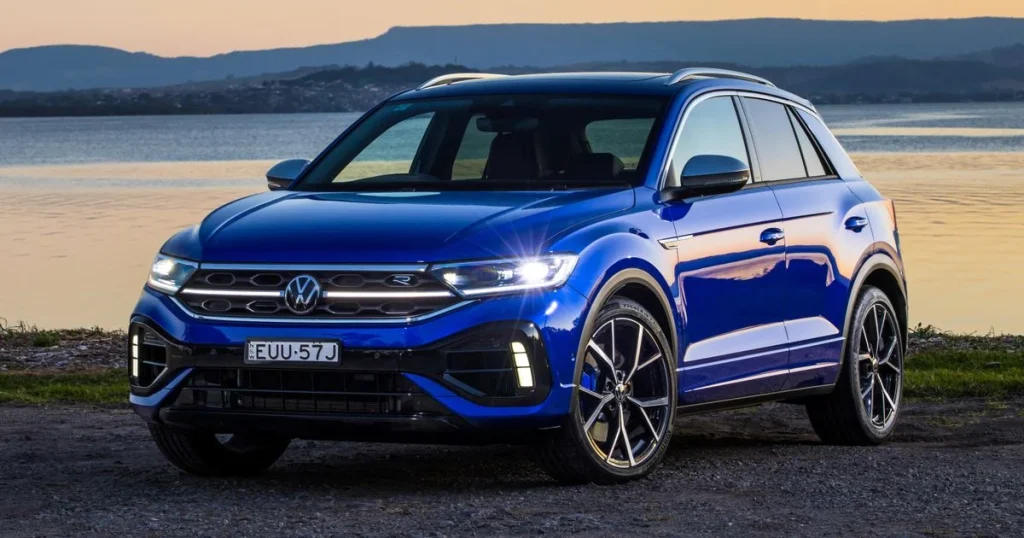
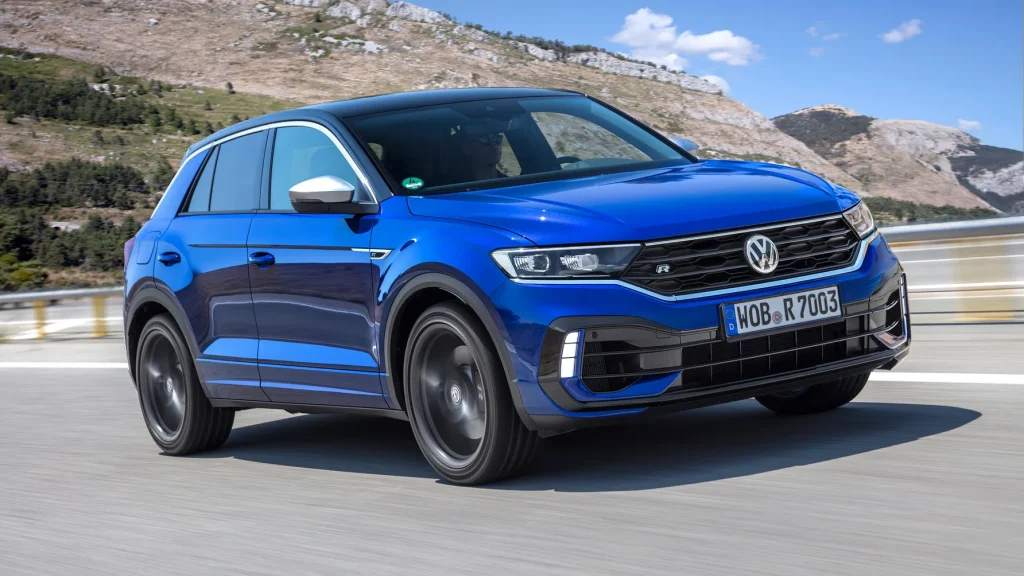
Volkswagen has given the T-Roc R several styling changes to distinguish it from the standard SUV. The front bumper features dedicated R design elements, while the rear receives a distinctive diffuser and a four-pipe sports exhaust system.
The exhaust layout is one of the most noticeable visual differences, reinforcing the performance character of the flagship model.
The SUV rides on newly designed 19-inch Zandvoort alloy wheels as standard. Buyers can also choose optional 20-inch Warmenau forged wheels, which are designed to reduce weight. Blue-painted brake calipers provide another recognizable R detail.
The exterior finish includes high-gloss black attachments as standard. Volkswagen also offers Lapiz Blue metallic, an exclusive color associated with its R performance models.
Other available finishes include Canary Yellow, Pure White, Wolf Grey metallic, and Grenadilla Black metallic. Most of these colors can be combined with an optional black roof.
Inside, the T-Roc R receives sports seats with a dedicated R upholstery pattern and blue contrasting stitching. Blue R logos appear on the seats and door sill panels, while the steering wheel features shift paddles and the dedicated R button for quickly activating the sportiest driving settings.
The Digital Cockpit Pro receives R-specific displays and performance information. Drivers can access a rev counter, gear-change recommendations, a GPS lap timer, an accelerometer, and visual information showing how torque is distributed across the wheels.
These functions give the cabin a more performance-oriented character without removing its everyday usability.
Volkswagen is also offering an optional lightweight R-Performance exhaust system developed by Akrapovič. Constructed from titanium, the system is intended to reduce weight while delivering a more distinctive exhaust sound. It is an additional option rather than standard equipment, so buyers will need to pay extra for this upgrade.
The new T-Roc R is priced from €59,995 in Germany, with pre-sales scheduled to begin on November 19, 2026. Pricing and equipment can differ between European countries, and Volkswagen has not announced a U.S. launch or American-market price. The company has also not confirmed an arrival date for other markets.
The model follows the introduction of the second-generation T-Roc, which arrived approximately one year earlier. Volkswagen is using the R version to complete the range with a substantially more powerful option for customers who want compact SUV practicality combined with performance-car engineering.
The new T-Roc R also arrives as Volkswagen expands electrification across its conventional vehicle lineup. The 48-volt mild-hybrid system demonstrates that the company’s performance division is beginning to incorporate electrification without abandoning turbocharged gasoline engines or conventional automatic transmissions.
Its combination of 328 horsepower, torque-vectoring all-wheel drive, adaptive suspension, and Nürburgring-inspired driving settings gives the SUV a distinctive position in the European performance crossover market.
The most important change, however, is the introduction of mild-hybrid technology into the R family. Volkswagen is attempting to balance stronger performance with improved energy recovery and efficiency, while retaining the driving characteristics expected from its performance models.