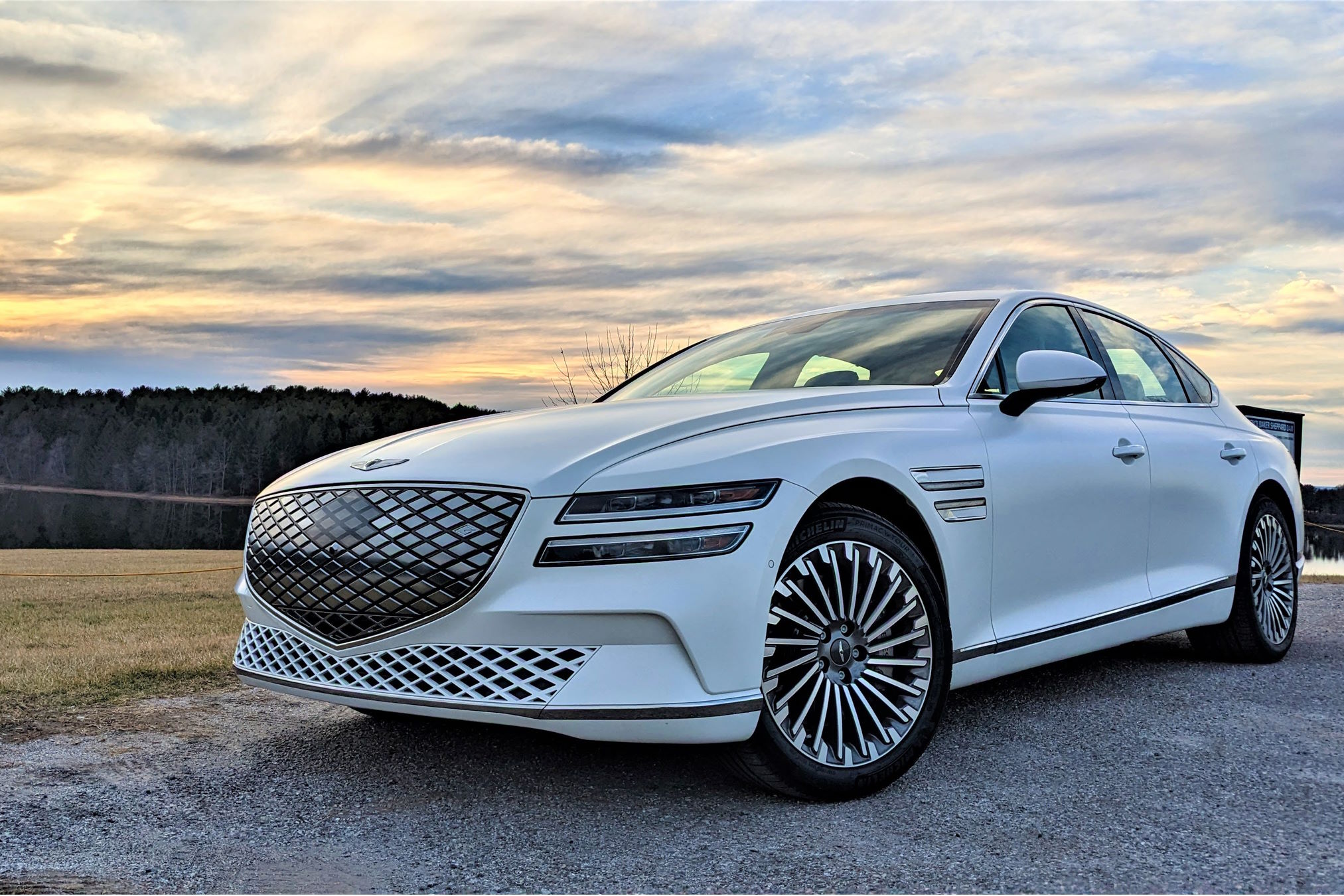
Genesis is expanding its electrified vehicle lineup with two new hybrid models, the G80 sedan and GV80 SUV, both featuring a newly developed 2.5-liter turbocharged hybrid powertrain.
Revealed in Los Angeles on November 18, 2026, the vehicles combine gasoline power with electric assistance to deliver 347 horsepower and 391 lb-ft of torque.
Genesis estimates that both hybrid models can cover more than 500 miles on a full tank while delivering better fuel efficiency than their gasoline-powered counterparts. The GV80 Hybrid made its North American debut at the event, while the G80 Hybrid was introduced to a global audience for the first time.
New 2.5-Liter Turbo Hybrid Powertrain Delivers 347 Horsepower
The main attraction of both models is Genesis’s new 2.5 Turbo Hybrid System. It combines a 2.5-liter turbocharged four-cylinder gasoline engine with two electric motors in a parallel hybrid configuration. One motor operates as a starter-generator, while the second provides additional driving power and supports regenerative braking.
The combined system produces 347 horsepower and 391 lb-ft of torque. Genesis says this represents nearly 16% more power than the comparable gasoline-powered versions. The torque figure is particularly notable because it matches the output of the brand’s 3.5-liter twin-turbocharged V6 engine.
Both hybrids use a seven-speed automatic transmission designed for Genesis’s longitudinal, rear-wheel-drive-based architecture. This arrangement helps preserve the driving characteristics associated with the brand’s larger luxury vehicles.
Buyers can also use adjustable regenerative braking to control how strongly the system recovers energy when slowing down.
The hybrid system is designed to deliver electric assistance across a wider range of driving conditions. This can help improve acceleration response while reducing the need for the gasoline engine to operate continuously. Genesis has also revised engine clutch control to support smoother transitions between electric and gasoline power.
Another important addition is a liquid-cooled hybrid battery. Genesis describes this as the first liquid-cooled hybrid battery system used within Hyundai Motor Group. Compared with air cooling, liquid cooling provides more precise temperature management, helping the battery deliver higher discharge power and supporting greater use of electric assistance.
The company has also introduced EV Mode, allowing the vehicles to operate using electric power under suitable conditions. Stay Mode is another feature, enabling the climate-control and multimedia systems to function without starting the gasoline engine. These features are intended to make the driving experience quieter and more refined.
The powertrain is shared by the G80 and GV80, but their different body styles and weights mean their real-world fuel consumption and performance characteristics may vary. Genesis has not yet published complete U.S. acceleration figures or final EPA ratings for either model.
More Than 500 Miles of Range With Improved Fuel Efficiency
The biggest practical benefit of the new hybrid system is its estimated driving range. Genesis expects both vehicles to travel more than 500 miles on a full tank of fuel. This figure is based on the company’s internal testing, and final EPA fuel-economy and driving-range estimates are still awaiting certification.
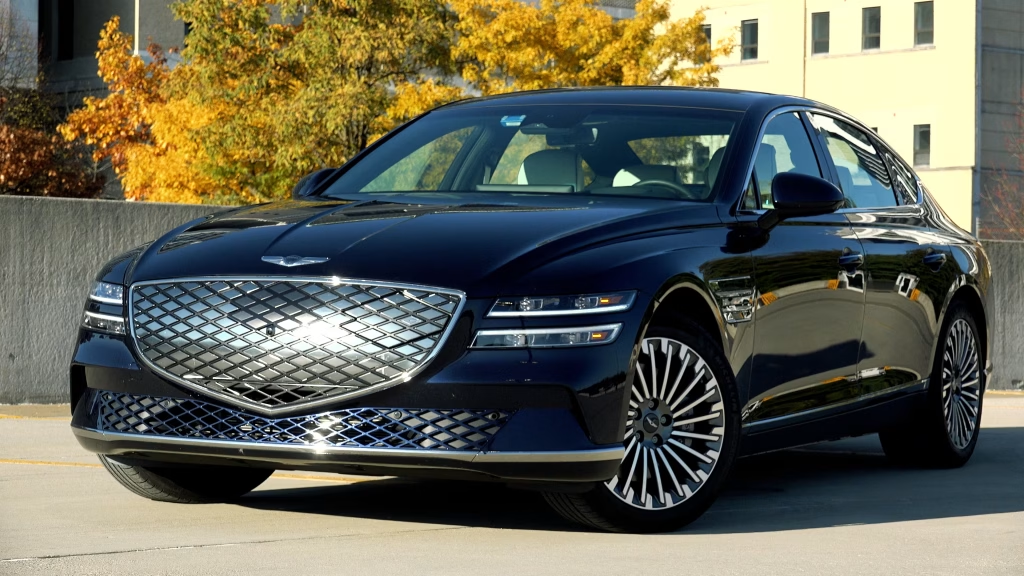
Genesis also reports different fuel-efficiency improvements for the two models. The GV80 Hybrid is expected to be up to 24% more efficient than its comparable gasoline-powered version, while the G80 Hybrid is expected to deliver an improvement of up to 30%.
These percentages are based on internal testing comparing 19-inch-wheel all-wheel-drive hybrid models with comparable gasoline versions. They should not be interpreted as confirmed EPA figures or guaranteed savings for every trim and driving condition.
The difference between the two models is partly related to their body styles and intended uses. The GV80 is a midsize luxury SUV designed to accommodate passengers and luggage while providing a higher driving position.
The G80 is a luxury sedan with a more streamlined body, which can offer aerodynamic advantages on the road. Both benefit from the same hybrid technology, but their final efficiency ratings will be determined separately.
The system also includes Hierarchical Predictive Control, which uses route and road information to manage the battery’s state of charge.
By considering upcoming driving conditions, it can prepare the battery for situations where electric assistance may be more useful. Smart regenerative braking can automatically adjust energy recovery based on navigation information and traffic conditions.
These functions are intended to make the hybrid system work more intelligently without requiring drivers to constantly manage its operation. Unlike a plug-in hybrid, neither model needs to be connected to an external charging station. The battery receives energy through the gasoline engine and regenerative braking during normal driving.
For luxury buyers, this arrangement offers a different approach to electrification. Drivers can benefit from electric assistance and potentially lower fuel consumption without changing their refueling habits or depending on public charging infrastructure.
However, the more-than-500-mile estimate should not be treated as a guaranteed distance in everyday use. Speed, traffic, weather, passenger loads, wheel selection, and driving style can all influence fuel consumption. The final EPA ratings will provide a more reliable basis for comparing the hybrids with their gasoline counterparts.
Updated Styling, Luxury Features, and North American Launch Plans
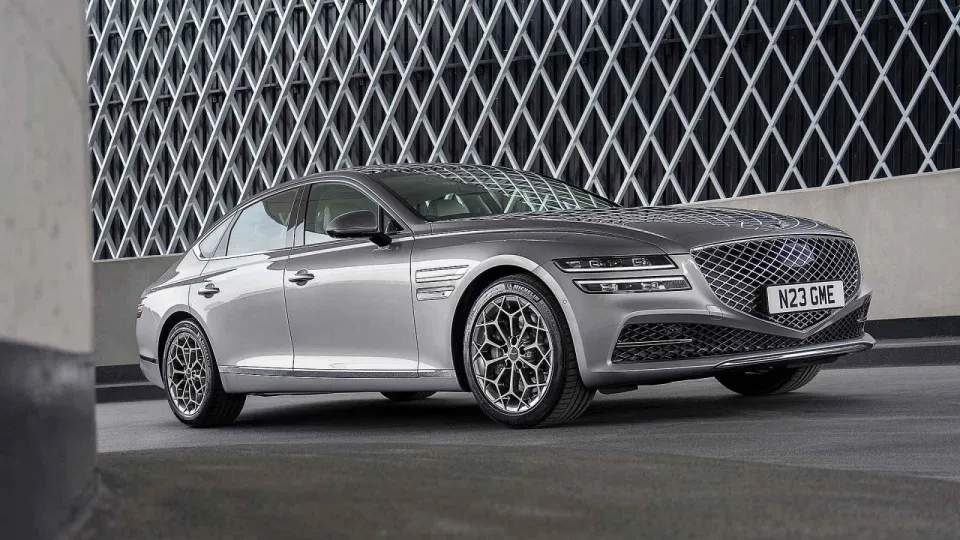
Genesis has introduced several design changes to distinguish the hybrid versions from the standard G80 and GV80. Both receive a redesigned front grille with a three-dimensional G-Matrix pattern, giving the front end a different appearance. New wheel designs and additional exterior colors also help identify the electrified models.
The GV80 Hybrid receives dedicated 19-inch, 20-inch, and 22-inch wheel options. Its new exterior colors include Seychelles Beige, Cardiff Green, and Brunswick Green Matte. Inside, buyers can choose from four new two-tone color combinations, revised seat quilting, and available real-wood trim. Nappa leather is also offered on selected configurations.
The G80 Hybrid receives its own set of styling and equipment changes. Available features include front-passenger Ergo-Motion seating, a Vision Roof, and Electronically Controlled Suspension with Road Preview. The electronically controlled suspension uses forward-facing road information to help adjust the vehicle’s response to changing surfaces.
Both models feature a 27-inch OLED display that combines the digital instrument cluster and infotainment functions. Available equipment includes Bang & Olufsen premium audio, Genesis Digital Key 2 Premium, and Active Noise Control-Road, which is designed to reduce unwanted road noise inside the cabin.
The GV80 adds available heated and ventilated second-row seats, Mood Curator, a Digital Center Mirror, and Remote Smart Parking Assist 2. These features reinforce its role as a family-focused luxury SUV, while the G80 concentrates on passenger comfort and a more traditional luxury sedan experience.
Safety technology includes Forward Collision-Avoidance Assist 2, Lane Keeping Assist, Lane Following Assist 2, Blind-Spot Collision-Avoidance Assist, and Highway Driving Assist 2.
Rear Cross-Traffic Collision-Avoidance Assist and Parking Distance Warning are also included. Equipment such as the Surround View Monitor and the Blind-Spot View Monitor is available depending on the configuration.
The two debuts also represent a strategic expansion for Genesis. The brand has previously concentrated its electrification efforts on battery-electric vehicles, including the GV60 and Electrified GV70.
Introducing conventional hybrids gives it another option for customers who want better fuel economy but are not ready to move to a fully electric vehicle.
The timing is significant in the American luxury market, where buyers continue to consider gasoline, hybrid, and fully electric powertrains. A hybrid SUV and sedan allow Genesis to compete for customers who prioritize long-distance driving, convenience, and strong performance without depending on charging stations.
The shared powertrain also allows the company to expand its hybrid technology across different vehicle categories.
The GV80 Hybrid’s North American debut took place at an exclusive Genesis event in Los Angeles on November 18, ahead of the 2026 Los Angeles Auto Show. The G80 Hybrid made its global debut at the same event.
The GV80 Hybrid had already entered the South Korean market in October 2026, but its North American specifications and pricing have not been finalized publicly.
Genesis has not announced U.S. starting prices, dealership arrival dates, or complete trim-level details for either hybrid. The company says pricing, specifications, and availability will be confirmed closer to launch. Buyers will therefore need to wait for official EPA figures before making a direct comparison with the existing gasoline models.
The new G80 and GV80 hybrids give Genesis a stronger electrified offering while retaining the performance and luxury features associated with its established lineup.
Their 347-horsepower output, liquid-cooled battery technology, and estimated range exceeding 500 miles make them significant additions to the brand.
Whether they become competitive alternatives to established luxury hybrids will ultimately depend on their final pricing, certified efficiency, and real-world driving performance.