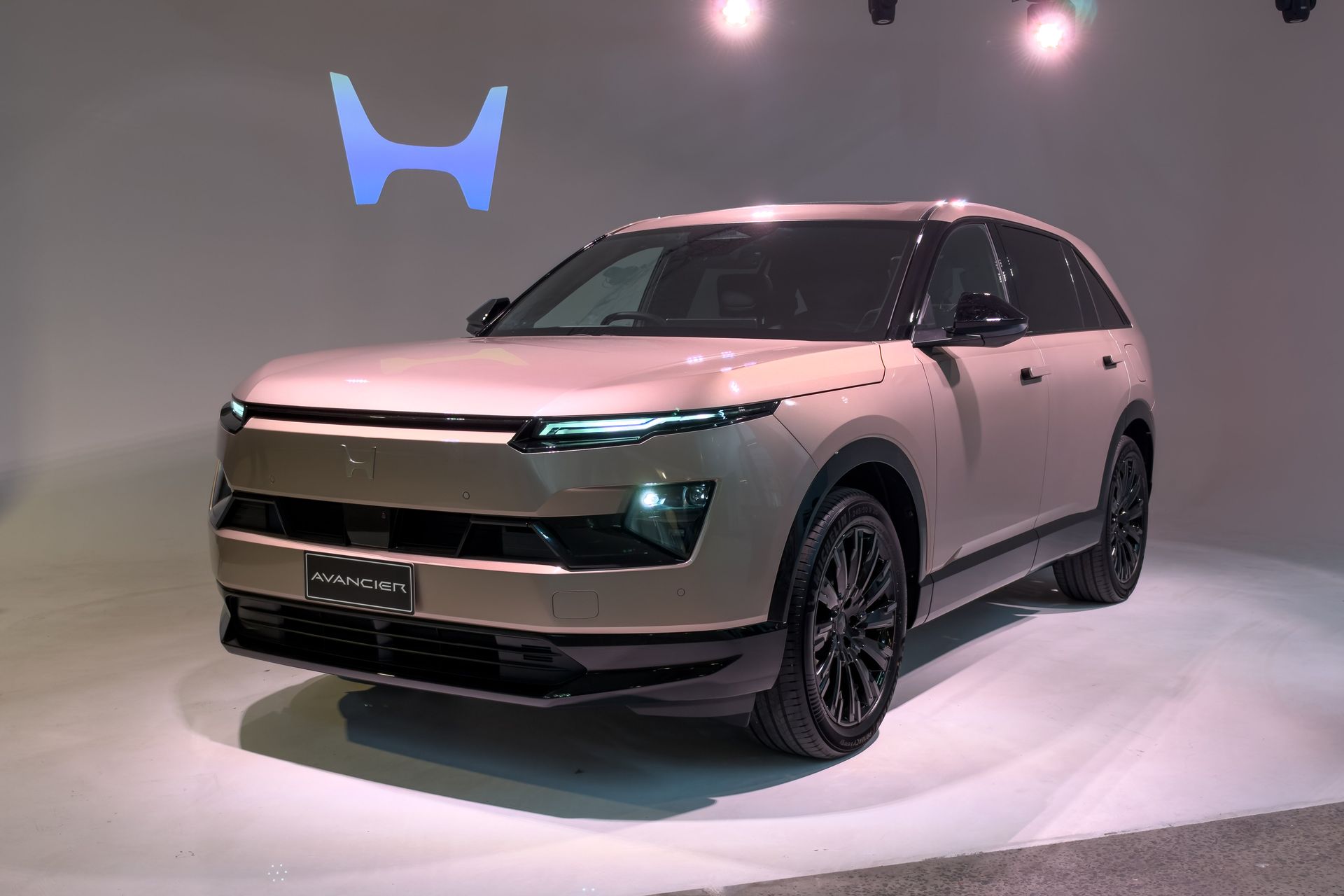
Honda’s latest SUV is more than a new addition to its global lineup. The all-new Avancier, unveiled on November 20, 2026, introduces the automaker’s next-generation hybrid technology, a newly developed vehicle platform, and an electric all-wheel-drive system that controls the front and rear wheels independently.
Designed around long-distance comfort and a three-row cabin, the SUV also brings a new interior experience with premium audio, connected features, and updated vehicle controls.
Although the Avancier is aimed primarily at Asian markets rather than the United States, its technology offers an early look at the direction Honda intends to take with its future hybrid vehicles.
The New Avancier Introduces Honda’s Next-Generation Hybrid Technology
The Avancier is the first production model to receive Honda’s newly named Honda Hybrid system, an evolution of the company’s established two-motor hybrid technology.
Honda says the system builds on experience gained through its e:HEV vehicles but incorporates improvements to engine efficiency, electric drive hardware, and control software. The goal is to improve fuel economy while maintaining responsive acceleration and a more engaging driving experience.
The new system is particularly important because Honda is using the Avancier to introduce a wider hybrid strategy. The company plans to launch 15 next-generation hybrid models globally by the end of its fiscal year ending March 31, 2030.
Honda has identified North America as a major focus for this rollout, although the Avancier itself is intended primarily for Asian markets. The SUV therefore acts as an early showcase for technology that could appear in other vehicles sold in different regions.
Honda has described the Avancier’s powertrain as a further development of its two-motor hybrid arrangement. In this type of system, electric motors play a major role in moving the vehicle, while the gasoline engine can operate in different ways depending on driving conditions.
The control system manages the relationship between the engine, motors, and battery to balance efficiency and performance.
One of the major engineering changes involves expanding the engine’s high-efficiency operating range. Honda says it has also improved the efficiency and reduced the size of the drive unit.
These changes are intended to make the hybrid system more effective without requiring an unnecessarily large or heavy mechanical package.
The manufacturer has not yet published a complete set of production specifications, including final horsepower, torque, battery capacity, fuel-economy ratings, or acceleration figures. That means it would be premature to compare the Avancier’s performance directly with established hybrid SUVs using figures that Honda has not confirmed.
The company has focused its initial announcement on the technology and vehicle architecture rather than a full technical specification sheet.
The most distinctive part of the new powertrain is DualPower eAWD, Honda’s electric all-wheel-drive system. It uses separate motors to drive and control the front and rear wheels independently.
Unlike a conventional mechanical AWD system that transfers engine power through a driveshaft and differential arrangement, this setup uses electric drive to manage power distribution between the two axles.
Honda says the system can provide strong acceleration from a standstill and adjust the distribution of driving force according to road conditions. That could be useful when accelerating on slippery surfaces, navigating changing road conditions, or maintaining stability through corners.
The company has also integrated its Motion Management System, which coordinates braking force, driving force, and vehicle posture control to help maintain predictable handling.
The Avancier is the first Honda model to introduce this DualPower eAWD arrangement. It also receives Honda S+ Shift, a feature previously associated with models such as the new Prelude and Civic e:HEV RS. Honda uses the technology to create a more engaging response from the hybrid powertrain, including simulated gear-change behavior.
Three-Row Seating and a Cabin Designed for Long Journeys
Honda has developed the Avancier around what it calls the Grand-Journey concept. Rather than focusing exclusively on powertrain technology, the company says it wanted to create an SUV that makes extended journeys comfortable for everyone inside. The three-row layout is therefore central to the vehicle’s identity.
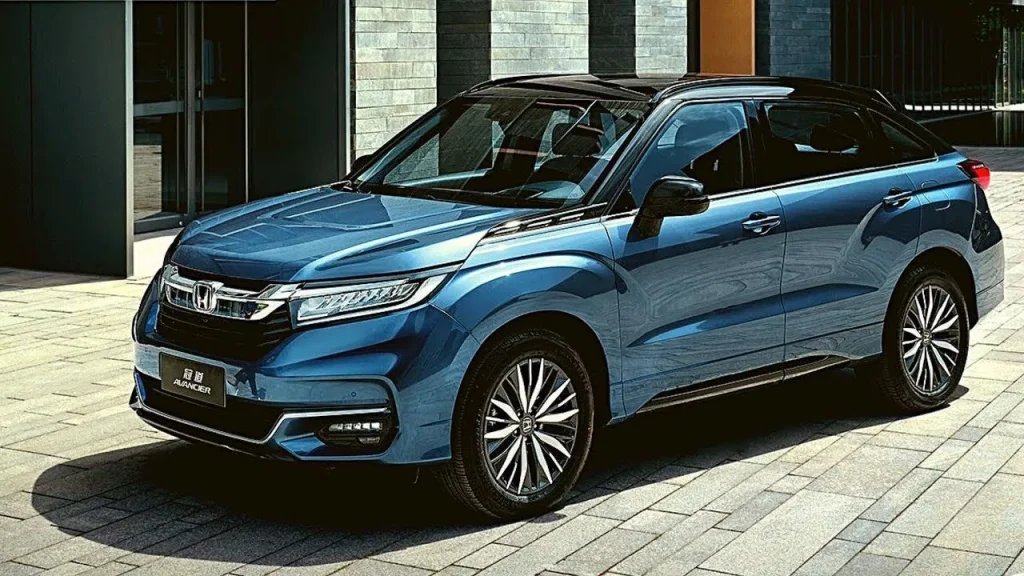
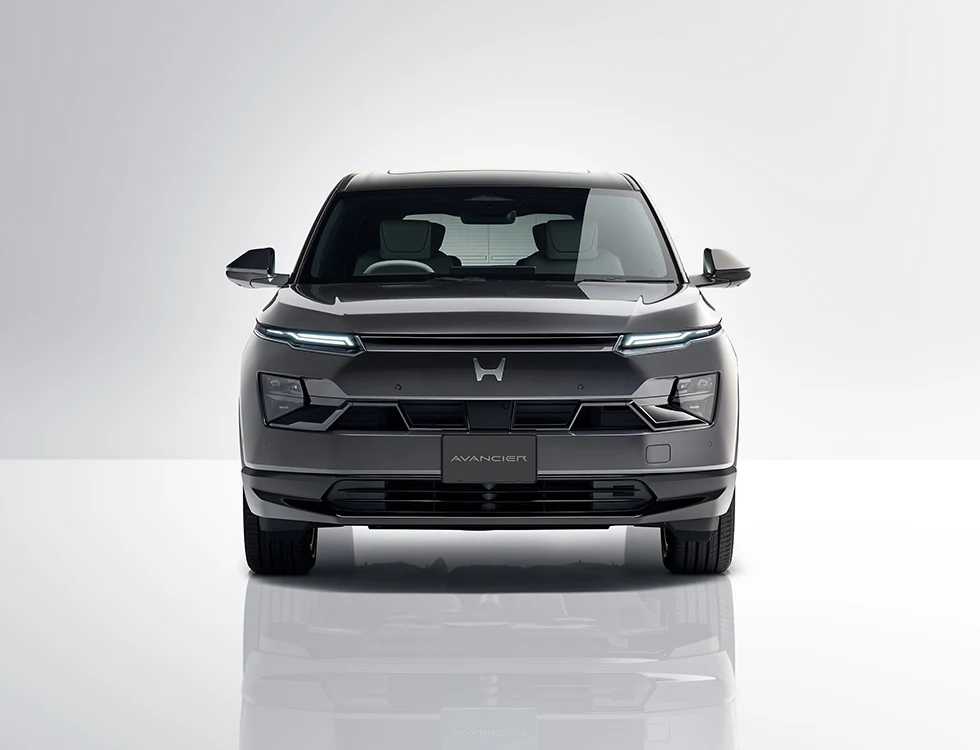
The exterior adopts a more modern design, with slim lighting elements, a prominent front grille, sculpted body surfaces, and a broad SUV stance. Its side profile uses relatively clean lines, while the rear features angular lighting and pronounced fender shapes.
Honda describes the design as a combination of refined styling and subtle rugged details intended to give the vehicle a confident road presence.
Inside, the manufacturer has concentrated on passenger comfort across all three rows. The second-row seats receive particular attention, with features including heating, ventilation, and large headrests.
Honda has also shaped the door linings and armrests to create a more welcoming environment for passengers. A panoramic roof extends toward the third row, allowing additional natural light into the cabin.
Access to the rearmost seats has also been considered. Honda says it optimized the door-sill shape and surrounding design to make entering and leaving the third row easier. This is important in a three-row SUV because the usability of the back seats can be just as important as the space available once passengers are seated.
The front seats are designed with ergonomics in mind, with Honda emphasizing reduced physical strain and fatigue during longer trips.
The company has not yet released detailed interior measurements, so there is no confirmed third-row legroom figure or cargo-capacity rating to compare with rival SUVs. Those details will matter when the vehicle reaches individual markets and full specifications become available.
The audio system is another notable cabin feature. Honda says the Avancier will offer a 12-speaker Bose Premium Sound System compatible with Dolby Atmos. The system uses overhead audio channels to create a more three-dimensional listening experience, rather than relying only on sound coming from the front, rear, and sides of the cabin.
Connected technology is also part of the package. Voice recognition allows occupants to control functions such as the air-conditioning system.
Honda expects the SUV to offer Remote In-Cabin View and Remote Surround View, allowing owners to use a smartphone to check the cabin and the area around a parked vehicle.
These features form part of the company’s broader MyCabin concept, which groups technologies designed to improve the in-vehicle experience.
The Avancier will also support over-the-air software updates. This gives Honda the ability to introduce certain software improvements and additional functions after the vehicle has been purchased, rather than relying entirely on updates performed at a dealership. The availability and scope of individual connected services may differ by market.
A New Platform, New Honda Badge, and a Limited Market Launch
The Avancier is not simply an existing Honda SUV fitted with a new hybrid system. It is also the first model built on the company’s newly developed platform, which has been designed to support future vehicles through a modular architecture.
Honda says the platform combines improved body rigidity with weight reduction, aiming to deliver stable handling without compromising ride comfort.
One of the engineering priorities was to manage how the vehicle’s body responds during cornering. Honda says its new approach to rigidity management is intended to create more controlled body behavior and improve road-holding performance.
The platform also allows certain components, including parts of the engine compartment and rear underbody, to be shared across different models. Other areas, such as the rear cabin, can be developed specifically for each vehicle.
This modular approach could help Honda develop multiple models more efficiently while maintaining different body styles and interior layouts. It is particularly relevant to the company’s plan to introduce 15 next-generation hybrid vehicles by fiscal 2030.
A common platform and powertrain architecture can reduce development complexity, although the final specifications of each model will depend on its size, market, and intended use.
The Avancier also introduces Honda’s updated H mark on a hybrid-powered vehicle for the first time. The redesigned emblem is part of the automaker’s broader effort to give its next generation of vehicles a consistent identity.
Honda has indicated that the simplified H mark will be used across future products, making the Avancier an early example of the brand’s visual transition.
Its launch strategy is focused primarily on Asia. Honda has identified markets, including Japan, Thailand, and China, for the SUV, with additional regional plans reported for markets such as Australia and New Zealand.
Japanese media reported that the vehicle is expected to reach Japan in spring 2027. The company has not announced a U.S. launch, and the Avancier should not be treated as a confirmed addition to Honda’s American showroom lineup.
That regional focus does not make the vehicle irrelevant to American Honda buyers. The more important development is the technology it introduces.
Honda has stated that its next-generation hybrid program will include a broader global rollout, with North America among its principal targets. Future U.S.-market vehicles could therefore benefit from developments first demonstrated in this Asian-market SUV, even if they do not share its name or body design.
Honda has not yet disclosed the Avancier’s final pricing, complete engine specifications, official fuel-economy figures, or market-by-market equipment details. Those numbers will be necessary to judge how it compares with other three-row hybrid SUVs once sales begin.
For now, the Avancier represents a significant technology introduction for Honda. Its combination of a next-generation two-motor hybrid system, independently controlled electric AWD, a new modular platform, and a passenger-focused three-row interior provides a preview of the company’s upcoming product direction.
The SUV’s most important contribution may ultimately be the powertrain and engineering package it introduces, rather than its availability in any single market.