
Ford has reached an important milestone in its effort to make electric vehicles more affordable in the United States. The automaker has started producing lithium iron phosphate (LFP) battery cells at its BlueOval Battery Park, Michigan, facility in Marshall.
The first cells are being shipped to Louisville, Kentucky, for prototypes of the upcoming Fathom electric pickup, which is expected to launch in the fourth quarter of 2027. The $3 billion factory is designed for annual production capacity of 20 gigawatt-hours, with output expected to increase during 2027.
The project gives Ford a domestic battery manufacturing operation and supports its broader plan to develop lower-cost electric vehicles.
Ford Starts Producing LFP Battery Cells in Michigan
Ford’s BlueOval Battery Park, Michigan, facility has moved from development and testing into battery cell production. The first prismatic lithium iron phosphate cells have come off the manufacturing line and are being shipped to the Louisville Assembly Plant. There, they will be used in prototypes and validation vehicles for the Fathom electric pickup.
Ford announced the first shipments on November 18, 2026, describing the milestone as the start of its commercial-scale battery cell manufacturing in the United States.
The Marshall facility represents an investment of approximately $3 billion and covers around two million square feet. Its production lines are designed to manufacture up to 40 prismatic cells per minute.
The plant has an annual production capacity of approximately 20 gigawatt-hours. That figure describes its planned capacity, not its current output. Ford expects manufacturing to ramp up during 2027 as it continues validating production processes and prepares for higher volumes.
The company previously discussed a larger capacity target of up to 40 GWh but later scaled back the project. The revised plan reflects changes in its electric-vehicle strategy and market conditions.
The cells use a rectangular prismatic design. Unlike cylindrical cells, which have a round shape, prismatic cells use a flatter, box-like enclosure. This format can help manufacturers arrange cells efficiently inside a battery pack.
Ford says the production lines also use automated inspection systems, including artificial intelligence-powered image recognition, to identify potential defects. Cells undergo aging and final inspection before they are packaged for shipment.
The next step is assembling individual cells into complete battery packs. Ford plans to bring its battery pack plant in Marshall online during 2027. That facility will support the Fathom program and allow the company to handle more of the battery manufacturing process within its own operations.
Why Ford Is Using LFP Chemistry and CATL-Licensed Technology
LFP batteries use lithium iron phosphate as the cathode material. Unlike several nickel-based battery chemistries, they do not rely on nickel or cobalt in the cathode.
This can reduce exposure to the costs and supply-chain challenges associated with those materials. LFP cells are also known for good cycle life and thermal stability, making them attractive for electric vehicles designed to reach a lower purchase price.
There are trade-offs. LFP batteries generally have lower energy density than many nickel-rich alternatives. A larger or heavier battery may therefore be needed to store the same amount of energy.
Cold-weather performance and charging behavior also require careful engineering. Ford’s task is to use the chemistry in a way that keeps the Fathom affordable without compromising the range and capability expected by pickup buyers.
The manufacturing technology comes through a licensing and services arrangement with Chinese battery manufacturer CATL, one of the world’s largest battery producers.
Ford is drawing on CATL’s expertise in LFP battery technology to develop its own manufacturing capabilities in Michigan. The key difference is that Ford owns and operates the Marshall facility, while CATL supplies the licensed technology and technical support needed for production.
The arrangement has attracted scrutiny from some U.S. lawmakers and government officials because it involves technology from a major Chinese company. In September 2026, U.S. Transportation Secretary Sean Duffy reportedly raised concerns about Ford’s relationship with CATL in a letter to CEO Jim Farley.
Ford has defended the agreement, describing it as a limited technology-licensing and services arrangement rather than a joint venture or foreign-owned manufacturing operation.
For Ford, the commercial objective is to develop domestic battery production while gaining access to manufacturing knowledge that has advanced rapidly overseas.
Producing cells in Michigan could reduce dependence on imported batteries and give the company more control over supply, production schedules, and quality. It also allows Ford to build expertise that can be applied to future electric vehicles.
The Marshall facility is connected to Ford’s wider Ford Energy strategy. The company intends to use its battery manufacturing experience to support energy storage systems for grid and commercial applications.
Automotive packs and stationary storage products have different requirements, but manufacturing knowledge, quality controls, and battery engineering can be relevant to both.
The Battery Cells Move the Fathom Closer to Its 2027 Launch
The first Michigan-made cells are heading to Louisville because Ford is developing and building Fathom prototypes there. These vehicles will help engineers test the battery system, vehicle packaging, performance, and manufacturing processes before customer production begins.
The Fathom is planned as the first vehicle based on Ford’s Universal Electric Vehicle Platform. The architecture is intended to reduce complexity through simplified engineering and more efficient component integration.
Ford has discussed making the battery structure part of the vehicle architecture, an approach that could help reduce weight and manufacturing costs.
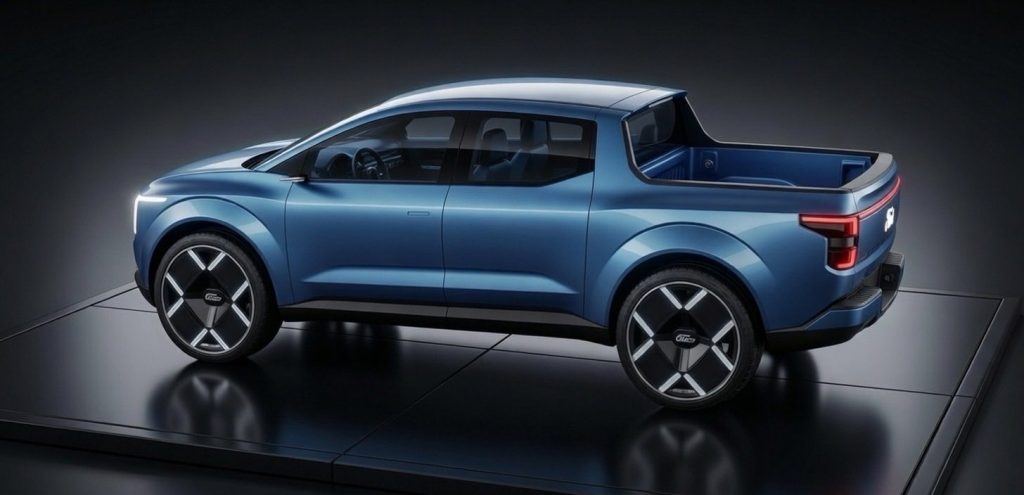
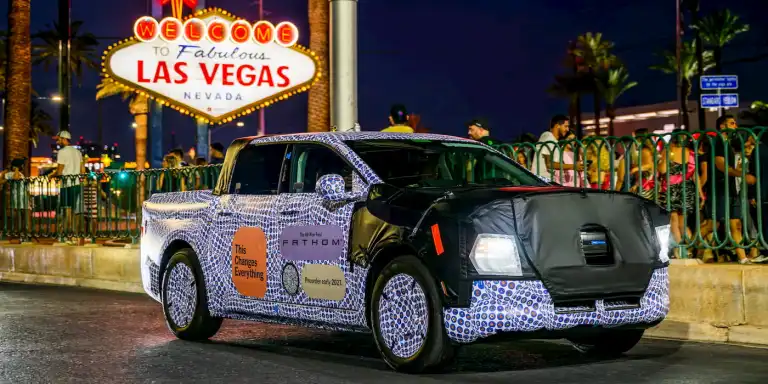
Price is central to the pickup’s positioning. Ford’s official Fathom website lists a starting MSRP of $28,350 for the standard-range model, excluding the $1,595 destination and delivery charge, taxes, and applicable dealer fees. The company says preorders are expected to begin in early 2027.
Ford has identified the Fathom as a midsize electric pickup and highlighted features such as bidirectional power capability and BlueCruise readiness.
However, it has not yet published all the details buyers will need to judge the truck, including its EPA-estimated range, battery capacity, charging times, horsepower, and towing specifications. Those figures will be important when comparing it with other electric pickups.
The planned fourth-quarter 2027 launch leaves Ford with several important steps. It must increase cell output, complete battery pack development, validate the vehicle, and prepare the assembly operation. The first cell shipments are part of the prototype and validation phase, not confirmation that retail production or customer deliveries have started.
The factory’s 20 GWh capacity should also be viewed as a target rather than immediate output. New manufacturing lines need to demonstrate consistent quality and production efficiency before reaching their planned rate.
Ford expects output to ramp up during 2027, but the pace will depend on production validation and demand for the vehicles and energy products the facility is intended to support.
For Ford, the significance of the announcement extends beyond one pickup. The company is building domestic manufacturing capability around a battery chemistry that could help lower the cost of future electric vehicles.
The CATL licensing arrangement provides access to established production expertise, while ownership of the Michigan plant gives Ford direct control of its operations.
The first cells leaving Marshall are an important step, but the larger test will be turning them into reliable battery packs and installing those packs in vehicles built at scale. If Ford meets its cost, quality, and timing targets, the Fathom could demonstrate how U.S.-based LFP manufacturing can support a more affordable electric pickup.