
Toyota has tempered expectations among sports-car fans, revealing that its experimental mid-engine project is still years away from reaching production.
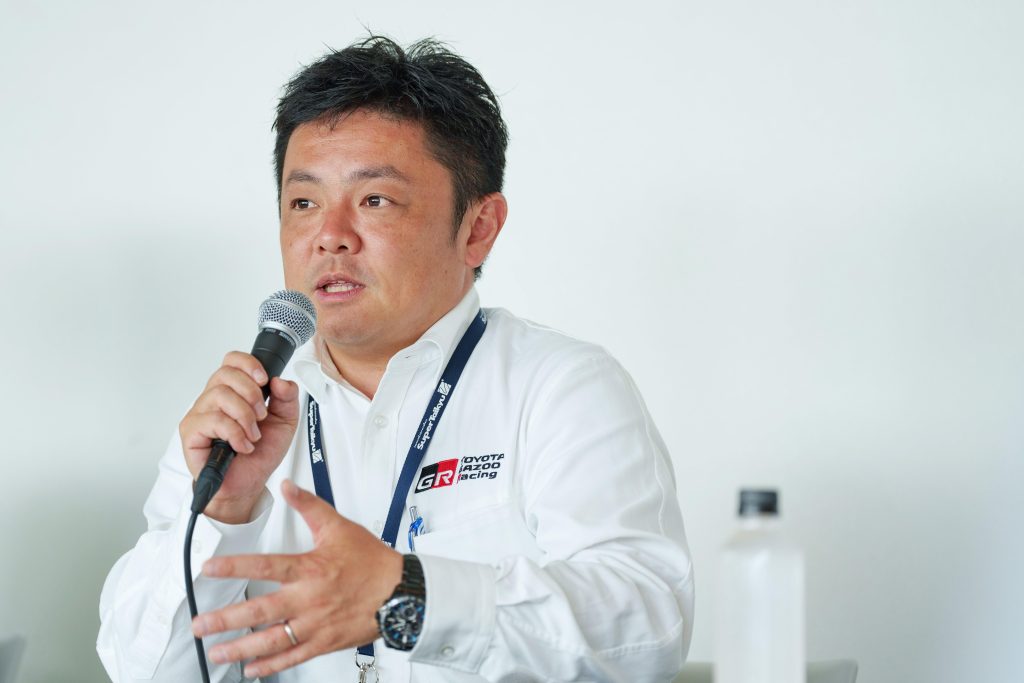
Gazoo Racing President Tomoya Takahashi recently explained that engineers have made substantial progress in understanding the challenges of placing an engine behind the driver, but the work required to turn the concept into a production car is not even halfway complete.
The prototype, known as the GR Yaris M or MORIZO M Concept, is being developed through motorsport testing. Toyota has not confirmed a production decision, a launch date, or whether the project will revive the MR2 name.
Toyota Says the Production Version Is Still a Long Way Off
Takahashi’s latest comments, published in an interview by Toyota’s official Toyota Times platform, put the project’s progress into perspective. He said the team is roughly 70% to 80% of the way toward understanding what happens when the engine is moved to the middle of the vehicle.
However, when judging progress toward an actual production car, he said the project is not even halfway there.
That distinction is important. Toyota has learned a great deal from developing and testing the prototype, but solving the engineering questions around a mid-engine layout does not mean the company has completed the work needed for a road-going model.
A production vehicle must meet durability, safety, emissions, comfort, and manufacturing requirements in addition to delivering the handling characteristics expected of a performance car.
The prototype is based on the GR Yaris, but its mechanical layout is substantially different. Toyota moved the engine from the front to a position behind the driver, creating a mid-engine configuration.
The project was developed to investigate the potential of this layout and gather knowledge through motorsport rather than simply preview a finished road car.
Toyota has been using the Super Taikyu endurance racing series as a development environment. Racing exposes components to sustained high loads and changing track conditions, allowing engineers to collect data that may be difficult to reproduce through ordinary road testing.
The team can examine how the engine, transmission, chassis, and cooling systems behave under pressure, then make changes before the next test.
The company has not said that the current prototype will become the production model in its present form. Takahashi explained that the aim is to understand the possibilities of a mid-engine car with this silhouette.
If customers respond positively to the design, Toyota may take that feedback into account, but the current experiment should not be treated as a confirmed showroom vehicle.
Cooling and Handling Remain Major Engineering Challenges
Moving an engine behind the driver changes how a vehicle manages heat, airflow, weight distribution, and handling. Those are among the reasons Toyota’s project has required extensive development.
With the powertrain located farther back, engineers must find effective ways to direct enough cooling air toward the engine and manage heat inside the rear section of the car.
Cooling has been one of the project’s most difficult areas. Engineers have spent time experimenting with airflow solutions to keep temperatures under control.
A mid-engine layout can make it harder to package radiators, ducts, and other cooling hardware while maintaining the proportions and aerodynamic requirements of a compact sports car. These challenges become more demanding when the vehicle is pushed hard on a race circuit.
Handling is another major consideration. A mid-engine vehicle places a greater share of its mass near the center of the chassis, which can produce responsive behavior but also requires careful suspension and balance tuning.
Braking, steering response, and cornering behavior must work together predictably. Toyota has previously acknowledged difficulties unique to midship-mounted vehicles, including braking, steering, and driving characteristics, during the early development of the GR Yaris M Concept.
Aerodynamics also remain part of the development work. Engineers need to generate sufficient downforce and maintain stability without creating excessive drag or restricting the airflow needed for cooling.
The bodywork, underbody, and air intakes all influence how the car behaves at speed. Finding a suitable balance is particularly important for a performance model intended to deliver consistent handling on both road and track.
The racing program has also involved making repeated changes to the prototype rather than relying on a single fixed design. Toyota’s engineers have used feedback from drivers, mechanics, and testing to refine the engine, body, and chassis.
This iterative approach is useful because a change to one area can affect several others. Improving airflow, for example, may require adjustments to bodywork, while changes to weight distribution can influence suspension and braking behavior.
These are not problems that can be solved simply by moving an existing engine and transmission into a different position. The mid-engine arrangement affects the vehicle’s structure, packaging, weight distribution, and cooling requirements.
Toyota’s motorsport program gives engineers a place to test those changes, identify weaknesses, and refine the prototype before making any decision about a production application.
Could the Project Lead to a New MR2?
The possibility of a new Toyota MR2 has naturally become part of the conversation surrounding the mid-engine project. The original MR2 was a compact, affordable sports car with a mid-mounted engine, and its layout makes the current prototype an obvious source of speculation.
However, Toyota has not officially confirmed that the experimental vehicle will carry the MR2 name or that it will reach production.
The company has previously indicated that it is interested in developing a new mid-engine sports car. Earlier comments from Gazoo Racing executives have suggested that the engineering work could eventually support a road-going model, but the latest statement makes clear that there is still a substantial development process ahead.
The current prototype is a research and motorsport project, not a final production specification.
Powertrain details also remain unconfirmed for any future road car. Toyota has used its compact, high-output G20E engine in the GR Yaris M Concept programme, but the company has not announced final output figures, transmission specifications, or a production powertrain configuration.
It would therefore be premature to attach a horsepower figure or performance estimate to a possible MR2 successor.
There is also no confirmed U.S. launch plan, pricing information, or production timetable. Even if Toyota eventually approves a road-going model, the company would still need to complete engineering development, validate the vehicle, and prepare it for manufacturing and regulatory requirements in the markets where it intends to sell it.

For now, the most meaningful development is that Toyota continues to test the mid-engine concept rather than abandoning the idea. The Super Taikyu program allows the company to learn from real racing conditions, while the latest comments from Takahashi set realistic expectations about how much work remains.
Enthusiasts hoping for an immediate MR2 revival should not interpret the prototype’s appearance as evidence that a production car is close.
Toyota’s approach suggests that it wants to understand the engineering fundamentals before committing to a new sports car. That may mean a longer wait, but it also leaves room for the company to change the design, powertrain, or purpose of the project as testing progresses.
Until Toyota makes a formal production announcement, the GR Yaris M remains an experimental platform with potential implications for future performance cars, not a confirmed new model.