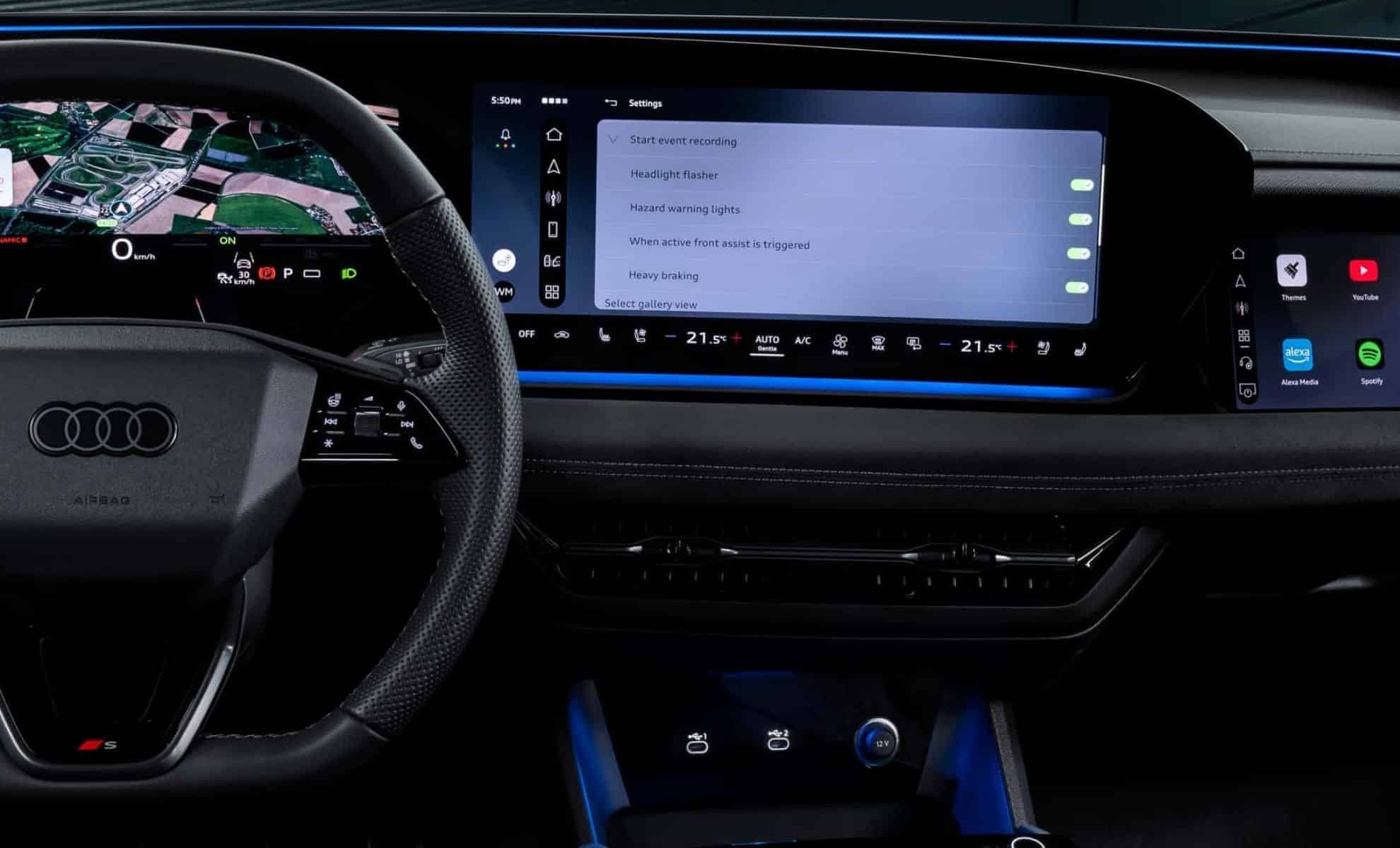
Audi is exploring a new way to combine digital displays with traditional dashboard controls. A recently uncovered patent describes a motorised panel of physical buttons that can slide or pivot out from behind the lower edge of the infotainment screen when needed.
When the controls are hidden, their functions remain available through matching touchscreen icons. The concept addresses a growing debate in the automotive industry about whether modern interiors have become too dependent on touchscreens.
Audi has not confirmed that the system will reach production, but the patent offers an interesting look at how the company could approach future cabin design.
Audi’s Patent Introduces a Hidden Physical Control Panel
The patent describes a compact switch bar positioned behind the lower edge of the central infotainment display. Rather than permanently occupying space on the dashboard, the panel remains concealed until the driver wants to use physical controls.
A motorized mechanism then moves it into position beneath the screen, exposing a row of switches and potentially a rotary control. When it is no longer required, the panel can retract behind the display again.
One important detail is that the touchscreen itself does not need to move. The display stays in its normal position while the control bar emerges from behind it. This allows Audi to maintain a relatively uncluttered dashboard when the physical switches are not in use, without permanently sacrificing the option of tactile controls.
The patent outlines several ways the mechanism could be activated. The panel could emerge automatically when the vehicle starts, respond to a voice command, or be deployed through a hand gesture.
Some descriptions also indicate that the system could respond to an interaction with the infotainment display. These different activation methods would give drivers more flexibility in deciding when they want the physical panel available.
The design also includes a digital alternative. When the physical panel is hidden, matching controls appear along the bottom of the touchscreen in the same order as the buttons on the switch bar.
This digital counterpart means that the functions remain accessible even when the mechanical assembly is retracted. Drivers who prefer touchscreen operation would not have to use the physical panel.
Once the physical control bar is activated, the matching digital buttons disappear from the touchscreen, leaving more room for other functions. Patent-related reports also describe a video playback feature in which the physical controls retract from the display area, allowing the video to occupy a larger portion of the screen.
The concept therefore attempts to make the same dashboard adaptable to different uses rather than forcing drivers to choose between a large screen and a permanent row of buttons.
The patent illustrations show a row of individual controls and a central rotary-style element. Audi has not confirmed the exact functions they would operate. Climate settings, audio volume, seat heating, and other frequently used features are possible applications, but these should not be treated as confirmed specifications.
Why Audi Is Looking Beyond Touchscreen-Only Interiors
The patent arrives as automakers reconsider the growing use of large touchscreen displays inside modern vehicles. Over the past decade, manufacturers have increasingly moved climate settings, audio controls, navigation functions, and other features into central infotainment systems.
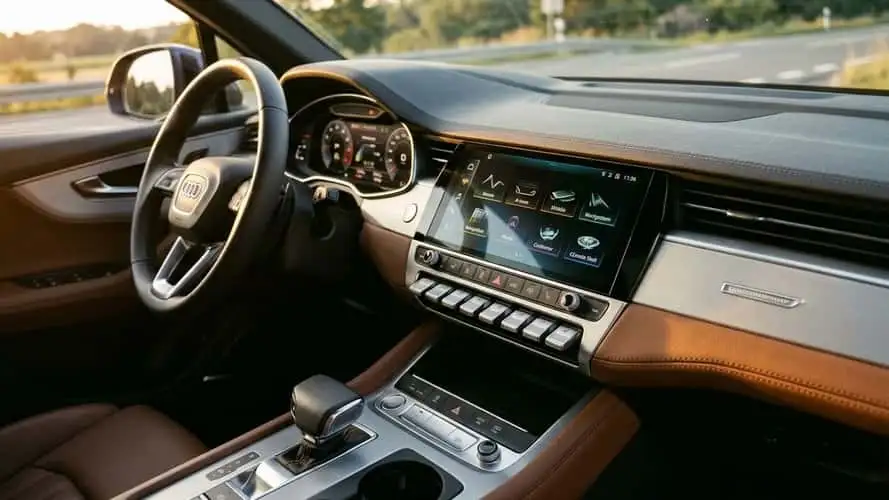
This approach allows designers to reduce the number of physical switches and create cleaner dashboard layouts. However, it has also generated criticism from drivers who find touchscreen menus less convenient for frequently used functions.
One key benefit of physical buttons is that drivers can often locate and use them by touch, reducing the time they need to take their eyes off the road.
A familiar rotary knob or dedicated switch provides immediate feedback, while touchscreen controls may require users to locate an icon, navigate a menu, and confirm a selection. This difference becomes particularly noticeable when adjusting settings while driving over uneven surfaces.
Audi’s proposed mechanism attempts to address both sides of the debate. Designers could retain the minimalist appearance associated with large digital displays, while drivers would still have access to physical controls when they want them. Instead of permanently filling the dashboard with buttons, the system would allow them to appear on demand.
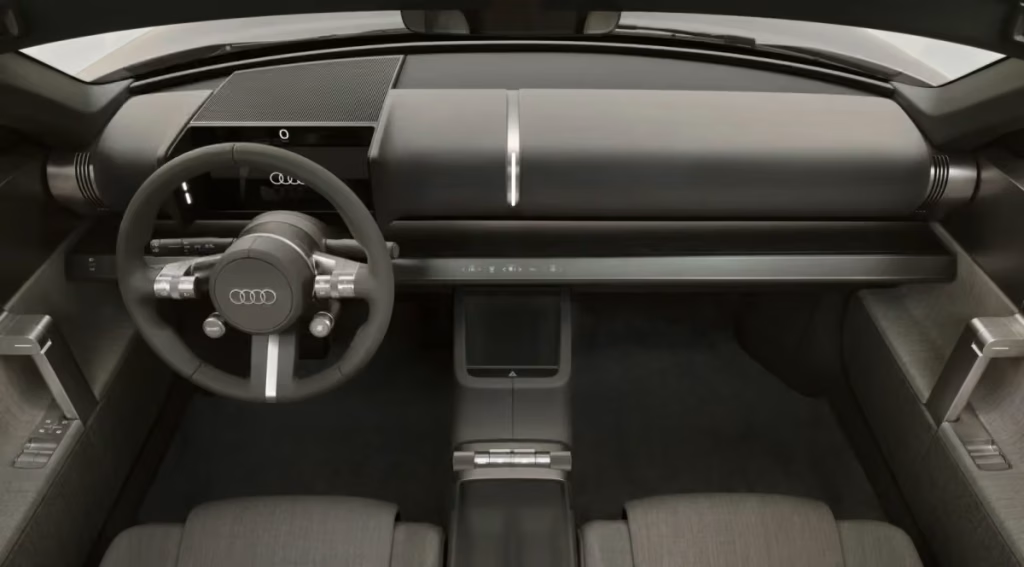
The idea also fits Audi’s wider design direction. The company’s Concept C introduced an interior focused on simplicity, high-quality materials, and mechanical controls. Its retractable infotainment display and physical aluminum controls demonstrated an interest in making digital technology less visually dominant.
Audi has also signalled that future interiors should give greater importance to intuitive physical interactions rather than relying exclusively on touch-sensitive surfaces.
There are practical reasons behind this shift as well. Large displays can increase dashboard complexity, occupy valuable interior space, and create challenges when manufacturers need to integrate other equipment. A compact physical panel that can be concealed could offer an alternative to installing multiple permanent control assemblies.
Safety considerations are also becoming more prominent in discussions about dashboard design. Driver distraction is a concern when essential functions require several touchscreen interactions.
European safety assessment organization Euro NCAP has indicated that its assessment approach will place greater emphasis on the availability and operation of certain physical controls from 2026 onwards.
Functions such as indicators, hazard warning lights, windscreen wipers, and the horn are among the controls receiving attention. This does not mean every vehicle function must have a physical button, but it highlights the importance of accessible controls.
Audi’s patent does not establish that the proposed panel would satisfy every future safety requirement. Its eventual usefulness would depend on which functions are assigned to the switches, how quickly they can be accessed, and whether the mechanism works reliably while the vehicle is moving.
Production Possibilities and Challenges Remain Uncertain
Although the concept looks promising on paper, several questions remain before it could become a production feature. The biggest is mechanical reliability. A conventional dashboard button is fixed in place, but Audi’s proposal requires a motorized mechanism that repeatedly moves the entire switch panel.
The assembly would need to operate smoothly over thousands of cycles while resisting dust, vibration, temperature changes, and everyday cabin wear.
Repair costs could also become a concern. If the motor, hinges, electrical connections, or movement mechanism develops a fault, repairing the system could be more complicated than replacing a conventional switch.
Manufacturers would need to ensure that a mechanical failure does not prevent drivers from accessing important vehicle functions. The touchscreen controls would provide an alternative interface when the panel is hidden, but the relationship between the mechanical and digital systems would need careful engineering.
Packaging is another challenge. The mechanism must fit behind the infotainment display without interfering with dashboard structures, wiring, ventilation ducts, or other components. It must also emerge into a position that drivers can reach comfortably.
A poorly positioned panel could make the controls difficult to use, undermining the convenience that the design is intended to provide.
Audi would also need to decide which functions deserve dedicated physical switches. Modern vehicles contain a growing number of settings, and a small control bar cannot accommodate every function.
The most practical approach would probably involve frequently used features, while less common adjustments remain within the touchscreen menus. However, the patent does not provide a confirmed list of controls or explain how the final layout would be configured.
There is also no confirmed production vehicle associated with the invention. Audi has not announced a launch date, development timeline, or model that will receive the retractable panel.
Patent applications show that a manufacturer is protecting or investigating an idea, not necessarily preparing it for immediate commercial use. Automakers regularly patent technologies that never progress beyond the development stage.
The system could eventually suit vehicles with minimalist interiors, particularly models where designers want to preserve a large central display without making everyday controls difficult to access.
However, Audi has not confirmed whether the mechanism is intended for electric vehicles, conventional models, or a particular future platform.
For now, the patent is best understood as evidence of Audi investigating a different approach to dashboard usability. Rather than removing touchscreens or returning completely to traditional switch-heavy interiors, the company is considering a system that allows both interfaces to coexist.
It remains unclear whether Audi will introduce these retractable buttons in a future production model. However, the concept highlights a growing shift in automotive design, as manufacturers look for ways to combine digital features with physical controls that drivers can easily find and use by touch.