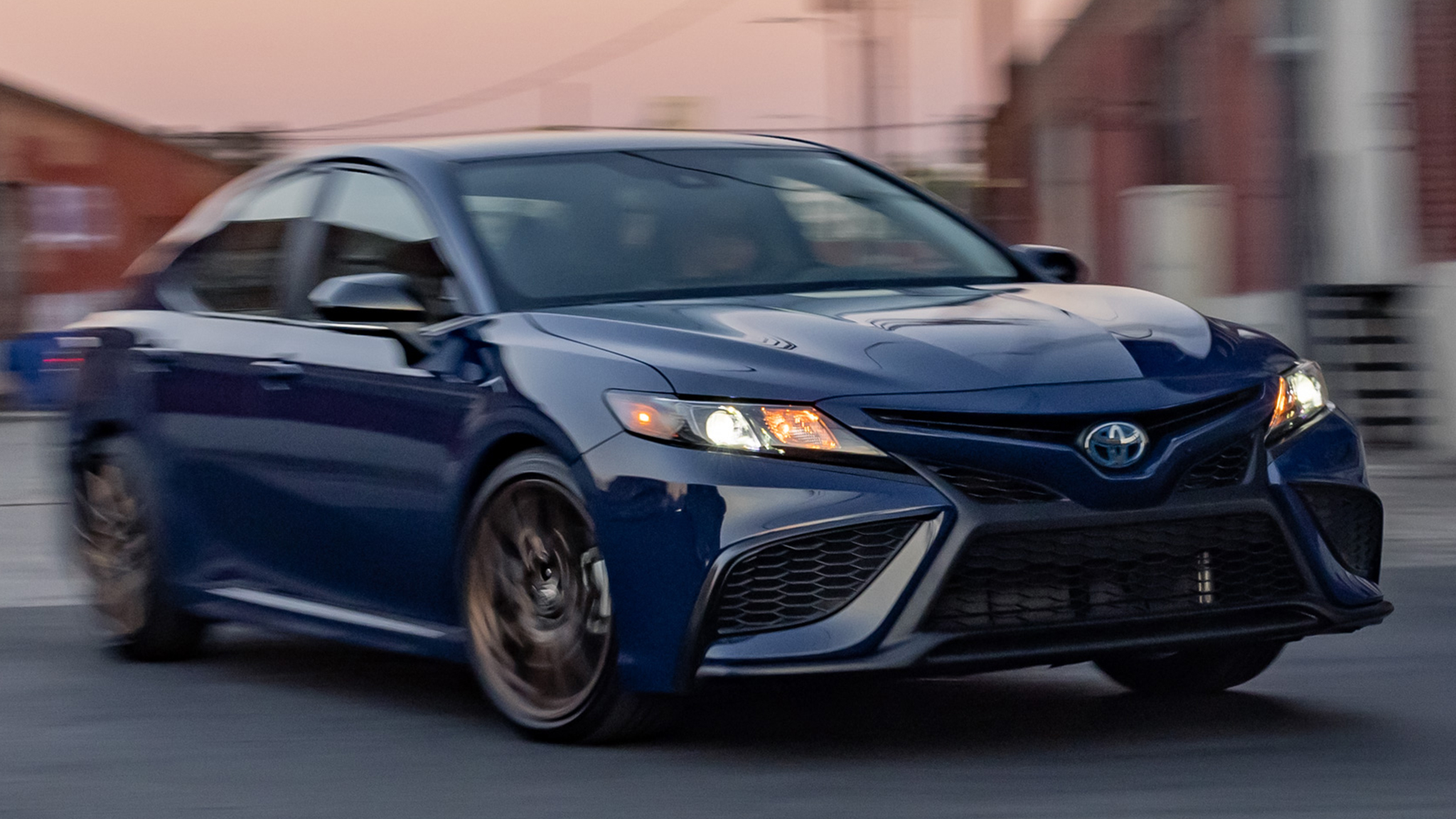
Toyota is returning the Camry to the Japanese market with an unusual arrangement. Instead of producing the sedan locally, the company will build it at its Kentucky plant in the United States before shipping it to Japan. Sales are scheduled to begin on December 23, 2026.
The return follows a three-year absence from Japanese showrooms and represents another step in Toyota’s effort to expand the distribution of American-built vehicles.
The move also has a trade dimension, as the automaker wants to demonstrate how vehicles manufactured in the United States can serve customers in Japan while supporting closer economic ties between the two countries.
Kentucky-Built Camry Returns to Japan After Three Years
Toyota officially confirmed the Camry’s return on November 25, 2026. The new Japanese-market model will be manufactured at Toyota Motor Manufacturing Kentucky in Georgetown, Kentucky, before being exported to Japan.
The facility has produced Camry models for the North American market for years, making it possible for Toyota to use an established production operation rather than create a separate Japanese manufacturing program.
The Camry disappeared from Japanese showrooms in 2023 after Toyota discontinued domestic sales. Its return is therefore significant for a model that has remained popular in several international markets, particularly the United States.
Toyota believes there is still an opportunity for the sedan in Japan, even though local buyers have increasingly favored SUVs, minivans, and smaller vehicles.
The Japanese launch will include two grades, G and Z. The G starts at 4.3 million yen, while the higher-specification Z costs 5.2 million yen.
Both prices include Japan’s consumption tax but exclude recycling fees. Toyota has set a monthly sales target of 850 vehicles, equivalent to approximately 10,200 units annually if the target is maintained throughout the year.
These figures indicate that Toyota is approaching the Camry’s return as a targeted addition to its Japanese lineup rather than a high-volume domestic production program. Importing the sedan from Kentucky allows the company to serve buyers interested in a larger hybrid car without restarting local manufacturing.
The move also demonstrates how Toyota’s manufacturing network operates across national boundaries. A vehicle designed for a global customer base can be assembled in one country and sold in another, provided the manufacturer adapts it to local regulations and customer expectations.
In this case, the Camry’s American production origin becomes part of the announcement rather than a detail hidden from buyers.
Toyota Adapts the American Sedan for Japanese Buyers
Although the Camry will come from an American factory, Toyota has made several changes to suit Japanese driving conditions and customer expectations. The most obvious adjustment is the conversion to right-hand drive.
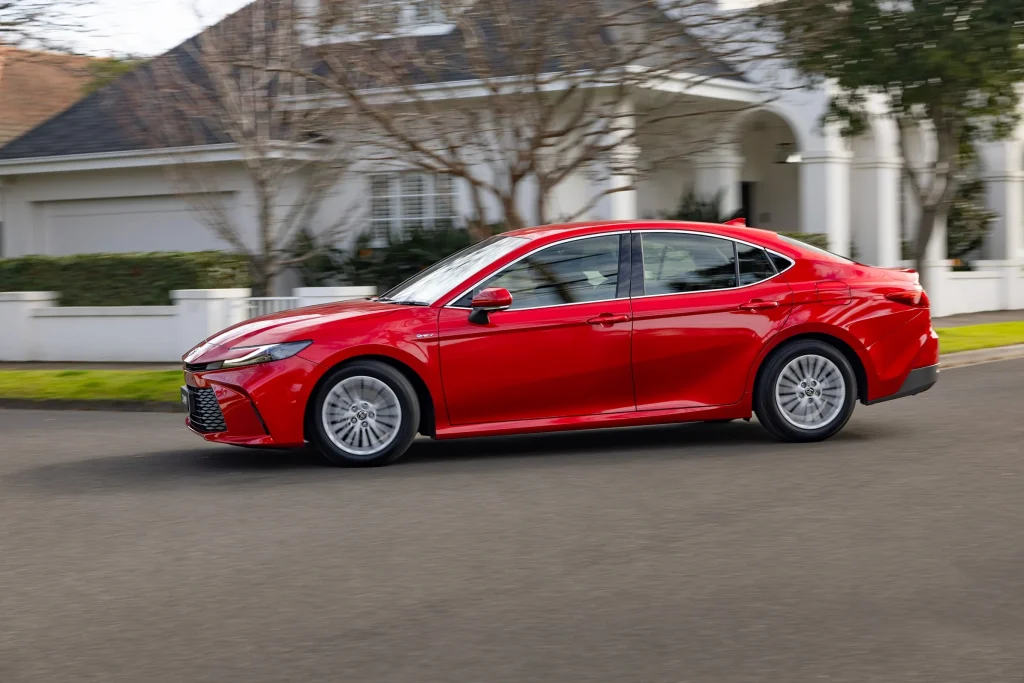
The turn-signal switch has also been moved to the right side of the steering column, matching the arrangement Japanese drivers commonly use. Toyota has additionally localized the multimedia and navigation systems for the domestic market.
These changes are important because importing a vehicle does not automatically make it suitable for another country’s market. Driver positioning, dashboard controls, navigation services, language settings, and regulatory requirements can all influence whether a vehicle feels familiar to local customers.
Toyota’s approach allows it to retain the benefits of American production while making the Camry more practical for Japanese owners.
The Japanese version will use a 2.5-liter four-cylinder hybrid powertrain. Toyota identifies the system as its A25A-FXS series-parallel hybrid setup, with power sent to the front wheels.
Unlike some configurations offered in North America, the Japanese launch specification is front-wheel drive. The company has not announced an all-wheel-drive version for the local market.
The sedan measures approximately 193.7 inches long, 72.4 inches wide, and 57.1 inches tall. Those dimensions give it a substantial road presence while retaining a relatively low profile compared with many modern SUVs.
The two-row, five-seat layout is intended to provide comfortable passenger accommodation without adding the bulk of a three-row vehicle.
Toyota has also highlighted improvements to cabin quietness. Changes to the aerodynamic design around the hood and doors are intended to reduce wind noise, while the interior uses a horizontal dashboard layout to create a more open appearance.
The Z grade receives the higher equipment specification, while the G provides a lower-priced entry into the returning model range.
Safety equipment includes Toyota Safety Sense, with features such as Pre-Collision Safety and Proactive Driving Assist. These systems support the driver by helping identify potential hazards and assisting with certain driving tasks. Their availability gives the Japanese-market Camry a modern safety package alongside its hybrid powertrain and localized technology.
The two-grade strategy also keeps the Japanese range relatively simple. Rather than offering the full variety of configurations available in the United States, Toyota is introducing a focused selection built around the hybrid sedan.
This should make ordering and distribution more straightforward, although the company has not disclosed how many vehicles will be allocated to each grade.
U.S. Manufacturing Becomes Part of Toyota’s Trade Strategy
The Camry’s comeback is part of a broader strategy rather than an isolated move. Toyota announced in December 2025 that it planned to bring three American-built models to Japan starting in 2026, including the Camry, Highlander, and Tundra.
The company said the plan could help meet different customer needs in Japan while contributing to improved trade relations between Japan and the United States.
The three vehicles come from different American manufacturing facilities. The Camry is produced in Kentucky, the Highlander at Toyota Motor Manufacturing Indiana, and the Tundra at Toyota Motor Manufacturing Texas.
This arrangement uses factories that already serve the North American market rather than requiring Toyota to establish new Japanese production lines for these models.
The Highlander and Tundra have already entered the Japanese market as U.S.-manufactured imports. The Camry’s December launch will complete the initial group of three models Toyota identified in its earlier announcement.
The vehicles also offer Japanese customers products that differ from much of the company’s locally produced lineup, particularly the full-size Tundra pickup and three-row Highlander SUV.
Trade relations provide another important part of the background. Japan and the United States have faced pressure over their bilateral trade balance, including discussions about automobile exports and market access.
Toyota’s decision to sell more American-built vehicles in Japan gives the company a practical way to demonstrate that its U.S. factories can supply customers beyond North America.
Japan has also considered changes to its vehicle certification process following bilateral negotiations. Toyota said its original plan would make use of a new system being considered by the Ministry of Land, Infrastructure, Transport, and Tourism.
The Camry’s introduction therefore sits within a wider discussion about how imported vehicles can enter the Japanese market.
For Toyota, the arrangement offers several potential advantages. It can make better use of existing American factory capacity, broaden the customer base for vehicles produced in the United States, and avoid the expense of creating a separate domestic manufacturing operation for relatively limited Japanese demand.
It also gives the company another way to balance production and sales across its global network.
However, the Camry’s return does not mean Toyota is shifting all Japanese-market sedan production to the United States. The company has not announced such a policy, and the imported model is one part of a broader product strategy.
Nor does the launch guarantee a major change in Japanese buying habits. Toyota’s target of 850 units per month provides a useful indication of its initial expectations, but actual sales will determine how successful the return becomes.
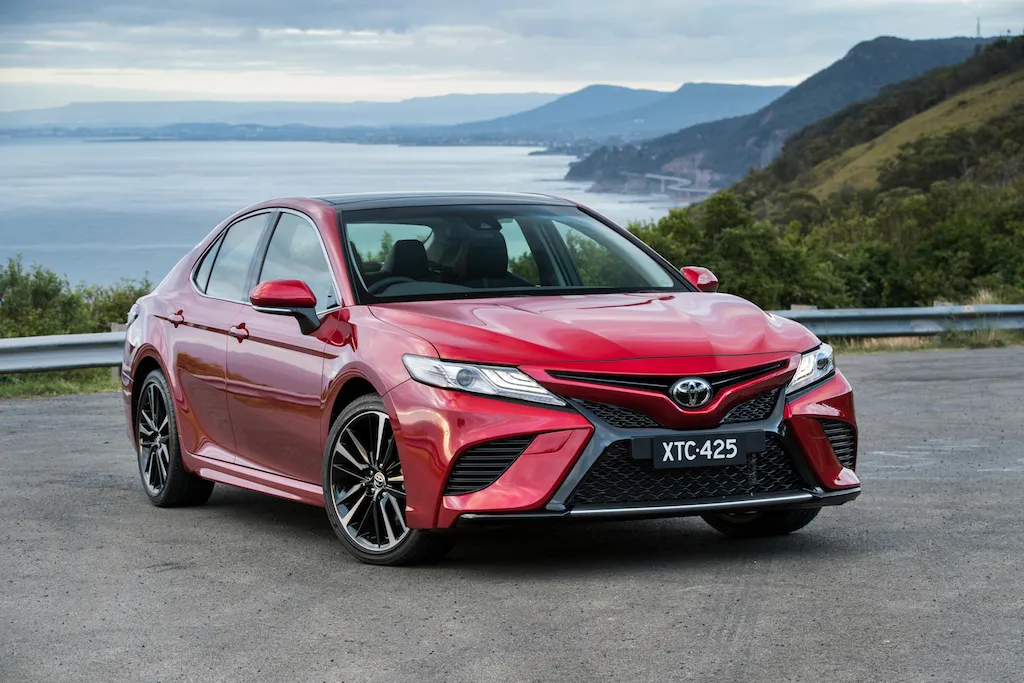
For Japanese buyers, the biggest question will be whether the returning Camry can attract customers who have moved toward crossovers and SUVs. Its hybrid powertrain, familiar Toyota engineering, and two-grade lineup give it a clear position, but the relatively high starting price means it will need to compete on comfort, efficiency, and equipment.
The December 23 launch will provide the first indication of how much demand remains for the sedan in its home market.
The bigger manufacturing story is already clear. A Camry built in Kentucky will once again be sold in Japan, showing how Toyota can use its global production network to serve markets far beyond the countries where its vehicles are assembled.
If the arrangement proves successful, it could also strengthen the case for expanding cross-market sales of American-built Toyota models.