
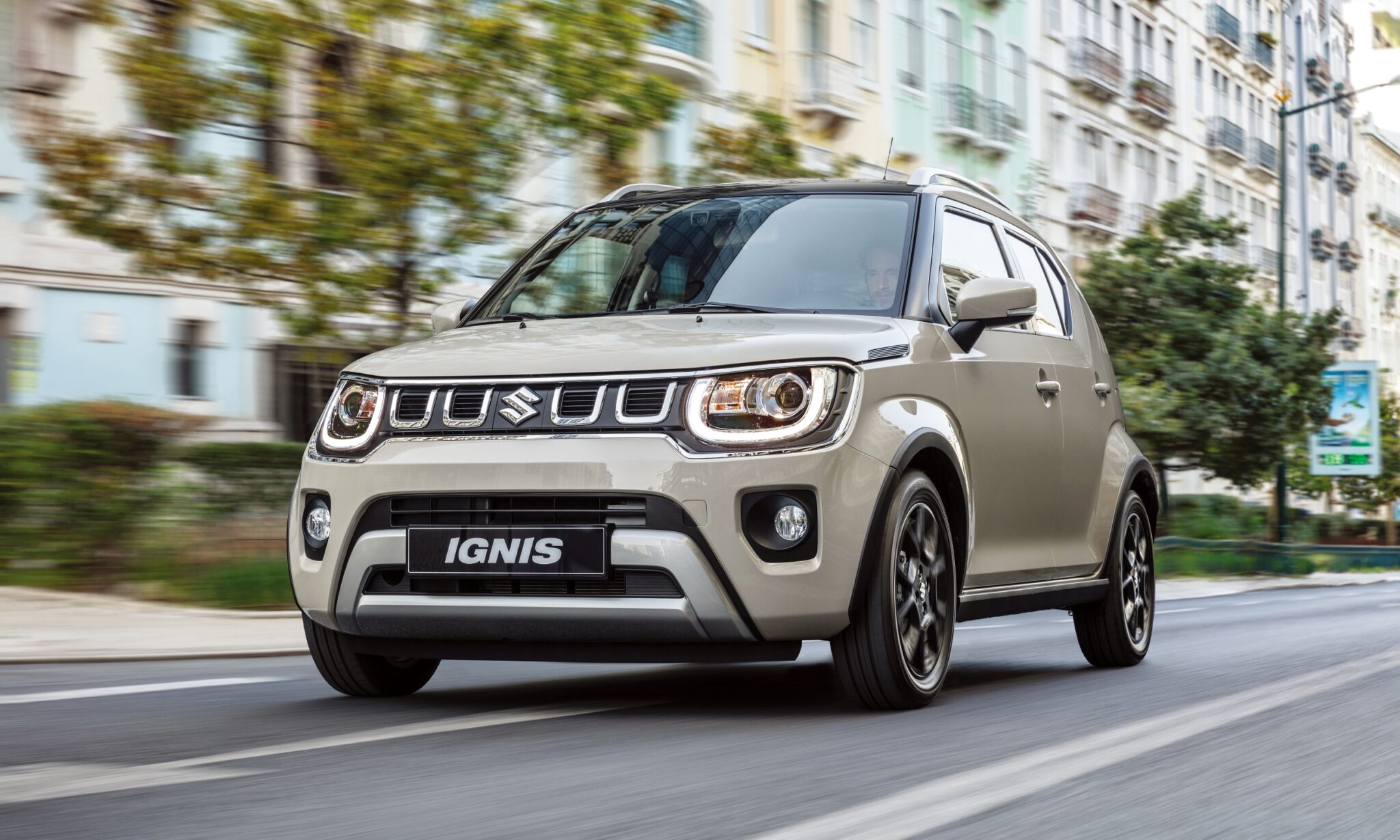
Small electric cars could become increasingly important as automakers look for ways to make EV ownership more accessible without requiring buyers to purchase large, expensive vehicles. Suzuki is entering this space with the all-new electric Ignis, a compact four-seat hatchback designed primarily for urban driving.
Revealed on November 25, 2026, the model uses a 26-kWh lithium iron phosphate battery, a front-mounted electric motor, and a dedicated electric-vehicle platform. Suzuki plans to begin sales in Europe and selected other markets from summer 2027.
The announcement gives the Ignis name a new role, bringing the company’s small-car experience into an increasingly competitive electric market.
Suzuki Gives the Ignis a Fully Electric Identity
The new Ignis represents Suzuki’s first compact EV developed for global markets. The company unveiled it through an online world premiere on November 25, with European sales and introductions in other markets scheduled to begin sequentially from summer 2027.
Suzuki describes the vehicle’s development concept as “Easy to Switch,” emphasizing a straightforward transition for drivers moving from petrol-powered cars to electric mobility or downsizing from larger vehicles.
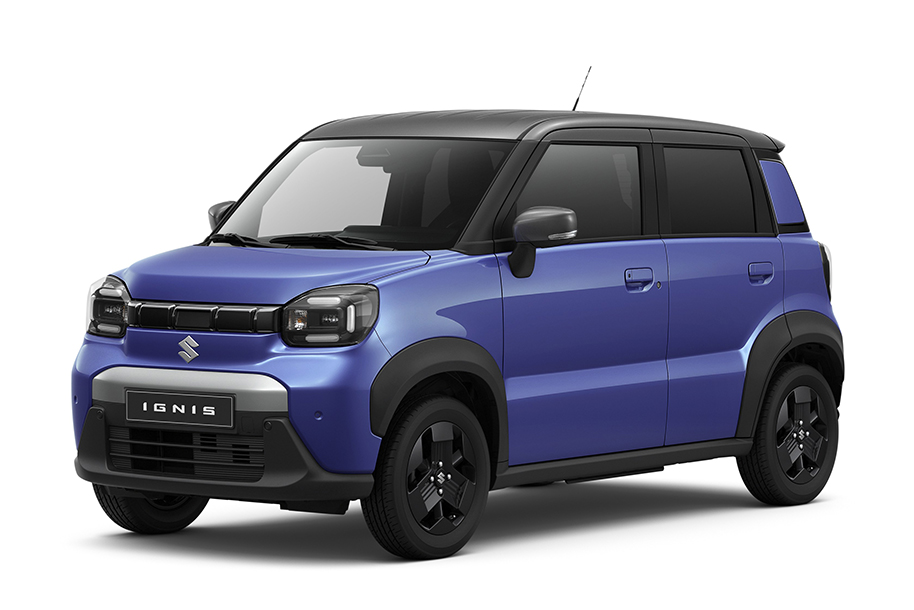
The electric version maintains the compact size and upright design that have become familiar features of the Ignis lineup, while introducing a refreshed exterior suited to the electric vehicle market. Suzuki highlights its new design direction through three key characteristics, namely smart, iconic, and cozy.
A flowing shoulder line and floating roof give the hatchback a light appearance, while distinctive front and rear LED lighting signatures use graphics inspired by digital numerals.
Its dimensions underline the vehicle’s intended role. The Ignis measures 3,570 mm in length, 1,565 mm in width, and 1,635 mm in height. Converted into U.S. measurements, that is approximately 140.6 inches long, 61.6 inches wide, and 64.4 inches tall.
The wheelbase measures 2,460 mm, or about 96.9 inches. These proportions make it considerably shorter than many electric crossovers and should help when navigating narrow streets and crowded parking areas.
The cabin accommodates four occupants. Suzuki says its engineers used the packaging experience gained from developing Japanese kei cars to make the most of the available interior space. The battery is positioned beneath the floor, leaving room for the passenger compartment while helping maintain a compact exterior footprint.
Inside, the dashboard features a wide display arrangement and a storage tray with a design inspired by pottery. A continuous rounded line runs from the dashboard into the door trim, creating a more enclosed cabin appearance.
The emphasis is on straightforward usability rather than an elaborate interior layout. Suzuki has not yet released a complete equipment list for every market, so details such as final infotainment specifications and trim-specific features remain subject to confirmation.
The car also has a minimum turning radius of 4.5 meters, equivalent to roughly 14.8 feet. That figure is particularly relevant in urban environments, where tight intersections, narrow residential roads, and restricted parking spaces can make larger vehicles inconvenient.
Its compact footprint and maneuverability are central to Suzuki’s argument that a small electric hatchback can serve as a practical everyday vehicle rather than simply a second car.
A 26-kWh LFP Battery Powers the Compact Electric Hatchback
The Ignis uses a 26-kWh lithium iron phosphate battery paired with a newly developed electric motor. Suzuki has selected LFP chemistry, which is commonly associated with durability and thermal stability.
The company says the battery has been designed with safety and long service life in mind, although it has not published detailed battery-warranty terms or degradation projections for the new model.
Power comes from a compact electric axle, or eAxle, that integrates the motor, inverter, and reduction gears into a single unit. This arrangement reduces the need for separate drivetrain components and helps package the electric system efficiently in a small vehicle.
For the European-specification Ignis, the motor produces a maximum output of 67 kW, equivalent to approximately 90 horsepower, and peak torque of 133 Nm, or around 98 lb-ft. Power is delivered to the front wheels through a two-wheel-drive configuration.
Suzuki has not announced acceleration figures or a top speed, so the car’s performance should not be judged by comparing its output alone with larger electric vehicles. Its intended use is everyday urban and suburban transportation.
The battery capacity is modest compared with the packs found in many electric SUVs, but that is consistent with the Ignis’s small-car positioning. A smaller battery can reduce vehicle weight, packaging requirements, and the amount of material needed for production.
It can also help keep the vehicle’s purchase price manageable, although Suzuki has not announced pricing and it is too early to determine whether the final model will be genuinely affordable.
One major unanswered question is driving range. Suzuki has not yet released an official range figure for the European Ignis, and its announcement does not provide confirmed energy-consumption or charging specifications.
The 26-kWh capacity alone cannot establish how far the car will travel on a full charge. Efficiency, battery usable capacity, vehicle weight, temperature, and driving conditions will all influence the result.
Charging information is also still incomplete. Suzuki has not confirmed the European model’s maximum AC or DC charging rates, nor has it provided official charging times. Those figures will be important for buyers considering a small EV as their primary vehicle.
A compact battery may be convenient for overnight home charging, but drivers without access to private charging will need to know how quickly the car can recharge at public stations.
The Ignis also uses a dedicated electric platform called HEARTECT-e. Suzuki says the architecture places the battery beneath the body and is engineered to provide a lightweight, rigid structure.
The platform is designed to combine efficient packaging with stable driving characteristics and passenger space. It has already been used in the company’s electric-vehicle development, including the e-Vitara.
Suzuki has developed suspension specifically for the electric platform. The braking equipment includes a regenerative-hydraulic braking system and an electric brake booster.
An easy-operation pedal is also available on certain specifications, allowing regenerative braking to contribute to slowing the vehicle. The intention is to make the transition from a conventional petrol car feel more familiar while recovering energy during deceleration.
Can the Electric Ignis Make Small EVs More Appealing?
Suzuki is entering a market where compact electric vehicles are becoming an important category, particularly in Europe. Large electric SUVs offer more passenger and luggage space, but their size and battery requirements can push prices beyond the reach of some buyers.
Smaller EVs provide an alternative for people whose driving consists mainly of commuting, shopping, and shorter regional journeys.
The Ignis’s compact dimensions and four-seat layout put it in a different category from larger electric crossovers. Its closest competitors will depend on the markets where Suzuki eventually introduces it, but the European small-EV segment already includes models such as the Dacia Spring and Leapmotor T03.
The Hyundai Inster also competes for buyers looking for a relatively compact electric vehicle, although it is larger than the Ignis.
Suzuki’s challenge will be balancing purchase price, usable range, and equipment. A 26-kWh battery may suit customers who mostly drive within cities, but buyers will want reassurance that the car can also handle occasional longer journeys.
Without confirmed range and charging figures, it is not yet possible to establish how competitive the Ignis will be in those situations.
The company says it conducted extensive real-world testing in urban environments and on winding roads across Europe and other regions. Engineers used information gathered during these tests to adjust power delivery and chassis tuning for local road conditions and customer requirements.
Suzuki says this work was intended to provide predictable handling, comfortable suspension behavior, and smooth electric acceleration for drivers who may be unfamiliar with EVs.
The launch also has implications for Suzuki’s wider electric-vehicle strategy. The company has historically built its reputation around compact, relatively lightweight vehicles, and the electric Ignis applies that approach to battery-powered mobility.
Its development philosophy, known as “Sho-Sho-Kei-Tan-Bi,” emphasizes smaller, fewer, lighter, and shorter designs alongside aesthetic appeal. The new model reflects that approach through its compact body, integrated electric drivetrain, and dedicated platform.
However, the global launch announcement should not be interpreted as confirmation that every market will receive the same vehicle at the same time.
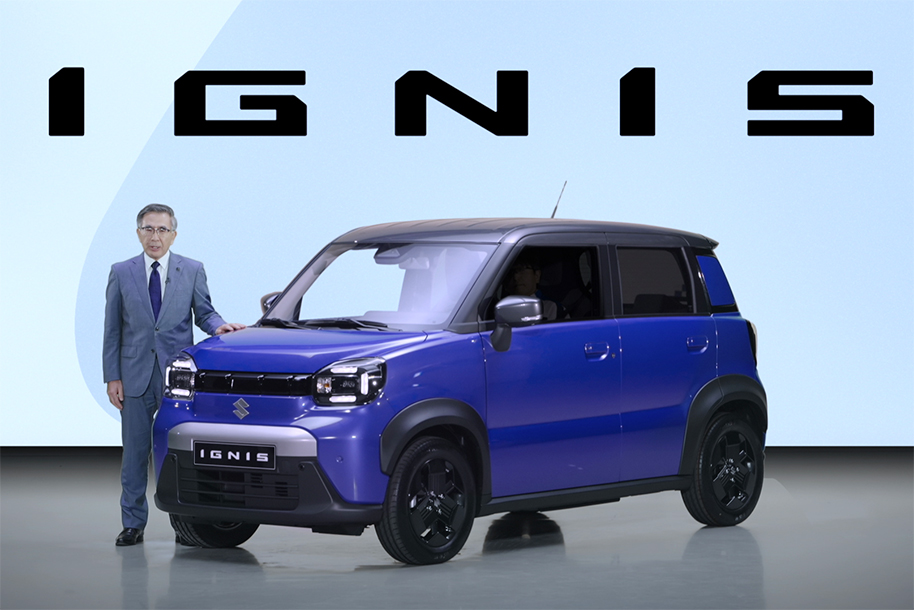
Suzuki has stated that sales will begin sequentially in Europe and other markets from summer 2027, but it has not published a complete country-by-country rollout schedule. Pricing, final specifications, and homologated range figures will be announced closer to market introductions.
For now, the electric Ignis is an important addition to Suzuki’s small-car strategy, but its commercial success will depend on information that has not yet been released. A competitive price, useful real-world range, and convenient charging performance will be essential if it is to attract buyers beyond those who primarily need a city runabout.
The 26-kWh battery and compact dimensions establish its intended purpose. The next stage will be showing that a small electric car can deliver enough practicality to make everyday ownership appealing.