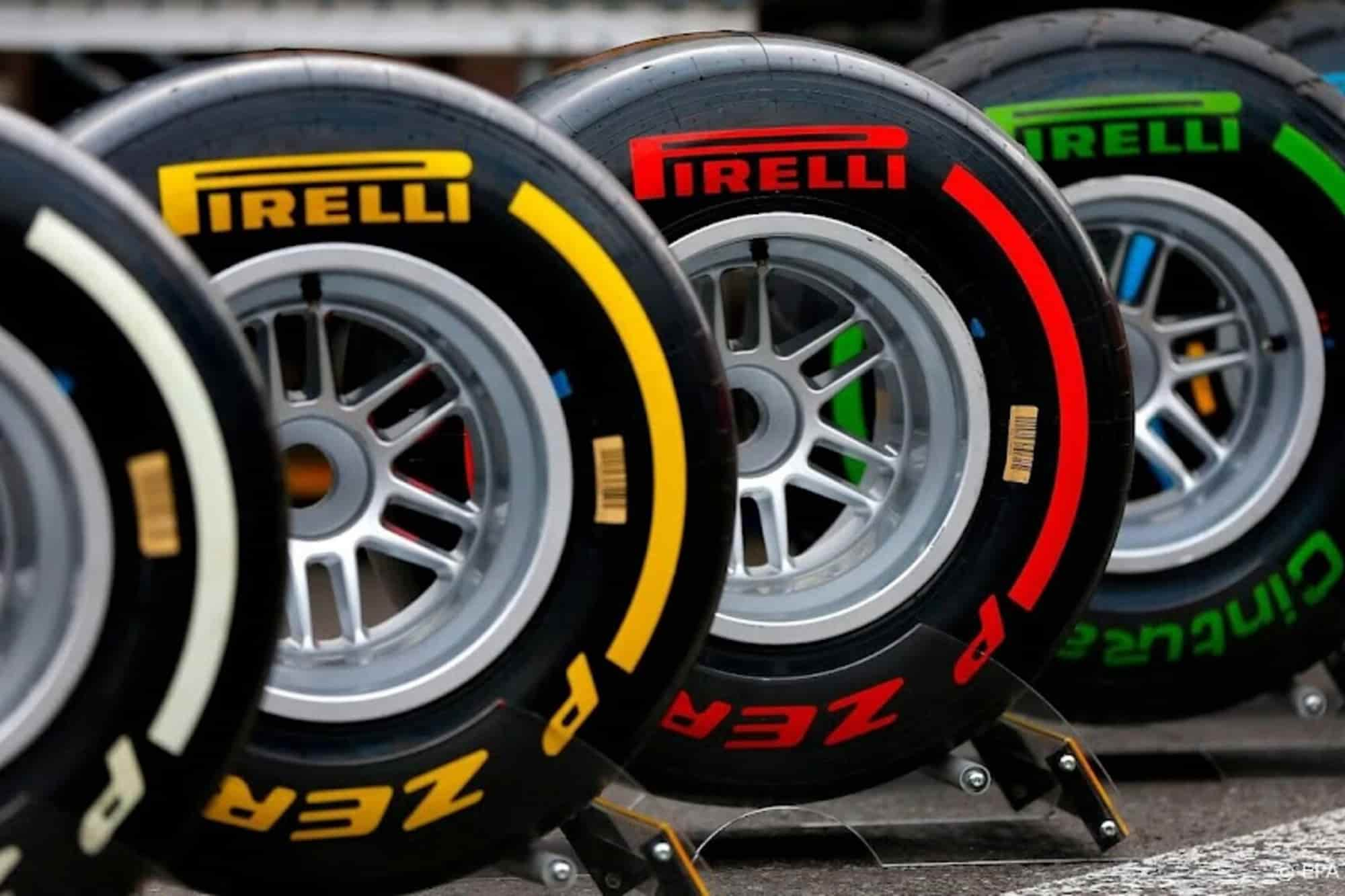
Tires are traditionally viewed as passive vehicle components, responsible for maintaining grip, absorbing road impacts, and supporting a vehicle’s weight.
Pirelli wants to give them a more active role through its Cyber Tyre technology, which uses sensors inside tires to collect information and communicate with a vehicle’s electronic systems.
The company demonstrated the technology in the United States in November 2026 and confirmed that Cyber Tyre-equipped tires will be manufactured at its Rome, Georgia, facility. The development is part of a broader $1.2 billion investment program that will expand the factory and strengthen Pirelli’s position in the American premium tire market.
Pirelli Introduces Cyber Tyre Technology to the U.S. Market
Pirelli presented Cyber Tyre technology at Las Vegas Motor Speedway during the 2026 Formula 1 Las Vegas Grand Prix weekend.
The demonstrations showed how information collected directly from tires can help vehicle electronics respond more effectively during braking, acceleration, and changing road conditions.
The company also confirmed that the technology will be manufactured at its Rome, Georgia, facility, bringing production closer to one of its most important markets.
The announcement builds on an earlier commitment made in May 2026, when Pirelli said it would introduce Cyber Tyre production in Georgia.
The November presentation provided a clearer picture of the technology’s capabilities and its role in the company’s American manufacturing plans. It also followed Pirelli’s September announcement of approximately $1.2 billion in investment for expanding the Rome operation.
Cyber Tyre is designed to turn each tire into a source of useful vehicle information. A small sensor installed inside the tire’s tread collects data such as tire identification, pressure, temperature, and acceleration.
That information is transmitted through Bluetooth and processed using Pirelli’s software and algorithms. The resulting data can then be shared with compatible vehicle electronic systems in real time.
This approach is different from conventional tire-pressure monitoring systems. Traditional systems primarily alert drivers when tire pressure falls outside an acceptable range.
Cyber Tyre is designed to provide a broader picture of how the tire is behaving, including information about its interaction with the road. That additional data can help a vehicle’s control systems make decisions based on the actual tires fitted rather than relying only on general assumptions.
The technology is being developed to work with systems such as anti-lock braking systems, electronic stability programs, and traction control. Pirelli has worked with Bosch on integrating tire information with vehicle electronics.
This cooperation is important because collecting data is only one part of the process. The vehicle must also be able to interpret that information and use it appropriately without compromising the operation of existing safety systems.
How Smart Tires Could Improve Braking and Vehicle Control
One of Cyber Tyre’s most important applications involves improving the way braking systems respond to available grip. ABS prevents wheels from locking during hard braking, allowing drivers to maintain steering control.
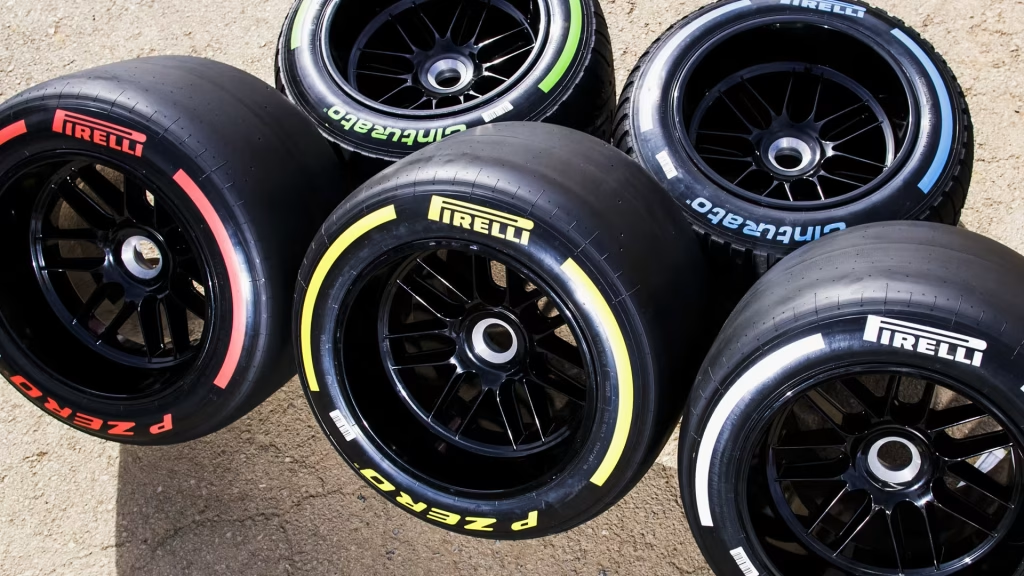
However, the amount of grip available depends on several factors, including tire type, temperature, road surface, and driving conditions.
Pirelli says Cyber Tyre can provide information about the tire’s point of maximum grip. The vehicle can use this information to help its ABS system operate more effectively and potentially reduce braking distances.
During the Las Vegas demonstrations, the company showed how tire-specific information could influence braking and traction-control behavior. These demonstrations illustrate the technology’s potential, but they should not be treated as proof that it will reduce stopping distances in every vehicle or road condition.
Traction control is another area where the technology could be useful. A vehicle’s electronic systems normally adjust power delivery or braking when they detect wheel slip.
Cyber Tyre can identify the tires installed and communicate information about their characteristics to the vehicle’s control unit. This allows compatible systems to adjust their settings according to the tires being used.
That could be particularly useful for drivers who switch between summer, winter, and all-season tires. Different tire compounds and tread designs can produce different levels of grip, and their behavior can change as temperatures rise or fall.
A system that receives information directly from the tire could help the vehicle adapt its control strategy instead of relying on a fixed calibration.
The limited-production Pagani Utopia Roadster is the first vehicle to feature Cyber Tyre as standard original equipment. Each tire contains a sensor that communicates with the vehicle’s electronics.
The system allows the car to use specific calibrations based on the installed tires and adjust torque management according to tire type and temperature. Drivers can also receive dedicated tire information through the infotainment system.
The technology could eventually become relevant to more mainstream vehicles, although Pirelli has not announced a complete list of future models that will receive it.
Its integration will depend on cooperation between tire manufacturers, automakers, and suppliers of vehicle electronic systems. Cars must have compatible hardware and software to take advantage of the information.
Cyber Tyre also has a potential application beyond individual vehicles. Pirelli says information collected by connected tires could help identify road hazards and changes in road-surface conditions. If data from multiple vehicles were collected and analyzed, it could help identify locations requiring inspection or maintenance.
This is a longer-term application, however, and would require suitable data-sharing arrangements and cooperation with infrastructure authorities.
Georgia Expansion Will Support Production and Create New Jobs
Pirelli’s decision to manufacture Cyber Tyre-equipped tires in Georgia is part of a much larger expansion of its Rome facility. The company announced a multi-year investment plan worth approximately $1.2 billion in September 2026.
The program is intended to increase annual production capacity to approximately six million car tires by 2033 and create around 1,000 additional jobs.
The expansion will take place in two main stages. The first will upgrade Pirelli’s MIRS, or Modular Integrated Robotized System, manufacturing technology.
This robotic production process is designed for high-value tires and allows greater flexibility in manufacturing specialized products. Pirelli expects capacity from this phase to reach approximately three million tires annually.
The second stage will add a fully automated conventional manufacturing line dedicated to premium tires, providing another three million tires of annual capacity when fully operational.
Together, the two stages are expected to bring the Rome facility’s total output to approximately six million car tires per year. The expansion program is scheduled to begin in 2027, with production capacity increasing progressively through 2033.
The investment is also expected to strengthen the facility’s role as a technology center. Pirelli has operated in Rome, Georgia, since 2002, and the site already combines manufacturing, innovation, and headquarters operations.
The company currently employs 234 people in Georgia, according to the state’s September announcement. The planned expansion is expected to increase that workforce substantially, with the bulk of additional hiring anticipated from 2029.
Cyber Tyre production fits into Pirelli’s local-for-local strategy, which involves manufacturing products closer to the markets where they are sold. The United States is particularly important to the company because of demand for premium and high-performance tires.
Producing connected tires in Georgia could help Pirelli serve American customers while developing its local manufacturing and technology capabilities.
The expansion will also require the company to manage several challenges. Connected tires involve sensors, software, and electronic integration in addition to conventional tire manufacturing.
Pirelli will need to maintain production quality while ensuring that the technology works reliably across different vehicle platforms. Automakers will also have to consider the costs of sensors, compatible electronics, and software development when deciding whether to adopt the system.
Cyber Tyre is therefore more than a new feature added to a tire. It represents a change in how manufacturers could use information generated at the vehicle’s contact points with the road.
Pirelli’s Georgia investment gives the technology a manufacturing base in the United States, while the wider factory expansion provides room for higher production volumes.
The first standard-production application in the Pagani Utopia Roadster demonstrates that the system has moved beyond a laboratory concept, but wider adoption will depend on cost, compatibility, and automaker demand.
As vehicles become increasingly connected, Pirelli is positioning the tire as another component capable of supplying information that can influence vehicle safety and performance.