
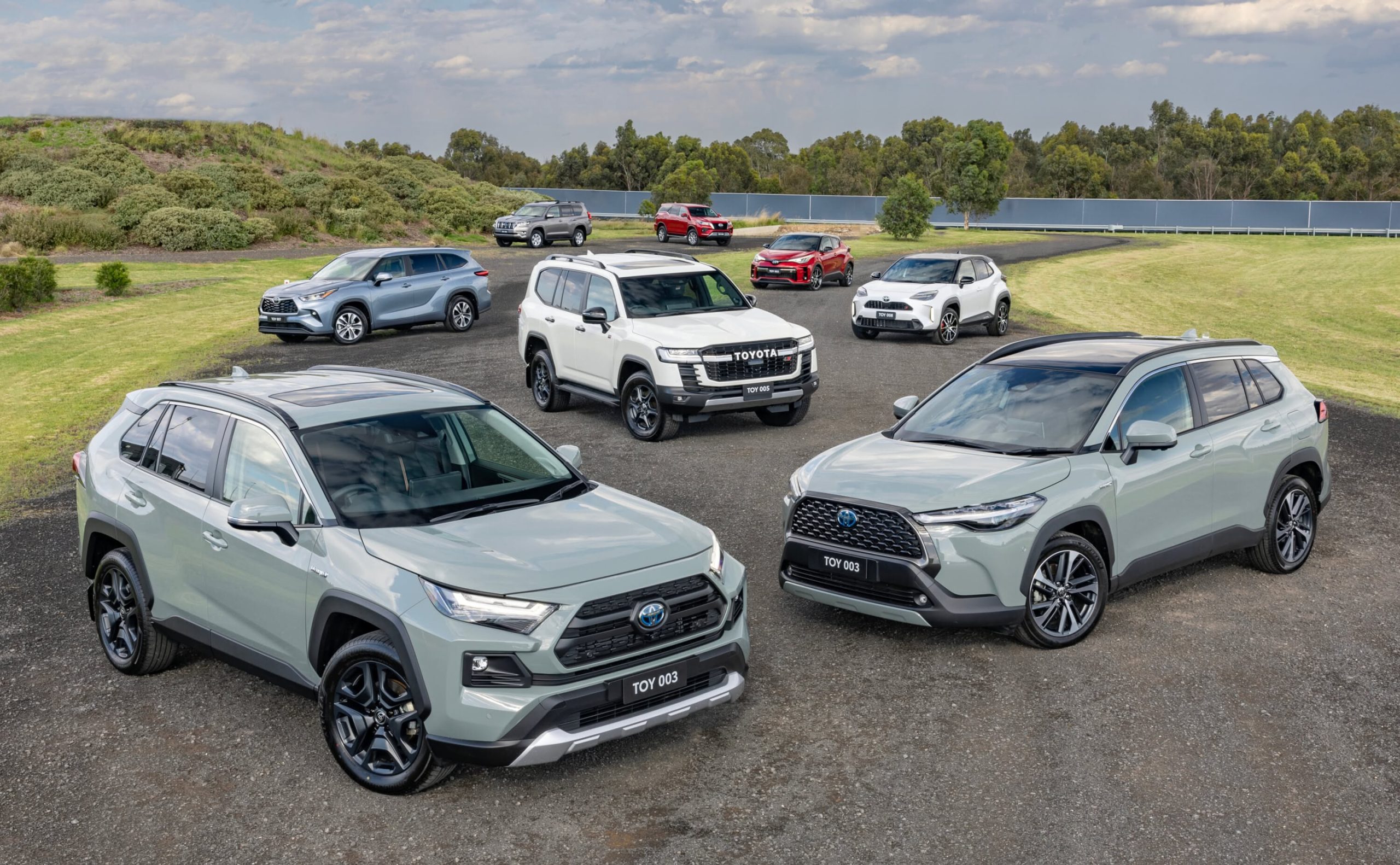
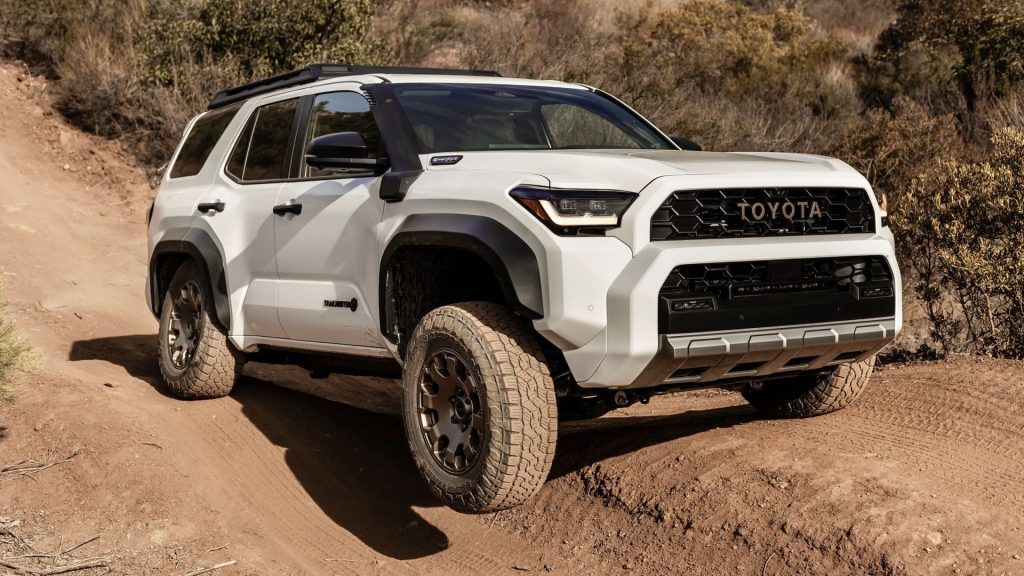
Toyota has returned to the top of Consumer Reports’ automotive reliability rankings, ending Subaru’s recent run as the highest-rated brand. The achievement comes after several Toyota models improved their reliability scores, including the Camry, Tacoma, and Tundra, while the redesigned 4Runner also delivered a promising early result.
Consumer Reports announced the findings in its 2026 Annual Automotive Report Card, published on December 4, 2025. The survey analyzed information from approximately 380,000 vehicles, making it one of the largest consumer-based assessments of vehicle reliability in the United States.
Toyota’s comeback also highlights the benefits of gradual engineering changes and established powertrain technology.
Toyota Moves Ahead of Subaru and Lexus in Reliability Rankings
Toyota’s return to first place is particularly notable because the company had not held the top position in Consumer Reports’ reliability rankings since 2022. Subaru had led the previous year’s rankings, but improvements across several Toyota models helped the Japanese automaker reclaim the crown.
In the latest results, Toyota achieved a predicted reliability score of 66 out of 100. Subaru followed in second place with 63, while Lexus ranked third with 60. Honda occupied fourth place at 59, and BMW completed the top five with a score of 58.
The results show that Japanese manufacturers continue to perform strongly in long-term reliability assessments.
The improvement was not driven by a single vehicle. Consumer Reports specifically identified the Camry, Tacoma, and Tundra as models that helped Toyota return to the top. The redesigned 4Runner also made a solid initial showing, contributing to the brand’s improved average.
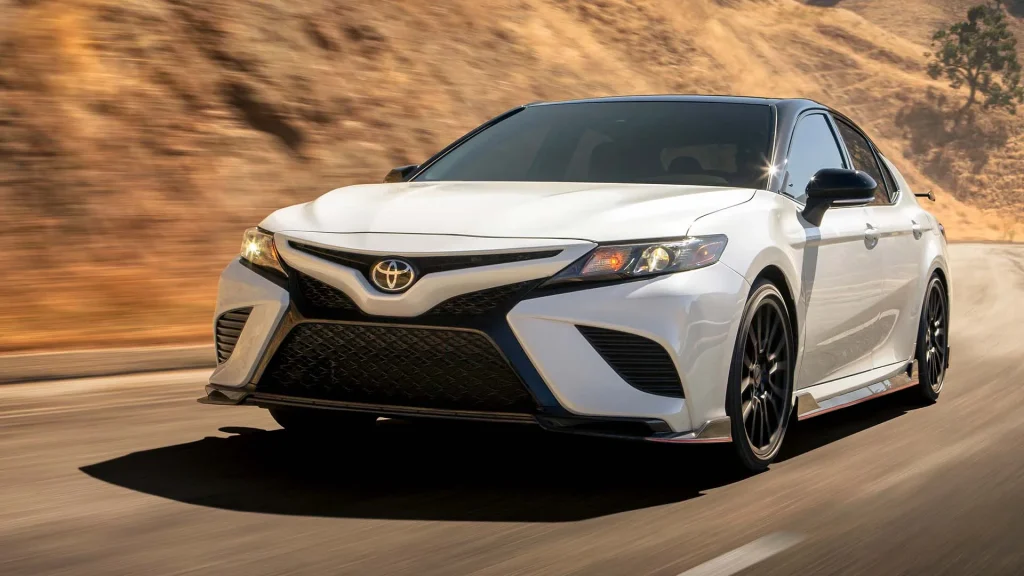
The Camry’s recovery is especially interesting. After its redesign for the 2025 model year, its predicted reliability score had fallen to an average rating of 56 in the previous survey. In the latest assessment, it improved to 74, placing it among the more dependable midsize cars.
That improvement suggests Toyota’s changes and production refinements helped address some of the concerns associated with the redesigned model.
The Tacoma also made a substantial recovery. Its 2024 redesign initially brought below-average reliability, but the latest survey showed it moving into the above-average category. The Tundra took longer to improve.
Introduced with a new platform and powertrain for the 2022 model year, it experienced reliability problems in its early production years. Consumer Reports now rates its 2026 model at average reliability, a meaningful improvement from its previous below-average position.
Toyota’s wider lineup also helped. Consumer Reports reported that six Toyota models appeared among its 10 most reliable vehicles in the latest survey. The company’s established models, along with the new Land Cruiser and redesigned 4Runner, contributed to a stronger brand-wide result.
This is important because Consumer Reports does not award the reliability crown based on one particularly successful vehicle. Its brand score reflects the performance of multiple models across recent model years.
A manufacturer with several consistently dependable vehicles can therefore outperform a competitor whose reliability results are concentrated in only a few products.
Why Toyota’s Reliability Improved After Earlier Problems
Toyota’s comeback is notable because the company has faced several highly publicized reliability problems in recent years.
The Tundra’s 3.4-liter twin-turbocharged V6, for example, was affected by engine-related recalls involving machining debris that could damage internal components. The redesigned Tacoma also experienced early ownership complaints and recalls.
Despite those issues, Consumer Reports found that the reliability of several Toyota models had improved. One important distinction is that its survey measures problems owners actually experience rather than simply counting recalls.
Consumer Reports asks members not to report recall-related issues unless they personally experienced the problem, and its analysts remove recall-only responses from the reliability data. This explains why a manufacturer can have significant recalls without automatically receiving the lowest reliability ranking.
The survey examines as many as 20 potential trouble areas, including engines, transmissions, electric motors, batteries, charging systems, in-car electronics, suspension components, and body hardware.
Owners report problems experienced during the previous 12 months, and Consumer Reports uses those responses to estimate the reliability of newer vehicles.
For the 2026 report, the organization collected information on approximately 380,000 vehicles covering model years 2000 through 2025, along with some early 2026 models.
Its brand reliability scores were calculated using recent model-year information, generally covering 2023 through 2025 and selected early 2026 vehicles where sufficient data was available.
Toyota’s relatively conservative approach to redesigns may also have contributed to its improvement. Consumer Reports has repeatedly found that manufacturers introducing entirely new platforms, engines, or complicated technology can experience reliability setbacks during the initial production years.
Gradual changes that build on established components often reduce the risk of introducing multiple new problems at once.
This does not mean Toyota avoids technological innovation. The company continues to introduce new hybrid systems, safety technology, and redesigned vehicles. However, its ability to improve existing models after early production issues appears to have helped its latest reliability results.
Another important finding concerns hybrid powertrains. Consumer Reports found that conventional hybrids experience approximately 15% fewer problems on average than gasoline-only vehicles.
That is particularly relevant to Toyota because hybrids make up a substantial part of its U.S. lineup, including versions of the Camry, Corolla, RAV4, Tacoma, and Tundra.
Plug-in hybrids and fully electric vehicles presented a different picture. According to the survey, these vehicles experienced approximately 80% more problems on average than conventional gasoline-powered cars. Issues involving batteries, charging equipment, and electric drive systems contributed to the difference.
Toyota’s strong hybrid performance therefore provides another advantage in the reliability rankings. Its experience with conventional hybrid technology gives the company a substantial portfolio of models using systems that have matured through years of development and customer use.
What Toyota’s Return Means for American Car Buyers
The latest Consumer Reports results offer useful guidance for shoppers, but they should not be interpreted as a guarantee that every Toyota will be trouble-free. Reliability varies between individual models, powertrains, and model years. Even manufacturers with strong brand averages can produce vehicles that experience expensive mechanical or electronic problems.
The 2026 report’s individual model results illustrate that point. Toyota’s strongest performers include the Corolla Cross, which received a predicted reliability score of 79, and the Corolla, which scored 76. The Crown scored 78, while the Tacoma and Camry both reached 74. The 4Runner also delivered a strong initial result following its redesign.
However, buyers should also consider the reliability of the specific engine and transmission combination they intend to purchase.
A model available with gasoline, hybrid, and plug-in hybrid powertrains can have significantly different reliability results depending on the configuration. Looking only at the nameplate or manufacturer’s reputation can therefore be misleading.
The rankings also demonstrate that Toyota is not the only dependable option. Subaru finished second, Lexus third, and Honda fourth. Lexus benefits from sharing several established platforms and powertrain components with Toyota, while Honda continues to perform strongly across its mainstream vehicle range.
BMW’s fifth-place result also shows that premium brands can achieve competitive reliability when their engineering and production processes perform consistently.
The survey provides an interesting regional comparison as well. Asian automakers recorded an average reliability score of 56 out of 100, compared with 50 for European manufacturers and 41 for domestic U.S. brands.
Seven of the 10 highest-ranked brands were headquartered in Asia. Among American manufacturers, Buick was the highest-ranked brand in eighth place, while Tesla reached ninth after making substantial improvements.
Tesla’s improvement deserves attention because the company climbed from 17th place to ninth. Consumer Reports identified better results involving body hardware, paint and trim, and electrical accessories.
The Model 3 and Model Y improved to average or above-average reliability, although the Cybertruck continued to receive a below-average assessment.
For buyers considering a new vehicle, Consumer Reports also recommends caution with newly introduced or completely redesigned models. Early production years can expose problems that manufacturers may not discover until vehicles reach customers.
Waiting for a model to establish a stronger reliability record can be a sensible decision, particularly when purchasing a vehicle with a new engine, transmission, or electronic architecture.
Toyota’s return to the top is therefore a significant achievement, but the most useful takeaway is the improvement across its lineup rather than the ranking position alone. The Camry, Tacoma, and Tundra have all recovered from earlier reliability concerns, while the company’s hybrid technology continues to perform well in the survey.
The results highlight an important consideration for American car buyers. A strong reputation for reliability comes from delivering consistent performance across an entire lineup rather than relying on the success of a single dependable model.
Toyota has regained the position it last held in 2022, but maintaining that lead will depend on how its latest redesigns and new technologies perform as more owners put miles on them.
