
Classic SUVs have carved out a powerful space in the collector and resale markets over the years. These vehicles represent a time when utility and durability were not just marketing points but fundamental expectations.
Dealers across the country are willing to bid aggressively for certain vintage SUV models that retain strong buyer interest, historical relevance, and resale value. Auctions, whether live or online, often see a frenzy when some of these iconic machines roll across the block. It’s not just about nostalgia.
There’s real demand, driven by a combination of rising classic car culture, off-road resurgence, and limited production models that aged into rarity.
These SUVs often have reputations built on reliability, rugged engineering, or cultural significance. Many of them have transitioned from being purely practical vehicles into lifestyle statements. Owning one today often comes with a sense of identity, whether it’s a symbol of adventure, rebellion, or simplicity. Dealers recognize these emotional attachments and are willing to compete for inventory that can draw eyes to a showroom or sell quickly to a waiting list of enthusiasts.
Additionally, the aftermarket support for many of these models remains strong. Restoration parts, upgrade kits, and custom accessories are widely available, making them attractive from an investment standpoint. Dealers are not just looking to flip these vehicles but often to add value and offer something unique.
Some SUVs have even crossed into premium territory where a properly restored example can fetch more than it ever cost brand new. The growing collector SUV segment isn’t limited to one automaker, either. American, Japanese, British, and even German manufacturers have produced timeless models that now fetch top dollar at auctions.
This list looks at ten such classic SUVs that dealers consistently chase. Each model on this list has demonstrated strong auction performance, ongoing popularity among enthusiasts, and historical importance that gives it long-term staying power.
Whether it’s off-road pedigree, iconic styling, or limited availability, these vehicles command attention. They’re not just relics of the past; they’re active players in the modern classic car scene.
Also Read: 15 Cars That Rarely Need Fixing Despite Abuse
1. Toyota Land Cruiser FJ40
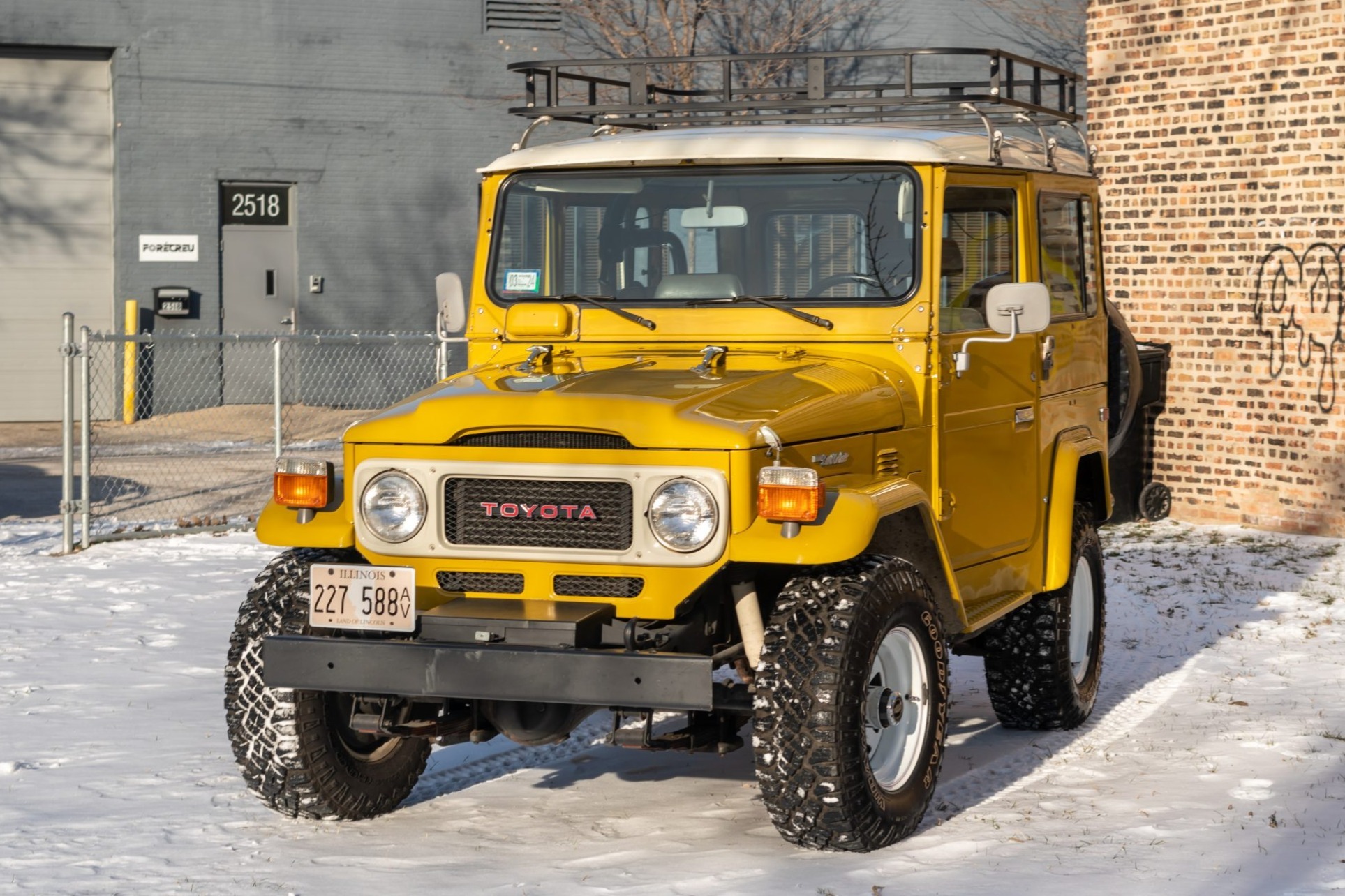
The Toyota Land Cruiser FJ40 holds a special place in SUV history. With its no-nonsense design and unmatched reliability, this model became a favorite for both military and civilian use around the globe. Originally introduced in the 1960s, the FJ40 was Toyota’s answer to rugged off-road needs in both developing and developed nations.
It quickly gained a reputation for being nearly indestructible, which is one of the reasons it remains so popular today. Dealers know that if one of these turns up at auction in good shape, it’s going to sell fast, especially if it has matching numbers and minimal rust.
Collectors often seek out unmodified examples, which are becoming harder to find. Many FJ40s have been heavily altered for off-roading over the decades, making original-condition trucks rare and desirable. Dealers pay close attention to documentation and chassis condition when bidding.
The value of these SUVs has appreciated significantly over the past decade, with pristine examples easily fetching six figures at auction. Restoration shops dedicated to the FJ40 further signal how strong the demand is. For dealers, these trucks represent a product that doesn’t need much persuasion to sell.
There’s also international demand to consider. The FJ40 was sold globally, and that means a wider range of collectors and buyers are in the market for clean examples. Export opportunities drive up auction prices, especially for right-hand-drive models or ones that were originally sold in less common markets. Dealers with connections abroad often compete fiercely for these, knowing they can mark up the vehicle significantly once it leaves the country.
Lastly, the FJ40’s appeal spans generations. Younger buyers who are just getting into the classic SUV scene often admire the simple, utilitarian style and classic Toyota reliability. Meanwhile, older collectors appreciate the nostalgia and connection to a different era of motoring. For dealers, this broad appeal makes the FJ40 one of the most reliable sellers on the auction circuit.
2. Ford Bronco
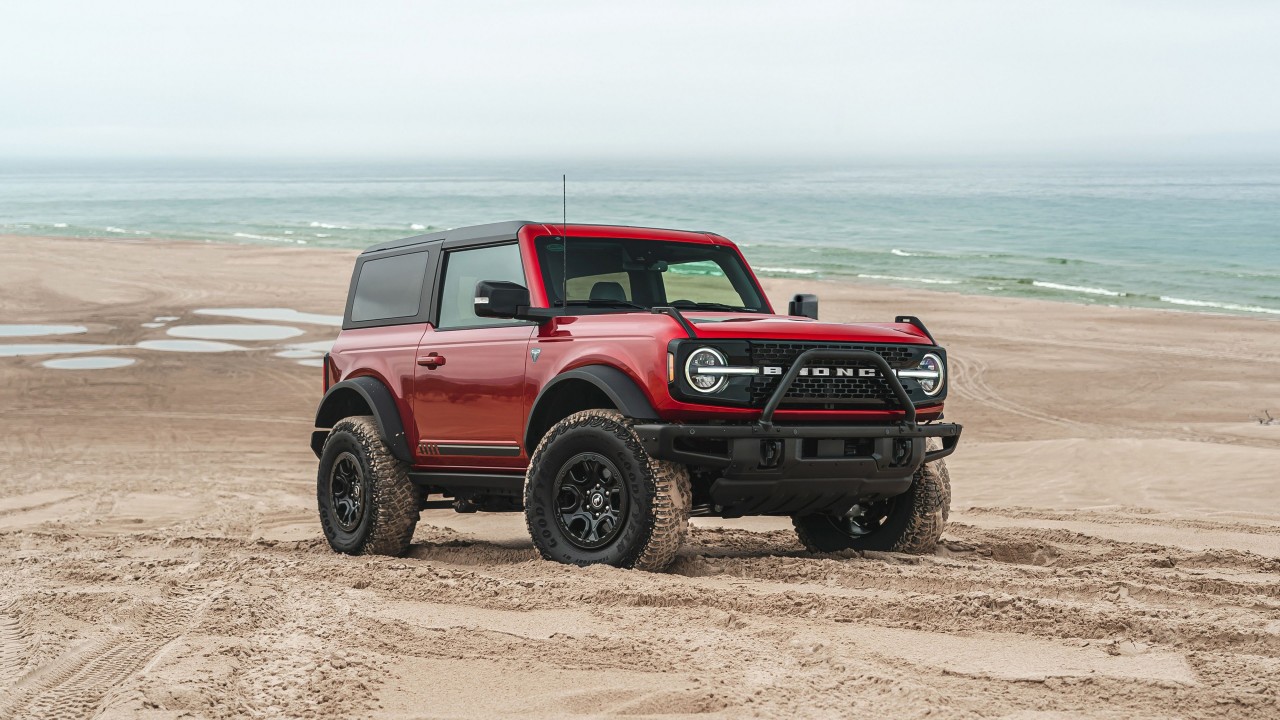
The first-generation Ford Bronco, produced from 1966 to 1977, is a poster child for classic American SUVs. Designed as a competitor to the Jeep CJ and International Harvester Scout, the original Bronco blended compact dimensions with off-road capabilities in a clean, boxy package.
Over the years, its minimalist design and practical nature turned it into a cult favorite. Today, these early Broncos command strong prices at auctions, with fully restored versions often reaching well into six-figure territory. Dealers watch auction listings for these constantly, as even project-grade Broncos can spark bidding wars.
A big factor in the Bronco’s appeal is its versatility. The early models came with removable tops, short wheelbases, and simple mechanics, making them ideal for customization. Dealers often look for base models in good structural shape, knowing they can be restored or customized according to market demand.
With the resurgence of the Bronco nameplate by Ford, interest in the original models has only increased. New buyers drawn in by the modern Bronco are often willing to pay a premium for a classic version to complete the collection or satisfy a retro itch.
Another reason why dealers are aggressive in acquiring these is the aftermarket and builder support for the Bronco. There are numerous shops dedicated exclusively to the restoration and modification of early Broncos. This ecosystem makes it easier for a dealer to turn an old Bronco into a profit-generating showpiece. Whether it’s a frame-off restoration or a tasteful restomod, there is a buyer for nearly every style.
There’s also the media factor. Broncos frequently show up in films, social media feeds, and high-end car shows, keeping them constantly visible in the public eye. Dealers benefit from this recognition, as they don’t need to explain the value to customers, it’s already understood. When one appears at auction, especially in desirable colors or with rare factory options, dealers are ready to raise their paddles without hesitation.
3. Jeep Grand Wagoneer (Pre-1991)
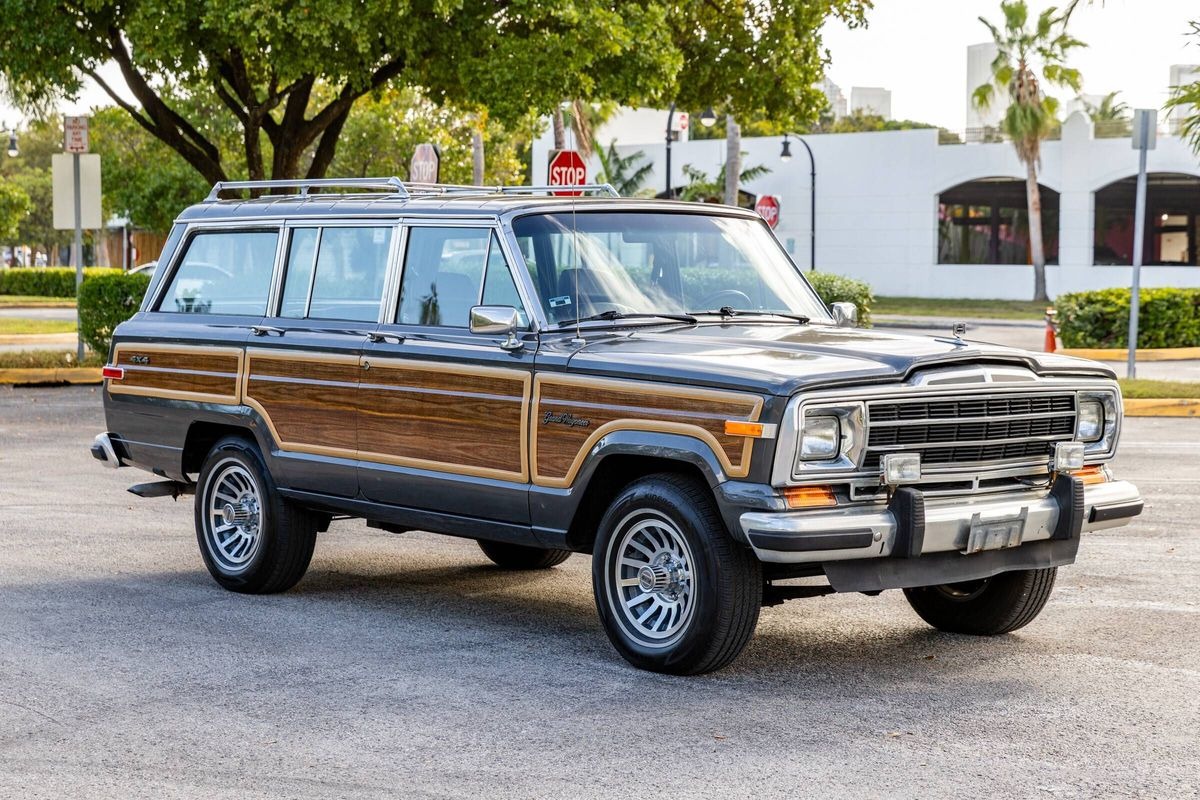
The Jeep Grand Wagoneer, especially the models built before Chrysler’s full takeover in 1991, holds a unique space in the classic SUV market. This was one of the earliest luxury SUVs, combining off-road capabilities with plush interiors and woodgrain paneling. For decades, it maintained the same basic body style, becoming an icon of consistency. Dealers often hunt these down at auctions because they offer something many classic SUVs don’t, a luxurious vintage feel paired with real utility.
What sets the Grand Wagoneer apart is its blend of comfort and capability. Long before SUVs became synonymous with soccer moms and suburban errands, the Grand Wagoneer was showing Americans that you could have both a four-wheel-drive vehicle and a comfortable cabin with leather, air conditioning, and a V8 engine.
Dealers know that this mix appeals to a certain type of buyer who may not be looking for rugged trails but rather weekend cruising with classic charm.
Another factor that boosts its desirability at auctions is its look. The fake woodgrain panels, chrome trim, and boxy shape are unmistakable. These details make the Grand Wagoneer instantly recognizable, and that aesthetic has found favor with buyers across multiple demographics.
Restoration companies now specialize in turning these into near-modern vehicles underneath, with updated engines, brakes, and interiors, all while preserving the iconic look. Dealers often have standing relationships with such restorers to flip auction purchases into high-margin retail listings.
The long production run and limited changes also mean parts are easier to find than for other classics. This makes them a safer bet for dealers who may need to perform light restoration or repairs. It also appeals to buyers who want a classic look without excessive maintenance headaches. At auctions, prices continue to rise, especially for low-mileage, rust-free examples from dry climates. Dealers know these will sell, and they bid accordingly.
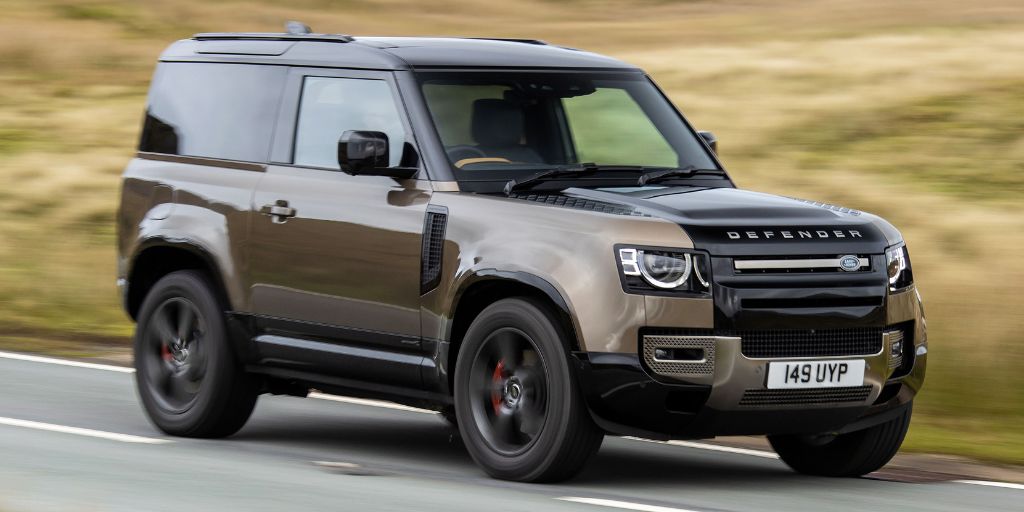
4. Land Rover Defender 90 and 110
The Land Rover Defender, specifically the 90 and 110 models from the 1980s and early 1990s, has become one of the most sought-after classic SUVs in recent years. Originally designed for agricultural and military use, the Defender developed a reputation for durability and go-anywhere ability.
It wasn’t known for comfort or refinement, but that was never the point. Its appeal lies in its mechanical simplicity, unmistakable appearance, and legitimate off-road prowess. Dealers chase these vehicles at auctions with increasing intensity, especially since they were only officially imported into the United States in limited numbers for a few years.
One of the major factors driving dealer interest is scarcity. Because of U.S. safety regulations, only a small number of Defenders were sold stateside before import restrictions made them unobtainable unless they were 25 years old or older.
Now that more models have crossed that age threshold, international sellers have begun flooding the auction scene with legally importable examples. Dealers familiar with the process of importing and titling older Defenders can capitalize on the demand. A clean, legally imported Defender can command high premiums, especially if it retains original features like the 200Tdi or 300Tdi diesel engines.
The aftermarket support for the Defender is another reason why dealers are so eager to bid on these at auctions. Restoration shops across North America and Europe now offer frame-off rebuilds, complete with galvanized chassis, upgraded interiors, and modern electronics, all while maintaining the rugged look that made the Defender famous.
Dealers often buy older, tired Defenders, send them for restoration, and resell them at significant markups. These upgraded Defenders appeal to both off-roaders and urban collectors who want something distinctive and rugged without sacrificing too much comfort.
There’s also the matter of branding and lifestyle marketing. Land Rover has leaned heavily into its heritage, and that marketing effort has helped maintain interest in older models. The classic Defender has become something of a symbol for rugged luxury, a blend of British pedigree and utilitarian function.
For dealers, that brand association makes these vehicles easier to pitch, and harder to keep in stock. As more buyers seek out unique vehicles with character, the Defender continues to rise in both value and demand.
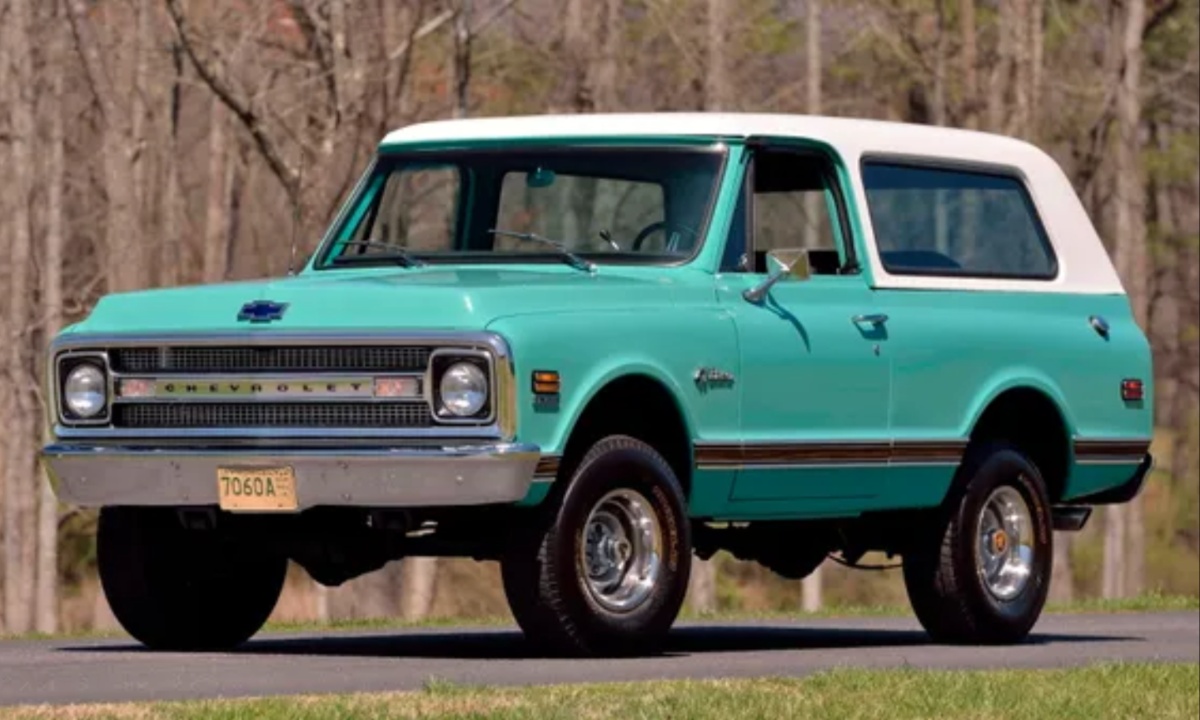
5. Chevrolet K5 Blazer (1969–1972)
The early Chevrolet K5 Blazer, particularly the first-generation models produced from 1969 to 1972, has become a hot commodity in the classic SUV market. With its full convertible top, V8 power, and truck-based platform, the K5 Blazer was Chevrolet’s response to the Ford Bronco and Jeep CJ.
It stood out thanks to its larger size, smoother ride, and aggressive styling. Dealers chase these early Blazers at auctions because they combine collectible appeal with modern drivability, and they attract a wide range of buyers, from off-road enthusiasts to muscle car collectors.
A big selling point for these early K5 Blazers is their shared DNA with classic Chevy pickups. Much of the running gear, chassis components, and even the body styling came directly from the C/K-series trucks of the same era. That means parts availability is better than many other vintage SUVs, making restoration less daunting and more cost-effective.
For dealers, that ease of maintenance and restoration translates into quicker turnarounds and better margins. Originality counts too, Blazers with factory air conditioning, original paint, or matching drivetrain components tend to fetch higher prices.
These vehicles are also prime candidates for restomods, which adds to their auction value. Many buyers are interested in vintage looks paired with modern features like fuel-injected LS engines, overdrive transmissions, custom interiors, and upgraded suspensions.
Dealers understand this trend and often scoop up solid-body examples to use as bases for custom builds. Once completed, a well-executed restomod K5 Blazer can easily bring six figures, especially at high-profile auctions or specialty dealerships.
The K5 Blazer’s looks contribute significantly to its desirability. The front-end design, large wheel wells, and convertible top give it a presence that’s hard to ignore. It has muscle car attitude with SUV proportions.
Dealers know these attributes appeal to a cross-section of customers: collectors who appreciate originality, and younger buyers drawn to bold, retro styling. As values continue to climb, more dealers see the early K5 as an investment-grade classic, and they show up at auctions ready to pay accordingly.
Also Read: 15 Cars From the 2000s That Still Run Strong Today
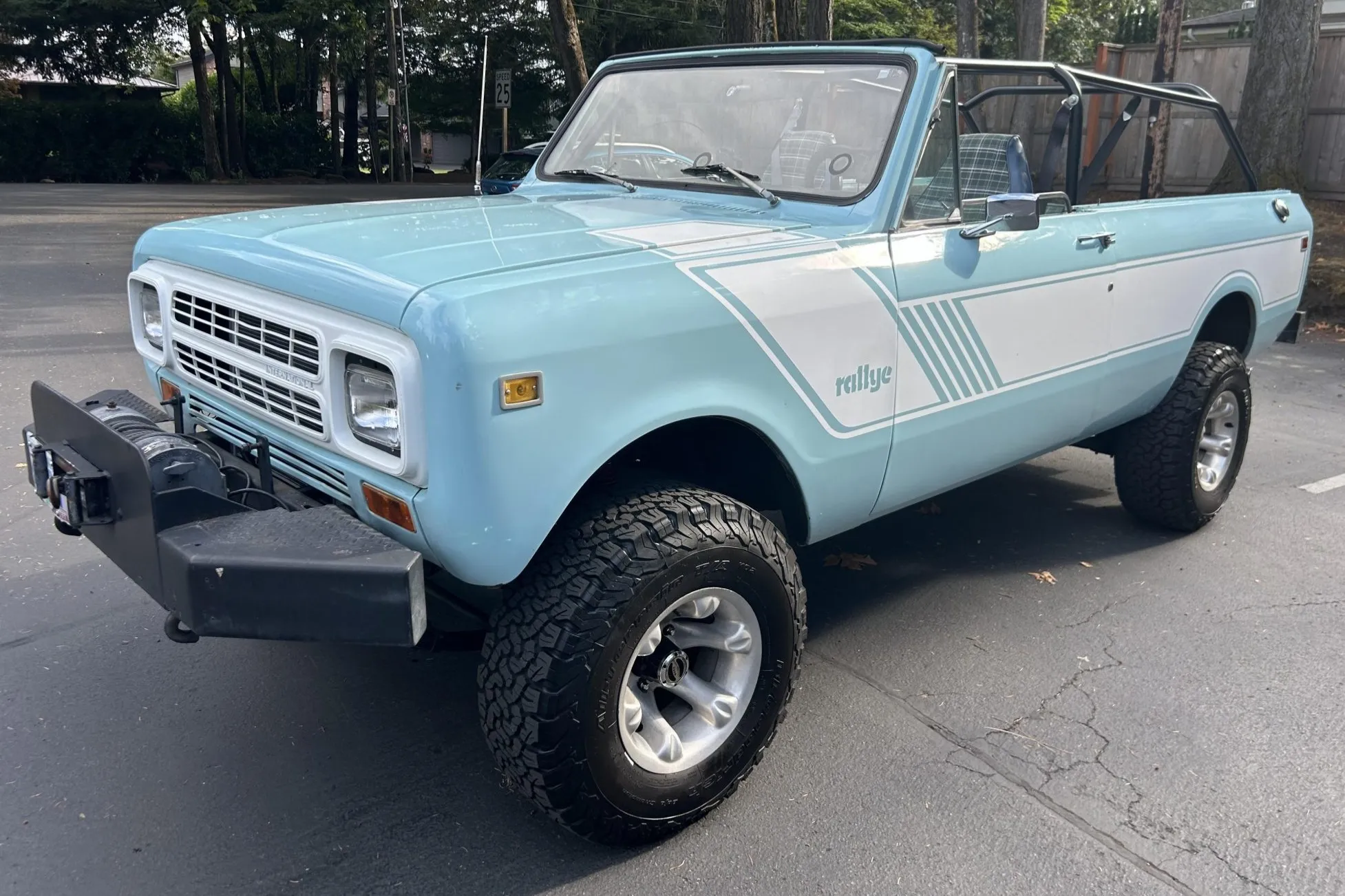
6. International Harvester Scout II
The International Harvester Scout II is a rugged, underrated classic that’s finally getting the recognition it deserves. Produced from 1971 to 1980, the Scout II followed up the original Scout with a more refined, yet still barebones, approach to utility.
While it didn’t have the same marketing machine behind it as Jeep or Ford, the Scout II earned a loyal following for its toughness, simplicity, and unique design. Dealers are increasingly aggressive at auctions when clean or restorable examples come up, recognizing that the Scout’s underdog status is part of what makes it special.
Part of the Scout II’s appeal is that it offers something a little different in the sea of classic Broncos and Blazers. Its boxy body, slanted rear roofline, and distinctive grille give it a personality all its own. Dealers look for solid bodywork above all, since Scouts were notorious for rust, particularly in the rockers, floors, and rear quarters.
A rust-free Scout, especially one with a V8 and factory options like air conditioning or a Rallye package, can demand significant attention at auction. As values increase, more collectors are being drawn in, and dealers are positioning themselves to meet that demand.
The simplicity of the Scout II’s mechanics also makes it attractive. With basic carbureted engines and traditional four-wheel-drive systems, there’s not much that can’t be fixed in a weekend with common tools.
This ease of maintenance appeals to a newer generation of DIY enthusiasts, many of whom are entering the classic SUV market for the first time. Dealers know that these buyers are often looking for a project, and a well-priced Scout II with good bones can move quickly off the lot.
Customization also plays a role in the Scout’s market momentum. Restored and modified Scouts now fetch strong money, particularly when they’re tastefully updated with modern conveniences while retaining their original charm. Dealers keep tabs on restoration shops that specialize in Scouts, sometimes even commissioning builds themselves. The combination of rarity, design, and mechanical simplicity makes the Scout II a dealer favorite and a rising star at classic SUV auctions.
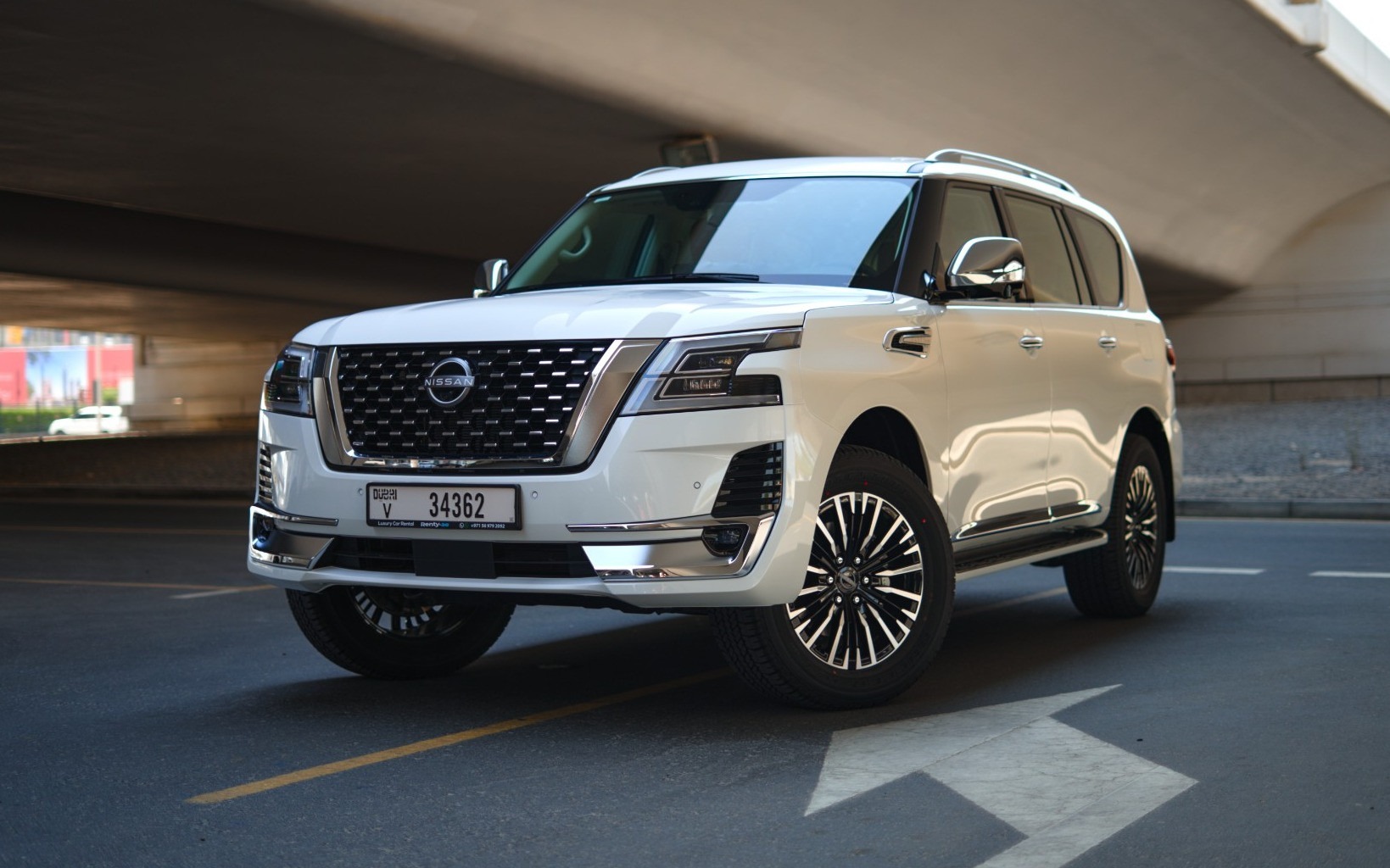
7. Nissan Patrol (60 Series)
The Nissan Patrol 60 Series is an often-overlooked classic SUV that’s finally getting the attention it deserves from dealers and collectors alike. Originally launched in the 1960s, this model was Nissan’s answer to the Land Cruiser FJ40 and the early Jeep CJ.
Although not as widely available in the U.S., the Patrol earned a reputation in overseas markets for its durability and off-road prowess. Dealers have become more aggressive in acquiring clean or restorable Patrols at auctions, particularly as the global demand for rare Japanese 4x4s continues to climb.
One of the key reasons for the Patrol’s rise is scarcity. Very few were sold in the U.S., and those that remain are often in rough condition or heavily modified. Finding an unmolested example is a major win for dealers, who know that rarity translates into auction value.
The simple, military-style design has aged well, with flat body panels, round headlights, and minimalistic interiors that reflect the function-first approach of early 4×4 design. It’s the kind of vehicle that turns heads not because it’s flashy, but because it’s uncommon.
Mechanically, the Patrol was built to last. Its inline-six engines were known for reliability, and its rugged leaf-spring suspension gave it legitimate off-road capabilities. Enthusiasts often compare it to the Land Cruiser FJ40 in terms of performance and character.
Dealers appreciate how these vehicles can appeal to niche collectors who are tired of the usual Bronco-and-Blazer lineup. For buyers interested in a more obscure but equally capable 4×4, the Patrol offers something fresh and highly collectible.
There’s also an emerging trend of importing older Patrols from Australia, South America, and the Middle East, regions where the vehicle was more common and better preserved. Dealers experienced in international shipping and legal importation are using auctions to grab clean foreign examples, refurbish them, and resell at premium prices in the North American market.
As global classic SUV interest grows, the Patrol 60 Series is becoming a valuable player in the auction scene, and dealers are starting to chase it with the same energy they’ve shown for more mainstream models.
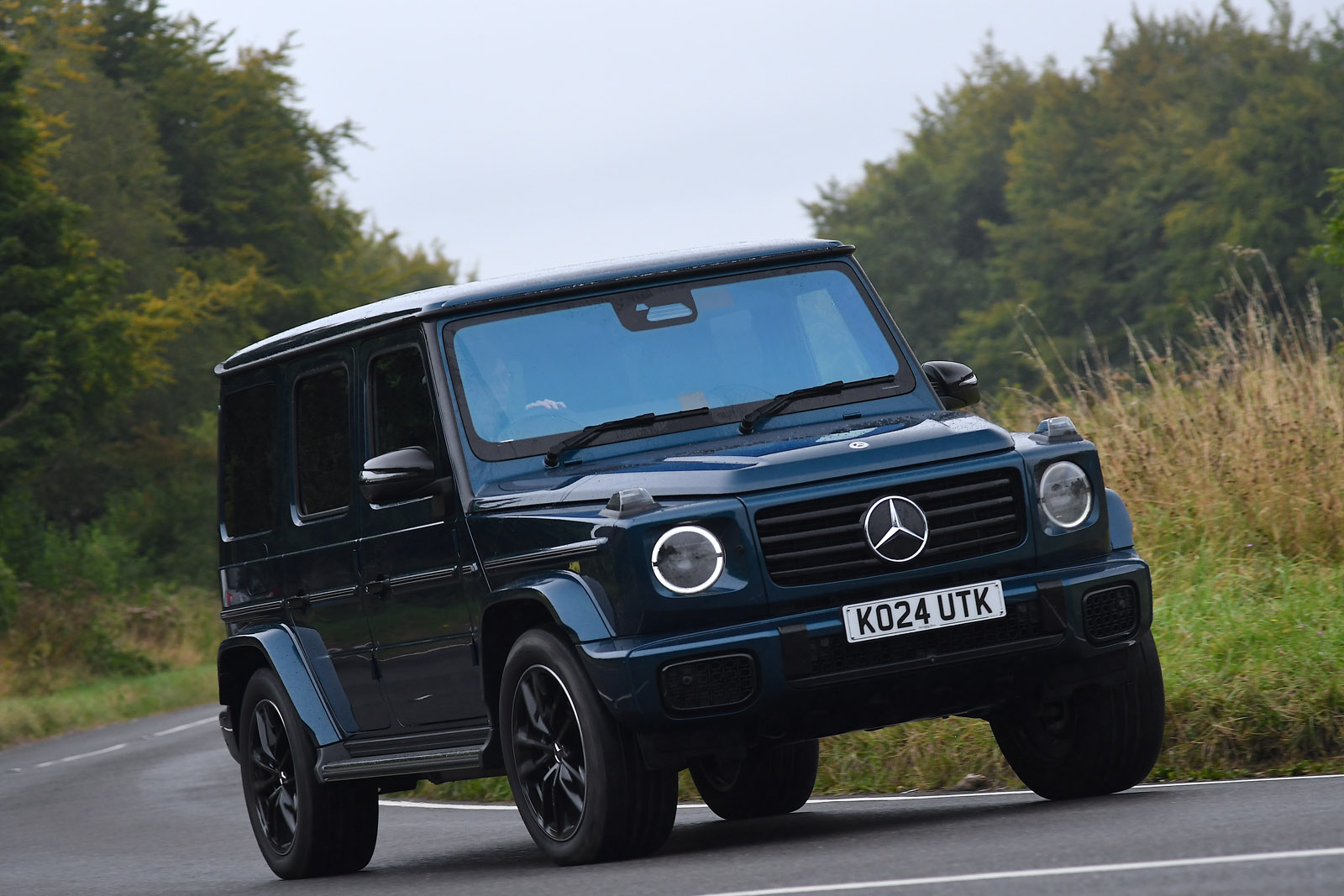
8. Mercedes-Benz G-Class (W460 and Early W463)
The early Mercedes-Benz G-Class models, especially the W460 and early W463 chassis built from the late 1970s through the early 1990s, are now some of the most desirable classic SUVs on the auction circuit.
Originally developed as a military vehicle, the G-Class (or “G-Wagen”) made its way into civilian life with the same rugged underpinnings but with increasingly upscale features over time. For many years, these early models were underappreciated, particularly in North America, but times have changed. Dealers are now chasing these vintage G-Wagens at auctions because the demand has grown exponentially among buyers who want old-school off-road ability with a European badge.
The appeal of the early G-Wagen lies in its dual nature. On one hand, it’s a hardcore 4×4 with locking differentials, body-on-frame construction, and simple, purposeful engineering. On the other hand, it carries the prestige and quality associated with the Mercedes-Benz name.
That combination attracts a unique buyer, someone who appreciates both off-road capability and luxury craftsmanship. Dealers are aware of this and are willing to invest in acquiring clean W460s or earlier W463s because they often don’t need to do much selling, the G-Wagen’s reputation precedes it.
Another factor working in favor of dealers is the ability to import older G-Wagens under the 25-year rule in the United States. Many of these vehicles were never sold in America originally, especially the diesel-powered W460s that were staples in Europe and the Middle East.
Dealers familiar with the importation process can source well-preserved examples from abroad and bring them stateside for resale at a significant markup. Since many U.S.-market buyers never had access to these configurations, they’re seen as exotic and desirable, adding even more value at auction.
These vehicles also benefit from one of the strongest aftermarket and restoration communities among European SUVs. Whether it’s restoring an original diesel W460 to factory condition or converting it to a modern V8 powertrain with luxury upgrades, there’s a strong ecosystem of specialists to support the process.
Dealers often work directly with these shops to turn auction buys into premium inventory pieces. The boxy styling, vault-like build quality, and iconic image make early G-Wagens hot properties. When one crosses the block in good condition, dealers are almost always part of the bidding crowd, hoping to grab one before prices climb even higher.
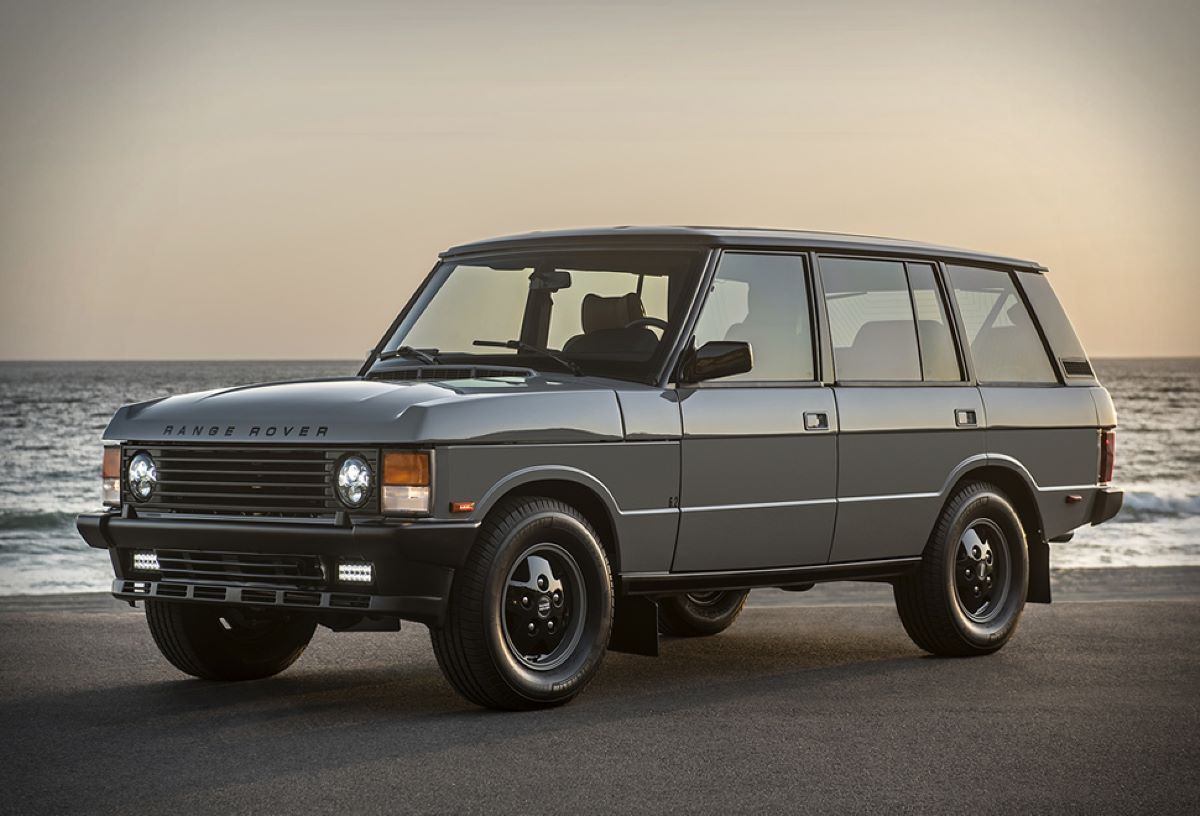
9. Range Rover Classic (1970–1995)
The original Range Rover Classic, built from 1970 through 1995, is one of the most influential luxury SUVs ever produced. It set the stage for the entire luxury SUV segment by combining a capable four-wheel-drive system with a comfortable, upscale interior.
These early Range Rovers were designed to work hard and look good doing it, making them equally at home on a muddy farm as in a city center. Over the past decade, these models have gone from overlooked used trucks to highly coveted collector pieces. Dealers have taken notice and now aggressively pursue clean Range Rover Classics at auctions across the globe.
Part of what makes the Range Rover Classic so valuable is its versatility. It appeals to off-road enthusiasts who appreciate its coil-spring suspension and low-range gearing, as well as collectors drawn to its minimalist British design.
Early two-door versions, which were never officially imported to the U.S., are especially desirable. Dealers often go out of their way to find these rare variants in Europe and South America, where they were more commonly sold. Once imported and restored, they can command top-dollar prices at auctions and boutique dealerships alike.
The restoration scene around the Range Rover Classic has also exploded, with numerous high-end shops now offering full rebuilds and modern upgrades. Dealers frequently partner with or even own shares in such restoration firms, allowing them to turn auction buys into high-margin, showroom-ready products.
Whether it’s a nut-and-bolt factory restoration or a restomod with air suspension and modern infotainment, the market for these SUVs is strong. Buyers are looking for vintage charm with modern amenities, and the Range Rover Classic delivers that when properly restored.
Another reason dealers chase these at auctions is the brand’s current status. Land Rover, and the Range Rover line in particular, has become synonymous with upscale adventure. That association helps even older models retain their prestige in the eyes of buyers.
A well-presented Range Rover Classic is seen not just as a classic car, but as a lifestyle statement. When one shows up at auction, especially a rust-free example with a documented history, dealers know they’re looking at something they can flip quickly, often with very little effort.
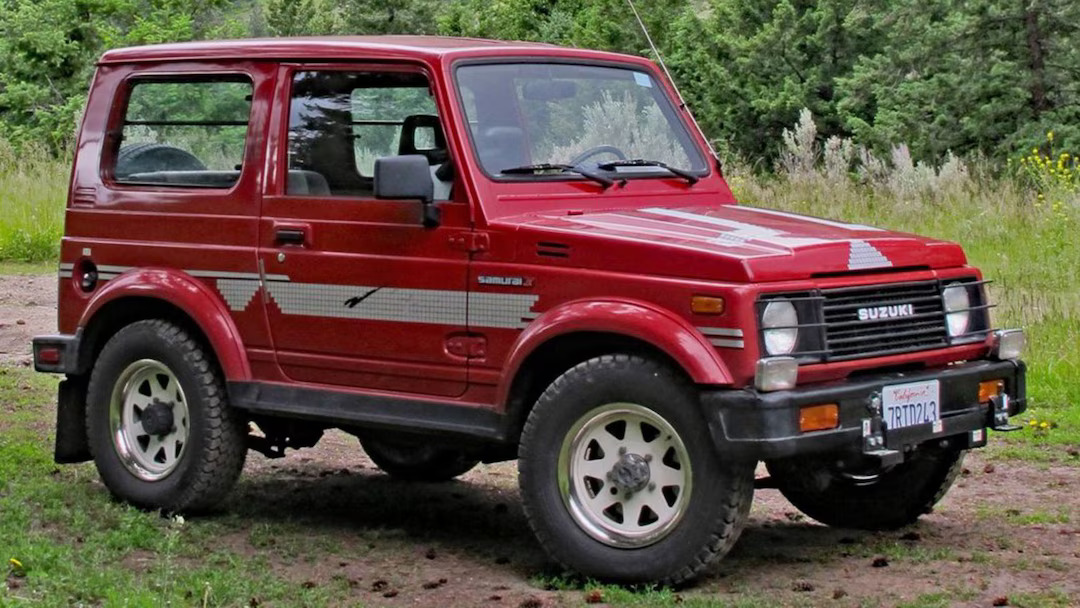
10. Suzuki Samurai
At first glance, the Suzuki Samurai might seem like an odd entry on a list filled with premium and full-size classic SUVs, but make no mistake, this compact 4×4 has earned its place among the most aggressively chased vehicles at classic car auctions. Introduced to the U.S. in the mid-1980s, the Samurai was inexpensive, lightweight, and surprisingly capable off-road.
Over the years, it developed a cult following among off-roaders, overlanders, and import enthusiasts alike. Now that clean, unmodified examples are becoming increasingly rare, dealers are getting in on the action and snapping them up wherever they appear.
The main appeal of the Samurai lies in its simplicity. With a curb weight of just over 2,000 pounds and solid axles front and rear, it’s the embodiment of basic, mechanical off-road capability. It’s also easy to work on and incredibly modifiable, which has helped it remain relevant in off-road circles even decades after production ended.
Dealers have recognized the growing demand, particularly from younger buyers looking for an affordable entry into classic 4×4 ownership. For those priced out of Broncos and Blazers, the Samurai offers a fun, capable alternative that’s still within reach, at least for now.
Another reason for the growing dealer interest is the nostalgia factor. The Samurai is a product of the 1980s in both form and function. Its boxy shape, quirky proportions, and pop-culture history (including a Consumer Reports controversy) give it a kind of outsider cool that many newer vehicles lack.
Clean Samurais with original paint and interiors are extremely hard to find, and when they come to auction, the bidding is fierce. Dealers understand that buyers are willing to pay a premium for originality, especially in vehicles that were often used and abused.
There’s also a strong export and import market around the Samurai. Internationally, it’s known under different names, such as the Suzuki Jimny, and it continues to enjoy popularity across Asia, South America, and Europe. Dealers with international reach often scout auctions specifically for Samurai that they can either import or export, depending on local market conditions.
