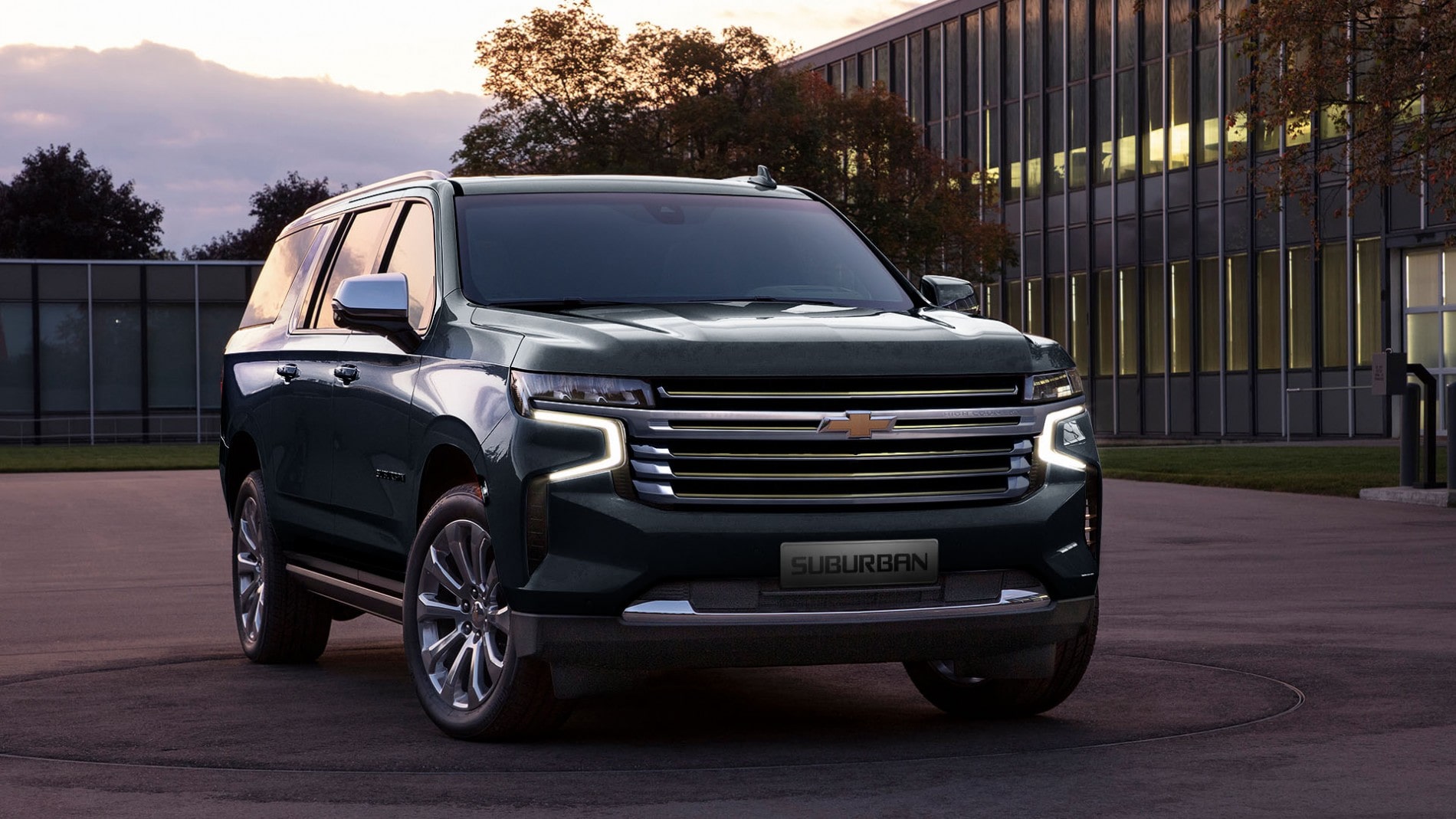
City driving and vehicle size have always been in quiet conflict, but nowhere is that tension more obvious than in older American cities like Philadelphia.
Built long before modern traffic demands and oversized vehicles, many of its neighborhoods feature narrow streets, tight parking spots, and sharp corners that challenge even experienced drivers.
Choosing the right vehicle here is not just about preference but practicality, as the wrong size can quickly turn daily driving into a stressful routine.
On one end of the spectrum are city subcompacts. These vehicles are designed with efficiency, maneuverability, and space-saving proportions in mind.
They slip into parking spaces others would pass by, navigate congested blocks with ease, and often provide better fuel economy for stop-and-go urban traffic. For many Philadelphia residents, these cars are not just convenient but essential tools for daily life.
On the opposite end are large SUVs. While they offer commanding road presence, spacious interiors, and strong performance, they often feel out of place in tightly packed urban environments.
In neighborhoods with row houses and narrow alleys, their width and turning radius can become serious limitations. Parking them can require multiple attempts, and even then, the fit may feel forced.
This contrast creates a clear divide in how different vehicles function within the same city. Some are built to adapt to urban constraints, while others are better suited to open roads and suburban layouts. Understanding this difference helps drivers make smarter decisions based on their environment, not just their preferences.
This article explores both sides of that equation. First, it highlights five city-friendly subcompacts that thrive in Philadelphia’s streets. Then, it shifts focus to five large SUVs that struggle in those same conditions, explaining why size can sometimes work against convenience in dense urban settings.
Also Read: 5 Compact Cars Perfect for Traffic In New York City vs. 5 That Are a Nightmare to Park
5 City Subcompacts In Philadelphia
Philadelphia’s streets demand precision more than power. Tight parking, unpredictable traffic flow, and narrow lanes reward vehicles that are compact, agile, and easy to handle.
Subcompact cars naturally fit into this environment, offering a balance of practicality and efficiency that larger vehicles cannot replicate. They are not just smaller cars but smarter choices for dense city living.
These vehicles often feature short wheelbases, light steering, and excellent visibility, making them ideal for weaving through traffic or squeezing into tight curbside spaces. Their smaller footprints reduce the stress of urban driving, especially in older neighborhoods where space is limited and margins for error are thin.
Beyond maneuverability, subcompacts also offer economic advantages. Lower fuel consumption, reduced maintenance costs, and affordable pricing make them appealing for city dwellers who prioritize functionality over excess.
In a place like Philadelphia, where daily driving can be more about navigating constraints than enjoying open roads, these cars excel.
The following five subcompacts are particularly well-suited to this environment. Each one brings a different strength to the table, whether it is clever design, efficient performance, or driver-friendly features. They are chosen not just for their size, but for how effectively they adapt to the realities of city driving.
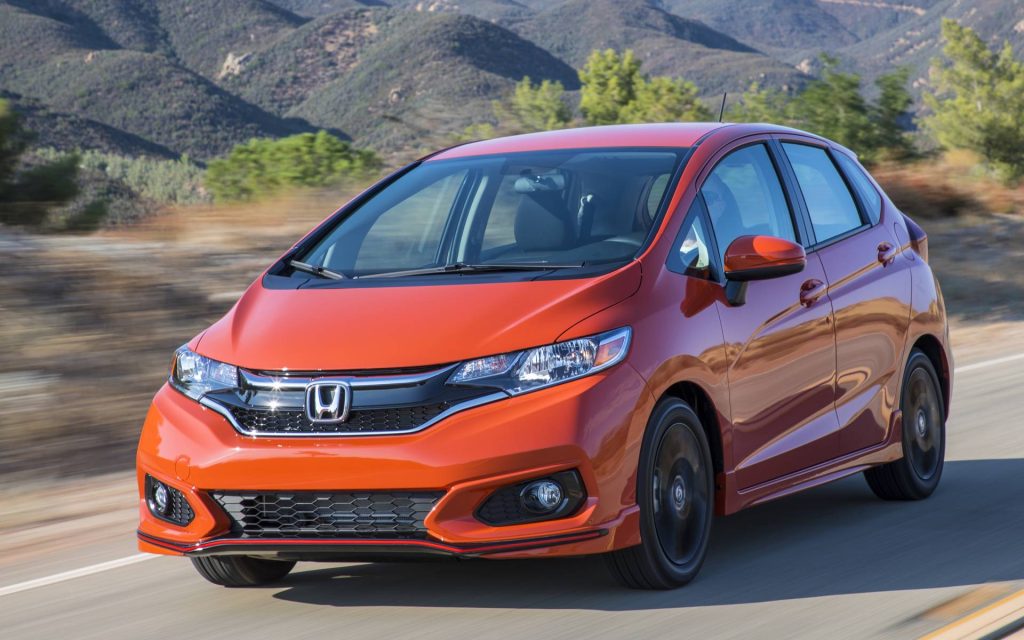
1. Honda Fit
The Honda Fit stands out as a vehicle that seems purpose-built for urban environments like Philadelphia. Its compact exterior dimensions make it easy to maneuver through tight streets, yet it surprises drivers with an interior that feels far more spacious than expected. This dual personality is one of the main reasons it earns a place on this list.
Unlike many cars that compromise interior usability for smaller size, the Fit uses a clever layout that maximizes every inch of space.
Its rear seating arrangement can be adjusted in multiple ways, allowing drivers to carry everything from groceries to larger items without needing a bigger vehicle. This flexibility becomes particularly valuable in a city where storage and convenience matter.
Driving the Fit through crowded neighborhoods feels natural rather than stressful. The steering is light, the turning radius is tight, and visibility is excellent from nearly every angle. These characteristics reduce the mental effort required to navigate busy streets or parallel park in tight spots.
Fuel efficiency also plays a role in its appeal. Stop-and-go traffic can quickly drain fuel in larger vehicles, but the Fit remains economical even under those conditions. This makes it not only practical but cost-effective for daily commuting.
This car is included because it represents what urban mobility should look like. It adapts to the city instead of fighting against it, offering drivers a sense of control and ease that larger vehicles struggle to provide.
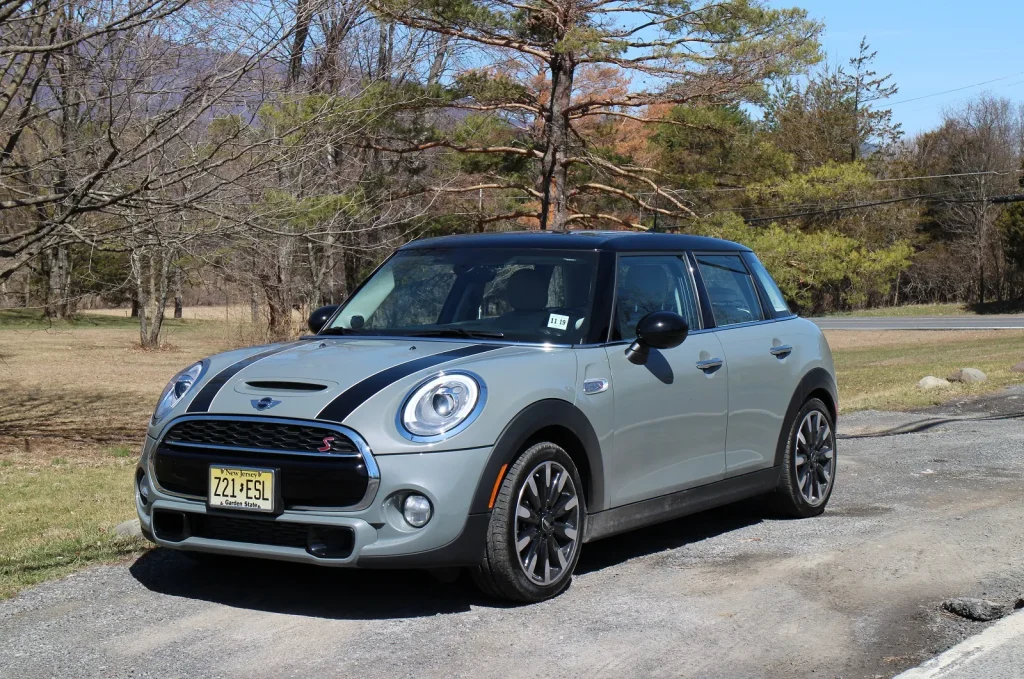
2. Mini Cooper Hardtop
There is a certain charm to the Mini Cooper Hardtop that goes beyond its recognizable design. While its styling often draws attention, its real strength lies in how well it handles dense city environments. In Philadelphia, where streets can feel cramped and unpredictable, this car feels almost tailor-made for the job.
One of the most noticeable traits is its compact footprint combined with responsive handling. The car reacts quickly to steering inputs, allowing drivers to make precise movements in tight situations. Whether navigating narrow alleys or fitting into a small parking space, the Mini Cooper makes the process feel controlled rather than chaotic.
Acceleration is another factor that works in its favor. City driving often requires quick bursts of speed to merge or navigate intersections, and this car delivers that responsiveness without feeling overwhelming. It provides just enough power to stay confident in traffic without sacrificing efficiency.
Inside, the layout is driver-focused, with controls positioned for easy access. While it may not offer the most spacious rear seating, it compensates with a cockpit that feels engaging and practical for daily use. For individuals or small households, this trade-off often makes sense.
This car is part of this list because it combines personality with practicality. It proves that a city-friendly vehicle does not have to be boring or purely utilitarian. Instead, it can bring a sense of enjoyment while still meeting the demands of tight urban spaces.
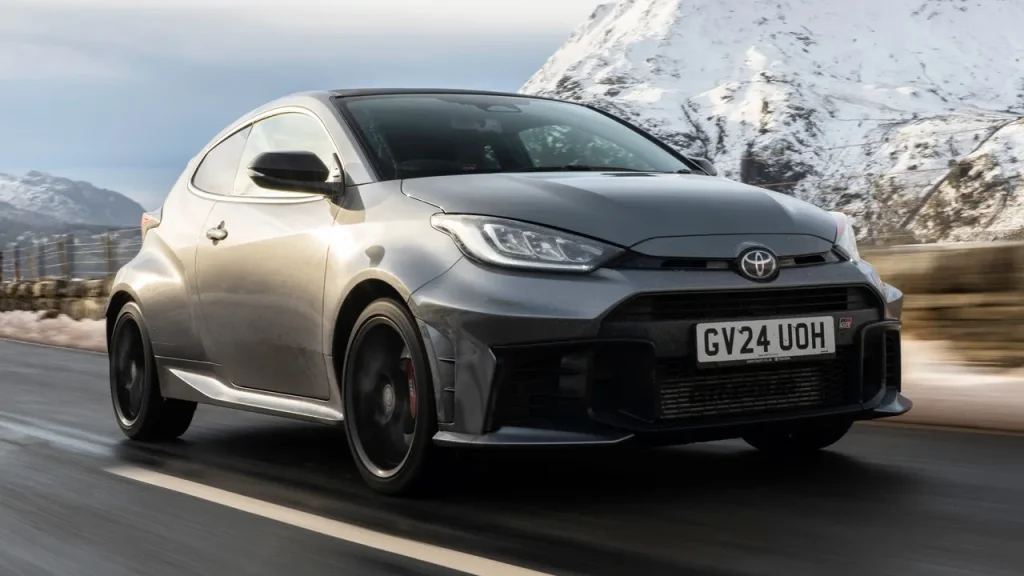
3. Toyota Yaris
The Toyota Yaris earns its place in this discussion by doing something many cars fail to achieve in urban settings. It keeps things simple, predictable, and easy to manage. In a city like Philadelphia, where driving conditions can change block by block, that kind of consistency becomes more valuable than flashy features or excessive power.
This is a car that does not demand attention from the driver. Instead, it quietly supports everyday tasks with a straightforward driving experience.
The compact size allows it to slip through tight gaps in traffic without hesitation, and parking becomes a far less intimidating task. Even in crowded neighborhoods where space is limited, the Yaris feels manageable.
Another important aspect is its durability in stop-and-go conditions. City driving can be hard on vehicles, with constant braking, accelerating, and idling.
The Yaris handles this environment with ease, offering a sense of reliability that reduces long-term ownership stress. It is the kind of car that feels dependable regardless of how chaotic the streets become.
Inside, the focus is clearly on function over luxury. Controls are simple, the layout is intuitive, and there is little to distract the driver from the task at hand. This minimalism works well in a city setting, where attention needs to remain on the road rather than on complex infotainment systems.
The reason for including the Yaris is its no-nonsense approach to urban mobility. It does not try to impress with unnecessary features. Instead, it delivers exactly what city drivers need, which is ease of use, reliability, and a size that fits the environment perfectly.
4. Kia Rio
The Kia Rio approaches city driving from a slightly different angle. While it maintains the compact dimensions expected of a subcompact, it adds a layer of refinement that makes daily commuting feel less like a chore and more like a smooth routine. This balance is what makes it particularly effective in a place like Philadelphia.
What stands out first is how composed the Rio feels on uneven city streets. Potholes, rough patches, and sudden surface changes are common in older urban areas, and this car handles them with a level of stability that reduces driver fatigue. It absorbs imperfections without making the ride feel harsh or unsettled.
Its size still plays a crucial role. The Rio is small enough to navigate narrow streets confidently, yet it does not feel cramped from the driver’s seat. This creates a sense of comfort that encourages longer drives without discomfort. Visibility is also well managed, helping drivers stay aware of their surroundings in busy traffic conditions.
Technology inside the cabin is integrated in a way that supports rather than overwhelms. Features are easy to access, and the interface remains user-friendly. For city drivers who rely on navigation and connectivity, this adds convenience without unnecessary complexity.
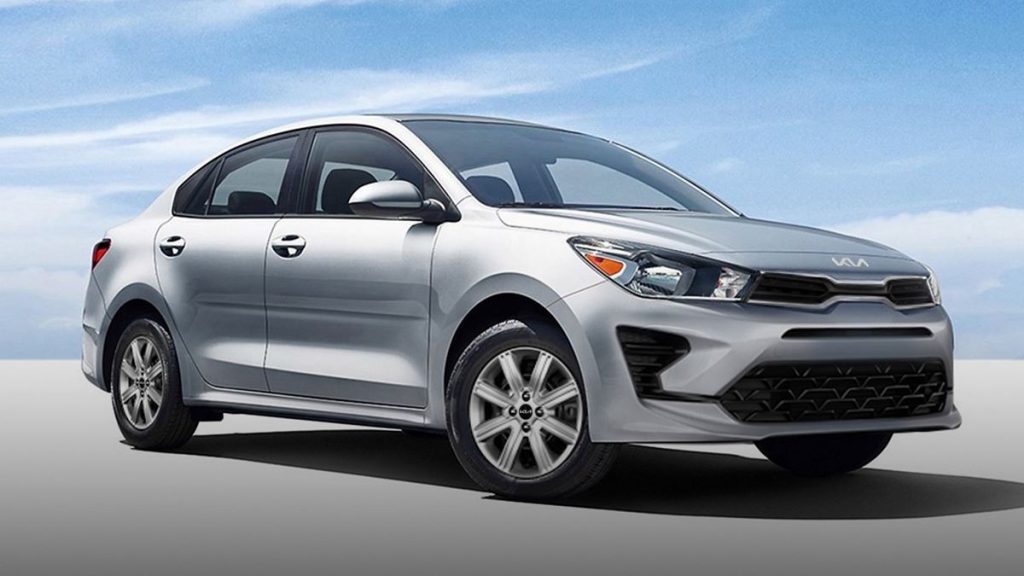
The Rio is included because it shows how a subcompact can offer more than just practicality. It brings a sense of refinement to urban driving while still respecting the limitations of city spaces. It proves that small cars can feel complete without needing to grow in size.
5. Chevrolet Spark
The Chevrolet Spark represents the most compact end of the urban driving spectrum, and that is precisely why it fits so well into Philadelphia’s tight and often unforgiving street layout. This is not a car that tries to balance between city and highway comfort. Instead, it fully embraces its role as a true city specialist.
Its extremely small footprint changes the way drivers approach everyday situations. Parking, which can be a daily frustration in dense neighborhoods, becomes almost effortless. Spaces that would be dismissed by larger vehicles suddenly become viable options. This alone can save time and reduce the stress that often comes with urban living.
Maneuverability is where the Spark truly shines. It feels light on its feet, responding quickly to steering inputs and making sharp turns without hesitation.
In narrow streets or crowded intersections, this agility gives drivers a level of confidence that larger cars simply cannot match. It feels less like navigating obstacles and more like flowing through them.
Another factor worth considering is its affordability, both in terms of purchase price and running costs. City drivers often prioritize practicality, and the Spark aligns perfectly with that mindset. Fuel efficiency remains strong in stop-and-go traffic, and maintenance costs are generally lower compared to larger, more complex vehicles.
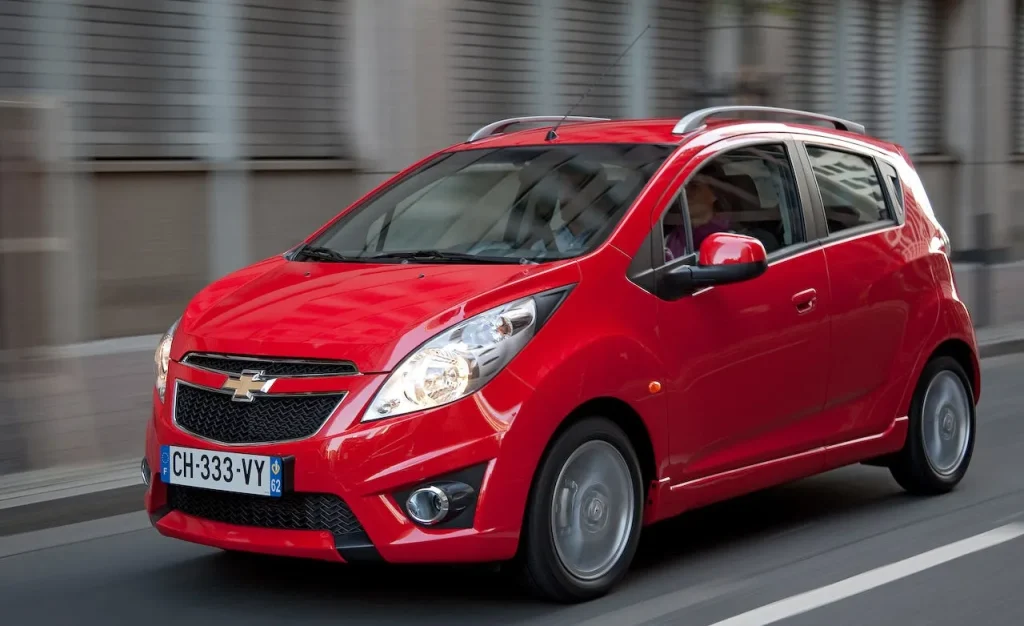
The interior does not aim for luxury, but it delivers what is necessary for daily use. The controls are straightforward, and the compact cabin reinforces the idea that this car is designed for efficiency rather than excess. For short commutes and frequent errands, it performs its role effectively.
This car is included because it fully commits to the idea of urban mobility. It does not try to be everything at once. Instead, it focuses on what matters most in a city like Philadelphia, which is ease, simplicity, and the ability to fit where others cannot.
5 Large SUVs That Won’t Fit Narrow Streets
Large SUVs are often marketed as the ultimate all-purpose vehicles, capable of handling families, cargo, and long-distance travel with ease. However, their strengths begin to fade when placed in environments that were never designed for their size. Philadelphia’s narrow streets, tight corners, and limited parking spaces highlight these limitations clearly.
Unlike open highways or suburban roads, city streets demand precision. Large SUVs, with their wide bodies and long wheelbases, often struggle to adapt.
Turning in tight spaces can require multiple adjustments, and even simple maneuvers like parallel parking can become time-consuming challenges. In some cases, drivers may avoid certain streets altogether due to space constraints.
Visibility can also become an issue. While these vehicles offer a higher driving position, their size can make it harder to judge distances in confined spaces. This creates added pressure on the driver, especially in areas where there is little room for error.
Another important consideration is how these vehicles interact with the surrounding environment. Narrow streets lined with parked cars leave minimal clearance, and larger SUVs can feel oversized to the point of being impractical. The experience often shifts from convenience to constant caution.
The following five SUVs highlight this contrast. Each one is capable and impressive in the right setting, but when placed in tight urban conditions, their size becomes a disadvantage. They serve as examples of how a vehicle designed for space and power can struggle when space itself is limited.
1. Chevrolet Suburban
The Chevrolet Suburban is often seen as a symbol of space and capability, but in a city like Philadelphia, those very qualities can work against it. Its sheer size makes it one of the most challenging vehicles to manage in tight urban environments, where every inch of space matters.
Driving the Suburban through narrow streets quickly reveals its limitations. The width alone can make lanes feel smaller than they already are, and passing parked cars requires careful judgment. There is little margin for error, and even experienced drivers may find themselves slowing down more than expected to avoid close calls.
Turning is another area where the Suburban struggles. Its long wheelbase reduces its ability to make sharp turns, which can be problematic in older neighborhoods with tight intersections. What might be a simple turn for a smaller car can become a multi-step maneuver in this SUV.
Parking presents perhaps the biggest challenge. Finding a space large enough is only part of the problem. Even when a spot is available, positioning such a large vehicle within tight boundaries can take time and patience. In areas where parking is already limited, this becomes a significant inconvenience.
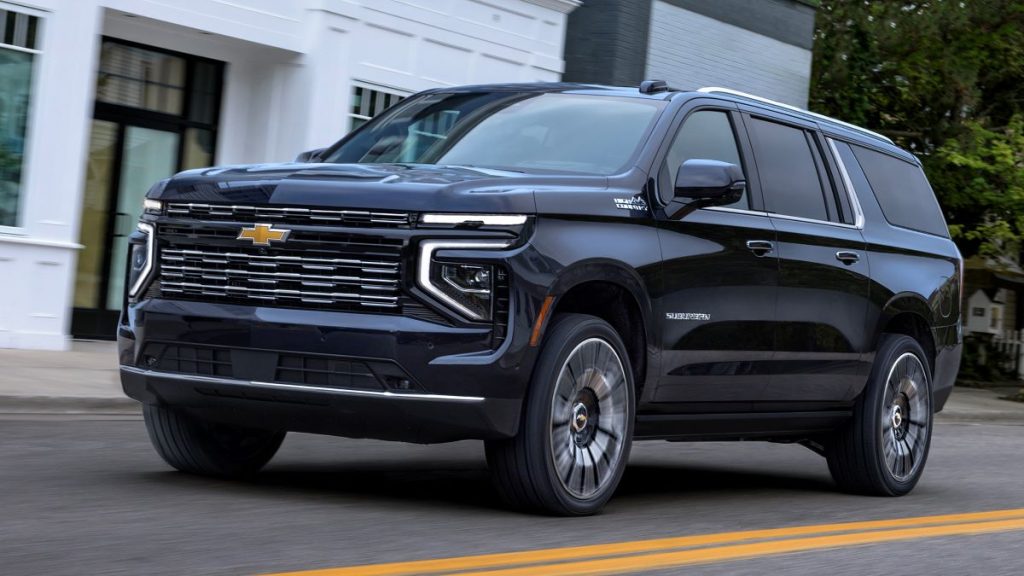
Despite these challenges, the Suburban is not a poorly designed vehicle. It excels in environments where space is abundant and long-distance comfort is a priority. However, it is included here to illustrate how a vehicle that performs exceptionally well in one setting can feel out of place in another.
2. Ford Expedition
The Ford Expedition presents itself as a vehicle built for scale, and it delivers on that promise in environments where space is not a constraint. However, Philadelphia’s tightly packed streets expose the challenges that come with such a large footprint. What feels commanding on a highway can feel overwhelming in a narrow urban setting.
One of the first things drivers notice is how much attention the vehicle demands. The width of the Expedition means constant awareness of both sides of the road, especially when navigating streets lined with parked cars. Even a slight miscalculation can bring the vehicle uncomfortably close to obstacles, which adds a layer of stress to everyday driving.
Its height and bulk also influence how it interacts with the flow of traffic. While the elevated driving position offers a broad view ahead, it does not necessarily translate to better maneuverability in confined spaces. Instead, the size can make quick adjustments more difficult, particularly in areas where traffic patterns shift suddenly.
Parking the Expedition is rarely a simple task in dense neighborhoods. It often requires searching for larger spaces that may not be readily available. When a suitable spot is found, aligning the vehicle within tight boundaries can take multiple attempts, especially on streets where space is already limited.
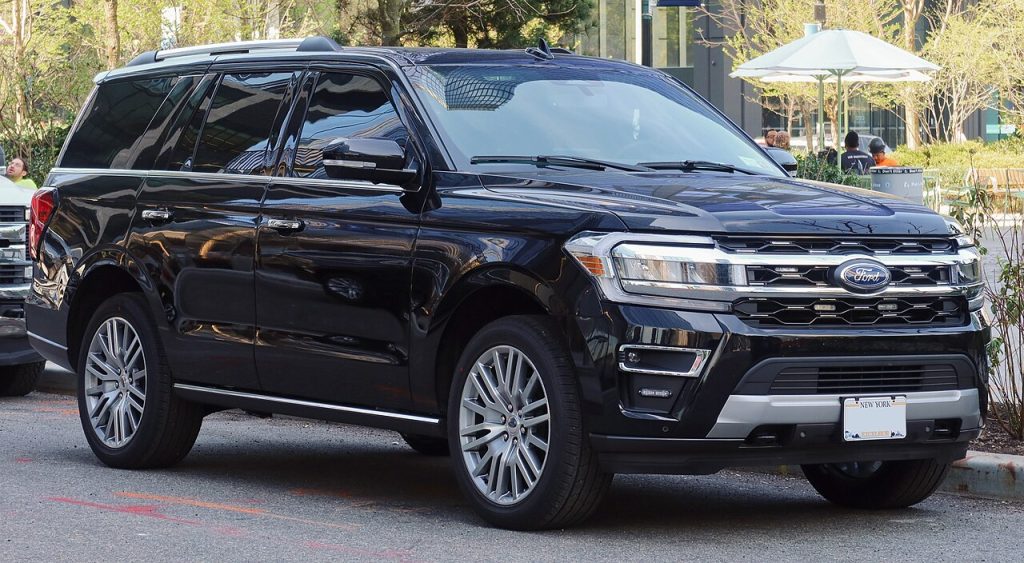
This SUV is included because it highlights how excess size can reduce practicality in a city environment. The Expedition is capable, comfortable, and powerful, but those strengths do not translate well to narrow streets. It serves as a reminder that bigger is not always better when space itself is the primary challenge.
3. Cadillac Escalade
The Cadillac Escalade brings a different kind of presence to the road, one defined by luxury and visual impact. While it excels in offering a premium experience, its size and proportions make it difficult to manage in Philadelphia’s older and more confined street layouts.
Driving the Escalade through tight city blocks feels less like a casual commute and more like a careful operation. The vehicle’s wide stance can dominate narrow lanes, leaving little room for error when passing other cars or navigating close quarters. This constant need for precision can make even short trips feel demanding.
Another factor is its length, which affects how the vehicle handles turns and corners. In neighborhoods with sharp intersections, the Escalade may require wider turns, sometimes encroaching on adjacent lanes. This can disrupt the natural flow of traffic and increase the complexity of simple maneuvers.
The luxury features inside the vehicle, while impressive, do not necessarily offset these challenges in an urban environment. While drivers enjoy comfort and advanced technology, they must still contend with the physical limitations imposed by the vehicle’s size. This contrast becomes more noticeable in areas where space is limited.
Parking is where the Escalade’s drawbacks become most apparent. Its dimensions make it difficult to fit into standard city parking spots, and even when it does fit, the clearance can be minimal. This often leads to increased time spent searching for suitable parking options.
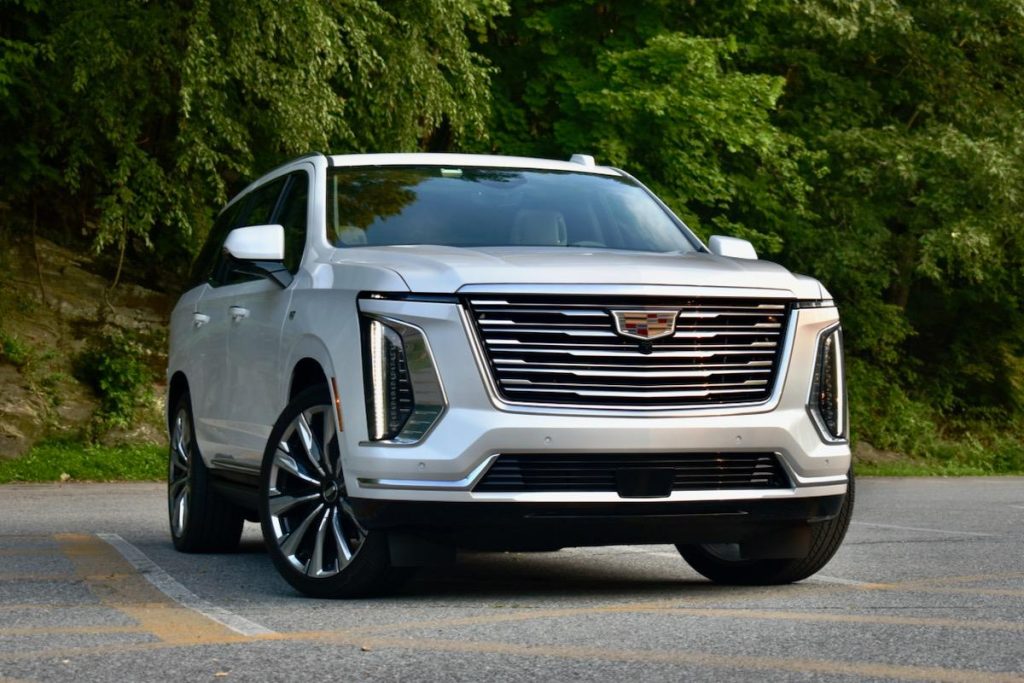
The Escalade is included because it demonstrates how luxury and size can conflict with urban practicality. It offers an exceptional driving experience in the right conditions, but in narrow city streets, its scale becomes a clear disadvantage.
4. Toyota Sequoia
The Toyota Sequoia approaches the large SUV category with a focus on durability and long-term dependability. It is a vehicle built to handle demanding conditions, whether that involves towing, carrying passengers, or covering long distances.
However, when placed in Philadelphia’s tightly structured streets, its strengths begin to feel mismatched with the environment.
One of the defining characteristics of the Sequoia is its solid and substantial build. While this contributes to a sense of security on open roads, it becomes a challenge in confined urban spaces. The vehicle occupies a significant portion of the lane, leaving little room for adjustments when navigating through areas lined with parked cars on both sides.
Its turning behavior also reflects its size. The Sequoia is not designed for sharp, quick directional changes, which are often necessary in older city layouts.
Drivers may find themselves slowing down considerably at intersections, carefully calculating each move to avoid tight curbs or nearby vehicles. This disrupts the natural rhythm of city driving, where efficiency and flow are key.
Another element that stands out is how the vehicle feels in stop-and-go traffic. The bulk of the Sequoia can make frequent braking and acceleration feel more pronounced, adding to driver fatigue over time. In a setting where traffic congestion is common, this can reduce overall comfort despite the vehicle’s otherwise capable design.
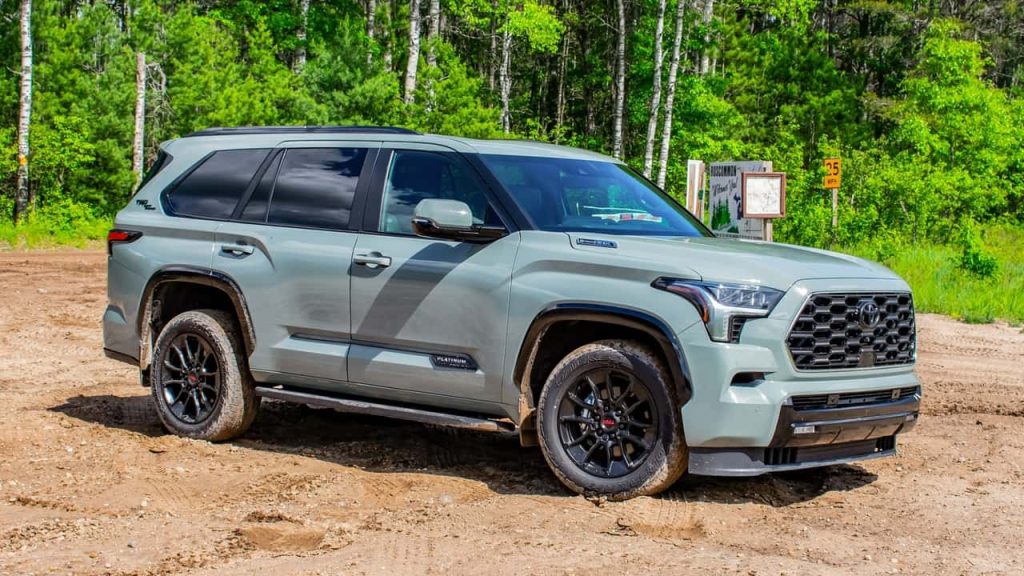
Parking, once again, becomes a test of patience. The Sequoia requires more space than what is typically available in dense neighborhoods, and even when a spot is found, maneuvering into it can be a slow and careful process.
This SUV is included to emphasize how a vehicle engineered for strength and reliability can struggle when space becomes the primary limitation. It excels in the right context, but Philadelphia’s narrow streets are not that context.
5. Jeep Wagoneer
The Jeep Wagoneer represents a modern interpretation of full-size SUV design, combining upscale features with a commanding road presence. It is intended to deliver comfort and capability in equal measure, but its size introduces clear challenges when navigating the confined streets of Philadelphia.
Unlike some large SUVs that feel purely utilitarian, the Wagoneer adds a layer of refinement that enhances long-distance driving. However, in an urban setting, its dimensions quickly become the dominant factor. The width and length make it difficult to move through narrow corridors without constant adjustments, especially in areas where space is already limited.
What makes the Wagoneer particularly challenging is how it blends size with expectations of ease. Drivers may anticipate a smooth and effortless experience, but the reality of tight streets and limited parking can create a disconnect. Maneuvering through dense neighborhoods requires more attention and patience than the vehicle’s design might suggest.
Its presence on the road can also influence how other drivers react. In narrow streets, where space must be shared carefully, a vehicle of this size can unintentionally disrupt the flow of traffic. Other drivers may need to adjust their position or speed, adding to the overall complexity of the driving environment.
Parking remains one of the most difficult aspects. The Wagoneer demands space that is often unavailable in older parts of the city. Even when a suitable spot is found, aligning the vehicle within tight boundaries can feel like a precise operation rather than a routine task.
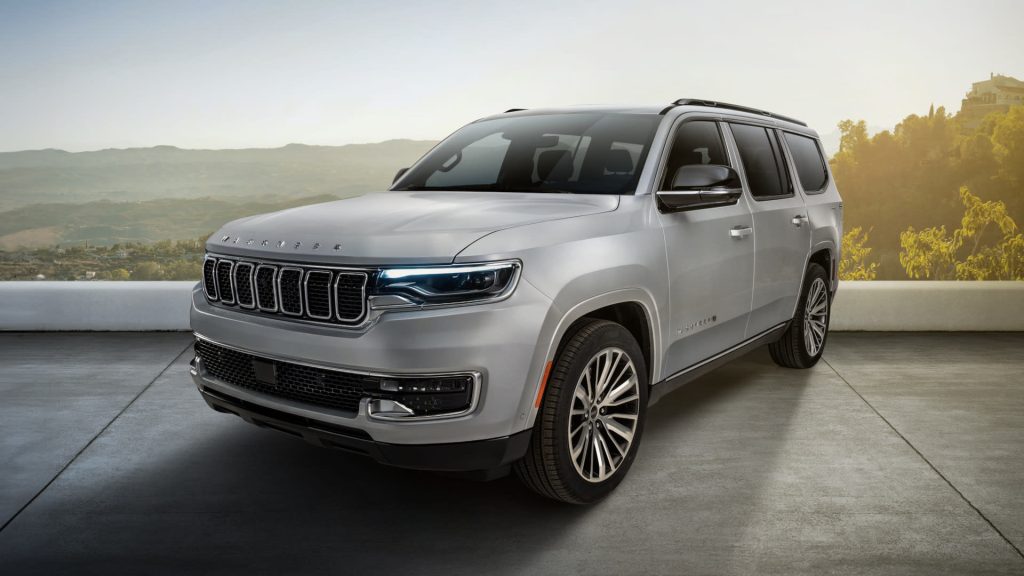
The Wagoneer is included as a final example of how modern full-size SUVs, despite their advancements, still face the same fundamental challenge in dense urban settings. Size, no matter how refined, cannot overcome the limitations of narrow streets.
Philadelphia’s narrow streets highlight a clear divide between vehicle types. Subcompact cars like the Honda Fit, Mini Cooper, Toyota Yaris, Kia Rio, and Chevrolet Spark excel due to their small size, agility, and ease of parking. They reduce stress and adapt naturally to tight urban conditions.
In contrast, large SUVs such as the Chevrolet Suburban, Ford Expedition, Cadillac Escalade, Toyota Sequoia, and Jeep Wagoneer struggle with width, turning radius, and parking limitations.
While powerful and spacious, they feel impractical in dense city environments, proving that in places like Philadelphia, smaller vehicles offer far greater everyday usability and convenience.
Also Read: 5 Rain-Ready Hatchbacks In Seattle vs. 5 RWD Sports Cars That Are Dangerous