
Seattle is a city where weather is not just a backdrop, it is an active force that shapes how people drive every single day. Rain is not occasional here, it is a constant companion that turns roads slick, reduces visibility, and demands a level of caution that drivers in drier climates may never fully understand.
In such conditions, the type of car you choose is not simply about style or performance. It becomes a decision that directly impacts safety, comfort, and confidence behind the wheel.
Hatchbacks have long been a natural fit for environments like Seattle. Their compact size makes them easy to maneuver through tight urban streets, while their practical design ensures they remain useful for daily life.
More importantly, many modern hatchbacks are engineered with stability, traction, and predictable handling in mind. These traits become invaluable when rain-soaked roads challenge even experienced drivers. A well-suited hatchback does not just get you through traffic, it helps you feel in control despite the conditions.
On the opposite side are rear-wheel-drive sports cars, which often prioritize performance and driving excitement above all else. While they can be thrilling in dry conditions, their characteristics can quickly become problematic in wet weather.
Sudden throttle inputs, reduced traction at the rear wheels, and a tendency to oversteer can make them difficult to manage on slippery roads. What feels engaging on a sunny day can feel unpredictable when rain enters the equation.
This contrast sets the stage for a deeper look at two very different categories of vehicles. First, we will explore hatchbacks that are particularly well-suited for Seattle’s rainy environment, focusing on how they provide stability and ease of use.
Then, we will examine rear-wheel-drive sports cars that may pose challenges in wet conditions, explaining why their design can work against them in this specific setting.
Also Read: 10 Reasons Why Your Steering Wheel May Shake at Sustained Highway Speeds
5 Rain-Ready Hatchbacks In Seattle
Driving in Seattle requires more than just basic competence. It calls for a vehicle that can respond calmly and predictably to constantly changing road conditions.
Rain reduces grip, increases stopping distances, and makes sudden maneuvers riskier. In this environment, a good hatchback is one that prioritizes balance, control, and driver confidence above all else.
What makes hatchbacks particularly effective here is their combination of size and engineering. They are small enough to navigate crowded streets and tight parking spaces, yet advanced enough to include features that enhance traction and stability.
Many also come with front-wheel drive or all-wheel drive systems that provide better grip on wet surfaces, reducing the likelihood of wheel slip.
Another advantage lies in their everyday usability. Seattle drivers often deal with a mix of urban commuting and short highway stretches, sometimes within the same trip.
A hatchback that can transition smoothly between these conditions without feeling unsettled becomes a valuable asset. Add to that the practicality of cargo space and efficient fuel usage, and the appeal becomes even clearer.
The following vehicles have been selected not just for their specifications, but for how they perform in real-world rainy conditions. Each one offers a distinct approach to handling wet roads, ensuring that this list reflects a variety of strengths rather than a single formula.
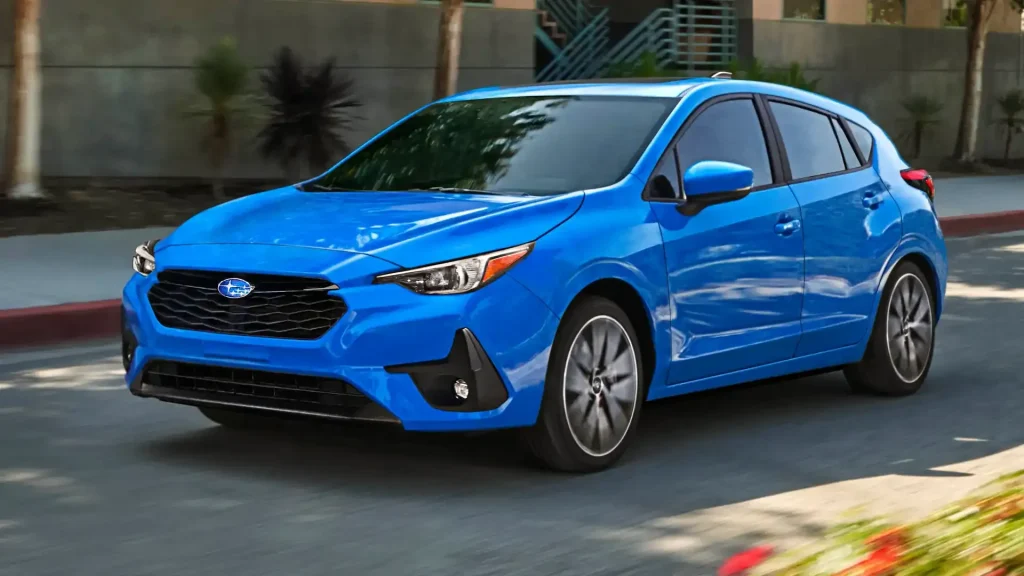
1. Subaru Impreza Hatchback
The Subaru Impreza Hatchback approaches wet-weather driving with a sense of assurance that feels almost instinctive.
It does not rely on the driver to constantly correct its behavior, instead offering a level of grip and balance that makes slippery roads feel less intimidating. This is largely due to its standard all-wheel drive system, which continuously distributes power in a way that maximizes traction.
In Seattle’s rain-heavy environment, that traction becomes more than just a feature. It transforms the overall driving experience.
When roads are coated in water and oil residue, the Impreza maintains a planted feel that inspires confidence. You are less likely to experience sudden loss of grip, and more likely to feel in control even when conditions are less than ideal.
The car also benefits from a low center of gravity, which contributes to its stability. This becomes particularly noticeable when taking turns on wet roads, where body movement can affect how a vehicle responds. The Impreza remains composed, allowing the driver to maintain a consistent line without overcompensating.
Another strength lies in its predictability. The steering, braking, and acceleration all feel linear, which is exactly what you want in challenging conditions. There are no sudden surprises or exaggerated responses, just a steady, reliable connection between driver and machine.
This is why the Impreza Hatchback earns its place on this list. It is not about excitement or flair, it is about providing a dependable, confidence-inspiring drive in an environment where those qualities matter most.
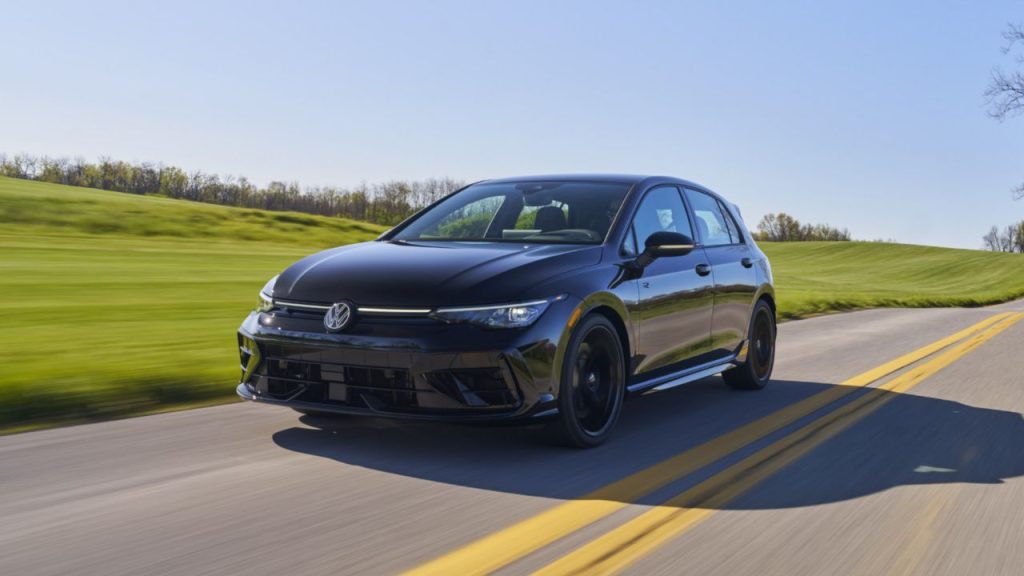
2. Volkswagen Golf
The Volkswagen Golf takes a more refined approach to handling wet conditions, focusing on precision and control rather than outright grip. It may not come standard with all-wheel drive in every version, but its engineering ensures that it remains composed and predictable even on rain-soaked roads.
One of the defining characteristics of the Golf is its balanced chassis. In wet conditions, balance becomes crucial because it determines how the car reacts to changes in speed and direction. The Golf manages this with a level of finesse that makes it feel stable without being overly rigid. It absorbs road imperfections while maintaining a clear sense of control.
Its steering system also plays a significant role. The feedback is precise, allowing the driver to make small adjustments with confidence. This is particularly useful in Seattle, where lane markings can become harder to see in heavy rain, and subtle corrections are often necessary to stay aligned.
Braking performance is another area where the Golf stands out. The system is tuned to deliver consistent stopping power without abruptness, which helps maintain stability when slowing down on wet surfaces. This reduces the risk of unsettling the car during sudden stops.
The reason for including the Golf is its ability to combine refinement with practicality. It does not overwhelm the driver with complexity, nor does it demand constant attention to stay under control. Instead, it offers a composed, confidence-building experience that fits perfectly with the demands of rainy urban driving.
3. Mazda3 Hatchback
The Mazda3 Hatchback approaches rainy driving with a philosophy that blends driver engagement with controlled restraint. It does not isolate you completely from the road, nor does it overwhelm you with raw feedback. Instead, it creates a measured connection that becomes particularly valuable when surfaces are slick and unpredictable.
What stands out first is how naturally the car communicates grip levels. In wet conditions, this awareness allows the driver to sense when traction is beginning to fade, rather than being caught off guard.
The Mazda3 does not wait for things to go wrong before responding. It gives subtle cues through the steering and chassis, helping you adjust your inputs before a situation escalates.
Unlike some hatchbacks that prioritize softness, the Mazda3 leans into a slightly firmer, more controlled ride. This characteristic pays off in the rain because it reduces excessive body movement. When the car stays composed, the driver feels more confident making directional changes, even on roads where water buildup can disrupt stability.
Another aspect worth noting is its available all-wheel drive system. While not always necessary, it adds an extra layer of reassurance during heavier rain or when road conditions worsen unexpectedly. The system works quietly in the background, distributing power in a way that enhances grip without making the driving experience feel artificial.
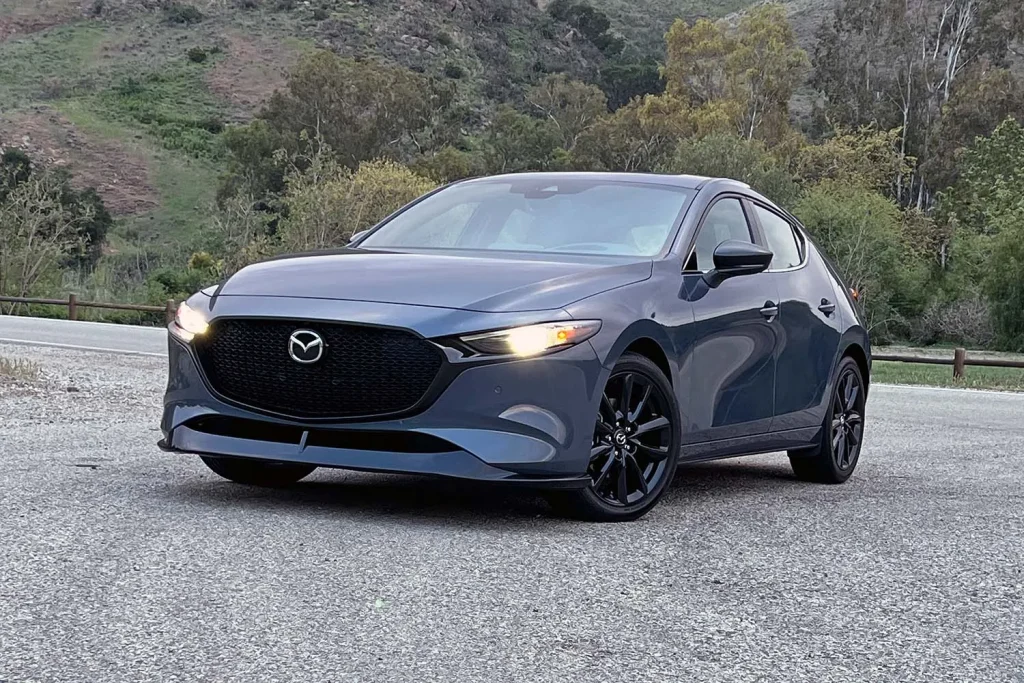
The reason this car earns a place here is its ability to strike a balance between involvement and security. It allows the driver to feel connected without sacrificing control, which is exactly what you want when navigating Seattle’s consistently wet streets.
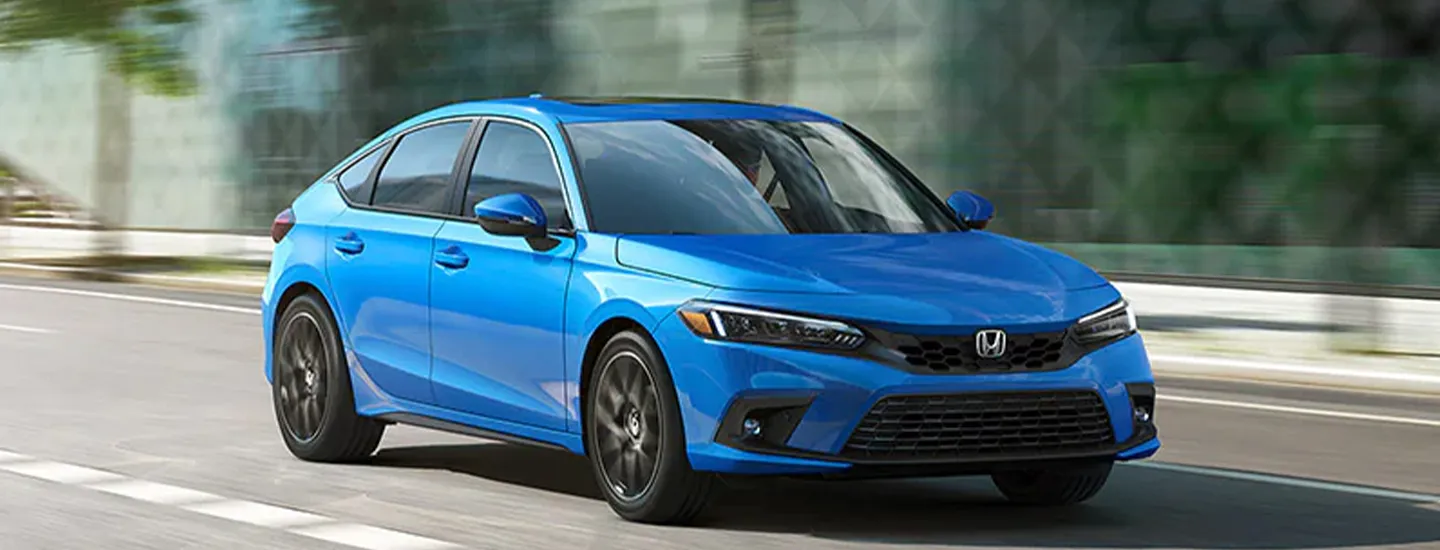
4. Honda Civic Hatchback
The Honda Civic Hatchback takes a different route by focusing on adaptability and ease of use. It does not try to impress with a single defining feature. Instead, it delivers a combination of traits that work together to create a dependable experience in rainy conditions.
One of its strongest qualities is how forgiving it feels. Not every driver reacts perfectly to wet roads, and the Civic seems designed with that reality in mind.
Its responses are gradual and easy to manage, which helps reduce the likelihood of overcorrection. In a city like Seattle, where conditions can change mid-drive, that forgiveness becomes a valuable safety net.
The Civic’s front-wheel drive layout also contributes to its stability. By placing power through the front wheels, it maintains better traction during acceleration on wet surfaces. This setup naturally resists the kind of rear-end instability that can occur in less suitable drivetrains, making it a practical choice for daily commuting.
Visibility is another area where the Civic quietly excels. Its design provides a clear view of the road and surroundings, which is crucial when rain reduces clarity. Being able to see more confidently allows the driver to anticipate changes in traffic and road conditions, rather than reacting at the last moment.
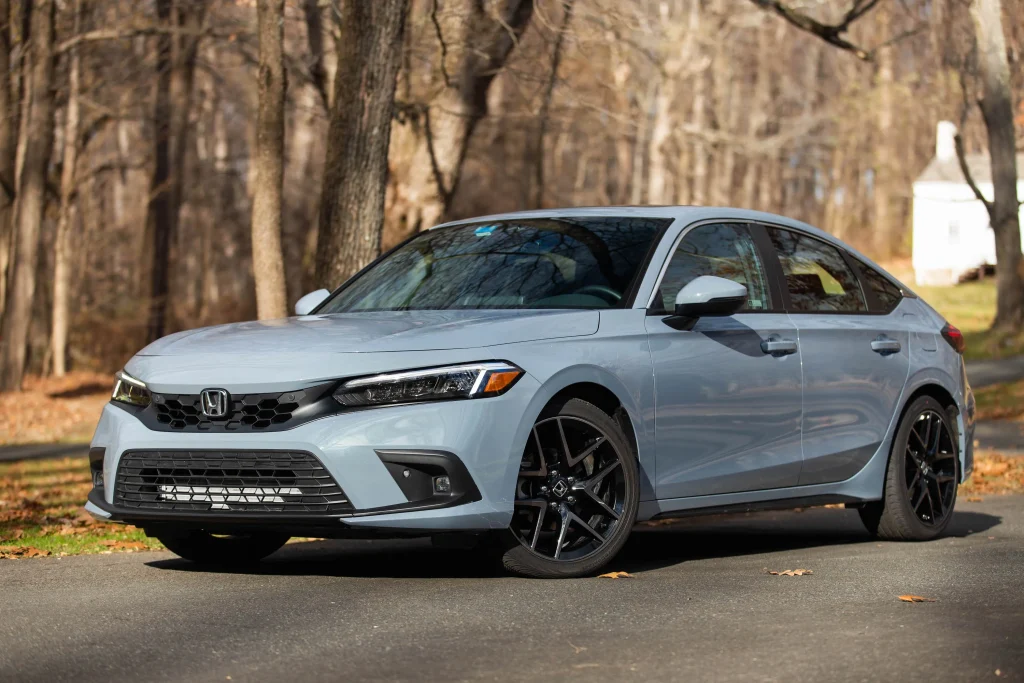
This car is included not because it pushes boundaries, but because it simplifies the driving experience. It reduces the number of variables a driver needs to manage, which is exactly what makes it effective in a challenging environment like Seattle’s rainy stre
5. Toyota Corolla Hatchback
The Toyota Corolla Hatchback closes out this list with an approach that emphasizes consistency above all else. It does not attempt to redefine how a hatchback should behave in the rain. Instead, it refines the fundamentals to a point where the car feels dependable regardless of how unpredictable the weather becomes.
In Seattle, where rain can vary from light drizzle to heavy downpour within the same commute, that consistency becomes a defining strength.
The Corolla Hatchback maintains a stable, predictable demeanor that does not change dramatically with road conditions. This allows the driver to develop trust in how the car will respond, which is essential when traction is limited.
The vehicle’s compact dimensions also play a subtle but important role. Narrow streets, tight parking spaces, and congested traffic are all part of the Seattle driving experience. The Corolla Hatchback navigates these situations with ease, reducing the mental effort required to position the car accurately in wet conditions where precision matters more.
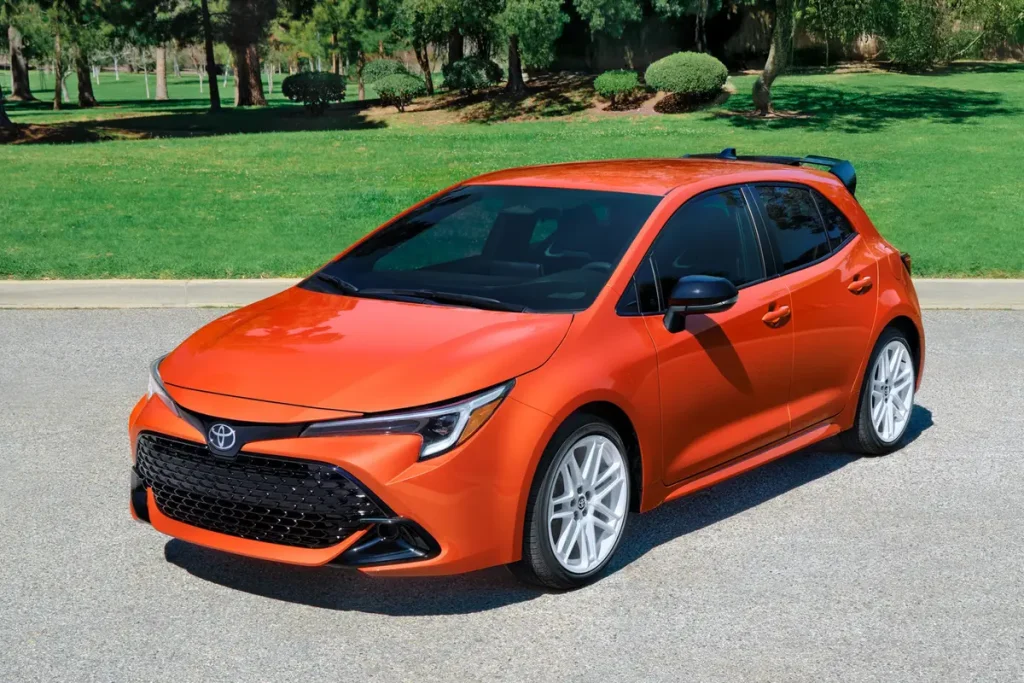
Another advantage lies in how smoothly it delivers power. The acceleration is controlled and progressive, avoiding sudden surges that could disrupt traction. This makes it easier to maintain stability when pulling away from stops or merging into traffic on rain-slick roads.
The reason this car completes the hatchback list is because it represents a kind of reliability that goes beyond mechanical dependability. It offers behavioral consistency, which is arguably even more important in challenging weather.
For drivers dealing with Seattle’s rain on a daily basis, that steady, predictable nature can make every commute feel more manageable.
5 RWD Sports Cars That Are Dangerous
Rear-wheel-drive sports cars are often celebrated for their dynamic handling and engaging driving experience. They are designed to deliver power to the rear wheels, allowing for sharper cornering and a more connected feel on dry roads.
However, these same characteristics can become problematic when the surface beneath them is wet and unpredictable.
Rain introduces a layer of complexity that changes how these vehicles behave. With reduced traction at the rear wheels, it becomes easier for the car to lose stability during acceleration or cornering.
This can lead to oversteer, where the rear of the car steps out unexpectedly. For experienced drivers, this might be manageable, but for everyday commuting, it introduces unnecessary risk.
Another issue is how these cars often encourage aggressive driving inputs. Sensitive throttle response and performance-oriented tuning can make it difficult to maintain smooth, controlled movements in wet conditions. Even small mistakes can be amplified, turning minor slips into larger corrections that demand quick reactions.
It is also important to consider the psychological factor. Driving a high-performance sports car can create a sense of confidence that may not align with the realities of a rain-soaked road. This mismatch between perception and actual grip can catch drivers off guard, especially in environments like Seattle where conditions change frequently.
The following vehicles are not inherently flawed. In the right conditions, they offer exceptional driving experiences. However, in wet, everyday commuting scenarios, their characteristics can work against the driver, making them less suitable and, in some cases, genuinely risky choices.
1. BMW M4
The BMW M4 is a machine that thrives on precision and power, delivering a driving experience that feels sharp and responsive in ideal conditions. It is engineered to reward confident inputs and skilled handling, but those same traits can become challenging when the road is wet and grip is reduced.
In rainy conditions, the M4’s rear-wheel-drive layout places a significant amount of responsibility on the driver.
The engine produces strong, immediate power, and when that power is sent to the rear wheels on a slippery surface, maintaining traction becomes a delicate task. Even a slight misjudgment in throttle input can lead to the rear stepping out.
The car’s performance-oriented tuning also plays a role. Everything from the suspension to the steering is designed for responsiveness, which can make the vehicle feel less forgiving when conditions are less than ideal. Instead of smoothing out driver inputs, it amplifies them, requiring a higher level of attention and control.
Another factor is how quickly situations can escalate. In a car like the M4, loss of traction can happen rapidly, leaving little time to react. This is particularly concerning in urban environments where space is limited and traffic is unpredictable.
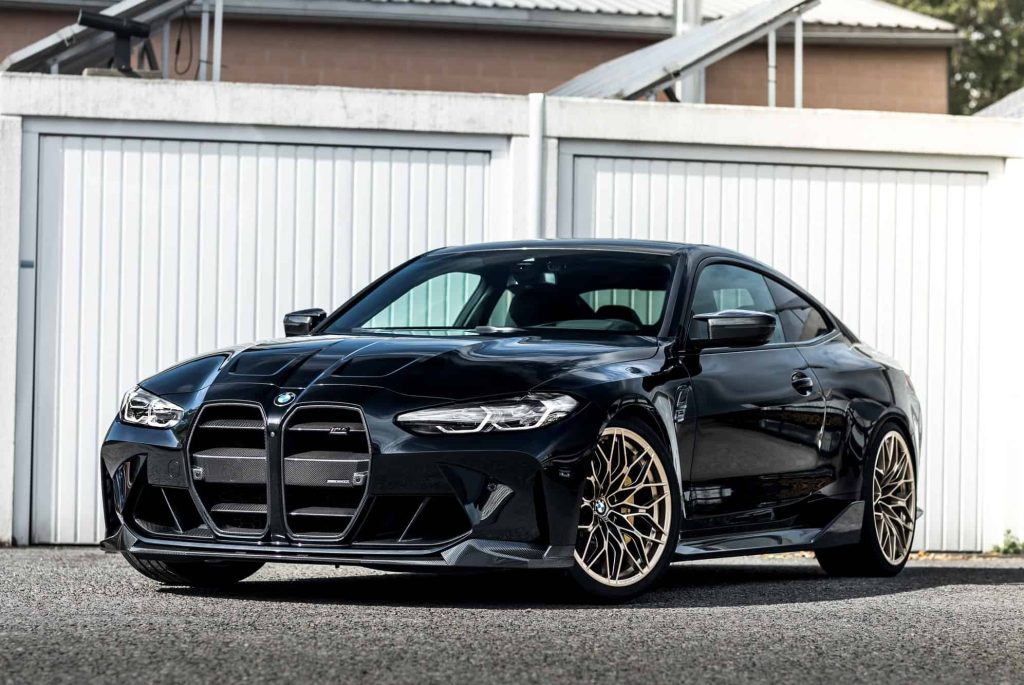
The inclusion of the BMW M4 in this list highlights the importance of context. While it excels on dry roads and controlled environments, its characteristics demand a level of precision that may not align with the realities of rainy commuting. In Seattle’s wet conditions, that mismatch can make it a risky choice for everyday driving.
2. Chevrolet Corvette Stingray
The Chevrolet Corvette Stingray represents a different kind of performance philosophy, combining high power with a low, wide stance that emphasizes speed and agility. It is a car built to deliver excitement, but that excitement can quickly turn into unpredictability when the road surface is compromised by rain.
One of the key challenges with the Corvette Stingray in wet conditions is how it distributes its power. The rear-wheel-drive system, paired with a powerful engine, creates a situation where traction must be carefully managed at all times. On dry pavement, this results in thrilling acceleration. On wet roads, it increases the likelihood of wheel slip.
The car’s low ride height also contributes to its vulnerability. Water accumulation on roads can affect how the tires interact with the surface, and the Corvette’s design leaves less margin for error in these situations. Hydroplaning becomes a more noticeable risk, particularly at higher speeds.
There is also the matter of driver expectation. The Corvette encourages a sense of confidence and performance-oriented driving, which may not be appropriate in rainy conditions. This can lead to inputs that are too aggressive for the available grip, increasing the chances of losing control.
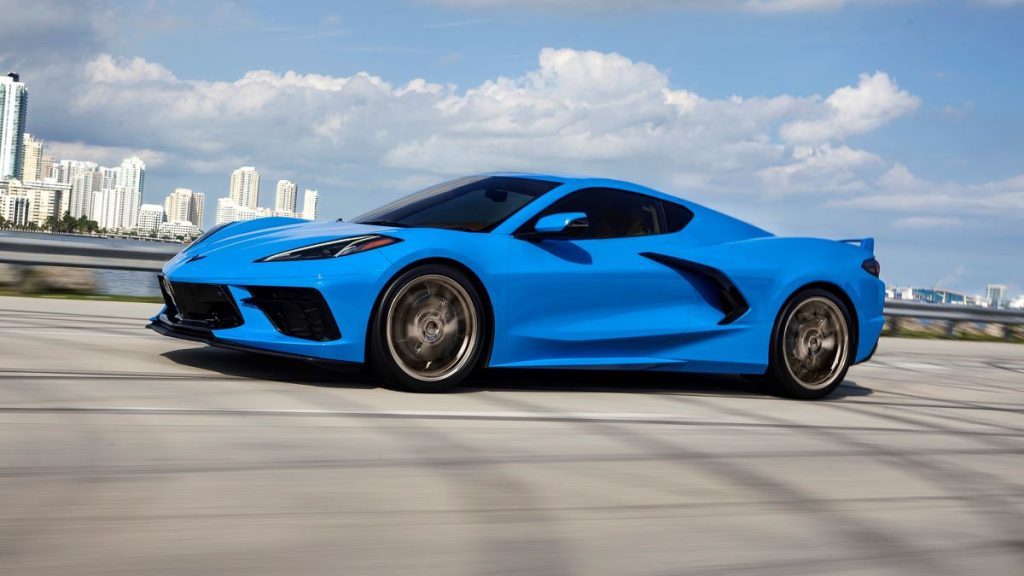
The reason this car appears on this list is not to diminish its capabilities, but to emphasize how those capabilities are tied to specific conditions. In a wet, urban environment like Seattle, the Corvette Stingray’s strengths can become liabilities, making it a less practical and potentially dangerous option for daily use.
3. Porsche 911 Carrera
The Porsche 911 Carrera carries decades of engineering evolution, and it has become far more stable and refined than its earlier generations. Still, its core layout remains unique, with the engine positioned at the rear and power sent to the rear wheels.
That distinctive configuration creates a driving experience that is deeply engaging, but in wet conditions, it can also become demanding in ways that are not immediately obvious.
What makes the 911 Carrera challenging in the rain is how weight is distributed. With a significant portion of mass over the rear axle, traction can initially feel strong during acceleration.
However, when that balance shifts mid-corner or during sudden inputs, the transition can be sharp. In a dry setting, skilled drivers can use this to their advantage. On rain-soaked Seattle streets, it requires constant attention to avoid sudden oversteer.
The car’s precision-focused steering and chassis tuning add another layer to this dynamic. Every input is translated quickly, which is ideal for performance driving but less forgiving when grip levels are inconsistent.
Small corrections can have amplified effects, making the car feel more sensitive than expected in low-traction environments.
There is also a psychological component to consider. The 911 Carrera feels composed at first, which can create a false sense of security. Drivers may underestimate how quickly conditions can change, especially when encountering standing water or uneven road surfaces.
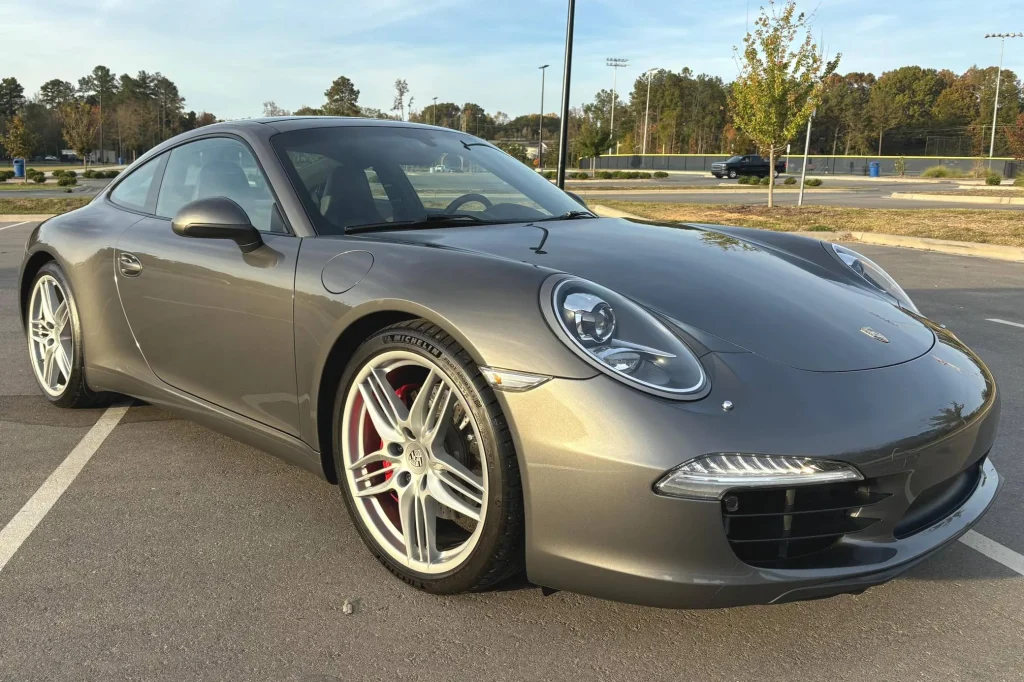
This is why the 911 Carrera is included here. It is not inherently unstable, but it demands a level of awareness and restraint that may not align with everyday commuting in heavy rain. In Seattle’s unpredictable conditions, that requirement can turn an otherwise rewarding car into a more challenging and potentially risky choice.
4. Nissan 370Z
The Nissan 370Z takes a more traditional sports car approach, focusing on raw driving feel and mechanical simplicity. It is a car that emphasizes connection between driver and machine, but that connection can become a double-edged sword when the road surface is wet.
One of the defining traits of the 370Z is its short wheelbase combined with a relatively powerful engine.
This combination makes the car feel agile and responsive in dry conditions. In the rain, however, it can lead to quicker weight transfers that are harder to manage. When the rear loses grip, it tends to do so more abruptly, requiring fast and precise corrections.
Unlike more modern sports cars that incorporate extensive electronic aids, the 370Z retains a more analog character. While this appeals to enthusiasts, it also means the driver carries more responsibility for maintaining control. On slippery roads, where conditions can change moment by moment, this can increase the margin for error.
The car’s throttle response further contributes to the challenge. Power delivery feels immediate, which is exciting on dry pavement but less forgiving when traction is limited. Smoothness becomes critical, and any abrupt input can unsettle the rear of the vehicle.
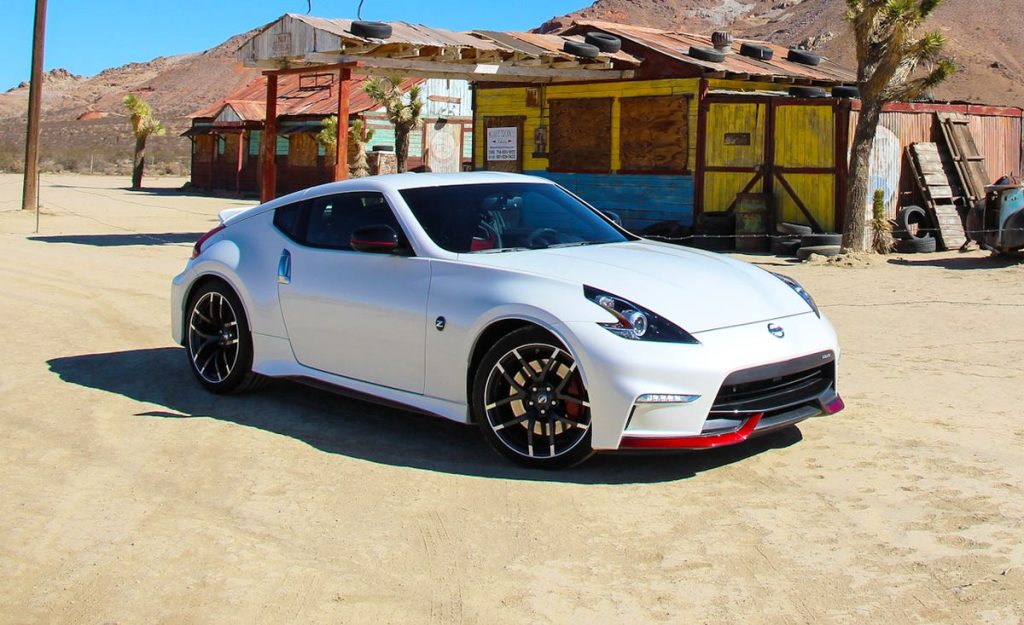
The inclusion of the 370Z reflects how a purist driving experience does not always translate well to everyday conditions. In a rainy city like Seattle, where grip is never guaranteed, the car’s engaging nature can turn into a source of unpredictability that makes it less suitable for routine commuting.
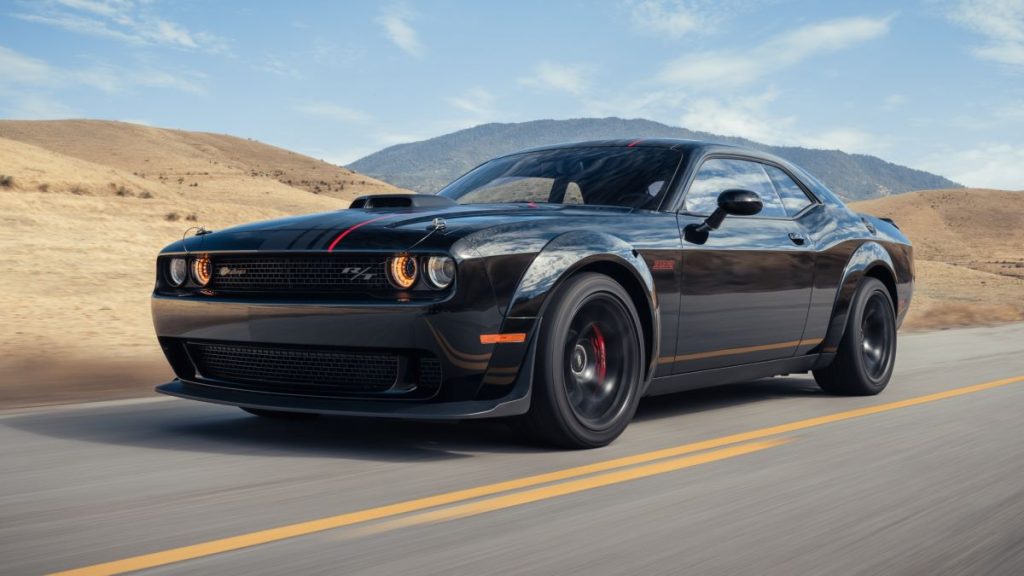
5. Dodge Challenger R/T Scat Pack
The Dodge Challenger R/T Scat Pack represents muscle car philosophy in a modern package, combining a large V8 engine with a rear-wheel-drive layout and substantial weight. It delivers strong straight-line performance and a commanding presence, but these same characteristics can become difficult to manage when rain enters the equation.
One of the primary concerns with the Challenger in wet conditions is how it handles power delivery.
The engine produces significant torque, and when that torque is applied to the rear wheels on a slippery surface, maintaining traction becomes a constant challenge. Even moderate acceleration can lead to wheel spin if not carefully controlled.
The car’s size and weight add another dimension to this issue. Heavier vehicles require more distance to stop and can feel less agile when quick adjustments are needed. In traffic or on winding roads with standing water, this can make the driving experience feel less responsive and more demanding.
There is also a contrast between the car’s intended purpose and the environment in which it is being used. The Challenger is designed for open roads where its power can be fully utilized. In a rain-soaked urban setting, that power often goes unused, while its drawbacks become more noticeable.
The reason this car completes the list is because it highlights how excess can work against practicality. While it offers an exciting driving experience in the right conditions, those conditions are rarely present in Seattle’s rainy climate.
As a result, it becomes a vehicle that requires extra caution, making it a less suitable choice for daily driving in wet environments.
Seattle’s constant rain changes what makes a car truly suitable for daily driving. Vehicles that prioritize stability, traction, and predictability become far more valuable than those focused purely on performance.
Hatchbacks like the Subaru Impreza, Volkswagen Golf, and Toyota Corolla Hatchback stand out because they deliver consistent control, smooth responses, and confidence on wet roads. Their balanced engineering helps drivers manage slippery conditions without added stress.
In contrast, rear-wheel-drive sports cars such as the BMW M4, Chevrolet Corvette Stingray, and Dodge Challenger R/T Scat Pack highlight how performance can become a drawback in the wrong environment.
Their power delivery, sensitivity, and reduced traction in wet conditions increase the risk of instability, especially during everyday commuting.
The key takeaway is simple. In a city like Seattle, the best car is not the fastest or most exciting, but the one that works with the environment rather than against it, making every drive safer and more manageable.
Also Read: 10 Front Wheel Drive Cars With Sports Car Handling and Precision
