
Brake pads are one of the most overlooked maintenance items in the automotive world. Most drivers only think about them when they hear that dreaded squealing sound at a red light. But the truth is, not all cars treat their brakes equally. Some vehicles are engineered so intelligently that their brake pads last well beyond 70,000 miles with minimal effort. Others seem to devour pads at an alarming rate, leaving owners staring at unexpected repair bills every year or two.
The difference comes down to several key factors. Vehicle weight, brake system design, regenerative braking technology, and even the type of brake pad compound the factory installs all play enormous roles. Performance-oriented cars with large engines and heavy bodies demand far more stopping power. That extra demand translates directly into faster pad wear and higher long-term costs.
On the flip side, lighter vehicles with smart braking systems, especially hybrids, can stretch brake pad life to extraordinary lengths. Some hybrid owners report never replacing pads for the entire time they owned the vehicle.
This guide breaks down six cars that are remarkably gentle on brakes and six that will have you back at the shop far sooner than you’d like. Whether you’re buying new or just curious about your current vehicle, this information could save you hundreds of dollars.
6 Cars That Are Easy on Brakes
These cars are known for long-lasting brake components and smooth braking systems, allowing pads and rotors to last well beyond average intervals. Efficient weight distribution, balanced braking force, and in some cases, regenerative braking (in hybrids) reduce wear significantly.
Models like the Toyota Prius, Honda Accord, and Lexus RX are often praised for minimal brake wear, with some owners reporting extended service intervals. Their design helps reduce heat buildup and friction, making them cost-effective and low-maintenance over time.
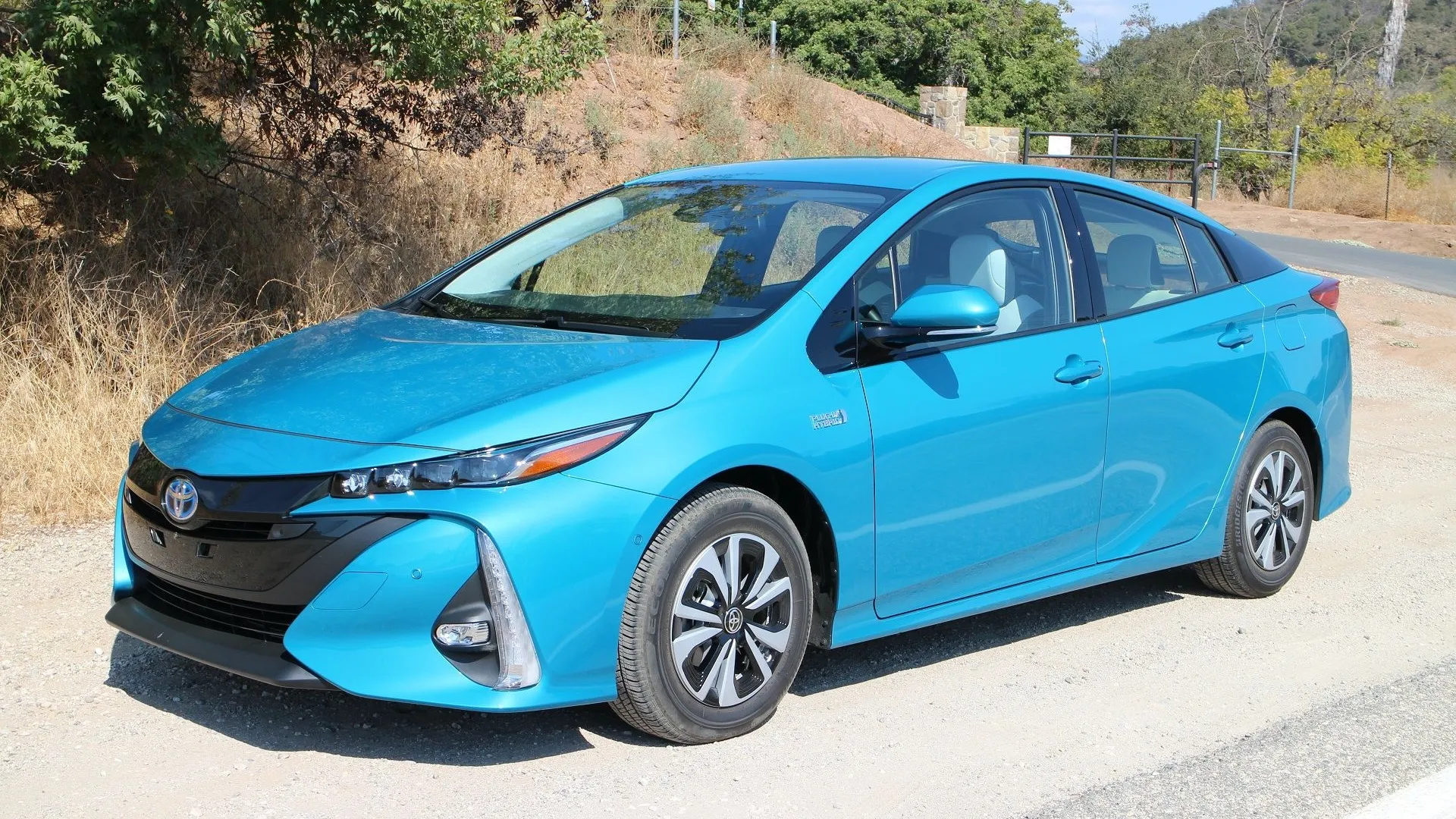
1. Toyota Prius (All Generations)
The Toyota Prius is the undisputed king of brake longevity. It has earned a legendary reputation among mechanics and owners alike for how rarely its brake pads need replacing. This is not an accident; it is the direct result of Toyota’s brilliantly engineered regenerative braking system.
When a Prius driver lifts their foot off the accelerator, the electric motor immediately begins acting as a generator. It converts the vehicle’s kinetic energy back into electricity, which is then stored in the hybrid battery. This process slows the car down significantly before the physical brake pads even engage. The friction brakes are essentially a backup system in normal driving conditions.
In city driving, where stop-and-go traffic is constant, this advantage becomes enormous. Most drivers in urban environments are braking dozens of times per hour. In a conventional car, every one of those brake applications wears the pads a little more. In a Prius, most of those slowdowns happen entirely through regenerative braking. The pads barely make contact.
Toyota also calibrated the brake feel carefully. The transition between regenerative and friction braking is seamless to the driver. You press the pedal, the car slows, and you never know which system is doing the work. This smooth handoff ensures the friction brakes are used as little as mechanically possible.
Prius owners routinely report brake pad life of 100,000 miles or more. Some drivers have gone well past that figure before needing their first pad replacement. Mechanics who specialize in hybrid vehicles often joke that they almost never see a Prius come in for brake work. It simply doesn’t happen with normal frequency.
The rotors on a Prius can also develop surface rust from underuse rather than wear. This is a unique problem, the brakes are used so infrequently that moisture sits on the rotors and causes cosmetic oxidation. A quick hard stop will clean them right off, but it illustrates just how little the friction brakes are being relied upon.
Even the rear drum brakes on earlier Prius models are known to last the lifetime of the vehicle in many cases. Toyota made a deliberate engineering choice to keep those rear brakes simple and low-maintenance. For anyone who prioritizes low running costs, the Prius is simply hard to beat on brake longevity alone.
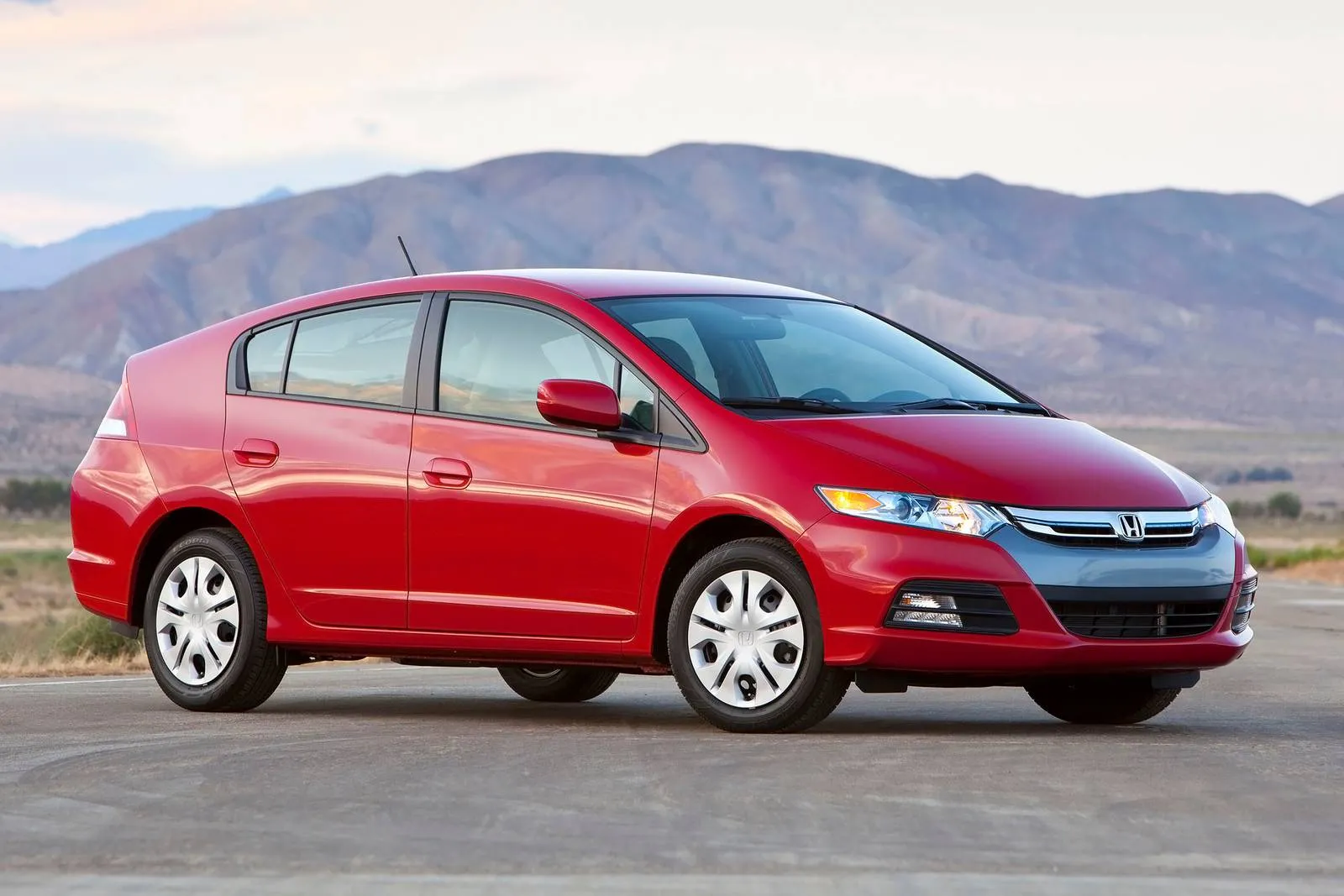
2. Honda Insight (Second and Third Generation)
The Honda Insight follows a very similar philosophy to the Prius. It uses Honda’s Integrated Motor Assist system, which blends electric motor braking with traditional friction braking. The result is a car that goes remarkably easy on its pads during everyday commuting. Honda engineered the Insight to be a practical, low-cost commuter above all else.
The Insight is also notably lighter than many of its competitors. Less weight means less momentum that needs to be scrubbed off during braking. Physics works directly in the Insight’s favor every single time the driver slows down. A lighter car simply requires less braking force to bring it to a stop.
Honda also used relatively small brake hardware on the Insight. The calipers and rotors are appropriately sized for a lightweight economy car. Smaller components can mean less thermal stress and more consistent wear patterns over time. Nothing is being overworked in the braking system of a well-driven Insight.
The third-generation Insight, which ran from 2019 to 2022, added more sophisticated energy recovery. It refined the transition between regenerative and friction braking even further. Drivers reported an even smoother pedal feel compared to earlier generations. Honda clearly learned from years of hybrid development and applied those lessons well.
Real-world Insight owners on forums and owner communities regularly report brake pad life between 80,000 and 100,000 miles. Some are genuinely surprised when a mechanic mentions the pads are still in good condition at high mileage. For a car sold at a reasonable price point, that kind of brake longevity adds real long-term value.
The Insight proves that you don’t need to spend a fortune to get excellent brake life. Honda kept the system practical and reliable. It may not have the cult following of the Prius, but it delivers equally impressive results in the real world.
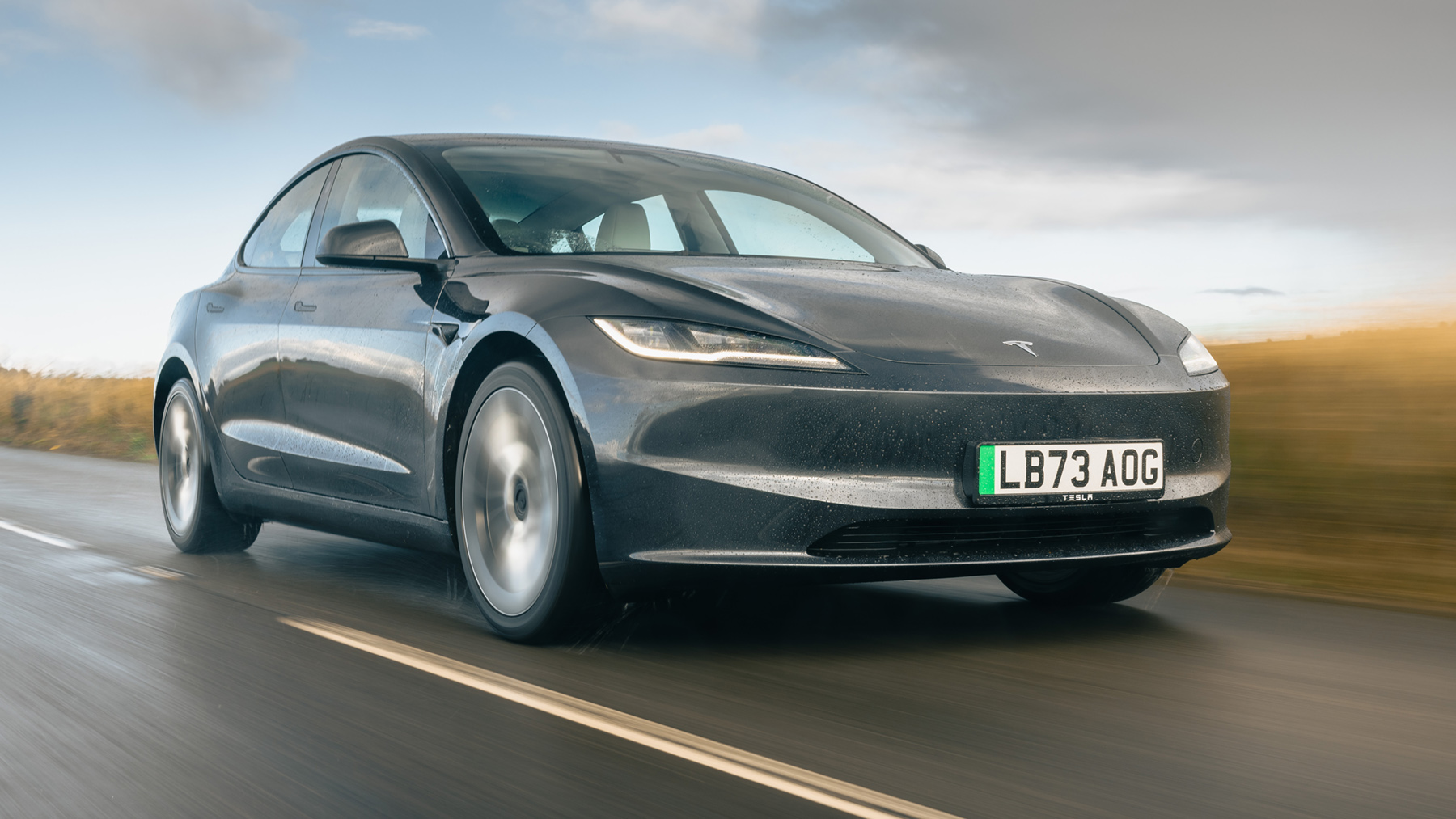
3. Tesla Model 3
The Tesla Model 3 takes regenerative braking to an entirely new level. Tesla’s “one-pedal driving” mode is so aggressive that many drivers almost never use the brake pedal in normal city driving. Lifting off the accelerator alone can bring the car to a complete stop in many situations. The friction brakes become almost ceremonial in daily use.
Tesla designed the Model 3 with an emphasis on energy efficiency and performance. The regenerative system is powerful enough to feel like moderate braking in a conventional car. New Tesla owners are often startled by how sharply the car decelerates when they first lift their foot. It takes a few days to get used to, but most drivers quickly prefer it.
Because friction braking is used so rarely, Model 3 brake pads last an extraordinary amount of time. Tesla itself has suggested that many Model 3 owners will go the entire ownership period without replacing pads. That is an almost unheard-of claim in the traditional automotive world. Yet many long-term owners confirm it holds true.
The Model 3 also benefits from being a relatively balanced car in terms of weight distribution. Despite being an electric vehicle with a heavy battery, Tesla’s engineering keeps the weight centered and low. Braking forces are distributed evenly across all four corners. No single pad or rotor is being overworked more than the others.
Tesla does use high-quality brake components from reputable suppliers. When the friction brakes are needed during emergency stops or high-speed highway deceleration, they perform very well. The system is not underpowered just because it isn’t used constantly. It remains ready and effective when called upon.
One interesting side effect of minimal brake use on a Model 3 is rotor rust. Just like the Prius, the rotors can develop a thin layer of surface rust when driven gently. Tesla actually includes guidance on this in their owner documentation. A periodic hard stop keeps the rotors clean and functional.
4. Toyota Camry Hybrid
The Toyota Camry Hybrid combines one of the world’s most reliable sedans with Toyota’s proven hybrid braking system. This combination produces a car that is extraordinarily gentle on brake components. Toyota has refined this system across multiple generations of the Camry Hybrid, and it shows in real-world ownership data.
The Camry Hybrid uses Toyota’s familiar Hybrid Synergy Drive system. Like the Prius, it blends regenerative and friction braking seamlessly. The driver simply presses the pedal, and the car’s computer decides how much of the stopping force comes from each system. In most everyday situations, regenerative braking handles the majority of the work.
The Camry Hybrid is heavier than the Prius, which means there is more kinetic energy to manage during braking. However, the larger hybrid battery can absorb more regenerative energy. The system is calibrated for the car’s specific weight class. Toyota made sure the regenerative capacity matched the vehicle’s demands.
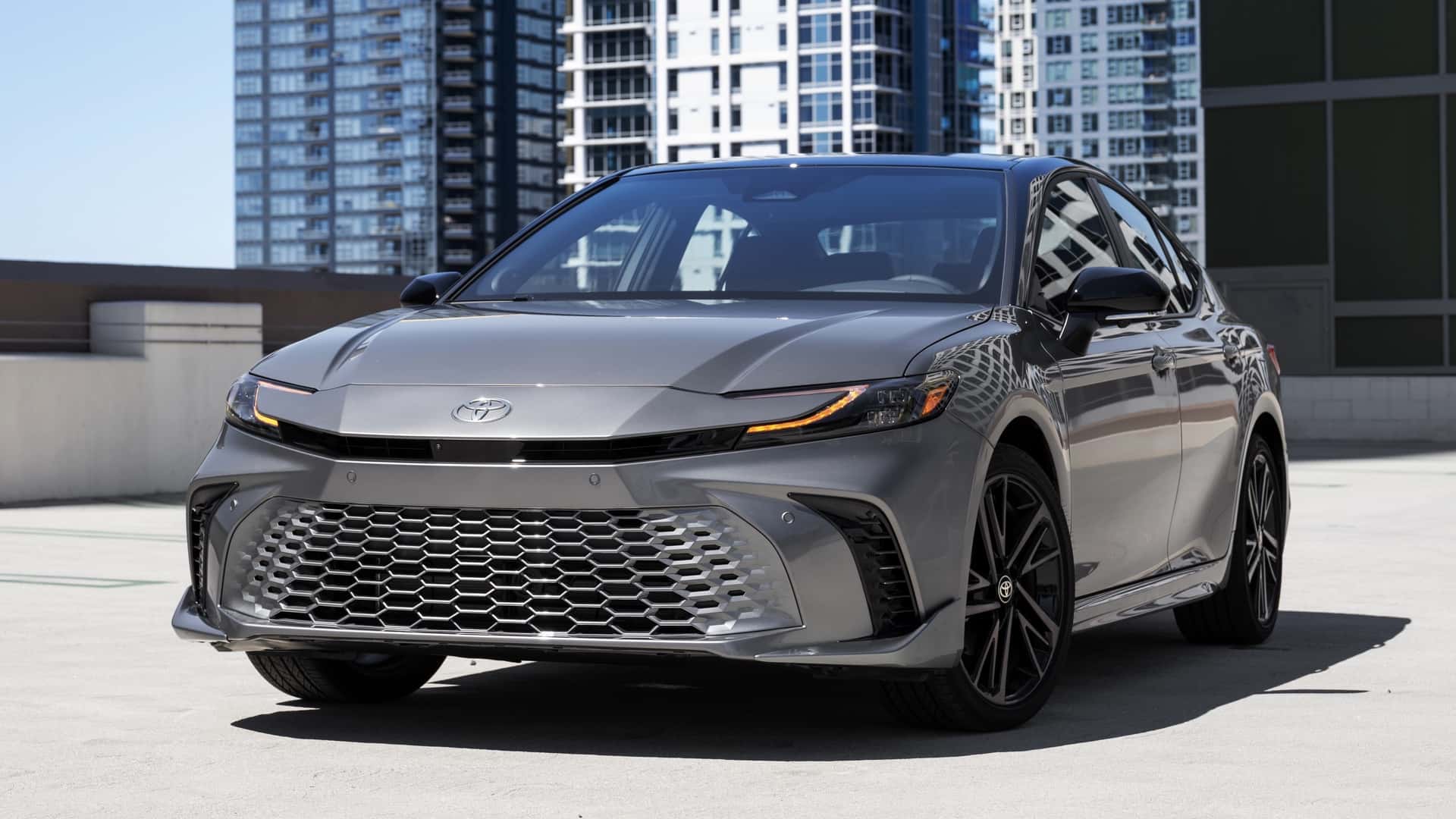
Many Camry Hybrid owners report going 60,000 to 80,000 miles on a single set of brake pads without any issues. Some even surpass 90,000 miles before their first replacement. For a midsize family sedan, those numbers are genuinely impressive. Comparable non-hybrid sedans often need pad replacements at 40,000 to 50,000 miles.
Fleet operators have taken notice of the Camry Hybrid’s low brake maintenance costs. Taxi and rideshare companies that run these cars in heavy urban traffic report drastically reduced brake maintenance expenses. Stop-and-go city driving is where regenerative braking shines brightest, and the Camry Hybrid delivers consistently.
The Camry Hybrid also benefits from Toyota’s well-known build quality and component reliability. The brake hardware itself is durable and well-manufactured. When pads do eventually need replacement, the process is straightforward, and parts are widely available and affordable. Ownership costs remain low from the first mile to the last.
Also Read: 5 Vehicles Where the Backup Sensor Works in Mud vs 5 That Don’t
5. Mazda3 (Naturally Aspirated, Front-Wheel Drive)
The Mazda3 earns its place on this list through engineering discipline rather than hybrid technology. Mazda chose a different path, keeping the car light, well-balanced, and equipped with appropriately sized brake hardware. The result is a car whose brake pads last far longer than most people would expect from a sporty-looking compact.
Mazda has always prioritized the feeling of driving efficiency. The naturally aspirated Skyactiv engines in the Mazda3 produce sufficient power without making the car feel heavy or demanding. Drivers tend to use the engine’s natural compression braking more often. Less reliance on the friction brakes means slower pad wear over time.
The Mazda3 has excellent weight distribution for a front-wheel-drive car. Weight balance affects how braking forces are distributed between the front and rear. A well-balanced car wears its front pads more evenly and doesn’t overload them as quickly. The Mazda3’s balance is genuinely praised by automotive engineers and reviewers.
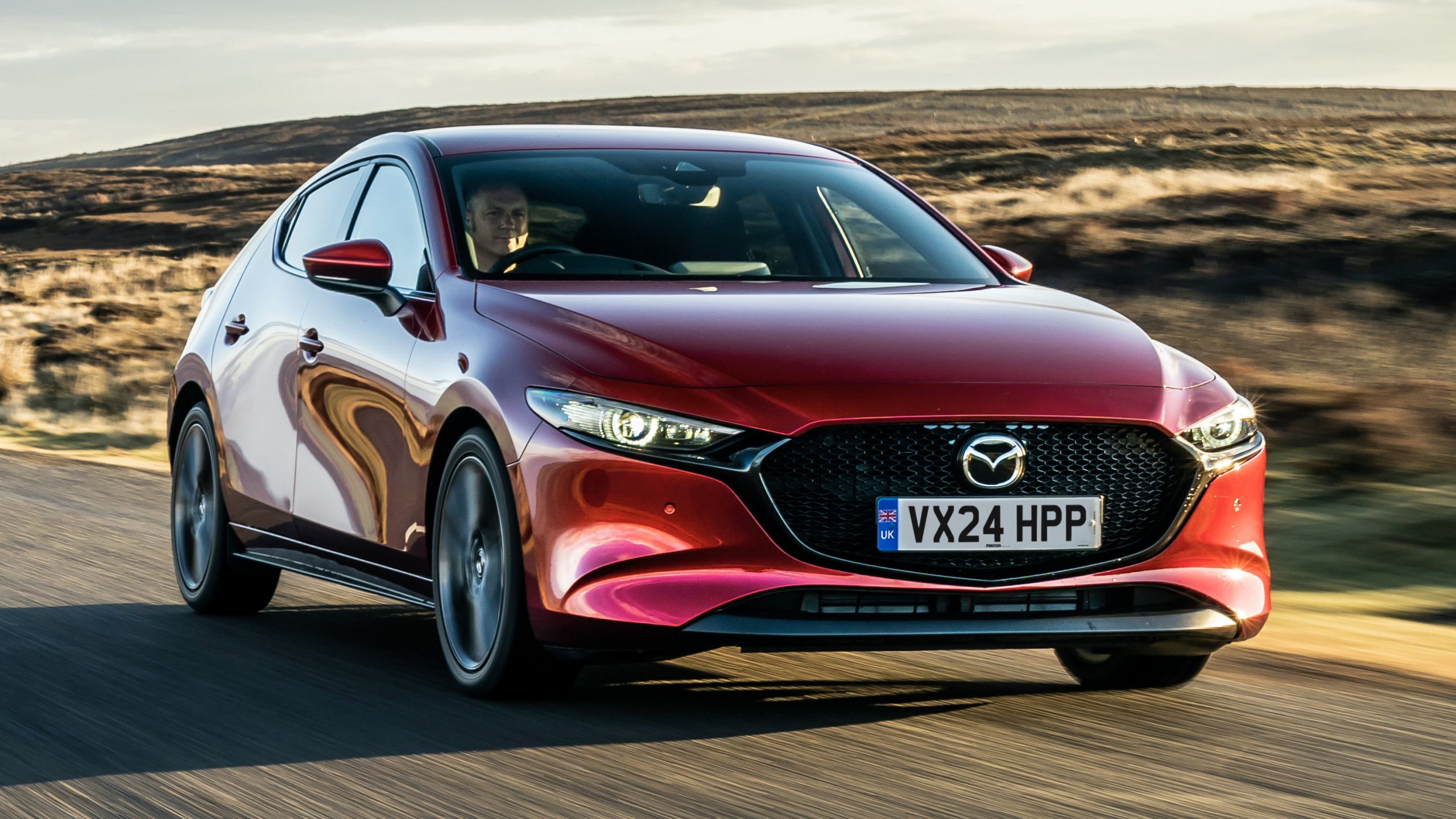
Mazda also equips the Mazda3 with brake pad compounds that are chosen for longevity and consistent performance. The factory pads are not aggressive, high-friction compounds meant for performance driving. They are designed for normal road use and daily commuting. That choice in compound directly translates to extended pad life.
Real-world Mazda3 owners frequently report front brake pad life of 50,000 to 70,000 miles. That’s above average for the compact segment by a meaningful margin. The rear pads last even longer, often going the entire life of the vehicle before needing attention. For a non-hybrid car, these are excellent numbers.
Mazda’s commitment to building cars that feel well-engineered rather than just powerful serves the Mazda3’s brake longevity well. The car doesn’t encourage aggressive driving through sheer power. It rewards smooth, efficient driving habits. Those habits, in turn, keep the brake pads in good shape for a very long time.
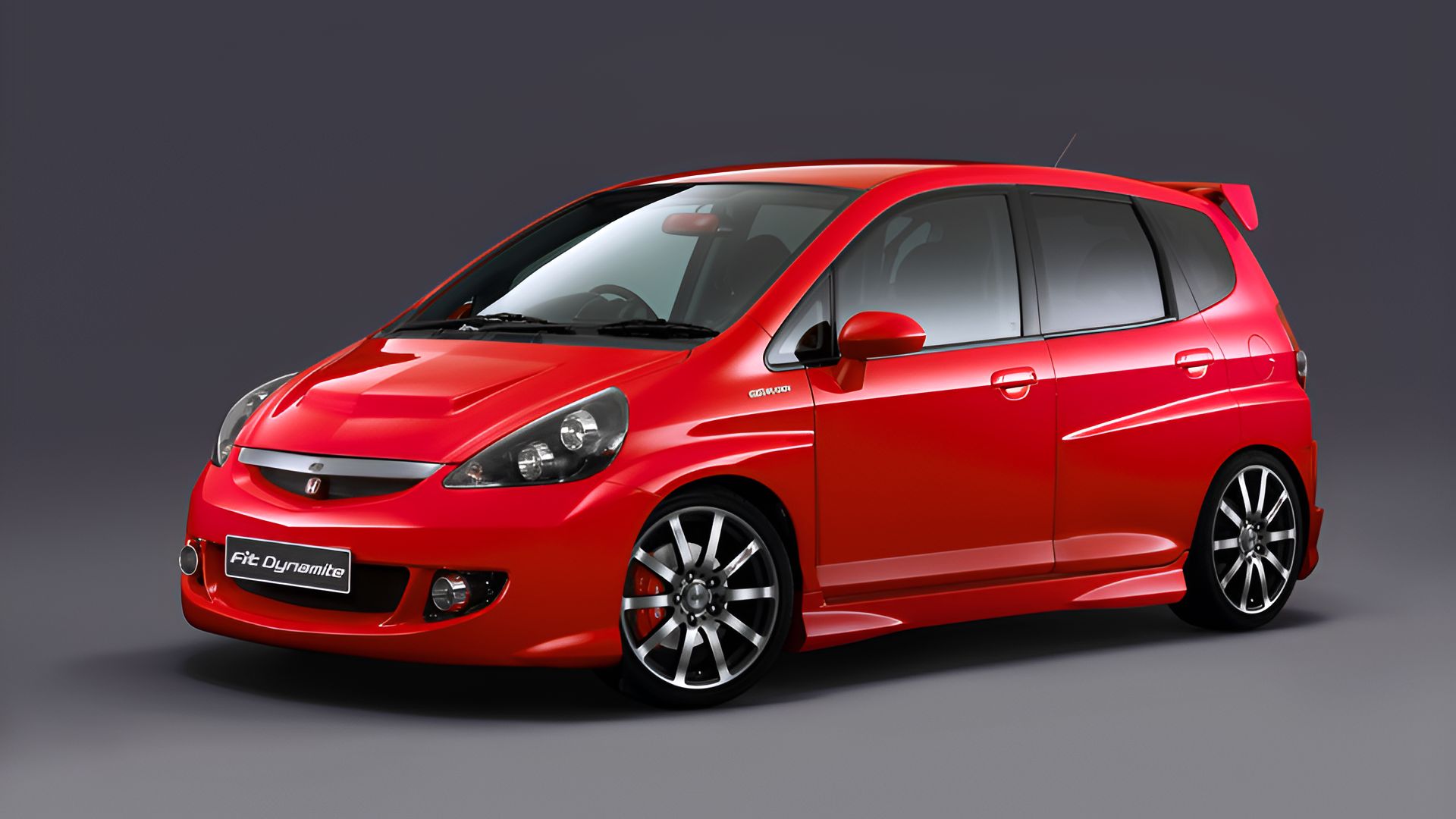
6. Honda Fit / Jazz
The Honda Fit, sold as the Jazz in many markets, is one of the longest-lasting brake stories in the subcompact segment. Its secret is almost embarrassingly simple: it is very light. A lightweight car requires very little braking force to slow down and stop. Less force means less heat and less wear on the pads every single time.
The Fit’s curb weight hovers around 2,500 pounds in most configurations. That makes it one of the lighter cars sold in any modern market. Compared to larger sedans and crossovers, which can weigh 3,500 to 4,500 pounds, the difference in braking demands is substantial. The Fit’s brakes are simply not under the same kind of stress.
Honda fitted the Fit with compact but competent brake hardware. The front disc brakes are appropriately sized for a car of this weight. They are not being asked to do more than their design spec allows. Brakes that operate within their intended parameters always last longer than those being pushed beyond their limits.
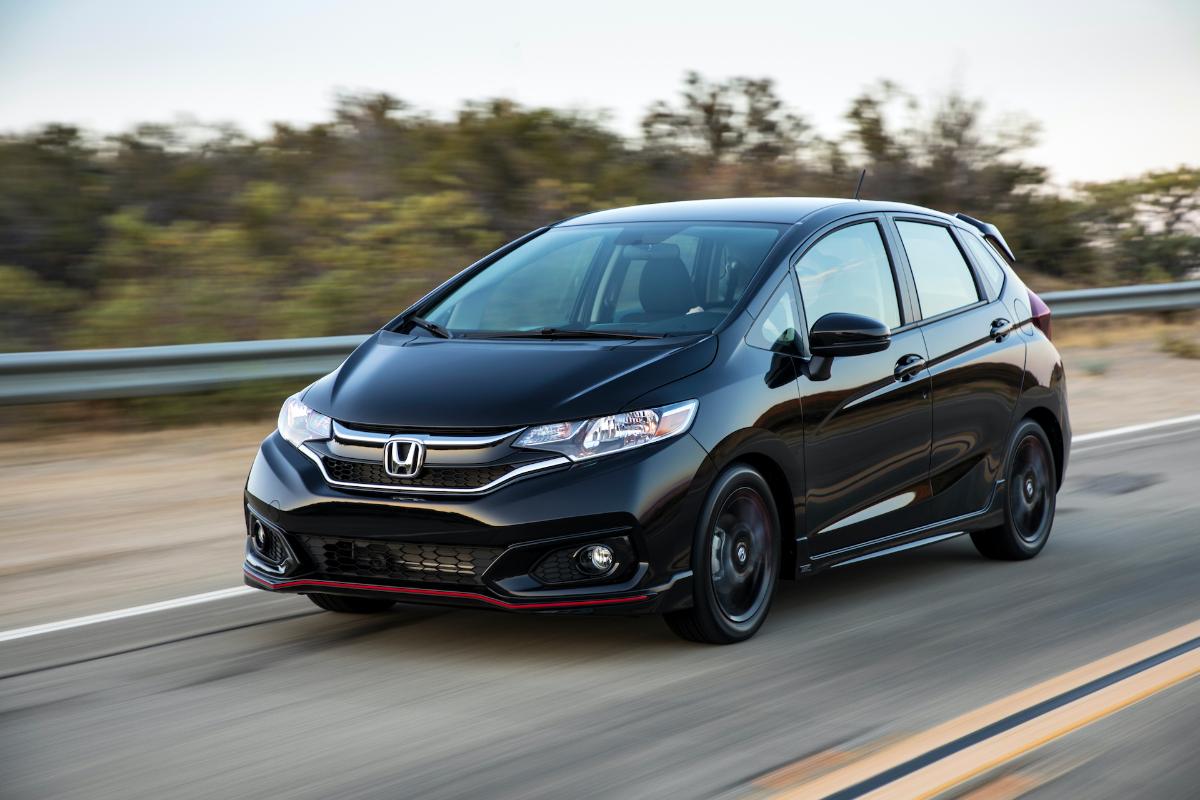
The Fit also tends to attract a certain type of driver, someone who values efficiency and practicality over performance. Those drivers tend to brake smoothly and gradually rather than aggressively. Driving style has an enormous impact on brake wear. A smooth driver in a Fit can get extraordinary life out of a set of pads.
Honda’s reliability in brake component quality is well-established. The Fit’s brake hardware is simple and proven. There are no complicated systems to fail. When pads do eventually need replacement, the cost is low, and the labor is straightforward. Everything about the Fit’s braking system favors low-cost, low-maintenance ownership.
Fit owners regularly report 60,000 to 75,000 miles on front pads with normal driving. In lighter-footed hands, some have exceeded 80,000 miles. For a small, affordable car, that’s a remarkable achievement. The Fit proves that sometimes the best brake technology is simply getting the weight right from the start.
6 That Eat Pads Every 25,000 Miles
These cars are often associated with rapid brake wear due to heavier weight, aggressive tuning, or less durable components. Performance-oriented setups or heavier vehicles can put more stress on brake pads, causing them to wear out quickly.
Frequent stop-and-go driving or poor heat management can worsen the issue, leading to pad replacements as early as 25,000 miles. This results in higher maintenance costs and more frequent service, making these vehicles less economical in the long run.
1. BMW M3 / M4
The BMW M3 and M4 are extraordinary performance machines. They are capable of breathtaking acceleration, precise cornering, and high-speed stability that few cars can match. But that performance comes with a direct cost; they consume brake pads at a pace that can genuinely shock new owners. Welcome to the high-performance German motoring.
The M3 and M4 are heavy cars for their segment. The current generation tips the scales at over 3,700 pounds. That is a significant amount of mass that needs to be brought to a stop repeatedly. Every braking event demands more from the pads than a lighter car would require. Mass is the enemy of brake longevity.
BMW also equips the M3 with a twin-turbocharged inline-six engine that produces over 500 horsepower in its Competition form. That power encourages enthusiastic driving. Enthusiastic driving means frequent hard braking. Hard braking is the fastest way to wear through brake pads, regardless of their quality or compound.
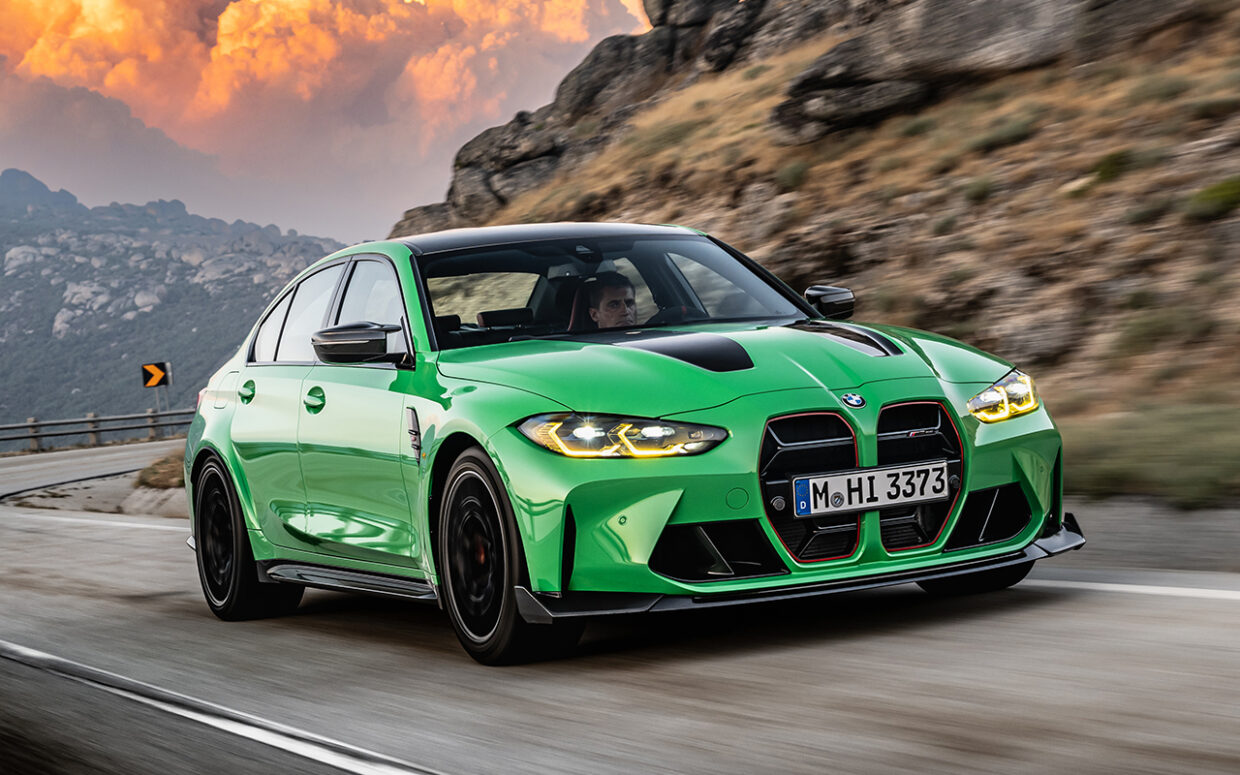
The M3 and M4 use large, multi-piston front calipers that clamp down with enormous force. This is necessary to bring the car to a stop safely from high speeds. But the same clamping force that makes the brakes effective also accelerates pad wear. The physics are unavoidable: more force means more friction means more wear.
Many M3 and M4 owners report needing rear brake pad replacements at around 20,000 to 30,000 miles. The rears wear faster than expected because BMW uses electric parking brake actuators that also affect rear pad wear patterns. Some owners are blindsided by how quickly the rear pads disappear. It becomes a regular maintenance line item.
The cost of replacing M3 brake pads is not cheap. BMW uses specific pad specifications for these models. Going with generic aftermarket pads can affect pedal feel and performance. Most M3 owners end up spending significantly more on brake maintenance annually than they ever anticipated when they bought the car. It is a known ownership cost that every buyer should factor in before signing.
2. Jeep Grand Cherokee (V8 and 4xe Models)
The Jeep Grand Cherokee is a large, capable SUV that has earned a loyal following for its off-road ability and road presence. However, it has also earned a quieter reputation among mechanics for eating through brake pads at an uncomfortable pace. Several factors combine to make the Grand Cherokee hard on its braking system.
The Grand Cherokee is a heavy vehicle. Depending on the trim and drivetrain, curb weight ranges from 4,500 to well over 5,000 pounds. Stopping that amount of mass repeatedly takes a serious toll on brake components. The front pads carry the majority of the braking load. They simply don’t last as long as owners hope.
The 4xe plug-in hybrid version is particularly interesting. Despite having regenerative braking capability, it doesn’t reduce pad wear as dramatically as lighter hybrid vehicles do. The sheer mass of the vehicle, made heavier by its battery pack, requires more braking energy than regeneration alone can handle. The friction brakes are constantly being called upon.
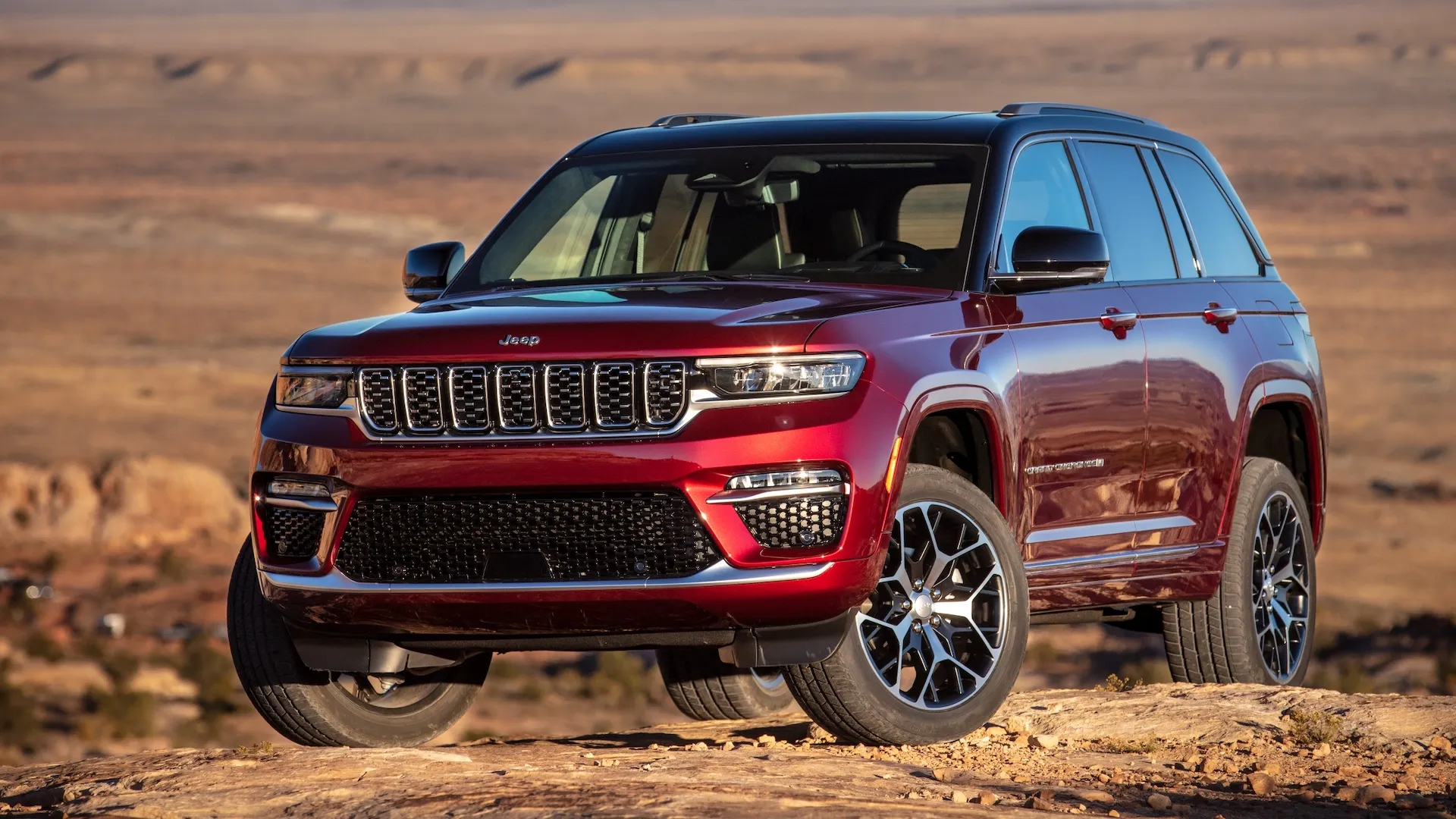
Grand Cherokee owners who use their vehicles for towing are in an even worse situation. Towing adds thousands of pounds of additional load that needs to be decelerated. The brake pads work overtime every single time the vehicle slows while towing. This significantly shortens the service intervals for brake pads.
Many Grand Cherokee owners report front brake pad replacement at around 25,000 to 35,000 miles. Some who tow regularly see replacement intervals as short as 15,000 miles. For an SUV that costs over $50,000 in many configurations, those maintenance costs add up quickly. It is a real consideration for anyone evaluating total ownership cost.
Jeep has improved the brake hardware on the Grand Cherokee over the years. The L platform introduced better ventilated rotors and improved pad compounds. But even these improvements can only do so much against the fundamental challenge of stopping a very heavy vehicle repeatedly. Physics ultimately wins this argument every time.
3. Ford F-150 (Especially Ecoboost V6 and V8 Models)
The Ford F-150 is the best-selling vehicle in America, year after year. Millions of Americans rely on it for work, hauling, and daily driving. But those same Americans often find themselves replacing brake pads more frequently than they expected. The F-150 has a brake wear problem that is directly tied to its enormous popularity and the way people use it.
The F-150’s base curb weight starts around 4,000 pounds, but payload, optional equipment, and heavy-duty configurations push that much higher. A loaded F-150 with a V8 engine can weigh close to 5,500 pounds. Every pound adds to the braking demand. The brake system is sized for the truck’s capability, but that doesn’t make it immune to wear.
Truck owners frequently haul loads and pull trailers. This is, of course, exactly what the F-150 is designed to do. But every loaded haul means the brakes are working harder than they would in an empty vehicle. Loaded braking creates significantly more heat. Heat is the primary driver of brake pad degradation.
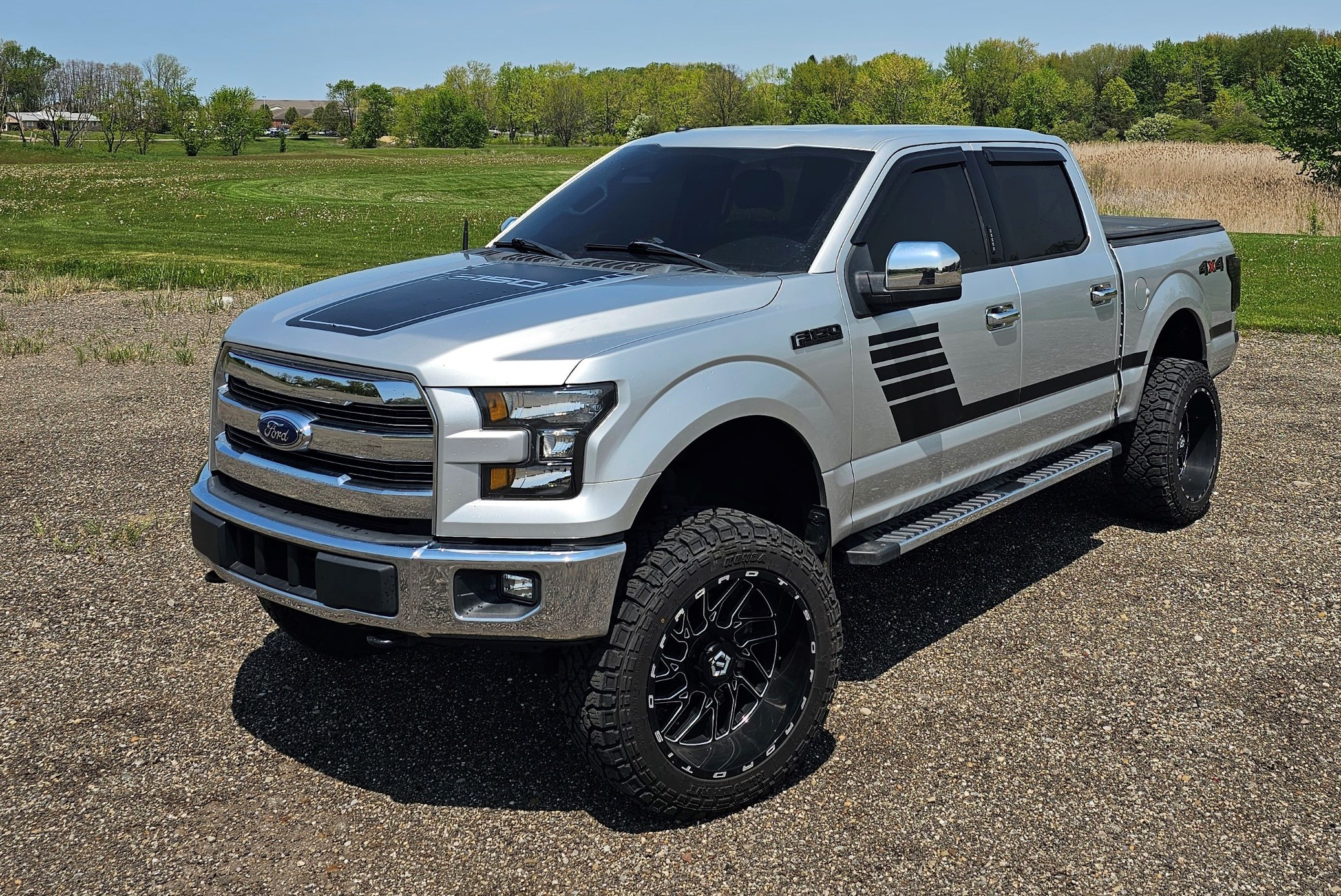
The EcoBoost turbocharged V6 engines give the F-150 surprising power and towing capacity. That capability encourages owners to use the truck to its limits. Trucks used hard near their payload, and towing limits show dramatically faster brake wear. The brakes were not designed for continuous maximum-load operation. They wear proportionally faster under those conditions.
F-150 owners in hilly or mountainous regions have an especially tough time with brake life. Engine braking in a large truck is limited. The friction brakes must do most of the work on long downhill grades. Some mountain-region F-150 owners report needing front pad replacements as early as 20,000 miles. That’s a high cost for what should be a durable work vehicle.
Ford has offered upgraded brake packages on certain F-150 configurations. The Police Responder model, for example, uses heavier-duty brake components. Some off-road trims also offer improved hardware. But the standard configurations sold to most buyers use conventional braking systems that simply struggle to keep up with the demands of American truck ownership.
4. Mercedes-Benz GLE (AMG and Air Suspension Models)
The Mercedes-Benz GLE is a premium midsize SUV that delivers a genuinely luxurious driving experience. It offers a smooth, refined ride and a beautifully appointed interior.
But beneath that luxury exterior lies a vehicle that is particularly hard on brake components. Mercedes GLE owners often discover this painful truth around the 25,000-mile mark.
The GLE is a heavy vehicle. Curb weights range from approximately 4,700 to over 5,200 pounds, depending on engine and equipment choices. The AMG GLE 63 S, with its hand-built twin-turbo V8, is the heaviest and most demanding of the range. Stopping 5,200 pounds of a premium German SUV requires enormous braking force. The pads pay the price.
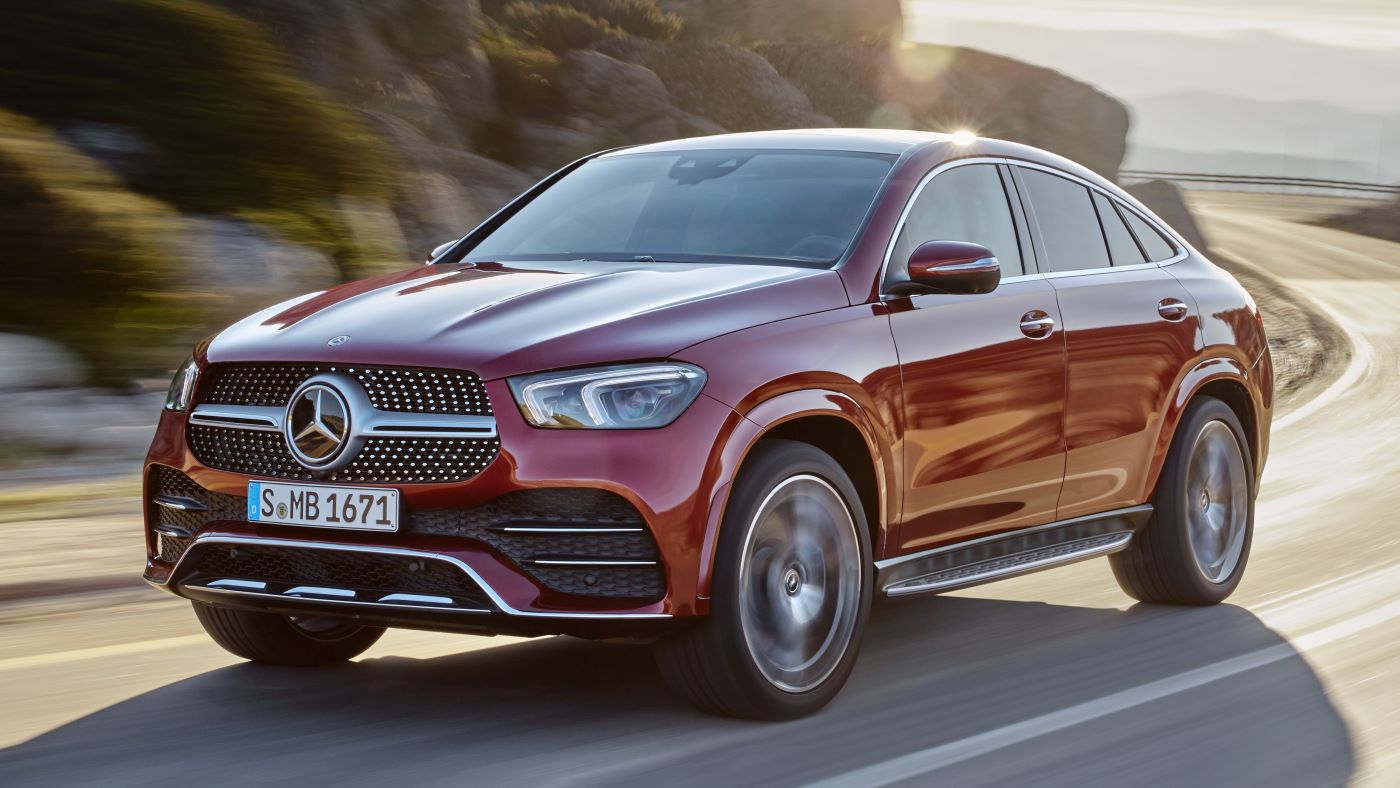
Mercedes equips many GLE variants with sophisticated air suspension systems. These systems improve ride comfort dramatically but also add weight. More weight means more brake demand. The air suspension also adjusts the vehicle’s ride height, which can subtly affect braking dynamics. All of this complexity works against brake longevity.
The AMG braking systems on GLE 63 models use large six-piston front calipers with massive rotors. These are capable units designed for high-speed performance use. But they use aggressive, high-friction pad compounds that wear quickly. A pad compound that can handle 150 mph highway braking is not a pad compound designed for long life at everyday speeds.
Mercedes brake pads, particularly OEM pads for AMG models, are also expensive to replace. The cost of a full brake pad and rotor service on a GLE 63 can run into thousands of dollars at a dealership. Even at independent specialty shops, the cost is high. Many GLE owners are simply not prepared for brake service bills of this magnitude.
European cars like the Mercedes GLE are also known for using softer pad compounds than their American counterparts. European driving culture accepts more brake dust on wheels in exchange for a softer, quieter pedal feel. That softer compound wears faster. GLE owners who notice excessive brake dust on their wheels are seeing a visual indicator of how quickly those pads are disappearing.
5. Dodge Challenger / Charger (V8 Models)
The Dodge Challenger and Charger, with their V8 engines, are two of the most iconic American muscle cars still in production. They deliver thunderous power, dramatic sound, and the unmistakable character of old-school American performance. They also deliver brake bills at a frequency that can feel almost as dramatic as the cars themselves.
Both the Challenger and Charger are extremely heavy for their respective body styles. The Challenger weighs approximately 4,100 to 4,400 pounds, depending on configuration. The Charger sedan is similar. These are not light cars. The weight is a direct result of their large platforms, heavy V8 engines, and solid construction.
The V8 engines, particularly the 5.7-liter HEMI, 6.4-liter 392 HEMI, and supercharged 6.2-liter Hellcat, deliver enormous torque. That torque translates directly into speed, and that speed must eventually be controlled. Hard acceleration followed by hard braking is a cycle that muscle car owners often enjoy. That cycle is devastating to brake pads.
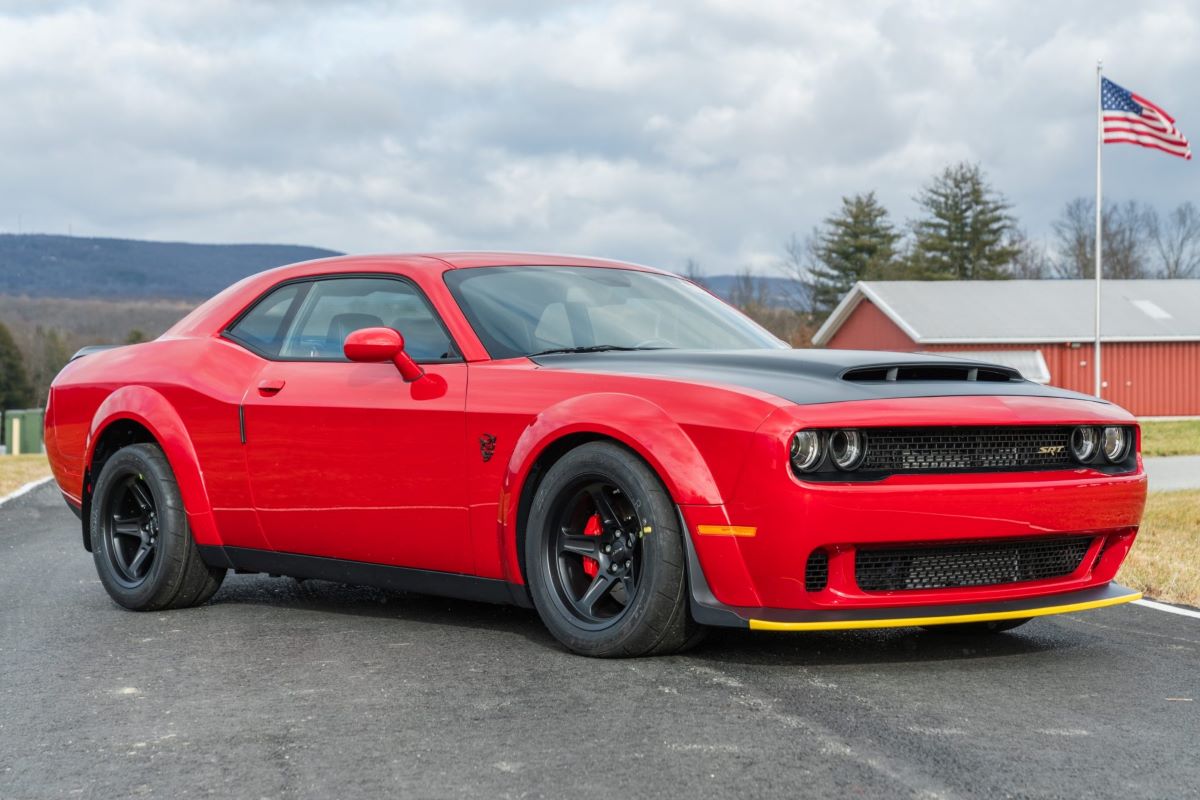
Dodge uses Brembo brake systems on many performance variants. The Brembo calipers are excellent pieces of engineering. They provide strong, consistent stopping power and resist brake fade during spirited driving. But the pad compounds Brembo uses in this application are designed for performance, not longevity. They wear faster than conventional pads by design.
Challenger and Charger Hellcat owners are the most affected. The extra power of the supercharged engine means the car can reach extreme speeds much more quickly. Stopping from those speeds takes more effort and generates more heat. Heat breaks down the pad material. Hellcat owners who drive enthusiastically can see pads wear out in 20,000 miles or less.
Even more moderate V8 variants suffer from this issue. Many Challenger R/T owners report front pad replacement around 25,000 to 30,000 miles. Some owners accept this as part of muscle car ownership and build it into their budget. Others are genuinely caught off guard. Either way, brake maintenance is a consistent and unavoidable part of owning these iconic American cars.
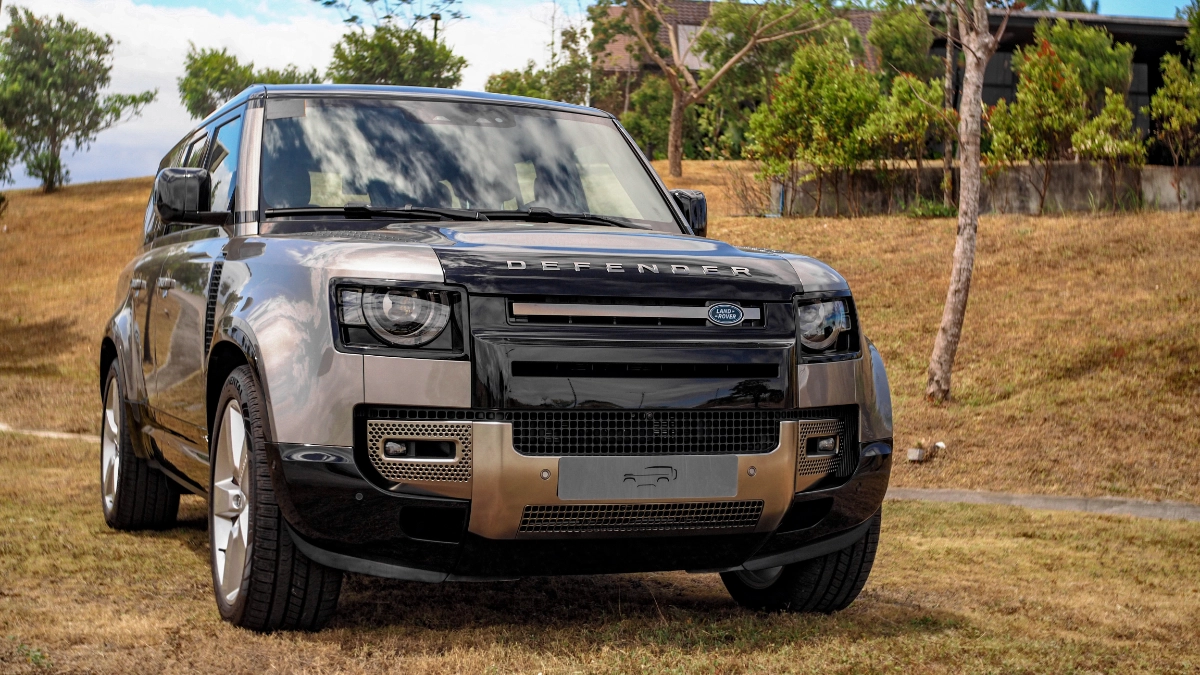
6. Land Rover Defender (V8 and Turbocharged Models)
The Land Rover Defender is one of the most capable off-road vehicles on the market. Its name carries decades of legendary status as serious four-wheel driving. But the modern Defender, particularly in its larger and more powerful forms, has developed a well-known reputation for accelerated brake wear that follows owners both on and off the road.
The Defender’s weight is its primary brake nemesis. The Defender 90 starts at around 4,800 pounds. The larger Defender 110 pushes past 5,000 pounds easily. In the V8 model powered by a supercharged 5.0-liter engine producing over 500 horsepower, the combination of mass and power creates extraordinary demands on the braking system.
Off-road use makes the situation significantly worse. When a Defender descends a steep rocky slope or navigates uneven terrain, the brakes are used in ways that most road vehicles never experience. Slow, constant brake pressure on long descents generates sustained heat. Sustained heat is one of the most damaging conditions for brake pad material.
The Defender also frequently comes equipped with all-terrain or mud-terrain tires for serious off-road use. These tires have higher rolling resistance and different traction characteristics than road tires. The way the vehicle decelerates on different surfaces changes braking behavior. Brake pads can wear unevenly when a vehicle frequently transitions between very different surface types.
Land Rover’s brake specifications for the Defender require specific pad compounds and hardware. Using non-OEM or budget replacement parts can create safety concerns in a vehicle that is often used in demanding environments. This means Defender owners are often locked into expensive OEM or premium aftermarket replacements. The cost per service interval is meaningfully higher than average.
Defender owners who combine road driving with genuine off-road adventures report brake pad life as low as 20,000 to 25,000 miles. Even those who use the vehicle primarily on paved roads often see 30,000-mile intervals due to the vehicle’s weight alone. It is one of the accepted costs of owning one of the world’s most capable and respected SUVs. The Defender earns its reputation on the trail and its brake bills at the shop.
Also Read: 9 Trucks With an Average Repair Bill Under $250 Across 100,000 Miles
