
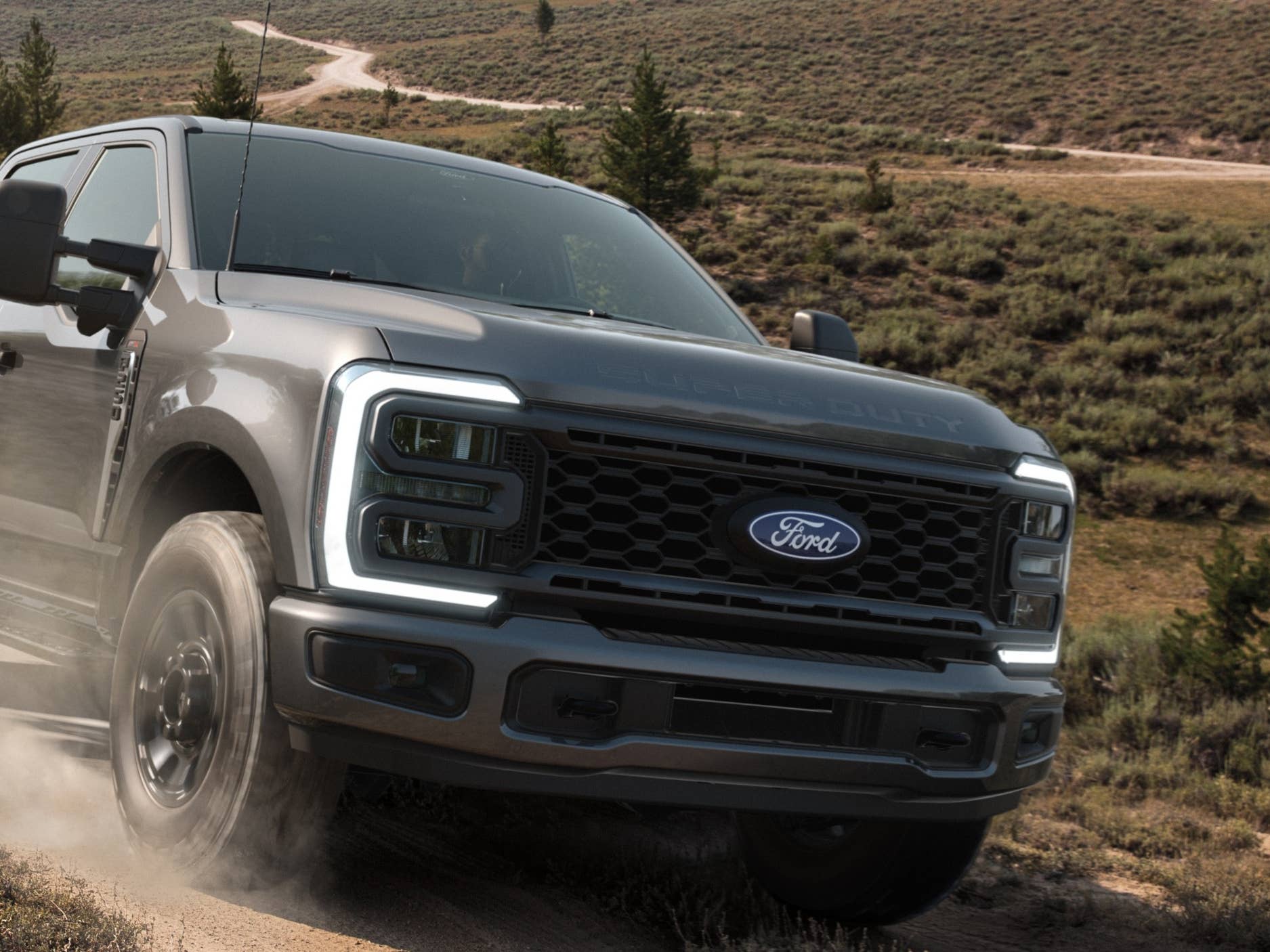
Ford is taking a clear turn with its heavy-duty truck strategy for the 2027 model year Super Duty lineup. Order guide information circulating through dealer channels and industry forums indicates a major powertrain restructuring that places the 7.3-liter “Godzilla” V8 at the entry point of the range.
This move removes two previously available base engines and leaves buyers with fewer but stronger starting options. The change arrives at a moment when the truck market continues to lean heavily on internal combustion for towing, hauling, and commercial use cases.
While electrification remains part of Ford’s broader long-term planning, heavy-duty customers continue to prioritize large-displacement gasoline engines and high-output diesel options. The revised Super Duty lineup reflects that reality with a simplified engine structure built around higher torque and durability expectations.
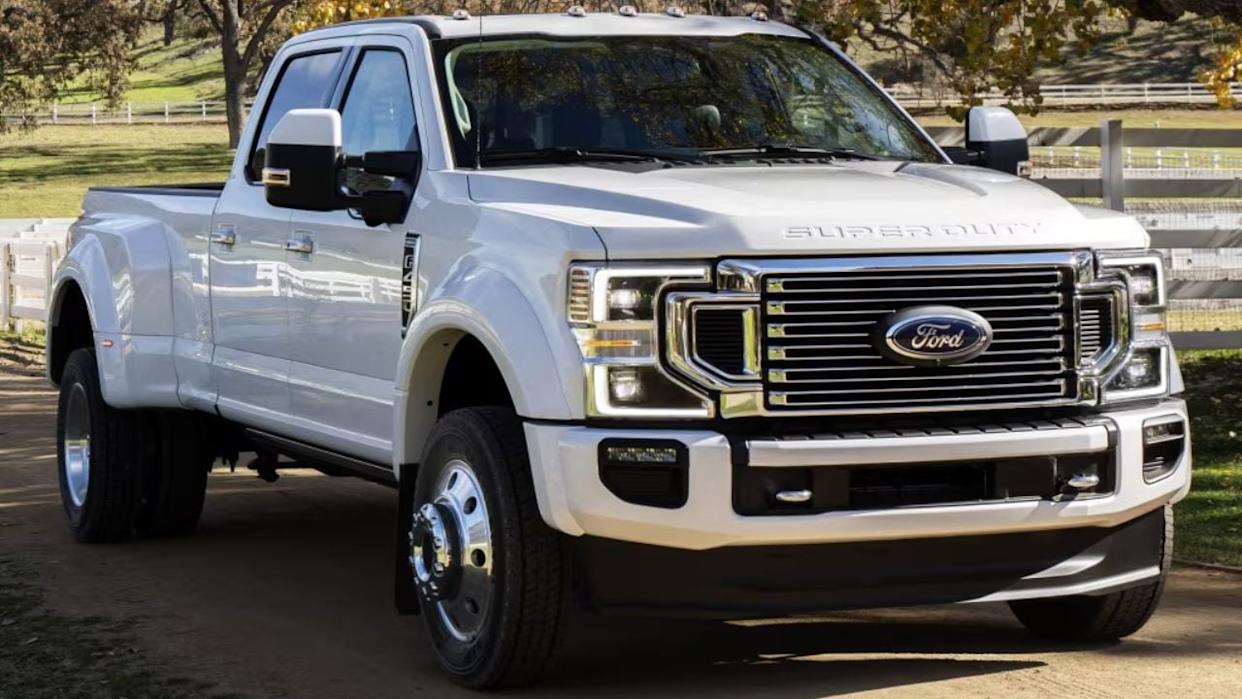
Super Duty Powertrain Lineup Gets a Major Reset
The 2027 Ford Super Duty range introduces a noticeable reshaping of its engine offerings. Based on dealer order guides reported by Ford Truck Enthusiasts and early industry documentation, Ford has removed the 6.8-liter gasoline V8 that previously served as the base engine.
That engine acted as the entry point for buyers seeking a lower-cost heavy-duty truck with acceptable towing capability. Alongside it, the standard-output version of the 6.7-liter Power Stroke diesel V8 is also no longer part of the lineup. This leaves a narrower set of choices for customers configuring a new Super Duty truck, with Ford streamlining the selection toward higher output configurations.
In place of those engines, the 7.3-liter gasoline V8 now becomes the standard engine across most Super Duty trims. Known internally as “Godzilla,” this pushrod V8 has already earned a strong reputation among fleet operators, commercial users, and towing-focused buyers. Its move into the base position signals Ford’s intention to position the Super Duty range with stronger baseline performance rather than entry-level economy.
For diesel buyers, the lineup becomes more straightforward but also more exclusive. The only diesel option remaining is the high-output version of the 6.7-liter Power Stroke V8. This engine sits at the top of Ford’s diesel offering and delivers far higher output than the previously available standard diesel configuration.
The simplification reduces engine variety but increases baseline capability. Ford appears to be targeting buyers who would likely have opted for higher-output engines anyway, particularly in commercial and towing-heavy applications where torque demand outweighs fuel economy considerations.
Also Read: Ford on Pace to Break Its Own Recall Record With 34 Recalls Already in 2026
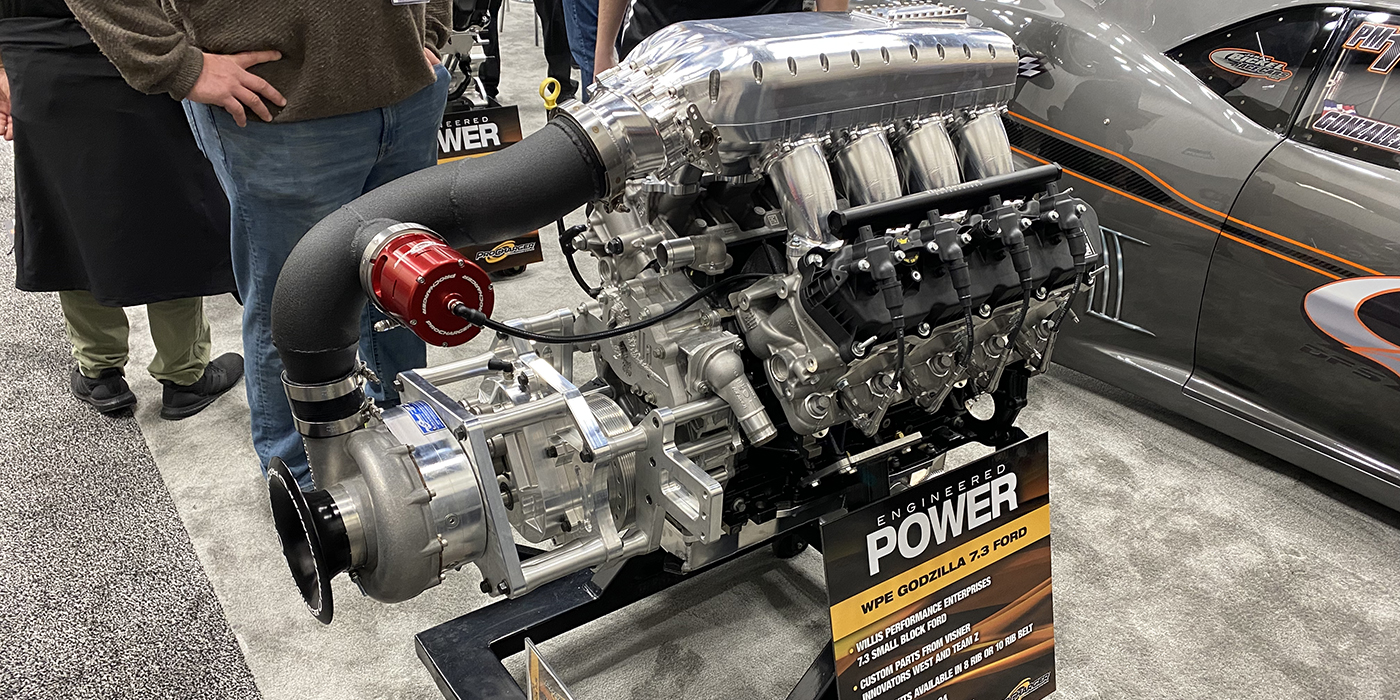
“Godzilla” V8 Takes Center Stage With Strong Output Figures
The 7.3-liter “Godzilla” V8 now anchors the Super Duty gasoline lineup with output figures that place it firmly in heavy-duty territory. Factory ratings list the engine at approximately 430 horsepower and 485 pound-feet of torque. These figures make it one of the strongest naturally aspirated gasoline engines available in a production pickup truck.
The engine uses a traditional overhead valve layout, a design choice that prioritizes durability and ease of maintenance over high-revving efficiency. This configuration has become a defining trait of the Godzilla V8, particularly in fleet and vocational applications where long service life and predictable repair costs matter more than fuel savings.
Ford originally positioned the 7.3-liter engine as an optional upgrade above the smaller 6.8-liter V8. That upgrade typically came with a price increase estimated at around $1,500, depending on trim and configuration. With its new role as the standard engine, Ford effectively removes that entry-level step, placing more power at the starting point of every Super Duty purchase.
From a towing perspective, the Godzilla engine continues to appeal to buyers who prefer gasoline over diesel for maintenance simplicity. While it does not match diesel torque output, it delivers consistent performance under load and avoids the higher service costs associated with turbocharged diesel systems and emissions components.
The engine’s presence as the base option also changes how the Super Duty lineup is perceived. Instead of starting with a lower-output gasoline engine, every configuration begins with a high-capability V8 designed for serious hauling. This approach aligns with Ford’s long-standing dominance in the full-size truck segment, where capability often takes priority over fuel efficiency in the heavy-duty category.
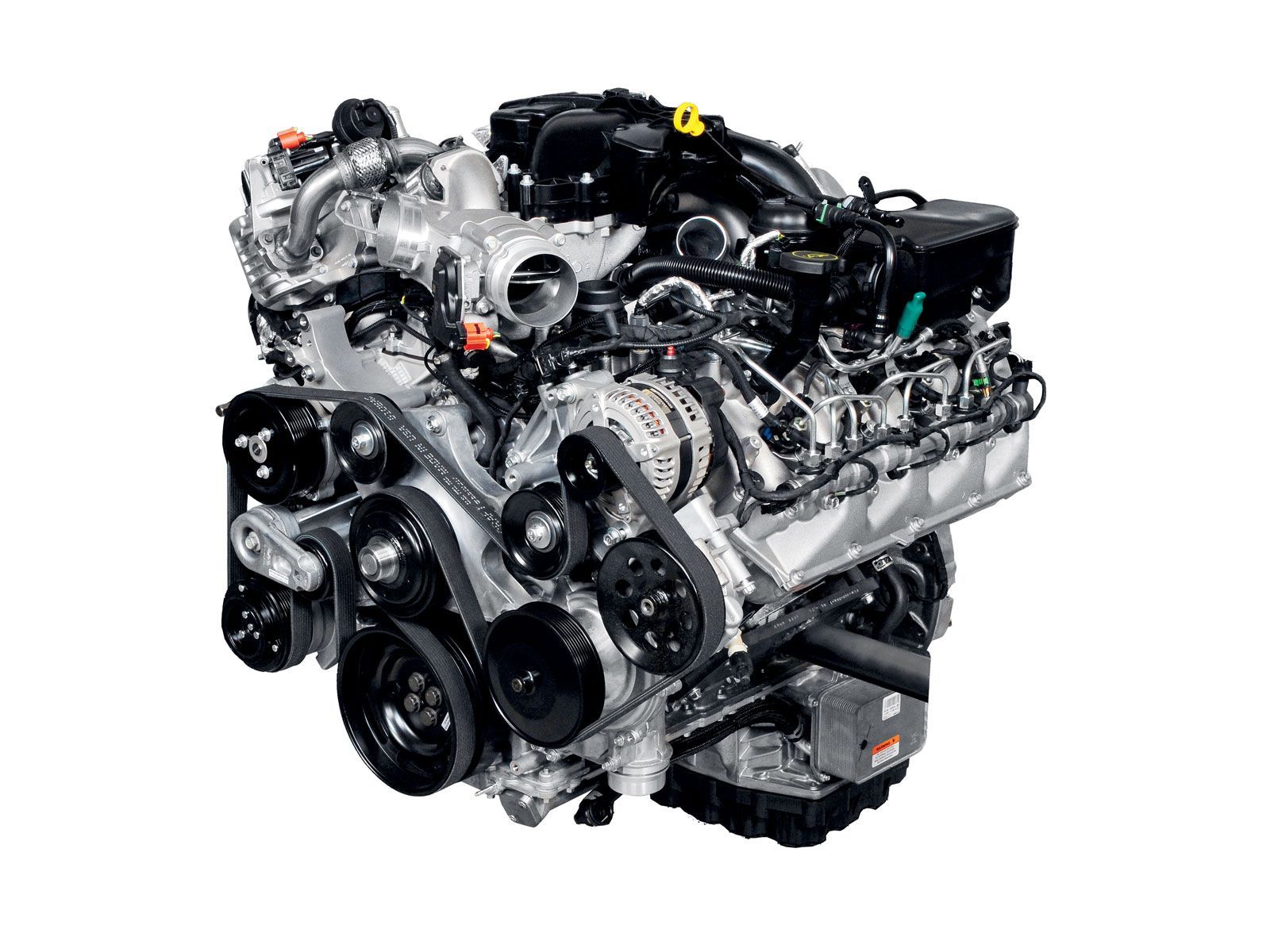
Diesel Strategy Narrows to High-Output Power Stroke Only
Ford’s diesel offering for 2027 becomes more focused with the removal of the standard-output 6.7-liter Power Stroke V8. That engine previously served as the middle-ground diesel option for buyers who wanted torque and fuel efficiency without stepping up to the highest-output configuration.
With that option gone, the high-output 6.7-liter Power Stroke now stands as the sole diesel choice in the Super Duty range. This engine produces approximately 500 horsepower and 1,200 pound-feet of torque, placing it among the most powerful diesel engines in the North American pickup market.
The high-output diesel has traditionally been aimed at buyers with demanding towing requirements, such as fifth-wheel trailers, commercial equipment transport, and heavy agricultural or industrial use. By making it the only diesel option, Ford appears to be consolidating diesel buyers into a single performance tier rather than spreading demand across multiple configurations.
This decision also simplifies production and inventory planning. Fewer engine variants reduce manufacturing complications at the plant level and streamline supply chain management for critical components such as turbochargers, emissions systems, and transmission calibration.
From a customer standpoint, the change removes the choice between two diesel performance levels. Buyers now face a direct decision between the standard 7.3-liter gasoline V8 and the high-output diesel engine, depending on towing requirements and long-term operating preferences.
Diesel pricing is expected to reflect the exclusivity of the remaining option. Historically, the high-output Power Stroke carried a premium of roughly $3,500 over standard diesel variants, and that pricing structure is expected to remain relevant when 2027 pricing details are officially released.
Also Read: Ford Recalls 179,000 Bronco and Rangers Over Seat Safety Risk
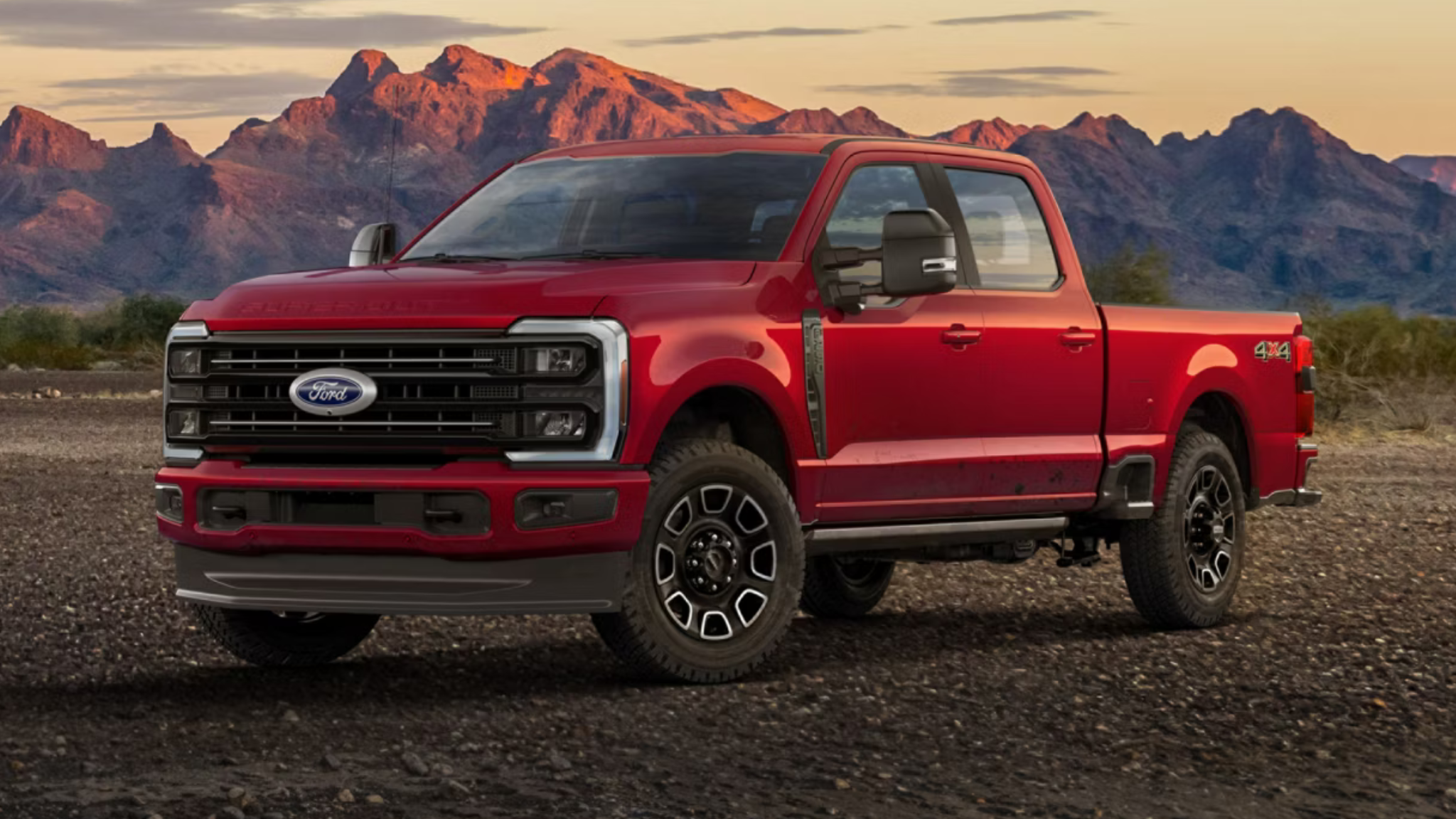
Pricing, Market Direction, and Buyer Impact
Ford has not released official pricing for the 2027 Super Duty lineup, leaving questions about how these powertrain changes will affect sticker prices across trims. However, the move toward higher-output standard engines suggests potential upward pressure on entry pricing.
In previous model years, upgrading from the base gasoline engine to the 7.3-liter V8 required an additional cost. With the 7.3-liter now standard, that upgrade cost may be absorbed into the base price of the truck. This could raise starting prices but also increase baseline capability across the entire lineup.
For diesel buyers, the impact may be more pronounced. With only the high-output Power Stroke available, customers who previously opted for the standard diesel may now face a higher entry cost for diesel-equipped Super Duty trucks. This consolidation positions diesel as a more premium choice within the range.
Market positioning also plays a role in Ford’s decision. Heavy-duty truck buyers in North America continue to show a strong preference for high-torque gasoline and diesel engines rather than smaller-displacement turbocharged alternatives.
Fleet operators, contractors, and recreational towing users often prioritize durability and load capability over fuel economy gains that may not offset operational demands. The broader industry context shows manufacturers balancing emissions regulations, electrification investments, and continued demand for traditional heavy-duty trucks.
Ford’s revised Super Duty engine lineup reflects a clear commitment to keeping internal combustion at the center of its heavy-duty strategy while simplifying choices for customers who already gravitate toward higher-output configurations.
As pricing details become available closer to launch, the full impact of this decision will become clearer. For now, the direction is evident: Ford is reducing engine variety in its Super Duty range while raising the performance baseline for every truck sold.
