
The V8 engine has remained one of the most celebrated powerplants in automotive history for more than half a century. Its combination of strength, sound, balance, and tuning potential helped shape the identity of muscle cars, luxury sedans, racing machines, and hypercars across multiple generations.
While smaller turbocharged engines and electric powertrains continue growing in popularity, the V8 still represents pure mechanical performance for many enthusiasts around the world.
Part of the V8’s appeal comes from its versatility. Some manufacturers used large-displacement naturally aspirated versions to deliver massive low-end torque and thunderous exhaust notes.
Others relied on turbocharging, hybrid assistance, or advanced engineering to create astonishing horsepower figures from relatively compact designs. No matter the approach, the greatest V8 engines always delivered a unique sense of drama difficult to duplicate with other configurations.
The evolution of V8 performance also tells the story of automotive engineering itself. Earlier engines emphasized raw displacement and mechanical simplicity, especially during the muscle car era when bigger usually meant faster.
Modern V8s became far more sophisticated, incorporating lightweight materials, computer-controlled fuel systems, active aerodynamics, and complex forced induction setups capable of producing hypercar levels of performance.
Another fascinating aspect involves how different manufacturers interpret the V8 formula. American companies often focus on brutal torque and aggressive soundtracks.
European brands frequently emphasize high-revving precision and advanced turbo technology. Some engines became legendary for reliability and tuning potential, while others earned fame because they pushed production car performance into entirely new territory.
This list highlights ten of the most powerful V8 engines ever installed in production cars. Some belong to limited-production hypercars built in tiny numbers, while others are powered muscle cars or high-performance sedans available to ordinary buyers with large enough budgets. Together, they represent the peak of V8 engineering across different eras and philosophies.
From screaming flat-plane crank exotics to monstrous supercharged American engines, these powerplants demonstrate why the V8 continues to hold such an important place in performance car culture.
Also Read: 10 Cars Most Frequently Listed as Lease Returns in 2026
1. Hennessey Venom F5 Fury V8
The Hennessey Venom F5 carries one of the most violent V8 engines ever placed inside a production vehicle. Known as the Fury engine, this twin-turbocharged monster was engineered specifically to push the Venom F5 into the highest levels of hypercar performance.
Hennessey did not build this engine for subtlety or refinement. Its purpose was straightforward: create overwhelming speed capable of challenging nearly anything on the planet.
At the center of the Fury engine sits a 6.6-liter V8 equipped with massive twin turbochargers generating enormous boost pressure.
The power delivery feels explosive once the turbos spool fully, producing acceleration intense enough to overwhelm even experienced drivers. Unlike naturally aspirated supercars that build power progressively, the Venom F5 hits with sudden, brutal force at high throttle inputs.
Part of what makes this engine remarkable is how much power Hennessey extracted without relying on hybrid assistance.
Many modern hypercars achieve extreme performance figures through electric motors working alongside combustion engines, but the Fury V8 depends purely on internal combustion engineering and turbocharged aggression. That approach gives the car a far more traditional mechanical personality.
The sound also separates the Fury from many rivals. Instead of refined luxury car smoothness, the engine produces a deep, aggressive roar mixed with turbocharger noise and violent acceleration. Every full-throttle pull feels dramatic and raw, exactly what many enthusiasts want from a high-horsepower American hypercar.
Cooling and durability became major engineering priorities during development. Producing this level of output generates tremendous heat, especially during extended high-speed driving. Hennessey reinforced the engine heavily while integrating advanced cooling systems capable of handling extreme operating conditions.
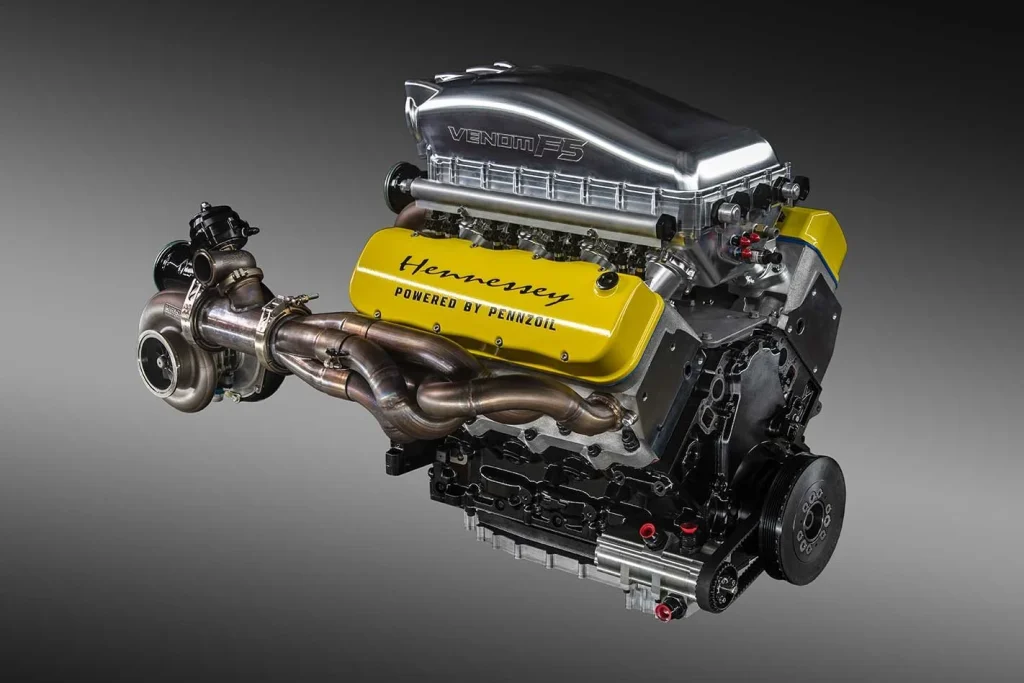
The Fury V8 represents modern American performance philosophy pushed to its absolute limit. Bigger boost, enormous horsepower, and relentless acceleration define the experience completely. Few production V8 engines have ever delivered such savage capability.
- Engine: 6.6-liter twin-turbocharged V8
- Torque: 1,193 lb ft
- Horsepower: 1,817 hp
- Length/Width: 183.1 in / 77.2 in
2. Koenigsegg Jesko Absolut Twin Turbo V8
The Koenigsegg Jesko Absolut showcases one of the most technically advanced V8 engines ever engineered for a road-legal production car.
Christian von Koenigsegg and his team designed this twin-turbocharged masterpiece with a singular focus on extreme performance, high-speed efficiency, and razor-sharp responsiveness. The result became a V8 capable of competing with nearly every hypercar engine ever created.
Unlike traditional American pushrod V8s, focused mainly on displacement and torque, the Jesko’s engine uses advanced engineering solutions normally associated with race cars.
A flat-plane crankshaft allows the engine to rev rapidly and produce an exotic sound far different from the deep rumble of muscle cars. At high rpm, the V8 screams with a sharp mechanical intensity resembling endurance racing prototypes.
Turbo response became another key development priority. Koenigsegg implemented a compressed air system that helps spool the giant turbochargers instantly during aggressive throttle inputs. This reduces lag dramatically and allows the engine to react with startling speed despite producing immense horsepower figures.
The V8 also operates on E85 fuel for maximum output potential. Using ethanol-based fuel allows more aggressive tuning and higher boost pressure, pushing the engine into performance territory few production vehicles have ever reached.
Acceleration remains relentless deep into triple-digit speeds because the engine continues producing massive force at nearly any rpm.
Aerodynamic efficiency in the Jesko Absolut further enhances the engine’s capability. Koenigsegg optimized the body carefully to reduce drag and maintain stability during extreme top speed attempts. Every horsepower generated by the V8 contributes effectively toward maximum velocity.
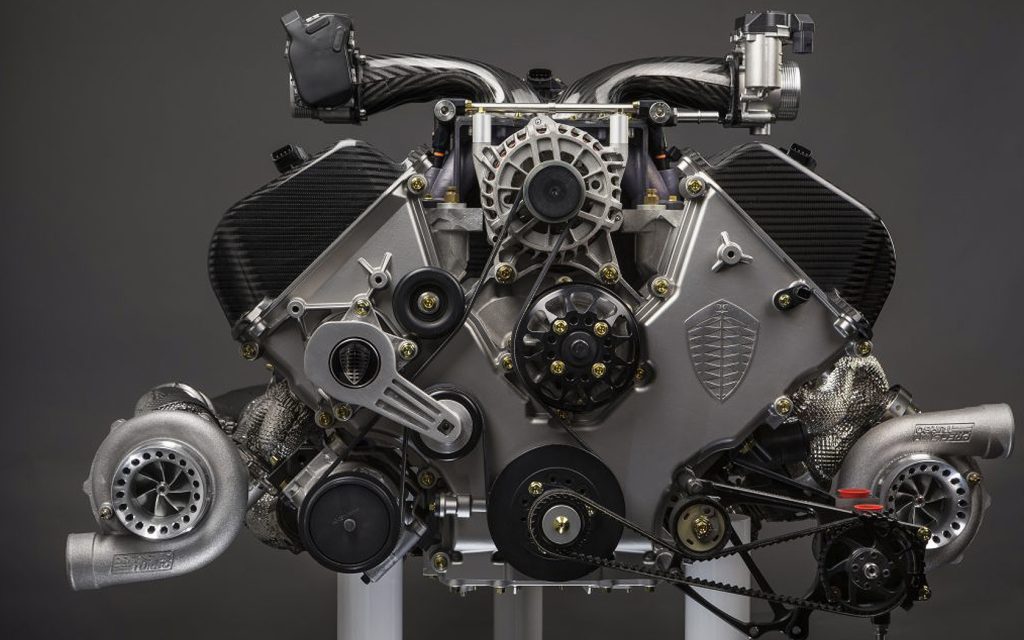
Another impressive achievement involves packaging. Despite its astonishing output, the engine remains relatively compact and lightweight. That helps preserve handling balance and improves the car’s responsiveness during aggressive driving situations.
The Jesko Absolut’s V8 feels important because it represents the peak evolution of modern gasoline-powered hypercar engineering before electrification begins dominating future performance vehicles.
- Engine: 5.0-liter twin-turbocharged V8
- Torque: 1,106 lb ft
- Horsepower: 1,600 hp on E85
- Length/Width: 190 in / 80.6 in
3. SSC Tuatara Twin Turbo Flat Plane V8
The SSC Tuatara entered the hypercar world carrying enormous expectations because SSC North America wanted to compete directly against the fastest manufacturers on Earth.
To achieve that goal, the company developed a brutal twin-turbocharged V8 engineered specifically for extreme top speed capability and relentless acceleration. The result became one of the most powerful V8 engines ever installed in a production car.
Unlike traditional large-displacement American V8 engines focused mainly on low-end torque, the Tuatara’s powerplant uses a flat-plane crankshaft design. This setup allows the engine to rev more freely and produce a sharper, more exotic sound.
At high rpm, the V8 transforms into a furious mechanical scream that feels far closer to a racing engine than a conventional muscle car powerplant.
SSC engineered the engine carefully around lightweight construction and aerodynamic efficiency. Because the Tuatara was designed primarily for high-speed performance, every component needed to support stability and sustained power delivery at extreme velocity.
Massive turbochargers generate incredible boost pressure, allowing the engine to produce acceleration strong enough to rival nearly any hypercar in existence.
One fascinating detail involves fuel flexibility. On standard pump fuel, the engine already delivers astonishing power. When running E85 ethanol fuel, output increases dramatically and pushes the Tuatara into another category entirely. That capability demonstrates how advanced modern forced induction technology has become.
The car’s aerodynamic bodywork also plays a major role in maximizing the engine’s effectiveness. SSC shaped the Tuatara with extraordinary attention to airflow management, helping reduce drag while maintaining stability during high-speed runs.
Without that aerodynamic efficiency, fully utilizing the V8’s immense power would become significantly harder.
What makes the engine especially impressive is the scale of achievement from a relatively small manufacturer. SSC challenged giants of the hypercar industry using intelligent engineering rather than massive corporate resources.
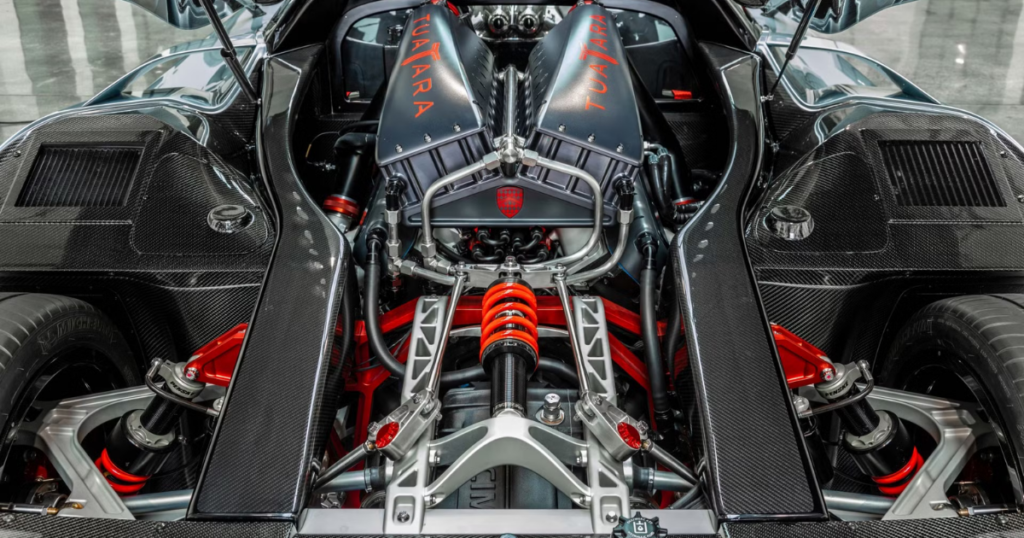
The Tuatara’s V8 proved American companies could still compete at the absolute highest levels of performance innovation.
Few V8 engines combine such extreme output, high-revving character, and top-speed ambition so successfully in a production road car.
- Engine: 5.9-liter twin-turbocharged flat-plane V8
- Torque: 1,280 lb ft
- Horsepower: 1,750 hp on E85
- Length/Width: 175 in / 79 in
4. Rimac Nevera Electric Assist Rivals With V8 Hypercars
Although the Rimac Nevera itself uses electric motors rather than a V8, its arrival completely reshaped discussions surrounding high-performance combustion engines.
Hypercars powered by enormous V8s suddenly faced a new type of rival capable of delivering acceleration levels previously unimaginable. The Nevera forced manufacturers using powerful V8 engines to push even harder to remain competitive.
For decades, V8 hypercars dominated conversations about extreme acceleration and top speed. Manufacturers relied on turbocharging, lightweight construction, and aerodynamic engineering to extract every possible advantage from internal combustion engines.
Then the Nevera demonstrated how electric torque could instantly surpass many of those achievements.
Its four motor setup produces immediate acceleration with absolutely no delay. Traditional V8 hypercars require turbochargers to build boost or engines to climb through rev ranges before reaching maximum output. The Nevera delivers full torque instantly, creating launches so violent they completely changed expectations for production car performance.
This shift affected the future development of high-horsepower V8 vehicles significantly. Manufacturers recognized that simply increasing displacement or turbo boost would no longer guarantee dominance.
As a result, several companies began integrating hybrid systems with powerful V8 engines to combine a traditional combustion engine with instant electric torque.
Despite the technological challenge posed by electric hypercars, many enthusiasts still prefer V8-powered machines because of their sound, vibration, and mechanical drama. The Nevera may outperform numerous combustion cars numerically, but it lacks the emotional soundtrack and aggressive character associated with legendary V8 engines.
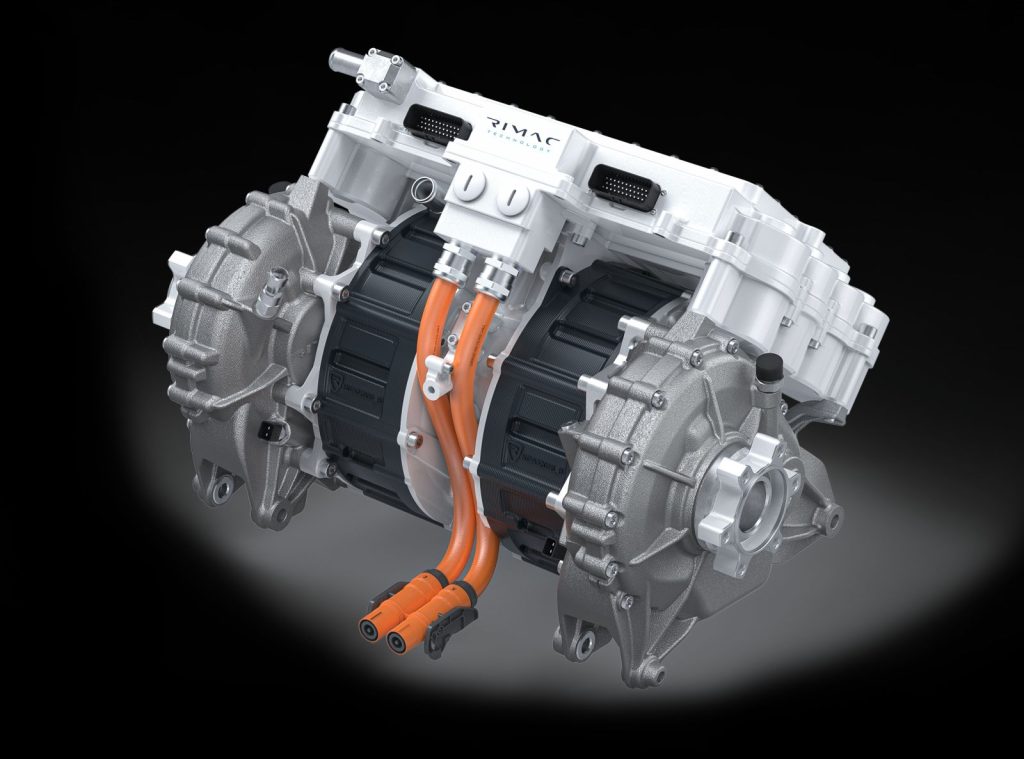
The Nevera’s influence on V8 engineering remains extremely important because it accelerated innovation across the industry. Hypercar manufacturers now build even more advanced combustion and hybrid V8 systems to compete against electric acceleration advantages.
In many ways, the Nevera indirectly pushed the final generation of extreme V8 engines toward even higher levels of performance. That competitive pressure contributed to the creation of some of the most powerful and extreme production V8s ever built before electrification continued to permanently reshape modern performance cars.
- Engine: Four electric motors with a 120 kWh battery
- Torque: 1,741 lb ft
- Horsepower: 1,914 hp
- Length/Width: 187 in / 79.7 in
5. Dodge Challenger SRT Demon 170 Supercharged HEMI V8
The Dodge Challenger SRT Demon 170 represents one of the wildest interpretations of the V8 formula ever released to the public.
Dodge engineered this machine with almost no concern for subtlety. Its mission centered entirely around producing outrageous straight-line performance through an enormous supercharged HEMI V8 capable of humiliating supercars during drag races.
At the core of the Demon 170 sits a heavily upgraded 6.2-liter HEMI V8 paired with a massive supercharger generating extreme boost pressure. The engine delivers explosive torque almost instantly, producing acceleration violent enough to lift the front wheels during hard launches. Few production cars create such a dramatic sensation from a standstill.
Dodge also designed the engine specifically to thrive on E85 ethanol fuel. When filled with high-ethanol-content fuel, the Demon 170 unlocks its full horsepower capability and transforms into one of the most powerful factory-produced V8 muscle cars ever created.
The difference in performance feels enormous, especially during quarter-mile runs where traction and torque become critical.
Unlike highly refined European hypercars, the Demon embraces old-school American aggression completely. The supercharger whine dominates the cabin under acceleration, while the exhaust produces a thunderous soundtrack impossible to ignore.
Driving the car feels less like operating a precision instrument and more like controlling raw mechanical violence.
Another fascinating aspect involves factory drag racing technology. Dodge equipped the Demon 170 with specialized launch systems, upgraded driveline components, strengthened axles, and suspension tuning specifically developed for maximum acceleration. Buyers essentially received a near race-ready drag machine directly from the dealership.
The car also became symbolically important because many enthusiasts viewed it as one of the final celebrations of gasoline-powered American muscle before electrification changed the industry permanently. Dodge intentionally built the Demon 170 without compromise, giving V8 fans one last extreme performance statement.
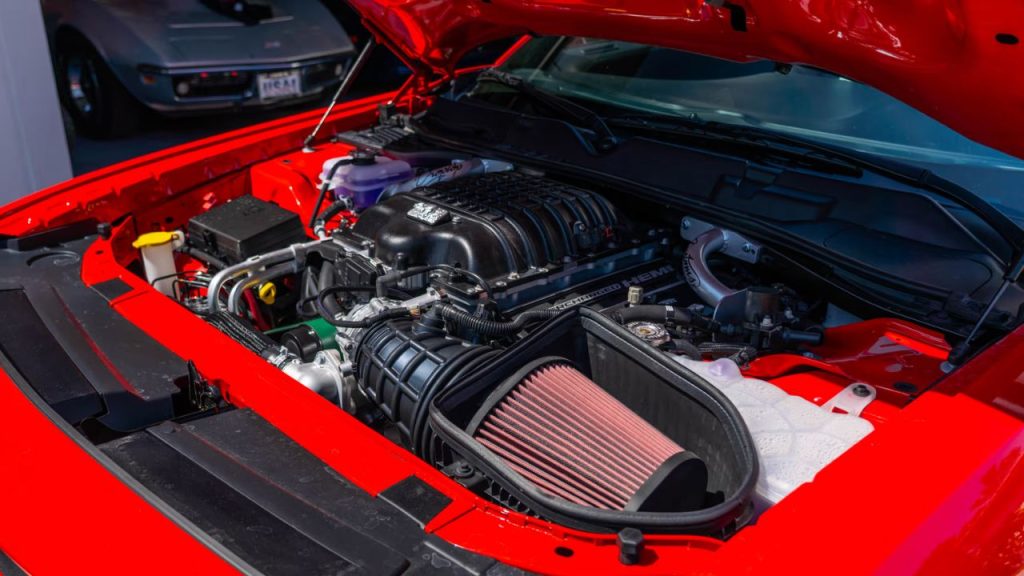
Few engines capture the spirit of traditional American horsepower culture better than this supercharged HEMI. It combines absurd power, massive torque, and unmistakable character in a way modern performance cars rarely attempt anymore.
- Engine: 6.2-liter supercharged HEMI V8
- Torque: 945 lb ft
- Horsepower: 1,025 hp on E85
- Length/Width: 197.9 in / 75.7 in
6. Chevrolet Corvette ZR1 LT7 Twin Turbo V8
The Chevrolet Corvette ZR1 pushed Chevrolet performance engineering into territory once reserved exclusively for exotic European manufacturers. At the center of the car sits the ferocious LT7 twin-turbocharged V8, an engine developed to prove the Corvette could compete directly against the fastest supercars in the world.
Chevrolet approached the LT7 differently from earlier Corvette engines. Traditional naturally aspirated V8s relied heavily on displacement and immediate throttle response, but the LT7 introduced advanced twin turbocharging technology capable of generating staggering power levels while preserving drivability. The result became one of the most powerful production V8 engines ever fitted to an American sports car.
The engine produces brutal acceleration throughout the rpm range. Large turbochargers force massive amounts of air into the V8, creating relentless high-speed performance that continues pulling hard far beyond ordinary sports car territory.
Yet despite the enormous output, engineers worked carefully to maintain smooth power delivery during normal road driving.
Sound remains a major part of the experience. The LT7 combines traditional American V8 aggression with the sharp mechanical noise of turbocharged performance engineering. Under full throttle, the engine delivers an intense soundtrack filled with deep exhaust thunder and turbocharger pressure.
Cooling and durability also became crucial engineering priorities. High-horsepower turbocharged engines generate enormous thermal stress, especially during track driving. Chevrolet integrated advanced intercooling systems, reinforced internals, and optimized airflow management to keep the LT7 stable under extreme conditions.
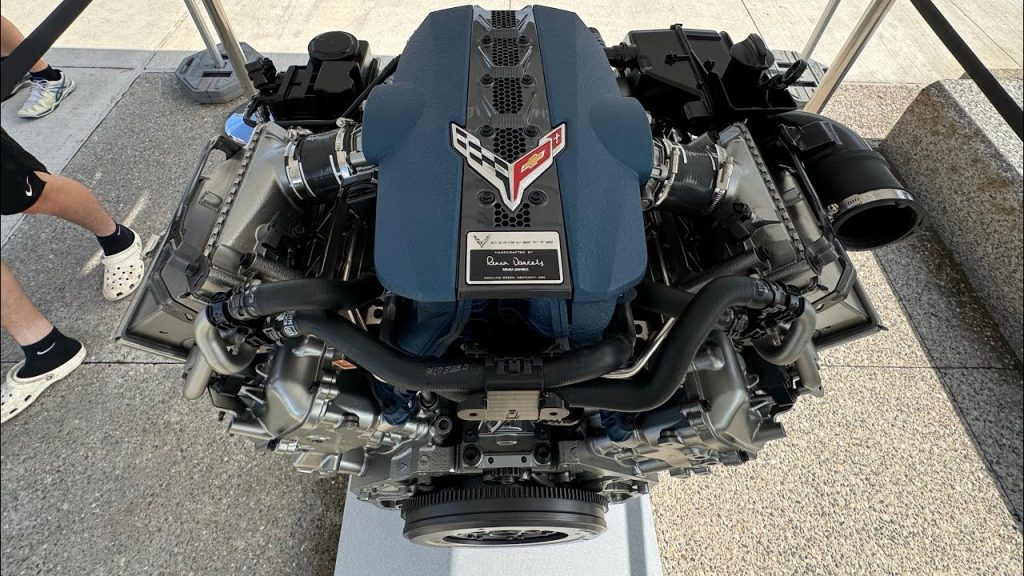
Another reason this V8 matters involves what it represents for American performance cars. The Corvette historically offered strong value and impressive speed, but the ZR1 upgraded the platform into genuine hypercar territory. European manufacturers could no longer dismiss American V8 engineering as simple brute force without sophistication.
The LT7 demonstrates how far modern V8 technology has evolved. It blends traditional displacement-driven muscle with advanced turbocharging, lightweight engineering, and world-class performance capability in one extraordinary package.
- Engine: 5.5-liter twin-turbocharged V8
- Torque: 828 lb ft
- Horsepower: 1,064 hp
- Length/Width: 184.6 in / 79.7 in
7. Mercedes AMG GT Black Series Flat Plane V8
The Mercedes-AMG GT Black Series introduced one of the most extreme V8 engines ever created by Mercedes-AMG. While the company built its reputation on large handcrafted V8s with thunderous soundtracks, the Black Series upgraded that formula dramatically through advanced engineering and race-inspired technology.
At the center of the car sits a heavily reworked version of AMG’s famous 4.0 liter twin-turbocharged V8. Engineers replaced the traditional cross-plane crankshaft with a flat-plane design, transforming both the engine’s character and performance delivery.
The change allowed the engine to rev more aggressively, improve throttle response, and produce a sharper exhaust note, far different from older AMG muscle-oriented cars.
The result feels brutal on a racetrack. Power builds rapidly as the turbochargers generate massive boost pressure, while the flat-plane crank gives the engine an almost exotic personality. Instead of a deep low-frequency rumble, the Black Series produces an intense mechanical roar mixed with turbocharger noise and sharp high-RPM aggression.
Mercedes also developed the engine specifically for sustained high-performance driving. Upgraded cooling systems, revised airflow management, and reinforced internals allow the V8 to withstand extreme track conditions repeatedly without losing effectiveness. That durability helped the Black Series achieve remarkable lap times on circuits around the world.
Aerodynamics further amplifies the engine’s capability. Massive adjustable wings, aggressive diffusers, and carefully engineered airflow channels keep the car stable at very high speeds. Every element works together to maximize the effectiveness of the V8 during hard driving situations.
Another fascinating detail involves drivability. Despite its incredible output and track-focused setup, the engine remains surprisingly manageable during regular road driving. Drivers can cruise comfortably before instantly accessing explosive acceleration with a single throttle input.
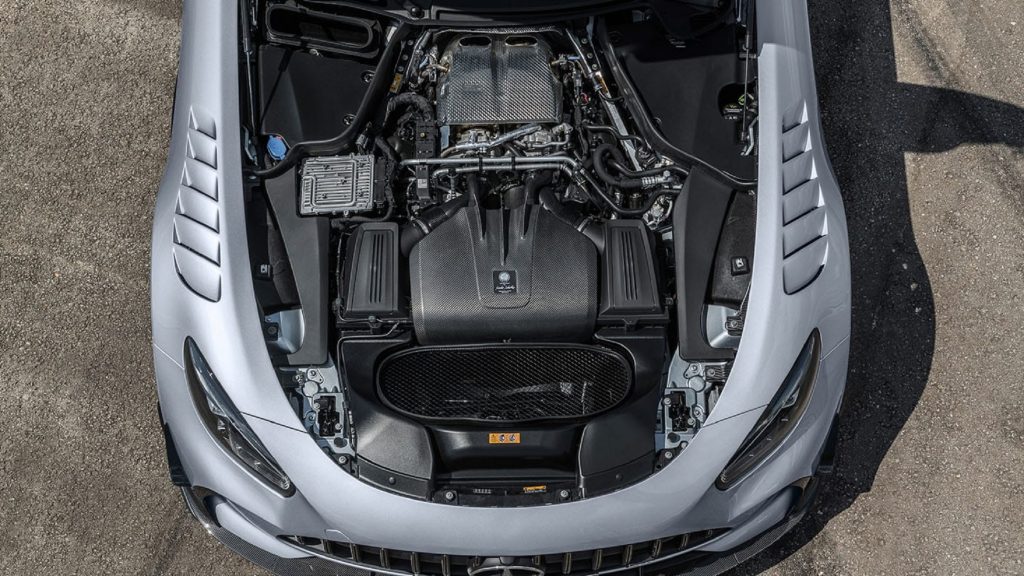
The AMG GT Black Series proved Mercedes could build a V8-powered machine capable of challenging the world’s most respected supercars. It combined traditional AMG power with sophisticated motorsport engineering in a way few production cars ever achieved.
- Engine: 4.0-liter twin-turbocharged flat-plane V8
- Torque: 590 lb ft
- Horsepower: 720 hp
- Length/Width: 179 in / 78 in
8. Ferrari F8 Tributo Twin Turbo V8
The Ferrari F8 Tributo carried enormous expectations because it replaced one of Ferrari’s most beloved naturally aspirated V8 lineages. Enthusiasts worried turbocharging might reduce the emotional character traditionally associated with Ferrari engines.
Instead, the F8’s twin turbocharged V8 became one of the most celebrated modern performance engines the company ever produced.
Ferrari engineered the powerplant with obsessive attention to responsiveness. Turbocharged engines often suffer from delayed throttle reactions compared with naturally aspirated designs, but the F8 minimized that sensation impressively.
Acceleration feels immediate and aggressive, giving drivers a strong connection to the car despite the forced induction setup.
The engine’s sound also surprised many critics positively. While naturally aspirated Ferraris still possess unmatched high-RPM drama, the F8 produces a sharp, intense exhaust note combined with violent turbocharged acceleration. Ferrari tuned the engine carefully so it retained emotional excitement rather than becoming mechanically sterile.
Performance figures place the V8 among the strongest production eight-cylinder engines ever built. The combination of lightweight construction, advanced turbocharging technology, and aerodynamic efficiency allows the F8 to deliver astonishing speed both on straights and through corners.
Drivers experience relentless acceleration throughout the rpm range rather than waiting for power to build gradually.
The car’s aerodynamic design contributes heavily to maximizing engine performance. Ferrari shaped the body using lessons learned from racing programs and previous special edition models. Airflow management improves cooling, stability, and downforce while preserving elegant styling.
Unlike raw track-focused supercars, the F8 also remains relatively approachable during daily driving. The engine behaves smoothly in traffic and lower-speed situations before transforming into something ferocious under hard acceleration. That flexibility broadened the car’s appeal significantly.
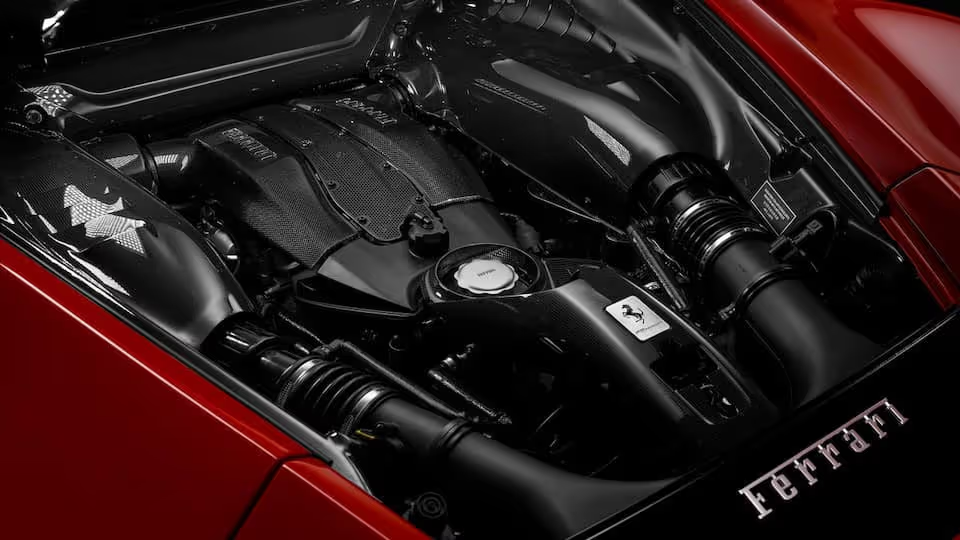
The F8 Tributo’s V8 became historically important because it represented the peak development of Ferrari’s non-hybrid turbocharged V8 era before the company transitioned further toward electrified performance systems.
- Engine: 3.9-liter twin-turbocharged V8
- Torque: 568 lb ft
- Horsepower: 710 hp
- Length/Width: 181.5 in / 77.9 in
9. McLaren 765LT Twin Turbo V8
The McLaren 765LT demonstrates how far modern V8 engineering has evolved when combined with obsessive weight reduction and advanced aerodynamics.
McLaren designed the 765LT as a sharper and more extreme version of the already fast 720S, but the company did far more than simply increase horsepower slightly. Engineers transformed the car into one of the most intense V8-powered production machines ever released.
At the heart of the 765LT sits a heavily upgraded 4.0-liter twin-turbocharged V8 derived from McLaren’s racing-inspired engine architecture. Turbochargers spool aggressively, creating explosive acceleration throughout the rev range.
Unlike older turbocharged engines that delivered power in delayed bursts, the 765LT reacts immediately to throttle inputs and builds speed with relentless force.
Part of what makes this V8 special is its emotional character. Modern turbocharged engines sometimes feel muted or overly refined, but the 765LT produces an aggressive mechanical soundtrack filled with sharp exhaust crackles and turbo pressure noise. Drivers constantly feel connected to the engine because every throttle movement creates an instant response.
McLaren also focused heavily on reducing mass around the engine and throughout the vehicle. Titanium exhaust components, lightweight body panels, thinner glass, and stripped interior materials all contributed to a lower curb weight. Because of that reduction, the V8’s power feels even more dramatic during acceleration and corner exits.
Another major strength involves track performance. The engine maintains incredible consistency under hard driving thanks to advanced cooling systems and carefully engineered airflow management. Combined with active aerodynamics and race-inspired suspension tuning, the 765LT became one of the fastest road-legal McLarens ever built around a circuit.
Despite its extreme focus, the V8 remains surprisingly usable during regular road driving. The engine can cruise calmly at lower speeds before instantly transforming into a violent high-performance machine when pushed harder.
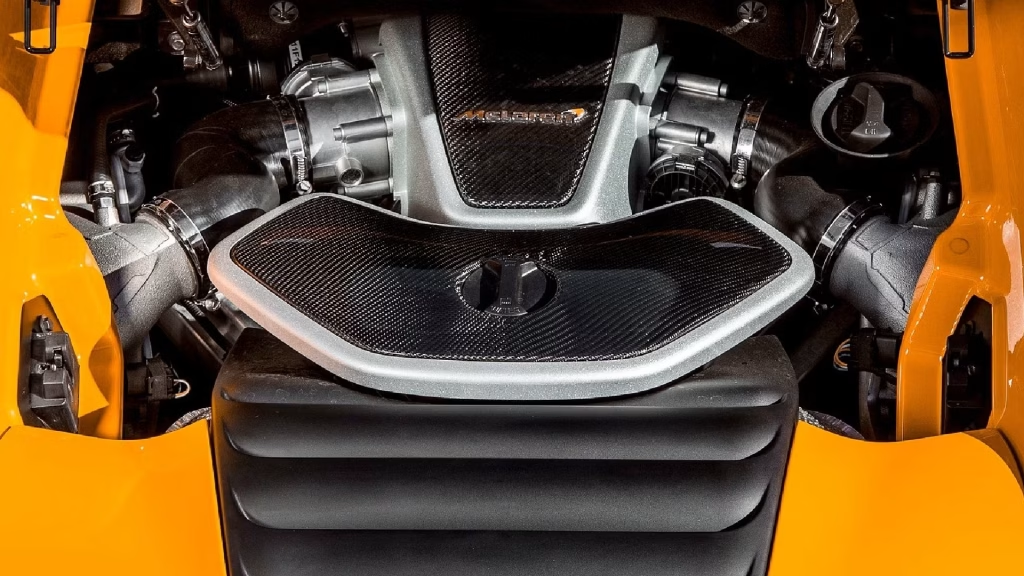
The 765LT proved a modern twin-turbo V8 could still deliver excitement, precision, and emotional intensity equal to many naturally aspirated supercars. It stands among the finest examples of contemporary V8 performance engineering.
- Engine: 4.0-liter twin-turbocharged V8
- Torque: 590 lb ft
- Horsepower: 755 hp
- Length/Width: 181.1 in / 76 in
10. Aston Martin Valkyrie Cosworth Hybrid V8 Rival
The Aston Martin Valkyrie technically relies on a naturally aspirated V12 rather than a V8, but its arrival dramatically influenced the future direction of high-performance V8 development.
Hypercar manufacturers realized traditional eight-cylinder engines would need to evolve rapidly in order to remain competitive against increasingly advanced hybrid systems capable of producing extreme performance figures.
Before cars like the Valkyrie appeared, many companies believed turbocharged V8 engines represented the peak of road-legal performance engineering. The Valkyrie challenged that assumption completely by combining lightweight construction, advanced aerodynamics, and electrified assistance in a package delivering race car levels of capability.
Its impact pushed manufacturers developing V8 hypercars toward more aggressive engineering solutions. Companies began integrating hybrid assistance into V8 platforms, refining aerodynamic efficiency further, and improving thermal management systems dramatically.
As a result, the final generation of elite V8 supercars became faster and more technologically sophisticated than ever before.
The Valkyrie also highlighted another challenge facing V8 engines: emotional engagement. Many enthusiasts still preferred the sound and mechanical feel of high-performance V8s compared with electric systems or hybrid setups.
That demand encouraged manufacturers to preserve strong exhaust character and aggressive throttle response even while adopting new technology.
Another important influence involved weight reduction philosophy. The Valkyrie proved that minimising mass remained just as critical as increasing horsepower. Several V8-powered manufacturers responded by introducing lighter chassis materials, titanium exhaust systems, and more compact turbocharged engines to improve agility and responsiveness.
Although not powered by a V8 itself, the Valkyrie indirectly shaped the future of modern eight-cylinder performance cars more than many actual V8 models did. Its arrival accelerated innovation throughout the hypercar industry and forced manufacturers to rethink how powerful combustion engines should evolve.
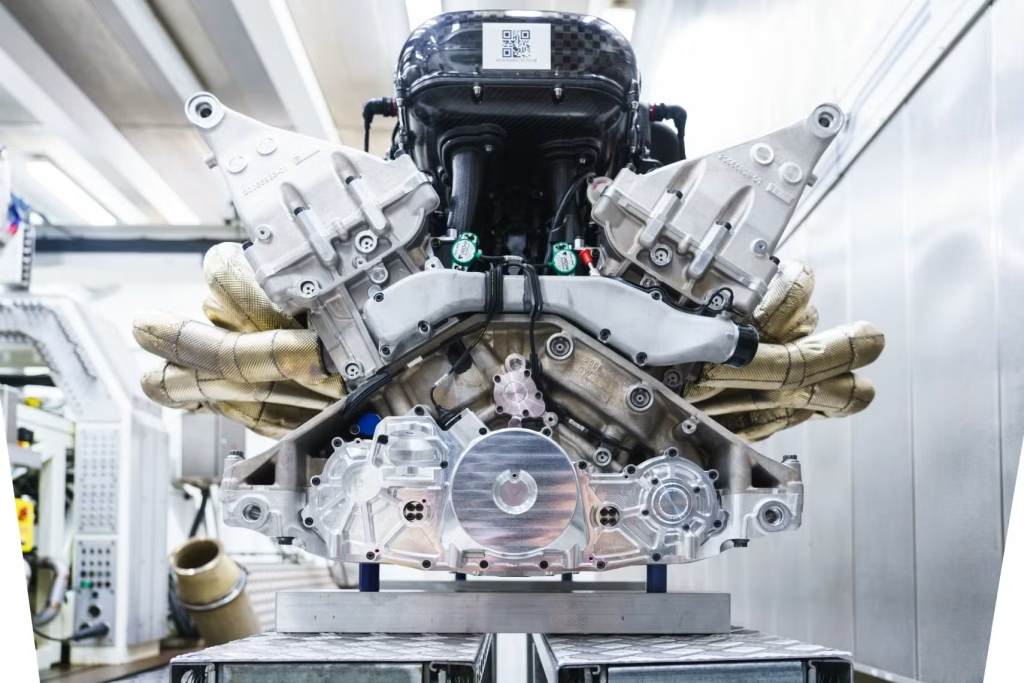
The result benefited enthusiasts greatly because the competition produced some of the most advanced and exciting V8-powered production cars in automotive history during the final years before electrification began dominating the industry fully.
- Engine: 6.5-liter naturally aspirated hybrid V12
- Torque: 664 lb ft
- Horsepower: 1,160 hp combined
- Length/Width: 197.5 in / 87.4 in
Also Read: 10 Ferrari Cars & Ranked From Worst To Best
