
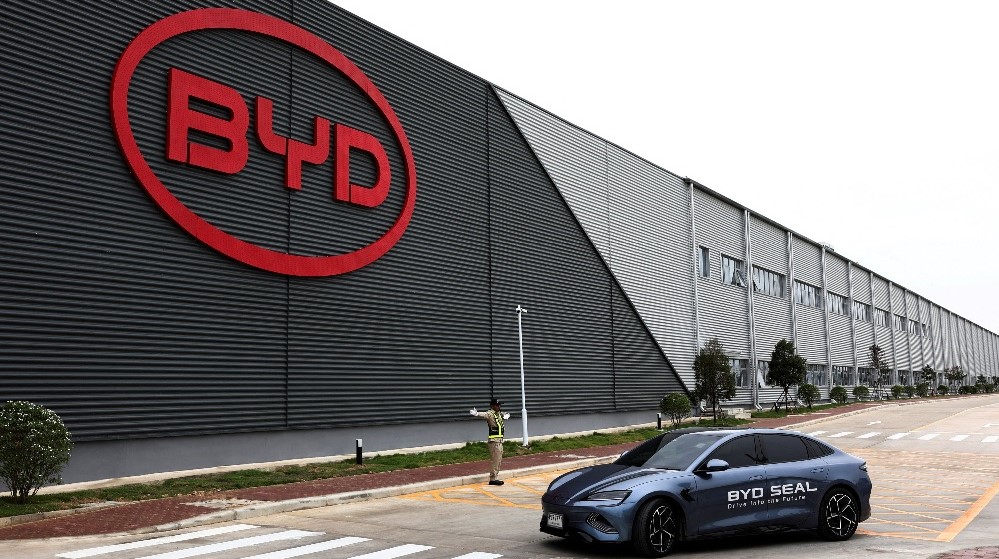
The global electric vehicle market has become one of the most strategically important industries of the 21st century, reshaping trade relationships, manufacturing ecosystems, and technological leadership across continents.
At the center of this transformation is the growing question of whether the United States should ban Chinese electric vehicles permanently or allow them into the market to compete with domestic and allied manufacturers. This debate is not only about cars but also about energy independence, national security, industrial policy, climate goals, and the future of innovation.
As China rapidly expands its electric vehicle production capacity, companies such as BYD and other major manufacturers have become global leaders in battery technology, cost efficiency, and large-scale production. Meanwhile, US-based companies like Tesla, Ford, and General Motors are investing heavily in electrification but still face supply chain challenges, pricing pressures, and global competition.
The argument for restricting Chinese EV imports is largely based on concerns about economic security, data privacy, and strategic dependency. Policymakers worry that allowing unrestricted access to Chinese electric vehicles could create vulnerabilities in critical infrastructure, especially given that modern EVs rely heavily on software, sensors, and data connectivity.
These vehicles are not just transportation tools but also data-collecting platforms, which raises questions about how information is stored, processed, and potentially accessed. On the other hand, supporters of open competition argue that banning Chinese EVs could slow down innovation, increase consumer prices, and reduce incentives for American manufacturers to improve efficiency and affordability.
They emphasize that competition is a key driver of technological progress and that the United States has historically benefited from global trade integration.
Another important dimension of this issue is climate policy. Electric vehicles are central to reducing carbon emissions and transitioning away from fossil fuels. Chinese EV manufacturers have significantly reduced production costs, making electric cars more accessible to middle-income consumers worldwide.
If the United States limits its entry, it may slow EV adoption rates domestically, potentially delaying environmental targets. However, critics counter that relying on foreign-dominated supply chains for green technology could create long-term strategic risks.
The question is not simply whether Chinese EVs should be banned or welcomed, but how the United States can balance competition, security, affordability, and innovation in a rapidly evolving global industry. The following sections explore these dimensions in detail, analyzing economic trends, security implications, consumer benefits, policy options, and the long-term future of the automotive sector.
Also Read: 10 Sleeper Sedans With Over 700 Horsepower
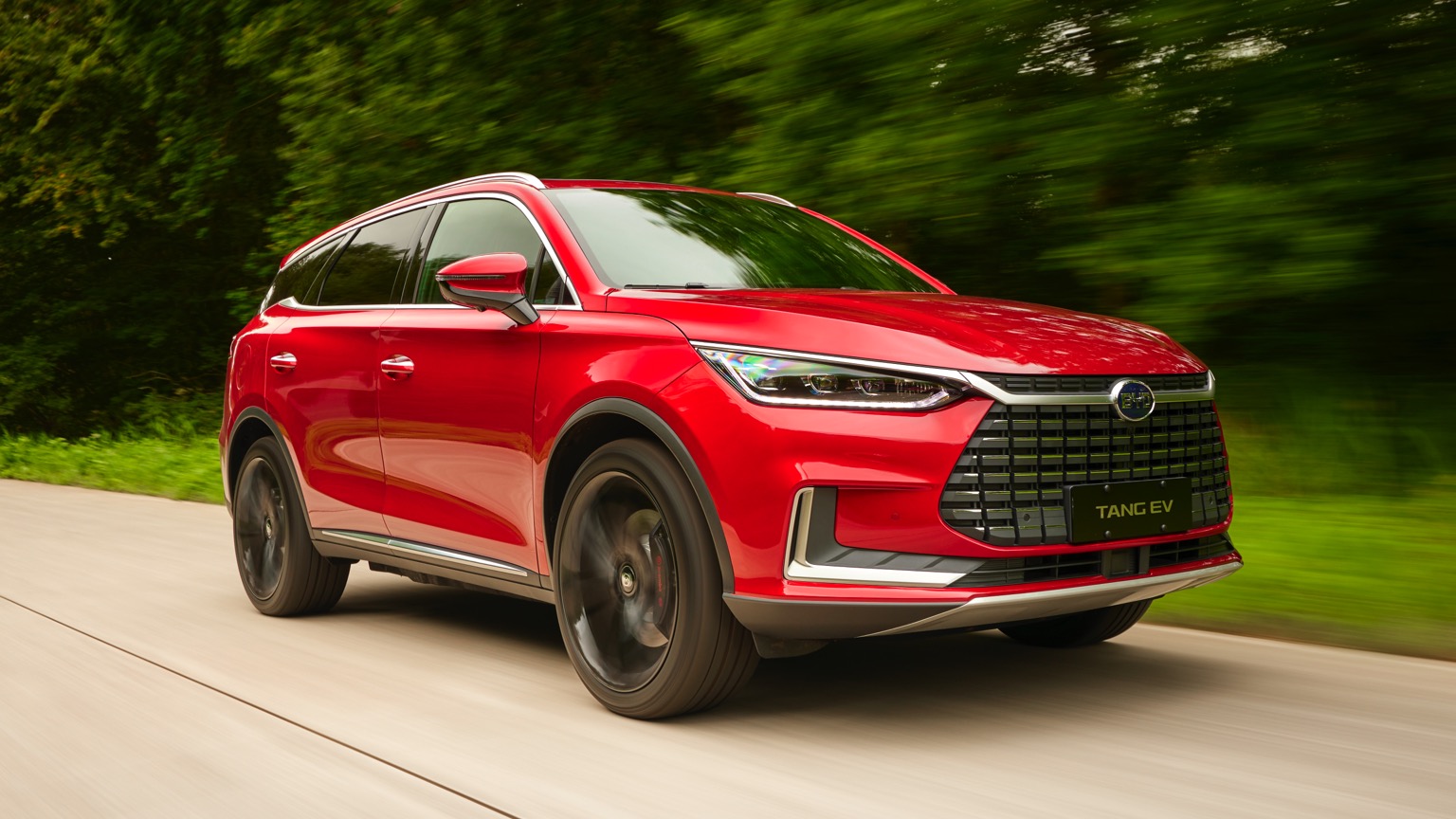
Global EV Competition and Rise of the Chinese EV Industry
The rise of the Chinese electric vehicle industry represents one of the most significant industrial shifts in modern automotive history. Over the past decade, China has built a vertically integrated EV ecosystem that includes battery production, semiconductor development, vehicle manufacturing, and supply chain dominance.
This integration allows Chinese companies to produce electric vehicles at a scale and cost that many competitors struggle to match. Firms such as BYD and others have leveraged government support, domestic demand, and manufacturing efficiency to become global players capable of exporting vehicles to multiple continents.
One of the key factors behind this growth is China’s control over critical raw materials and battery supply chains. Lithium, cobalt processing, and rare earth materials play a central role in EV production, and China has invested heavily in securing access to these resources.
This has enabled Chinese manufacturers to reduce production costs and scale faster than many Western competitors. As a result, they can offer electric vehicles at significantly lower price points, making EV adoption more accessible in emerging markets and price-sensitive regions.
Another important factor is the speed of innovation within the Chinese EV sector. Chinese manufacturers often operate in highly competitive domestic markets where rapid iteration is necessary to survive.
This has led to fast improvements in battery range, charging speed, software integration, and vehicle design. Many Chinese EVs now include advanced autonomous driving features, smart connectivity systems, and high-performance battery technology that rivals or in some cases exceeds global standards.
Additionally, China has benefited from strong government policy support. Subsidies, infrastructure investment, and regulatory frameworks have encouraged EV adoption at scale.
Urban planning in major Chinese cities has also favored electric mobility, with widespread charging infrastructure and restrictions on internal combustion vehicles in certain zones. This policy environment has created a strong foundation for long-term EV growth and global competitiveness.
Finally, the global expansion of Chinese EV manufacturers is reshaping international automotive markets. As these companies begin exporting to Europe, Southeast Asia, and potentially North America, they introduce new competitive pressures on established automakers. This raises questions for countries like the United States about how to respond to an increasingly globalized and competitive EV industry.

National Security and Economic Concerns for the US
National security concerns play a major role in the debate over Chinese electric vehicles entering the US market. Modern EVs are highly connected systems that rely on software, GPS tracking, sensors, and constant data exchange.
This connectivity raises concerns about how data is collected, stored, and potentially accessed by foreign entities. Policymakers worry that widespread use of foreign-manufactured connected vehicles could create vulnerabilities in transportation infrastructure, especially if systems are integrated into smart city networks or government fleets.
Economic security is another major factor. The automotive industry is a critical component of the US economy, supporting millions of jobs across manufacturing, supply chains, dealerships, and related services. If low-cost Chinese EVs were to enter the market without restrictions, domestic manufacturers could face intense pricing pressure.
This could lead to reduced margins, factory closures, or slower investment in US-based production facilities. Policymakers must weigh the benefits of cheaper consumer vehicles against the potential long-term decline of domestic manufacturing capacity.
There is also concern about technological dependency. If the United States becomes reliant on foreign-made EV batteries or software systems, it may lose strategic control over key technologies. This dependency could become particularly problematic during geopolitical tensions or trade disputes. In such scenarios, supply chain disruptions could affect vehicle availability, pricing stability, and infrastructure development.
Cybersecurity risks further complicate the issue. Connected vehicles can potentially be vulnerable to remote access, software manipulation, or data breaches if not properly secured. While these risks are not exclusive to Chinese manufacturers, geopolitical tensions amplify concerns about trust and oversight. Regulators must consider how to ensure strict cybersecurity standards regardless of origin.
Finally, economic policy considerations include long-term industrial competitiveness. Some policymakers argue that limiting foreign competition may provide space for domestic companies to scale and innovate.
Others argue that protectionist measures can reduce efficiency and slow technological progress. This tension between security and openness is central to the US policy debate on Chinese EVs.
Also Read: 10 SUVs Where the Cheapest States Sit in the Southwest

Innovation, Consumer Benefits, and Market Dynamics
Competition in the electric vehicle market has historically driven rapid innovation, and the entry of Chinese EV manufacturers could significantly accelerate this trend. When companies compete across borders, they are forced to improve performance, reduce costs, and enhance features in order to attract consumers. This dynamic often leads to faster technological advancement than in protected or less competitive markets.
From a consumer perspective, Chinese EVs could bring substantial benefits in terms of affordability. One of the biggest barriers to EV adoption in the United States is price. Many electric vehicles remain more expensive than traditional gasoline-powered cars, even with incentives.
Chinese manufacturers have demonstrated the ability to produce EVs at a lower cost due to economies of scale and supply chain efficiency. If these vehicles were available in the US market, consumers could gain access to more affordable options, potentially accelerating EV adoption.
In addition to pricing, innovation in battery technology is another major area of impact. Chinese firms have made significant progress in lithium iron phosphate batteries and other cost-effective energy storage solutions.
These advancements can improve vehicle range, reduce charging times, and lower maintenance costs. Increased competition could push US manufacturers to accelerate their own research and development efforts.
Market dynamics also play a crucial role in shaping long-term industry outcomes. If competition is restricted, domestic manufacturers may face less pressure to innovate quickly. However, if competition is fully open, there is a risk that some companies may struggle to survive against lower-cost imports. This creates a balancing challenge for policymakers who must consider both short-term consumer benefits and long-term industrial sustainability.
Innovation thrives in environments where competition is strong, but rules are fair. The challenge for the United States is determining whether controlled openness or restrictive protection better serves its economic and technological goals.

Trade Policy Options
The United States has several policy options when it comes to Chinese electric vehicles, ranging from full bans to structured collaboration. A complete ban would eliminate Chinese EV imports entirely, prioritizing national security and domestic industry protection. However, such a policy could also reduce consumer choice, increase prices, and potentially slow EV adoption rates across the country.
Tariffs represent a middle-ground approach. By imposing taxes on imported Chinese EVs, the United States could make them less price-competitive while still allowing limited market access. This approach could help protect domestic manufacturers while maintaining some level of competition. However, tariffs may also lead to trade retaliation and increased global trade tensions.
Another option is strict regulatory oversight rather than outright restriction. This could include cybersecurity requirements, data storage regulations, and local manufacturing mandates.
Under this model, foreign EV manufacturers would be allowed to operate in the US market only if they comply with strict standards designed to protect data and ensure security. This approach attempts to balance openness with safeguards.
Collaboration is a more forward-looking approach that involves joint ventures, shared research initiatives, and global standards development. In this model, US and Chinese companies could potentially cooperate on battery technology, charging infrastructure, and emissions reduction goals. While politically challenging, collaboration could accelerate global EV innovation and climate progress.
Each policy option carries trade-offs between security, affordability, competitiveness, and diplomacy. The optimal strategy likely involves a combination of these approaches rather than a single uniform policy.

Future of the Automotive Industry and Geopolitical Implications
The future of the automotive industry will be defined by electrification, automation, and digital integration. Electric vehicles are not just replacing internal combustion engines but are fundamentally transforming how transportation systems operate. As vehicles become more connected and software-driven, the industry will increasingly resemble the technology sector rather than traditional manufacturing.
Geopolitically, control over EV supply chains will become a major source of global influence. Countries that dominate battery production, semiconductor development, and software systems will hold significant strategic power. China currently has a strong position in many of these areas, while the United States is investing heavily to rebuild domestic manufacturing capacity.
The competition between the US and Chinese EV industries may also shape global trade alliances. Countries may align with different technological ecosystems depending on pricing, accessibility, and political relationships. This could lead to fragmented global standards for EV technology, charging infrastructure, and software systems.
At the same time, climate change pressures will continue to push all major economies toward electric mobility. This creates a shared global incentive to expand EV adoption regardless of political tensions. The challenge lies in balancing cooperation on environmental goals with competition in industrial leadership.
The question of whether the United States should ban Chinese EVs or welcome them will likely evolve. Rather than a binary choice, the future may involve a complex mix of competition, regulation, and selective collaboration designed to maximize innovation while protecting national interests.
